21 Two-Tone Kitchen Cabinet Ideas That Stand Out

You stand in your kitchen and wonder how to make it feel fresh without a full remodel. Two-tone kitchen cabinet ideas can give you that new-look energy without breaking the bank. Mixing upper and lower cabinet colors draws the eye and balances mood, texture, and light.
This guide shows 21 practical two-tone kitchen cabinet ideas. You’ll find classic combos, bold contrasts, and soft neutrals. Each idea includes a clear visual prompt, a shopping-style elements list, step-by-step execution, and styling tips. Whether you’re repainting shaker cabinets or swapping hardware, there’s a plan you can follow.
Use this as your pin-ready cheat sheet. Save the looks you love, adapt the steps to your space, and pick a palette that fits your home. Let’s explore two-tone kitchen cabinet ideas that stand out and feel truly yours.
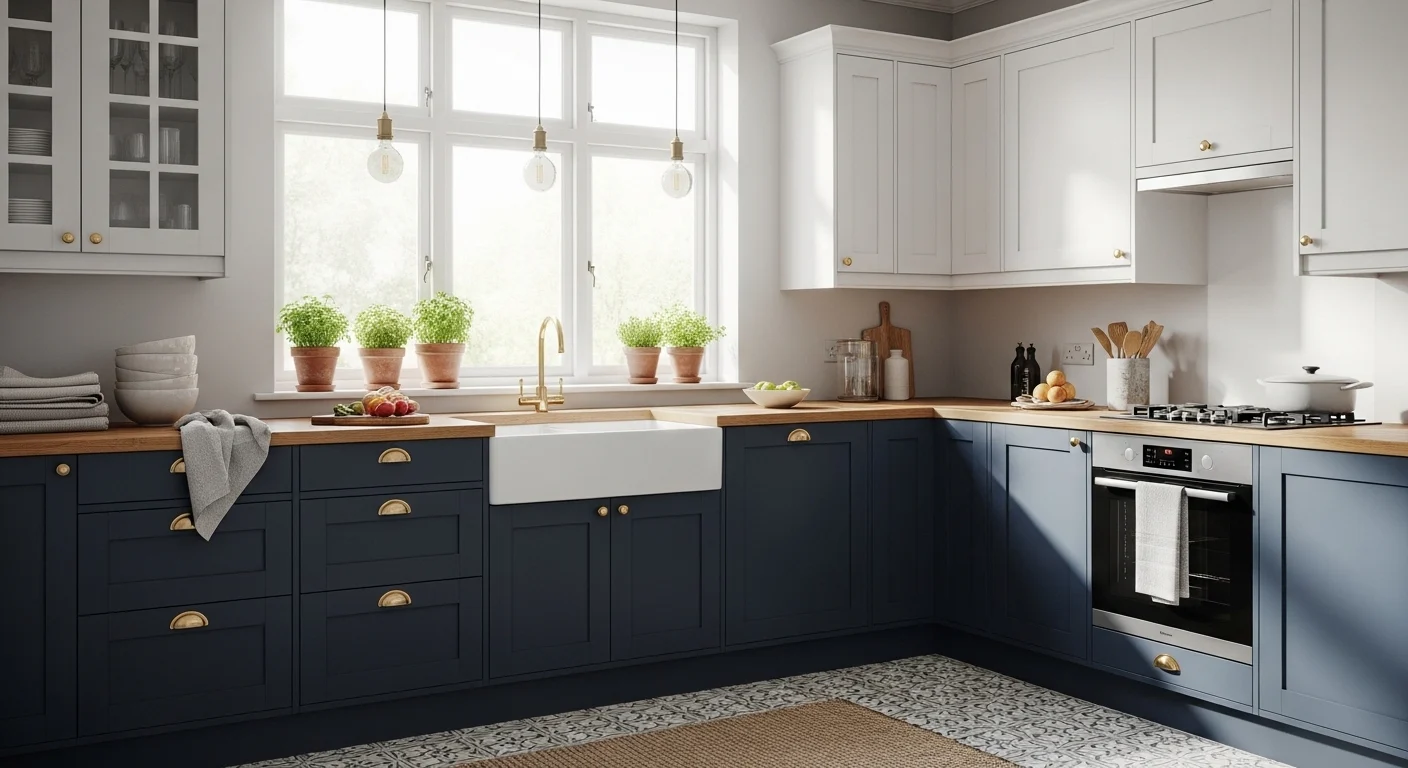
- Navy Lower, Crisp White Upper — two-tone kitchen cabinet ideas
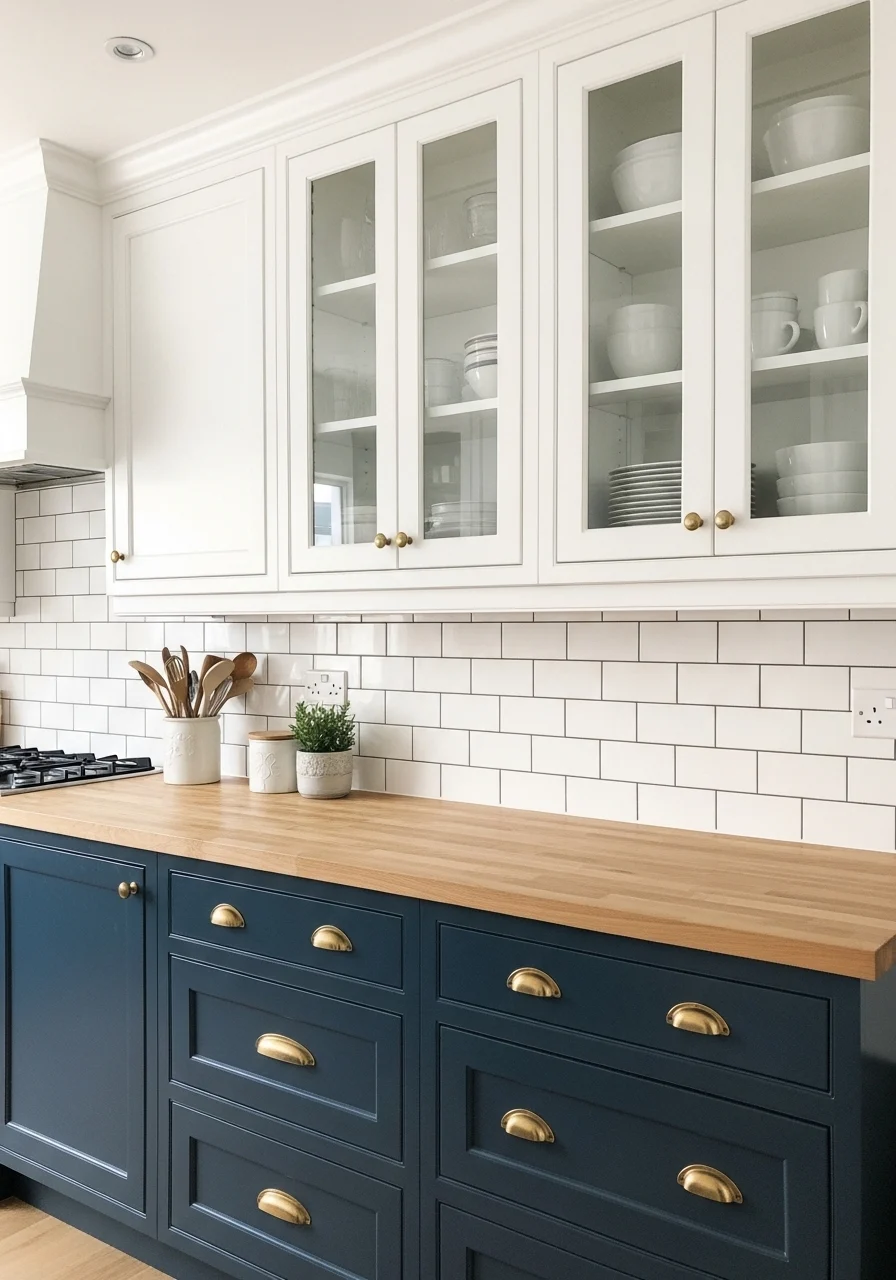
This navy and white combo feels classic and calm. The deep navy anchors the room. White uppers keep the ceiling line airy and bright. It works in coastal or modern homes. You’ll love this if you want contrast without heaviness. The vibe is coastal-meets-contemporary.
Key Elements (color schemes, hardware)
- Lower cabinets: satin deep navy paint (e.g., Hale Navy)
- Upper cabinets: semi-gloss crisp white
- Countertop: light oak butcher block or white quartz
- Backsplash: white subway tile, matte grout
- Hardware: warm brass cup pulls and bar handles
- Open shelving: floating oak shelves
- Lighting: brass pendant lights with warm bulbs
- Floor: light oak or soft gray tile
- Accessories: woven basket, potted herbs
- Finish: satin on lowers, semi-gloss on uppers
How to Achieve This Look (painting, cabinet hardware)
- Clean and degrease all cabinet faces.
- Sand lightly and prime both upper and lower doors.
- Paint lower cabinets navy in two thin coats.
- Paint uppers crisp white in two thin coats.
- Refinish butcher block or install quartz.
- Install brass hardware on lowers and simple pulls on uppers.
- Add floating oak shelves and style with dishware.
- Regrout or update backsplash if needed.
- Seal or finish tops to protect from wear.
How to Style / Use It
Show off navy lowers with open shelves full of white ceramics. Pair brass fixtures and warm wood for a cohesive look. Use simple textiles—linen towels, woven rug—to keep it soft. Maintain by wiping paint with gentle cleaner and waxing wood surfaces seasonally.
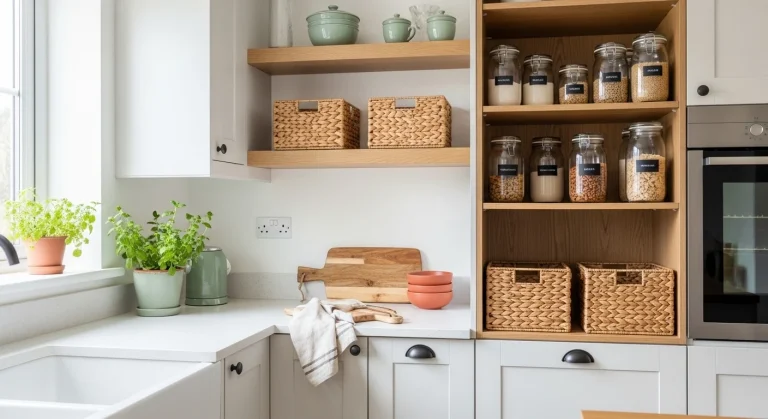
- Soft Sage Base, Cream Upper
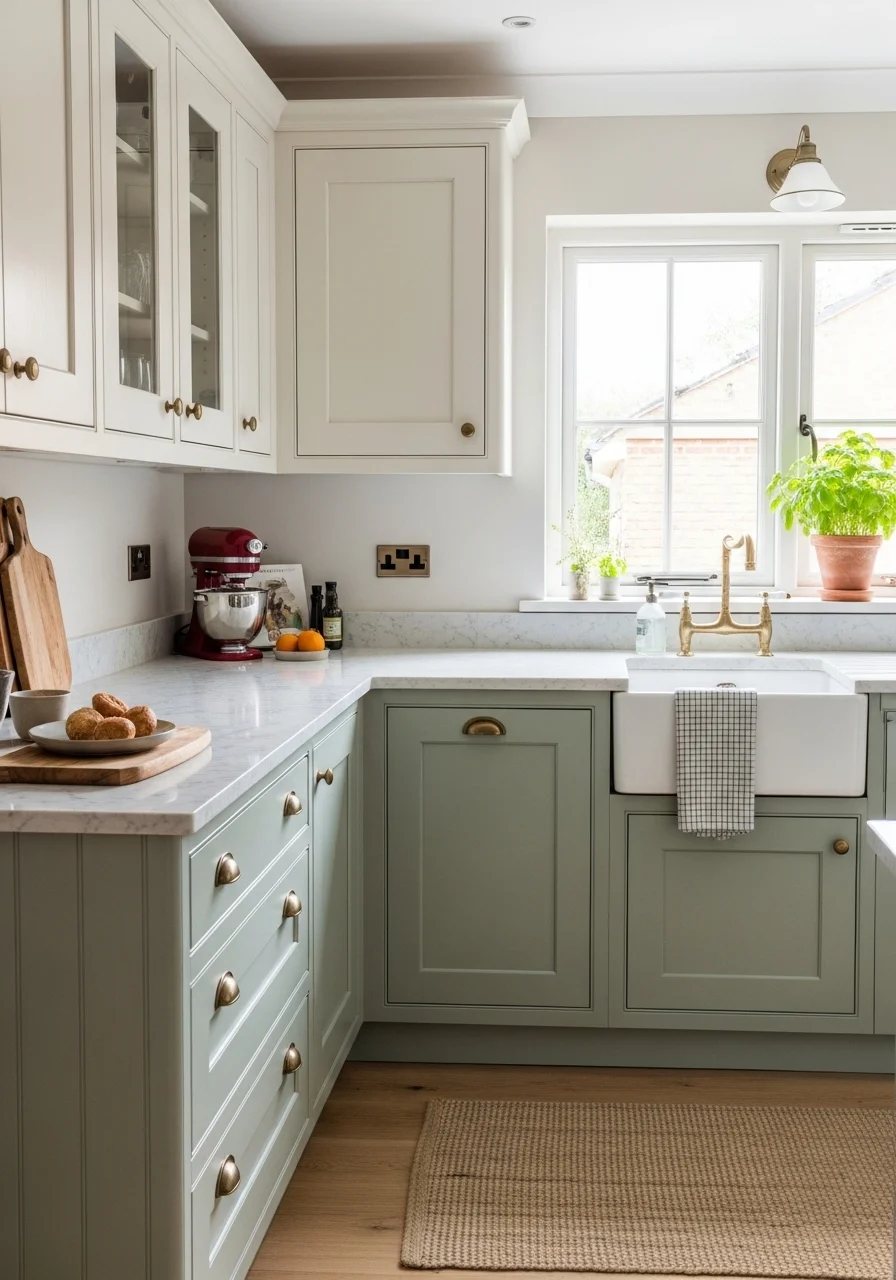
This soft sage and cream combo feels warm and grounded. The muted green adds personality without boldness. Cream uppers keep the space light. It suits farmhouse, cottage, or modern-traditional kitchens. You’ll feel calm and welcome every time you cook.
Key Elements (paint, textures)
- Lower cabinets: matte sage green
- Upper cabinets: warm cream semi-gloss
- Countertop: white marble-look quartz
- Sink: apron-front ceramic farmhouse sink
- Hardware: aged brass knobs and cup pulls
- Lighting: black or brass sconces
- Floor: warm-toned hardwood or terracotta-look tile
- Backsplash: neutral penny tile or subway tile
- Textiles: woven jute runner, linen towels
- Plants: herb pots on sill
- Open space: small butcher block accents
How to Achieve This Look (cabinet painting, styling)
- Remove doors and label each for rehang.
- Sand, prime, and fill any gaps or dents.
- Paint lowers with matte sage in even passes.
- Paint uppers cream, keep brush strokes even.
- Replace old hardware with brass knobs on lowers.
- Add apron sink and connect plumbing if needed.
- Lay or refresh flooring to warm tones.
- Install backsplash, grout in warm tint.
- Style with herbs, wooden chopping boards, and ceramics.
How to Style / Use It
Pair with warm metallics and natural wood accessories. Keep styling organic—stoneware mugs and woven baskets. Clean painted surfaces gently and touch-up chips if needed. Swap seasonal decor—citrus bowls in summer, wood accents in winter.
- Charcoal Base, Oak Upper
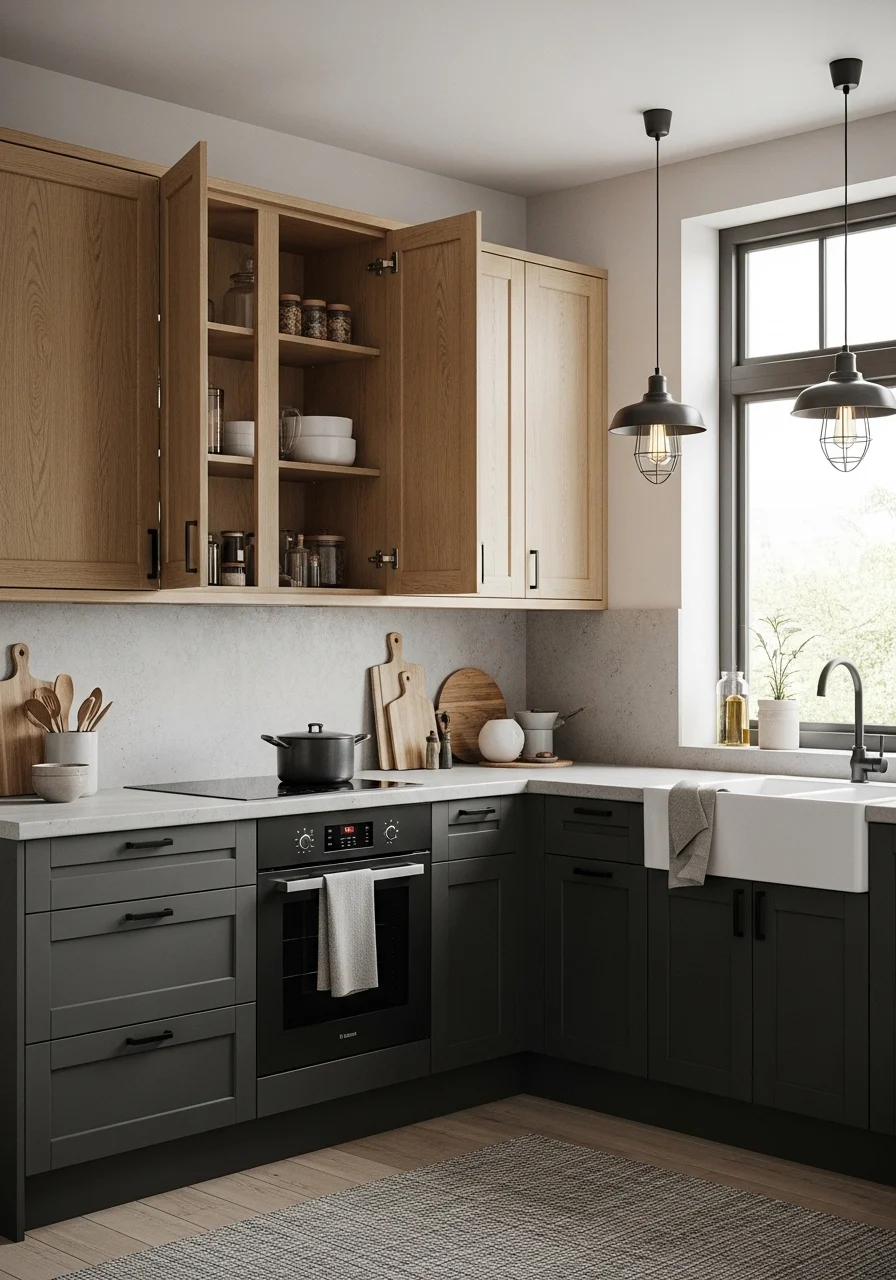
Dark lowers with natural oak uppers give a modern, balanced look. Charcoal adds depth. Oak introduces warmth and texture. It fits contemporary or industrial styles. You’ll love how the wood softens the dark base, making the room cozy.
Key Elements (materials, finishes)
- Lower cabinets: matte charcoal paint
- Upper cabinets: natural oak veneer or stained solid wood
- Countertop: concrete-look quartz or gray stone
- Hardware: matte black pulls and knobs
- Lighting: black metal pendants with warm bulbs
- Backsplash: large gray porcelain tile
- Floor: warm oak plank flooring
- Open shelving: oak to match uppers
- Decorative: copper accents, woven placemats
- Sink: undermount stainless or black composite
How to Achieve This Look (installation, staining)
- Choose charcoal paint with durable finish.
- Order or stain oak upper cabinet doors to match grain.
- Install lower cabinetry and ensure level.
- Fit oak uppers or open shelves, secure to studs.
- Install concrete-look countertop.
- Add matte black hardware throughout.
- Install large tile backsplash with dark grout.
- Add pendants and under-cabinet lighting.
- Style with warm textiles and copper accents.
How to Style / Use It
Highlight oak grain by keeping clutter minimal. Pair with black appliances or stainless steel. Use wood cutting boards and copper cookware for warmth. Protect oak uppers with occasional oiling or dusting.
- Two-Tone Shaker: Forest Green Base, Ivory Upper
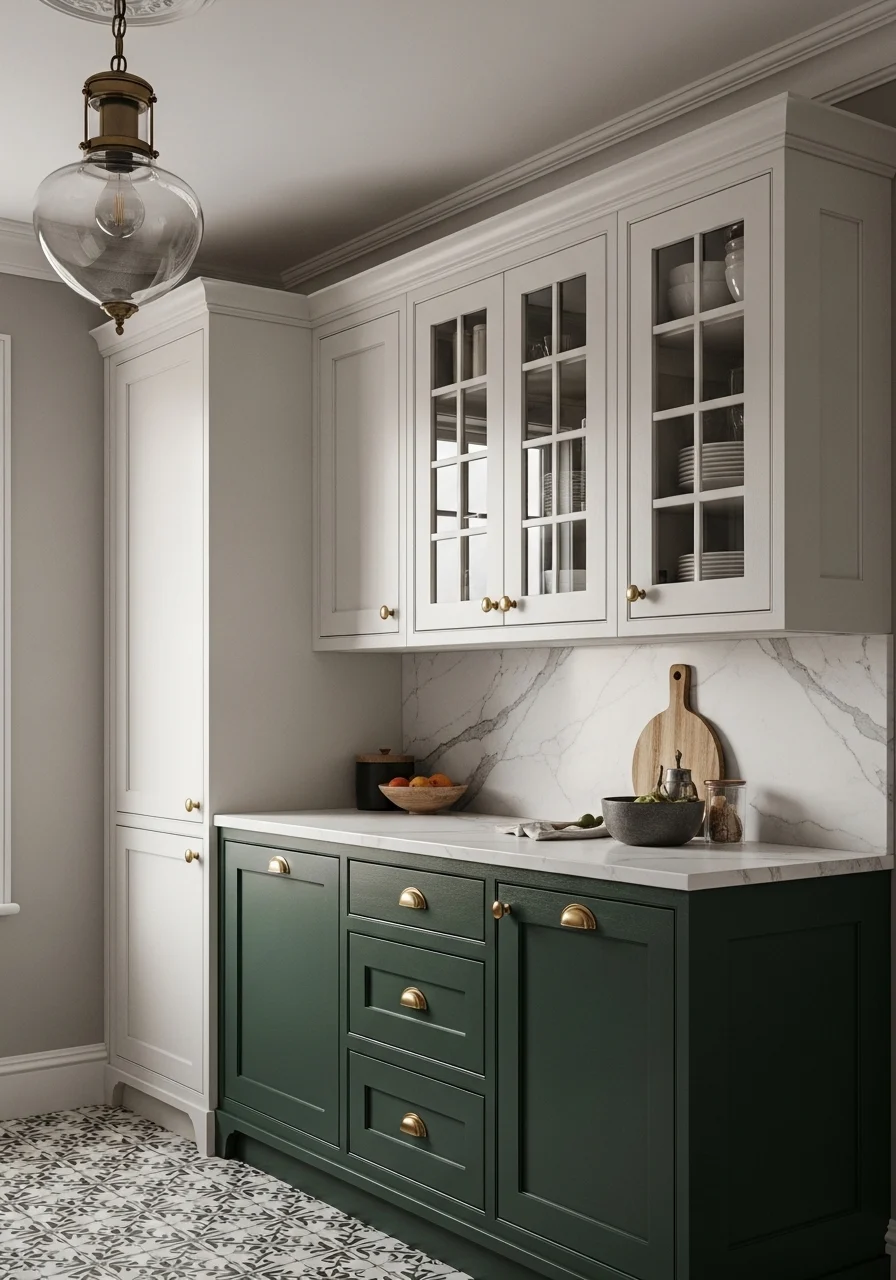
Shaker profiles look timeless with two-tone paint. Forest green lowers feel grounded. Ivory uppers keep the look refined. It suits period homes and modern classics. You’ll enjoy a look that’s both fresh and familiar.
Key Elements (styles, finishes)
- Cabinets: Shaker-style doors
- Lower paint: deep forest green, satin
- Upper paint: warm ivory, semi-gloss
- Countertop: honed marble or quartz
- Hardware: aged brass cup pulls and knobs
- Floor: encaustic or patterned cement tile
- Faucet: bridge style in brass
- Lighting: glass pendants or vintage shades
- Accessories: ceramic canisters, woven basket
- Trim: white crown molding for contrast
How to Achieve This Look (prep, painting)
- Remove doors and label each.
- Sand and prime shaker panels.
- Paint lowers forest green in thin coats.
- Paint uppers ivory, allow proper drying.
- Install marble or quartz counters.
- Add brass hardware and bridge faucet.
- Lay patterned tile floor or rugs.
- Install lighting and crown molding.
- Style with ceramics and brass accents.
How to Style / Use It
Let the flooring be a focal point against two-tone cabinets. Use white or cream dishware to echo uppers. Clean painted finishes with mild soap. Keep brass polished or let it age for character.
- Coastal Blues — two-tone kitchen cabinet ideas
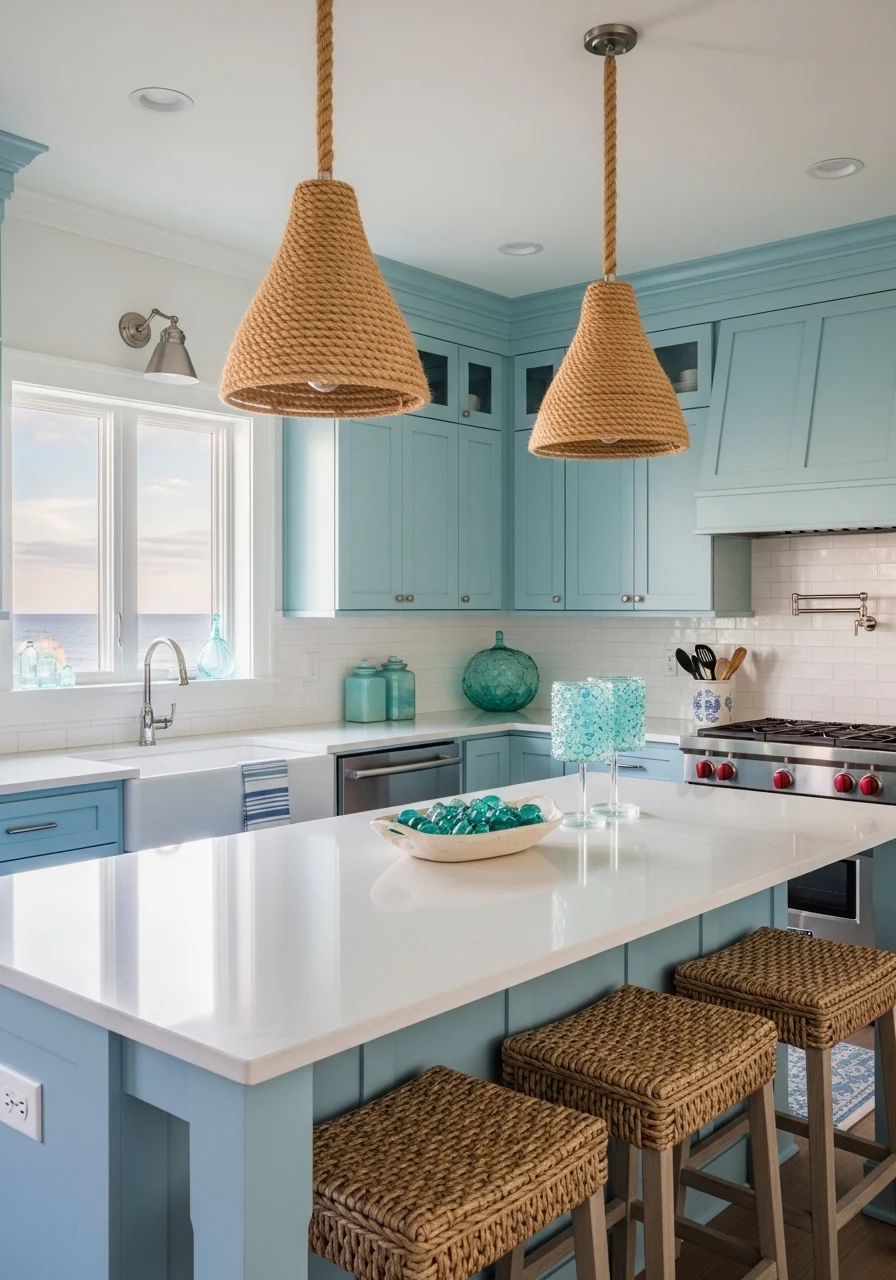
Powder blue and seafoam make a dreamy coastal pair. The lighter upper tone keeps things breezy. This two-tone kitchen cabinet idea brings seaside calm indoors. You'll feel like you’re in a bright beach cottage.
Key Elements (coastal elements)
- Lower cabinets: powder blue satin paint
- Upper cabinets: seafoam or pale aqua semi-gloss
- Countertop: white quartz or carrara marble
- Hardware: nickel or brushed brass
- Lighting: woven rope pendants
- Seating: wicker or rattan stools
- Backsplash: glass tile in soft blue hues
- Floor: bleached hardwood or light tile
- Accessories: baskets, seashell displays
- Plants: succulents or herbs in terracotta
How to Achieve This Look (painting, installation)
- Prep cabinets: remove doors and clean surfaces.
- Prime and paint lowers powder blue.
- Prime and paint uppers seafoam.
- Install white quartz or marble counters.
- Fit rope-wrapped pendants above island.
- Add wicker stools and rattan baskets.
- Lay glass tile backsplash in soft blues.
- Replace hardware with brushed finishes.
- Style with beach-inspired accessories.
How to Style / Use It
Keep shelves minimally styled with natural textures. Rotate seasonal decor like navy accents in summer. Use moisture-resistant finishes near sinks. Wipe quartz regularly to keep it bright.
- Matte Black Lower, Gloss White Upper with Marble Counter
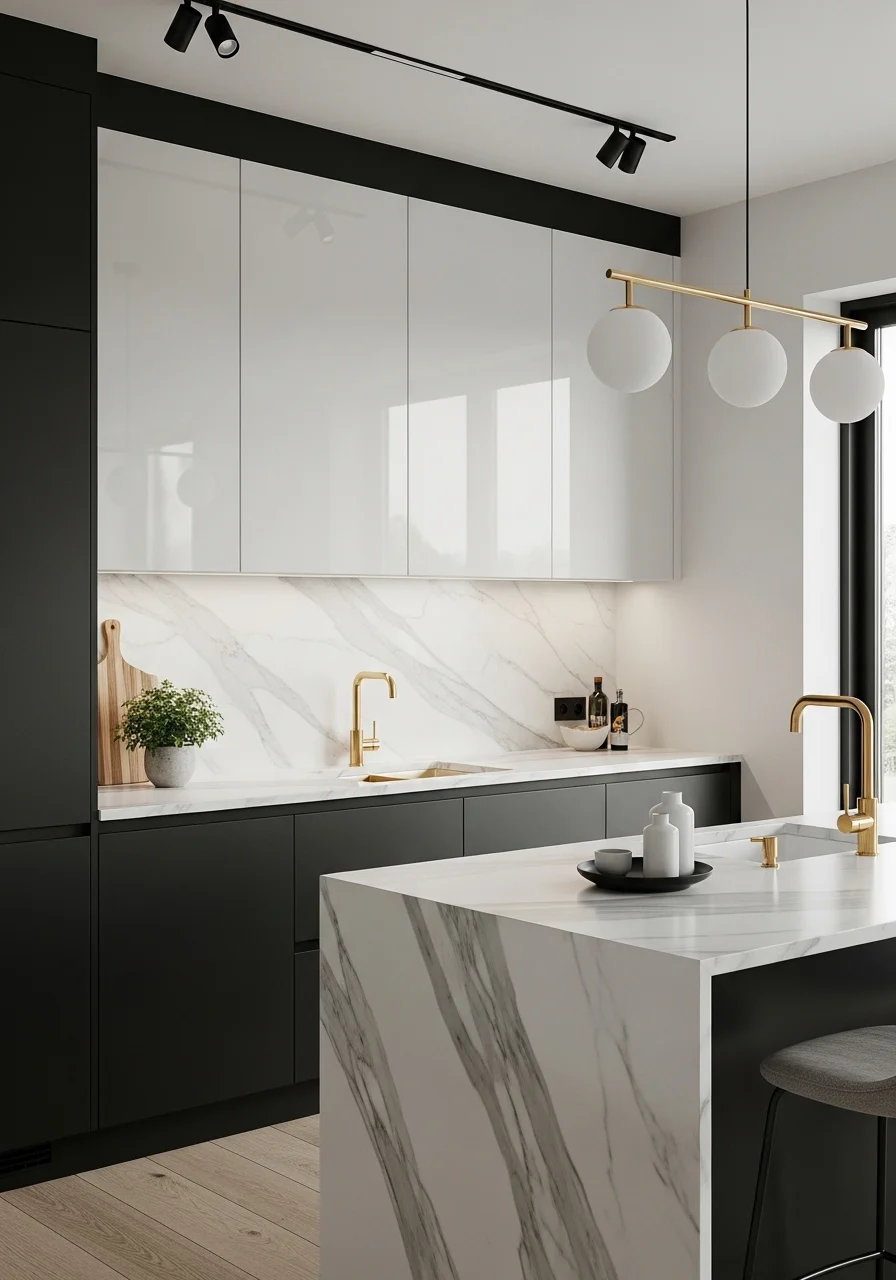
Matte black and gloss white is bold and chic. Black lowers anchor the room. Gloss uppers bounce light back into space. Marble counters add elegance. You’ll get a high-contrast look that feels polished.
Key Elements (finishes, textures)
- Lower paint: matte black
- Upper finish: high-gloss white
- Countertop: veined marble or marble-look quartz
- Hardware: polished brass or gold
- Sink: integrated white or stainless
- Lighting: slim linear pendant in brass
- Floor: light gray porcelain or pale wood
- Backsplash: matching marble slab
- Seating: black leather stools
- Trims: minimalistic, concealed hinges
How to Achieve This Look (painting, installation)
- Degrease cabinets and sand as needed.
- Prime both upper and lower doors.
- Apply matte black to lowers in even coats.
- Apply high-gloss to uppers carefully to avoid brush marks.
- Install marble or matching quartz slab backsplash.
- Fit polished brass hardware and faucet.
- Add linear pendant and soft under-cabinet lighting.
- Place black leather stools at island.
- Seal marble if natural stone is used.
How to Style / Use It
Keep countertops uncluttered to highlight marble. Pair with brass accents and modern art. Use gentle cleaners on high-gloss surfaces to avoid scratches. Choose a rug to soften the floor near the sink.
- Two-Tone Rustic: Barn Red Lower, Cream Upper
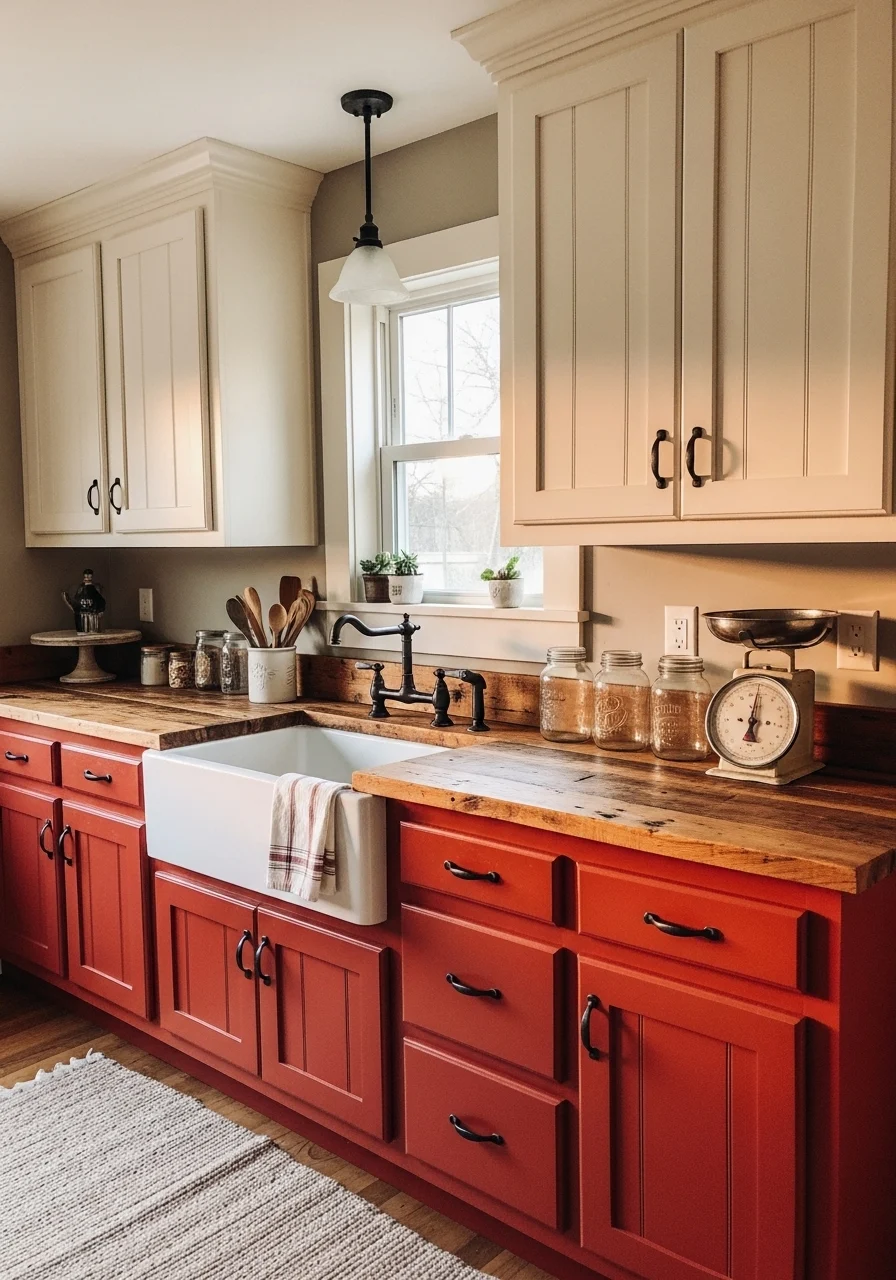
Barn red lowers lend warmth and a lived-in feel. Cream uppers give balance and brightness. The look fits country or rustic kitchens. You’ll get a cozy, welcoming space for family cooking.
Key Elements (rustic details)
- Lower paint: muted barn red, satin
- Upper paint: warm cream
- Countertop: reclaimed wood or butcher block
- Hardware: wrought iron or oil-rubbed bronze
- Sink: farmhouse apron sink in white
- Lighting: vintage pendant or cage fixtures
- Floors: wide-plank hardwood
- Accessories: mason jars, enamelware
- Backsplash: beadboard or white subway tile
- Open shelves: reclaimed wood
How to Achieve This Look (refinish, install)
- Sand and prime cabinet faces.
- Paint lowers barn red in two coats.
- Paint uppers cream and allow full dry time.
- Install reclaimed wood counters and seal.
- Replace hardware with wrought iron pulls.
- Fit farmhouse sink and connect plumbing.
- Install beadboard backsplash or subway tile.
- Hang vintage pendants for warm light.
- Style with enamelware and mason jars.
How to Style / Use It
Display earthenware and vintage tools on open shelves. Keep wood sealed to withstand water. Use warm-toned cleaning products to avoid fading paint. Swap seasonal textiles—plaid in winter, light linens in summer.
- Monochrome Gray Gradient: Dark Lower, Mid Gray Upper
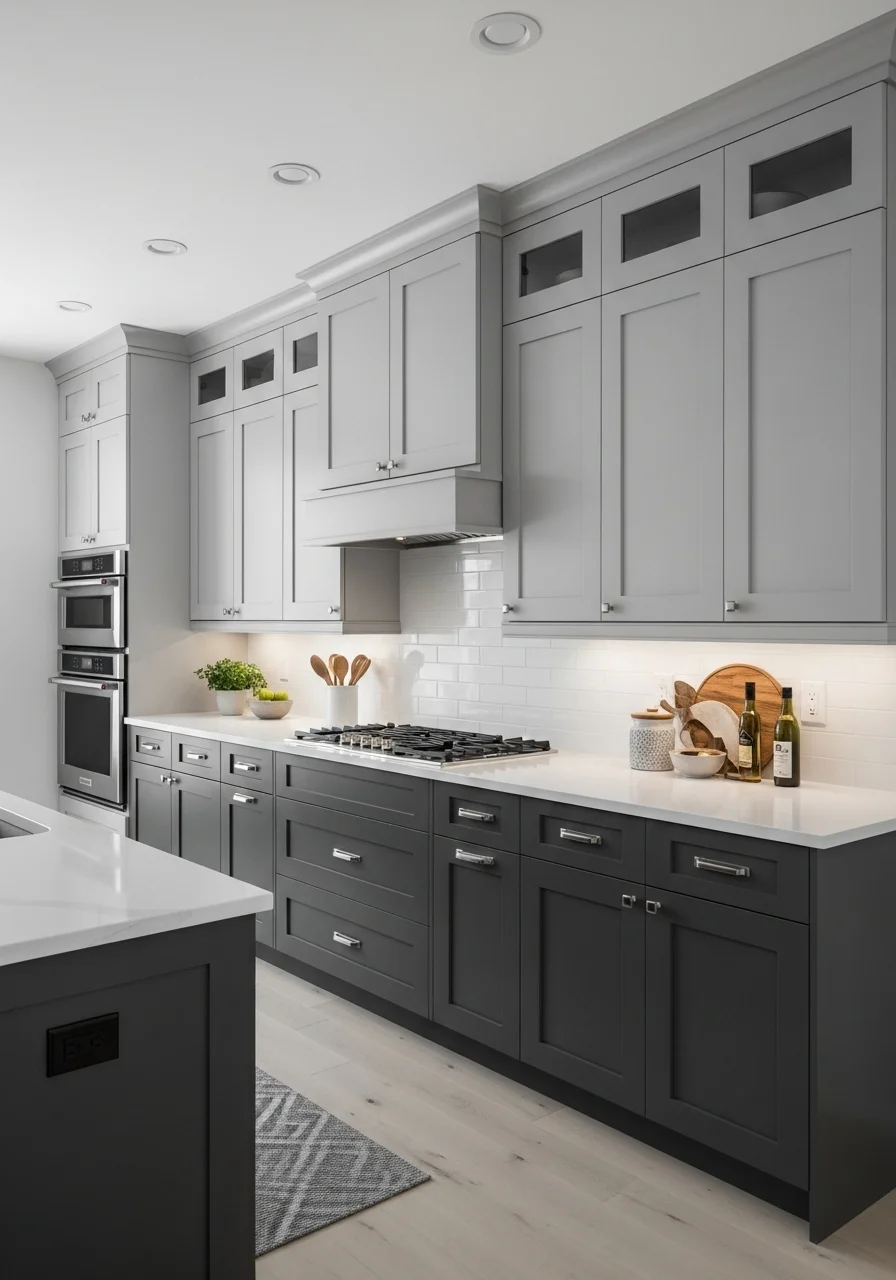
A gray gradient reads modern and subtle. Dark lower cabinets ground the space. Mid-gray uppers blend softly with walls. This two-tone approach keeps cohesion while adding depth. You’ll appreciate the calm, urban vibe.
Key Elements (tones, materials)
- Lower paint: graphite or charcoal gray
- Upper paint: mid-gray with warm undertone
- Countertop: white quartz
- Hardware: stainless steel or chrome
- Appliances: stainless steel finish
- Lighting: recessed with warm LEDs
- Floor: concrete-look tile or gray hardwood
- Backsplash: matte subway tile in light gray
- Textiles: gray woven runner
- Accents: black planters, metal trays
How to Achieve This Look (painting, accessories)
- Choose paint shades with matching undertones.
- Prep, prime, and paint lowers charcoal.
- Paint uppers mid-gray evenly.
- Install white quartz counters and chrome fixtures.
- Replace hardware with streamlined stainless pulls.
- Fit backsplash in light gray mat tiles.
- Add under-cabinet lighting to enhance contrast.
- Style with metal accents and black planters.
- Keep surfaces minimal for modern look.
How to Style / Use It
Mix textures—matte cabinets, glossy quartz—to avoid flatness. Pair with warm wood accents to soften cool grays. Use microfiber cloths for cleaning; avoid harsh abrasives. Bring in greenery to brighten the palette.
- Classic Two-Tone: Black Bottom, White Top — two-tone kitchen cabinet ideas
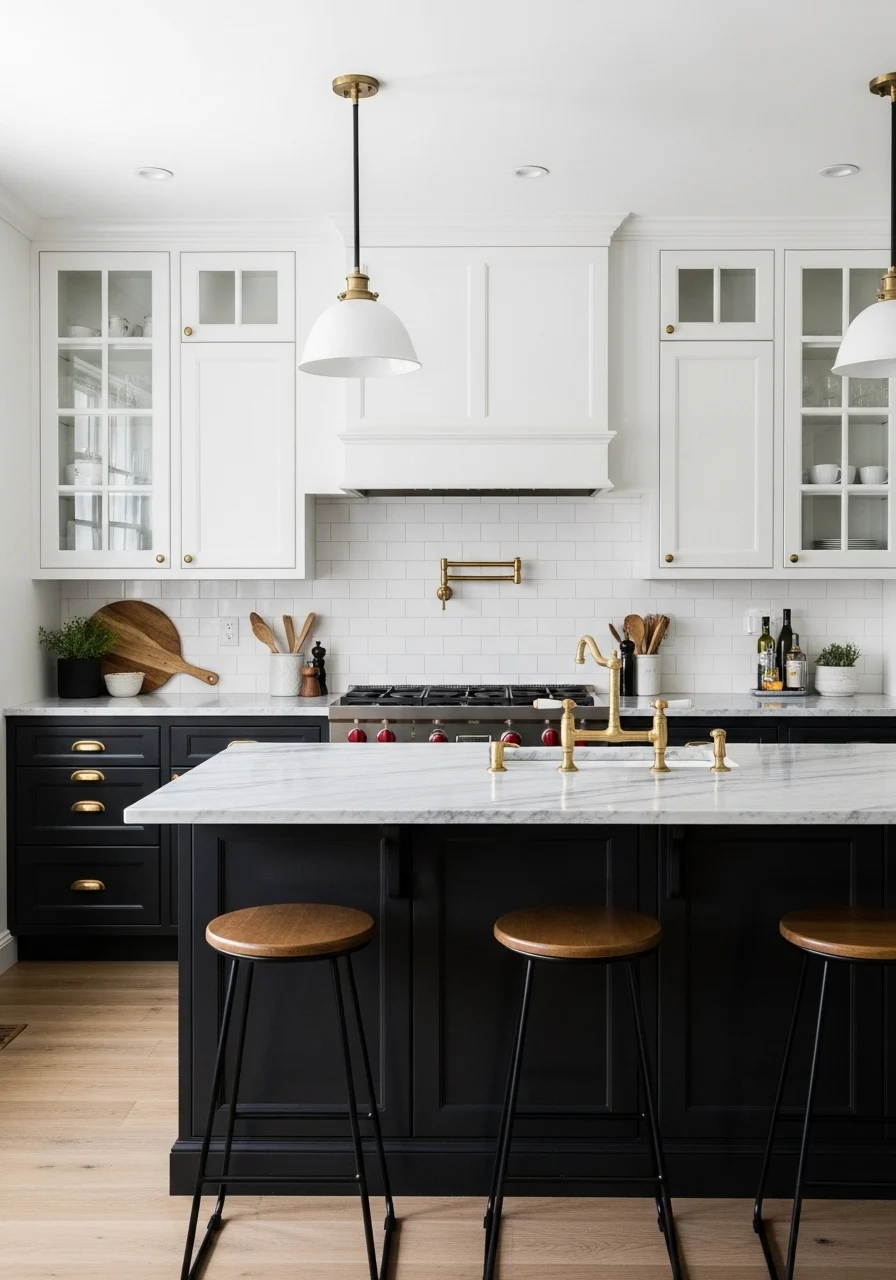
Black lowers and white uppers is a classic two-tone kitchen cabinet idea. It’s high-contrast, yet timeless. Marble and brass make the look feel elegant. You’ll enjoy a kitchen that reads both modern and classic.
Key Elements (classic combo)
- Lower cabinets: deep black, matte or satin
- Upper cabinets: bright white, semi-gloss
- Countertop: Carrara marble or white quartz
- Hardware: aged brass or oil-rubbed bronze
- Backsplash: classic subway tile with light grout
- Lighting: brass pendants or glass shades
- Flooring: warm hardwood or patterned tile
- Sink: farmhouse or undermount stainless
- Decor: simple ceramics and wooden boards
- Trim: white crown molding
How to Achieve This Look (painting, finishing)
- Strip or sand cabinet doors lightly.
- Prime and paint lower doors black.
- Prime and paint upper doors white.
- Install marble or quartz countertops.
- Add brass hardware and vintage-style faucet.
- Lay or refresh subway tile backsplash.
- Install pendant lighting above island.
- Re-hang doors and align hinges carefully.
- Style minimally with wood cutting boards.
How to Style / Use It
Use black lowers to hide scuffs near the floor. White uppers keep dishes visible and bright. Maintain marble by sealing and wiping spills quickly. Add patterned rugs for warmth and texture.
- Pastel Play: Blush Lower, Soft Gray Upper
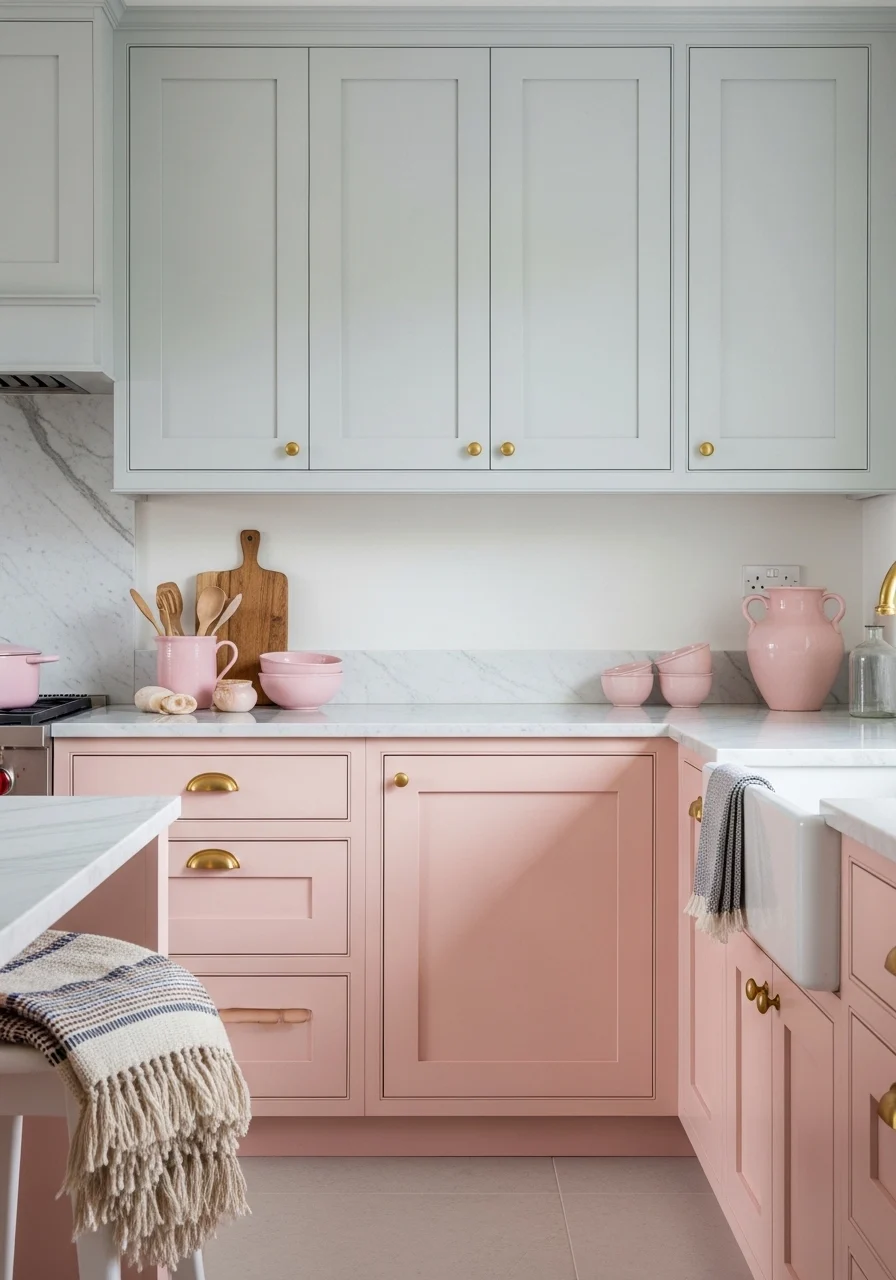
Blush and soft gray feels fresh and playful. The blush adds personality without being loud. Gray uppers keep the palette grounded. This works if you want a soft, contemporary look. You’ll notice warmth and subtle charm.
Key Elements (colors, textures)
- Lower paint: muted blush pink, satin
- Upper paint: dove gray semi-gloss
- Countertop: white marble-look quartz
- Hardware: mixed brass knobs and simple pulls
- Lighting: glass or brass pendants
- Floor: pale oak or neutral tile
- Backsplash: white herringbone tile
- Decor: pastel ceramics, vintage glass
- Textiles: linen curtains and seat cushions
- Accents: small plants and brass trays
How to Achieve This Look (paint, accessorize)
- Prep and prime cabinet surfaces.
- Paint lowers in two thin coats of blush.
- Paint uppers in dove gray.
- Install white quartz counters and backsplash.
- Add mixed brass hardware for interest.
- Hang glass or brass pendants.
- Add pastel dishware to open shelves.
- Place woven textiles to soften seating.
- Lightly distress edges for a lived-in feel if desired.
How to Style / Use It
Pair with warm metals and natural wood. Use pastel ceramics as decor and for function. Wipe down painted surfaces with diluted dish soap. Swap textiles seasonally for updates.
- Walnut Veneer Lower, Matte White Upper
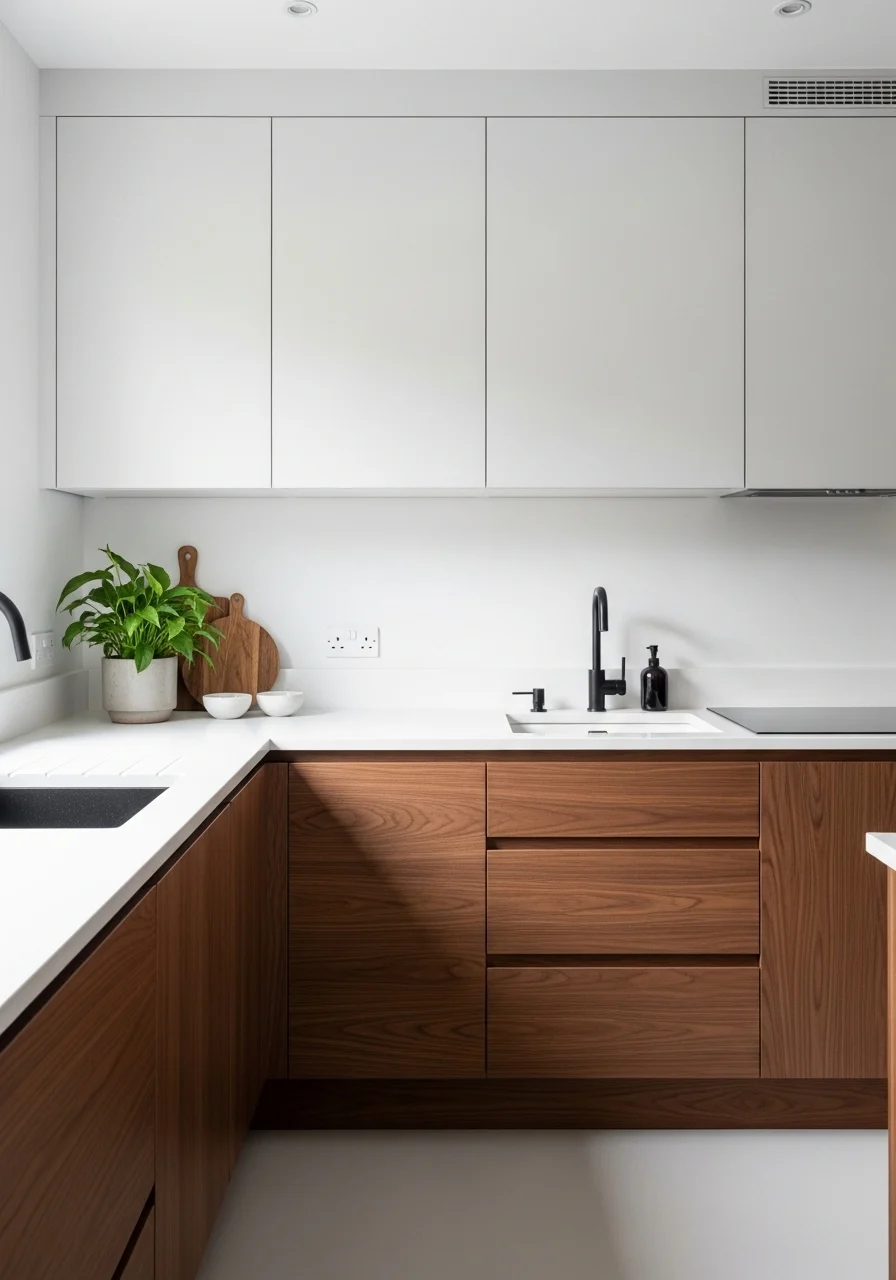
Walnut veneer lowers add natural grain and warmth. Matte white uppers keep the palette light. The feeling is Scandinavian and calm. You’ll get texture without loud color.
Key Elements (wood, tones)
- Lower material: walnut veneer or stained oak
- Upper finish: matte white paint
- Countertop: white quartz with subtle veining
- Hardware: matte black slim pulls
- Sink: black composite or stainless
- Lighting: slim black pendants or track
- Floor: pale natural wood planks
- Backsplash: white tile or simple plaster
- Accessories: ceramic planters, wooden spoons
- Finish: clear coat to protect veneer
How to Achieve This Look (veneer care, install)
- Select walnut veneer with consistent grain.
- Install lower cabinets and seal edges.
- Paint uppers matte white after priming.
- Fit white quartz counters and secure backsplashes.
- Add matte black hardware for contrast.
- Install lighting and under-cabinet LEDs.
- Oil or seal veneer to protect from moisture.
- Style minimally with plants and wood objects.
- Wipe veneer with damp cloth; avoid harsh cleaners.
How to Style / Use It
Let walnut grain be a focal point with minimal decor. Pair with black accents for a modern twist. Maintain veneer by avoiding standing water. Add rugs for warmth in colder months.
- Lemon Base, Chalk White Upper
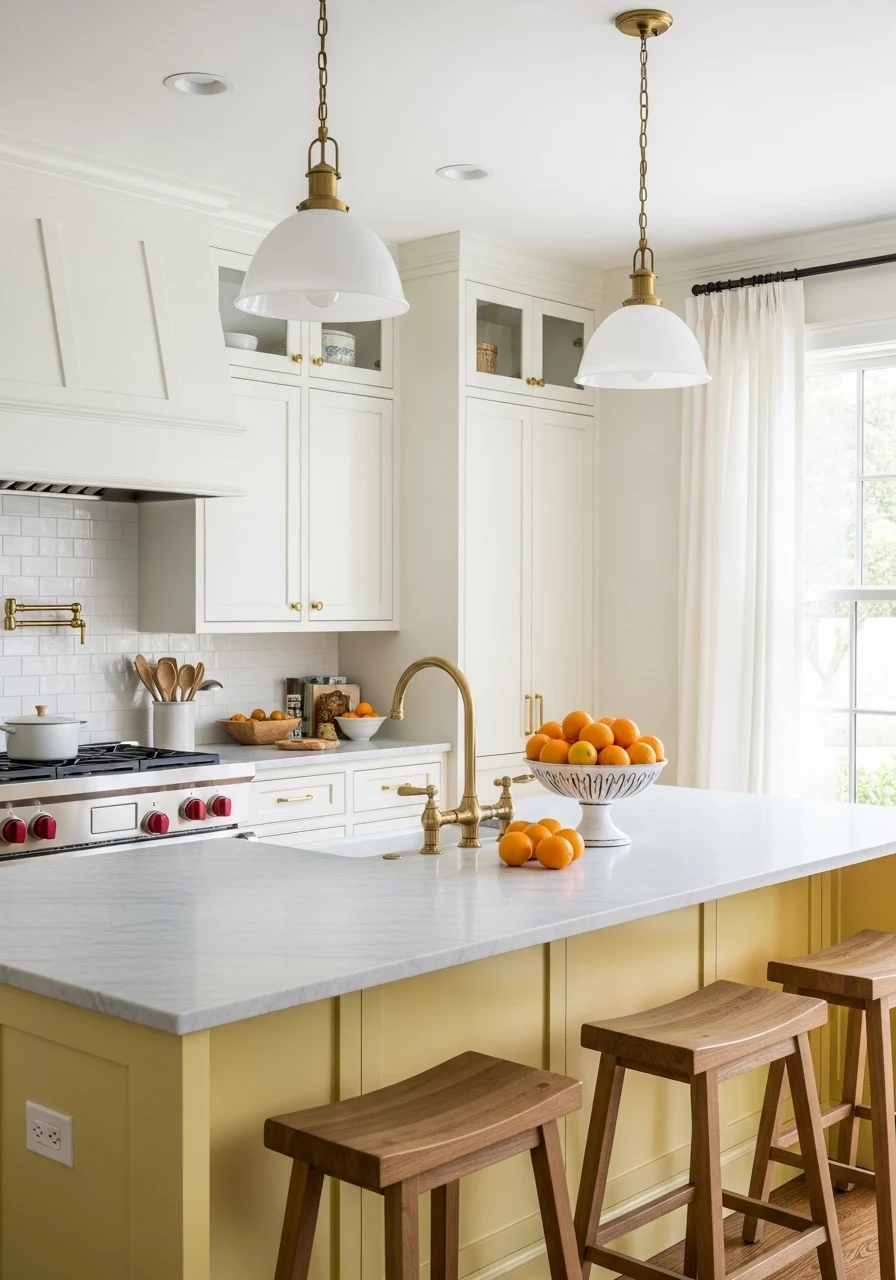
Lemon yellow brings sunshine to your kitchen. Chalk white uppers balance brightness. This two-tone idea suits cheerful, cottage, or retro spaces. You’ll smile walking in each morning.
Key Elements (bright colors)
- Lower paint: muted lemon yellow, satin
- Upper paint: chalk white semi-gloss
- Countertop: pale marble-look quartz
- Hardware: brushed nickel or brass
- Lighting: light rattan or white pendants
- Floor: light oak or whitewashed tile
- Backsplash: white gloss tile or beadboard
- Accessories: citrus bowls, wooden utensils
- Textiles: gingham or linen in neutral tones
- Plants: small citrus or herb pots
How to Achieve This Look (paint, accessories)
- Prep cabinets thoroughly and prime.
- Paint lowers lemon yellow in even coats.
- Paint uppers chalk white.
- Install pale quartz countertops.
- Replace hardware with brushed finishes.
- Hang rattan or white pendants.
- Style with citrus bowls and wooden utensils.
- Add herb pots to the window sill.
- Keep countertops clear to let color pop.
How to Style / Use It
Use lemon as an accent rather than overwhelming. Swap citrus decor seasonally. Clean painted surfaces using mild soap to preserve color. Add soft textiles to balance the bright tone.
- Slate Blue Bottom, Warm White Upper
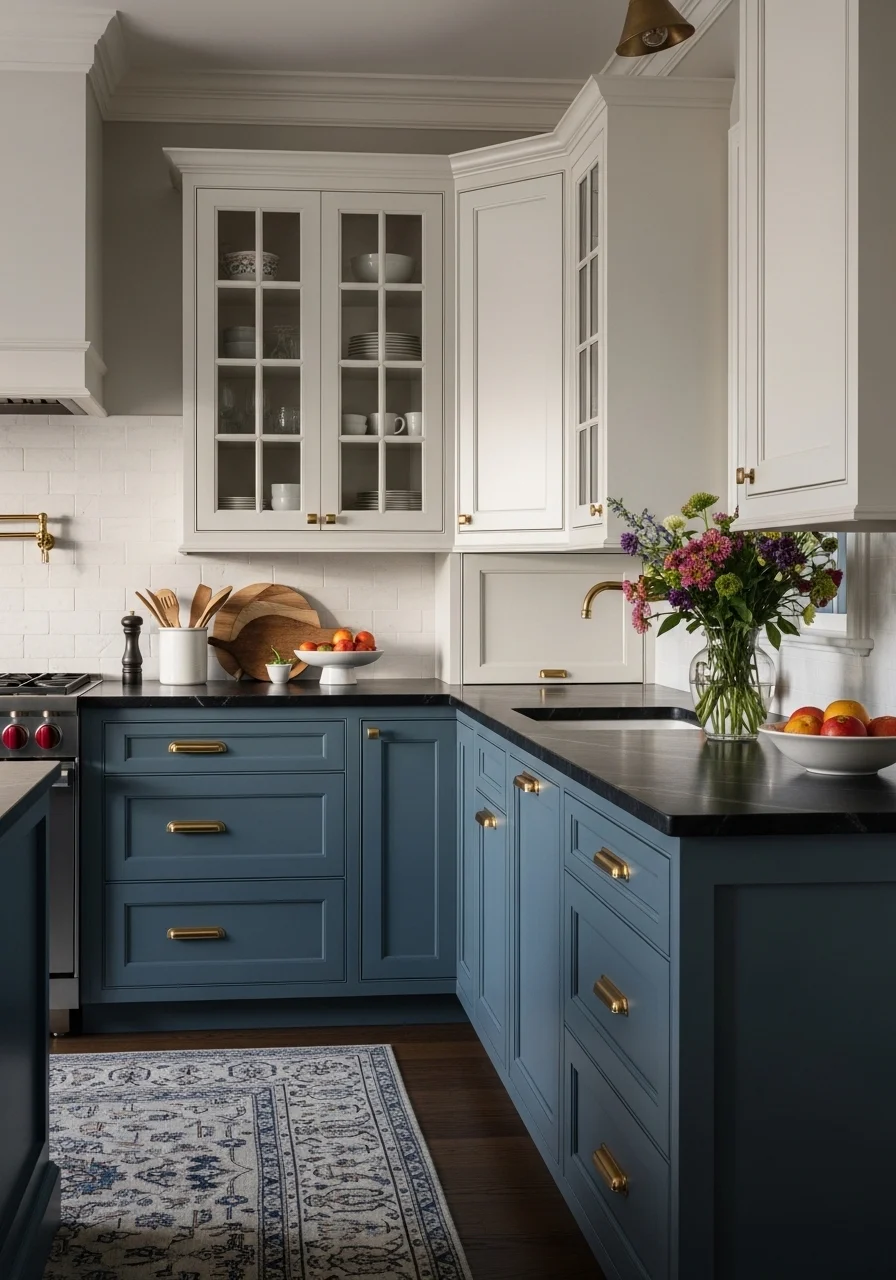
Slate blue base feels grounded and modern. Warm white uppers bring a soft contrast. This pair suits many architectural styles. You’ll get a sophisticated, approachable kitchen.
Key Elements (tones, accents)
- Lower paint: slate blue, low-sheen finish
- Upper paint: warm white semi-gloss
- Countertop: soapstone or dark quartz
- Hardware: brushed brass or antique brass
- Lighting: mixed brass and glass pendants
- Floor: mid-tone hardwood
- Backsplash: handmade tile in warm white
- Accessories: earthenware vases, linen towels
- Sink: deep single-basin in stainless or black
- Trim: white or warm white to match uppers
How to Achieve This Look (paint, countertop)
- Choose slate blue with warm undertones.
- Prime and paint lowers in two coats.
- Paint uppers warm white.
- Install soapstone or dark quartz counters.
- Add brass hardware and warm lighting.
- Install warm white backsplash tiles.
- Place patterned rug for texture.
- Style with fresh flowers and earthenware.
- Maintain soapstone with periodic oiling.
How to Style / Use It
Pair slate blue with brass and wood for warmth. Use rugs to anchor the space. Clean soapstone with stone cleaner and re-oil as needed. Swap flowers and textiles seasonally for fresh looks.
- Mint Green Lower, Gloss White Upper with Open Shelves
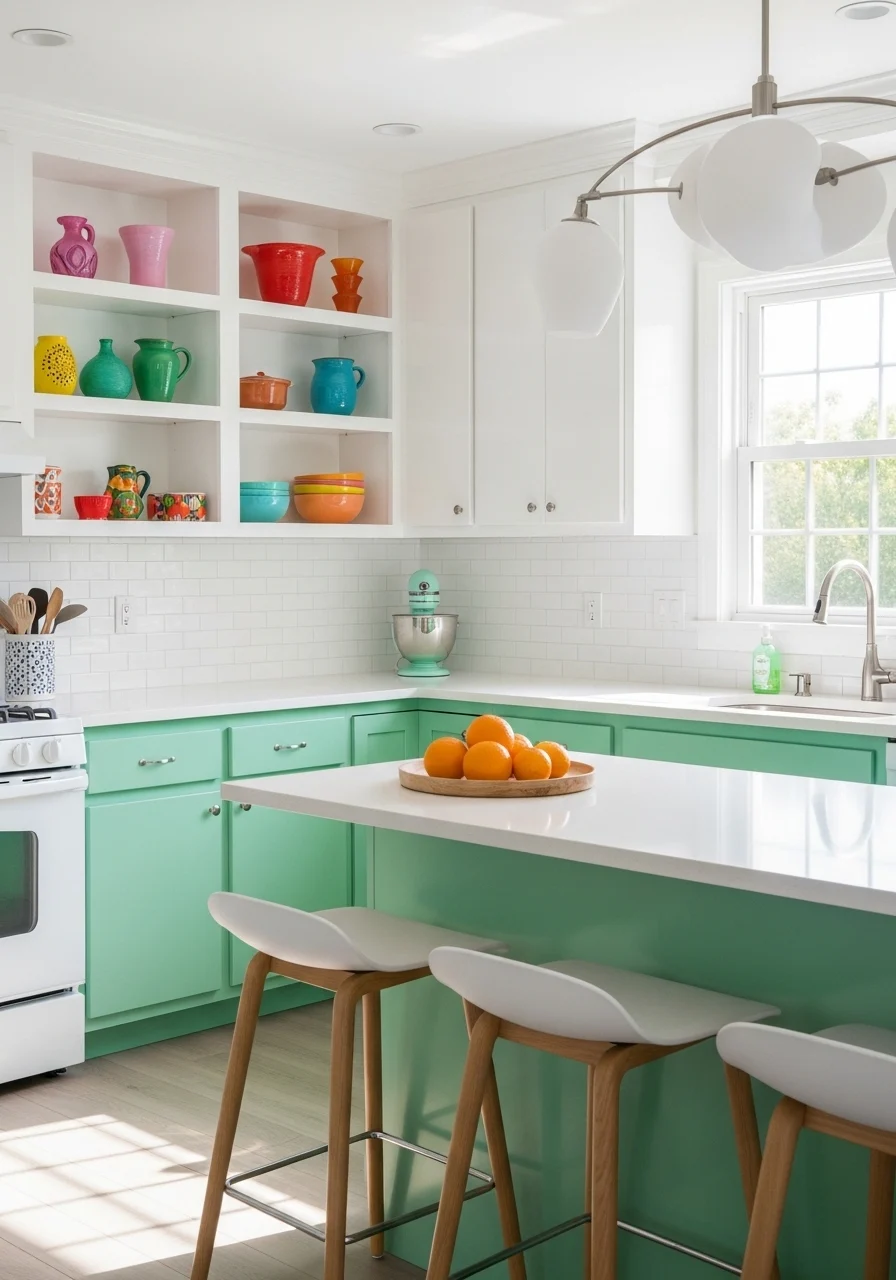
Mint green lowers feel cheerful and modern. Gloss white uppers and open shelves keep the space airy. This two-tone idea is playful yet practical. You’ll love the spring-like feel year-round.
Key Elements (retro-modern)
- Lower paint: mint green satin
- Upper finish: gloss white
- Open shelves: white or light wood
- Countertop: white laminate or quartz
- Hardware: chrome or nickel pulls
- Lighting: mid-century pendants
- Floor: pale wood or terrazzo-look tile
- Decor: colorful ceramics and glassware
- Seating: mid-century bar stools
- Plants: trailing ivy or pothos
How to Achieve This Look (shelving, installation)
- Prep and paint lowers mint green.
- Paint uppers gloss white carefully for mirror finish.
- Install open shelves and secure to studs.
- Add white counters and chrome hardware.
- Fit mid-century lighting and stools.
- Style open shelves with colorful ceramics.
- Add trailing plants to soften lines.
- Keep shelves organized to avoid clutter.
- Wipe gloss surfaces with soft cloth.
How to Style / Use It
Use open shelves for everyday dishware to keep convenience. Mix ceramics by color family for cohesion. Dust shelves regularly to maintain brightness. Swap decor seasonally for new pops of color.
- Two-Tone Minimalist: Soft Greige Lower, White Upper
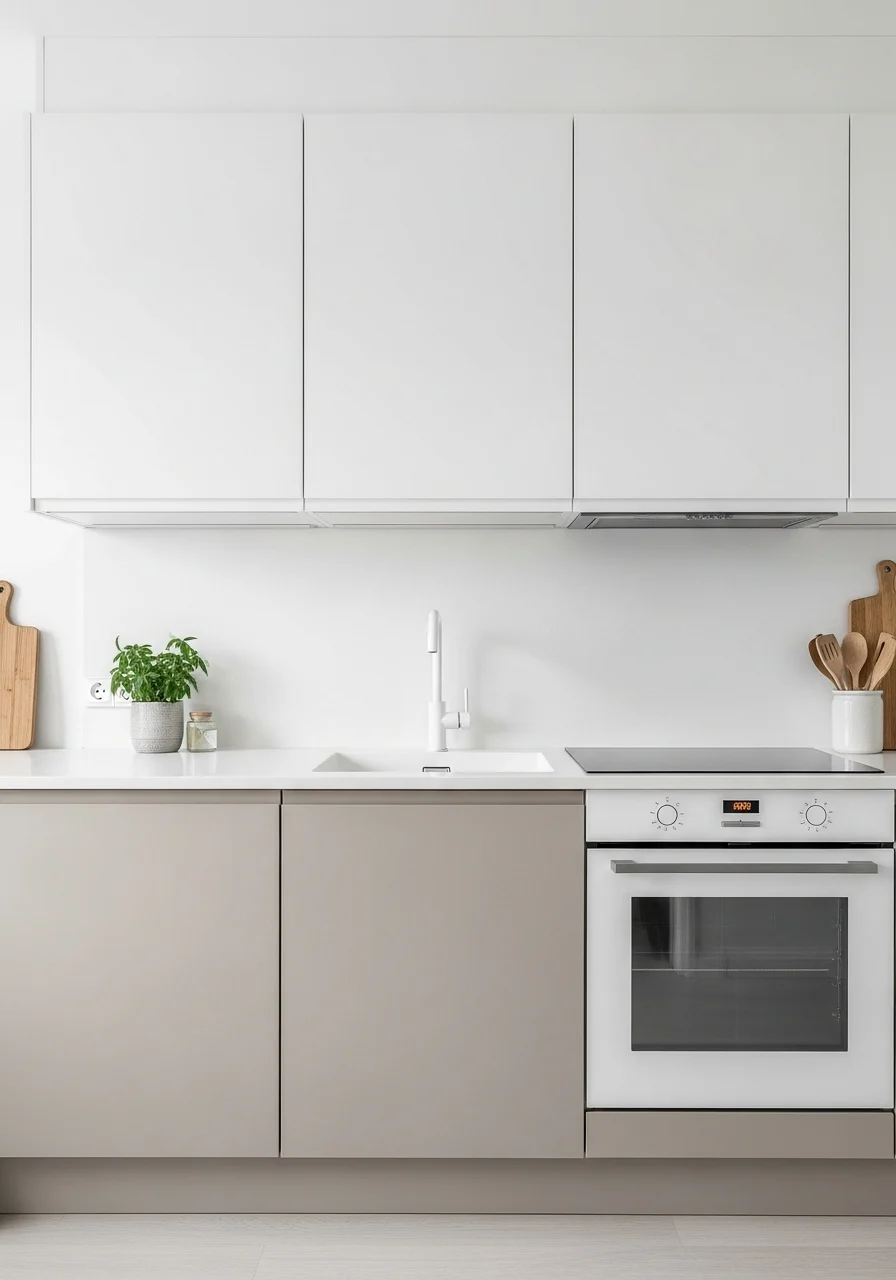
Soft greige lowers with white uppers achieve a subtle, minimalist look. Greige adds warmth without color intensity. White uppers maintain brightness. This two-tone idea suits pared-back modern homes.
Key Elements (minimal tones)
- Lower paint: soft greige, low-sheen
- Upper paint: clean white semi-gloss
- Countertop: seamless white solid surface
- Hardware: concealed pulls or slim black handles
- Appliances: integrated panels
- Lighting: recessed and subtle pendant
- Floor: pale wood or neutral tile
- Backsplash: full-height white slab
- Decor: minimal ceramics and single-stem vase
- Trim: square edge, simple lines
How to Achieve This Look (streamlined install)
- Choose greige with neutral undertone.
- Prep and paint lowers in even coats.
- Paint uppers white for clean contrast.
- Install solid surface counter and full-height backsplash.
- Replace visible hardware with concealed pulls as needed.
- Fit integrated appliances and aligned panels.
- Add subtle lighting and one statement pendant.
- Style minimally with single-stem vase.
- Maintain with soft, non-abrasive cleaners.
How to Style / Use It
Keep surfaces uncluttered to show seam-free lines. Use hidden storage solutions to maintain minimal aesthetic. Clean regularly to preserve the seamless look. Add seasonal natural accents for a gentle change.
- Sky Blue Upper, Rich Walnut Lower
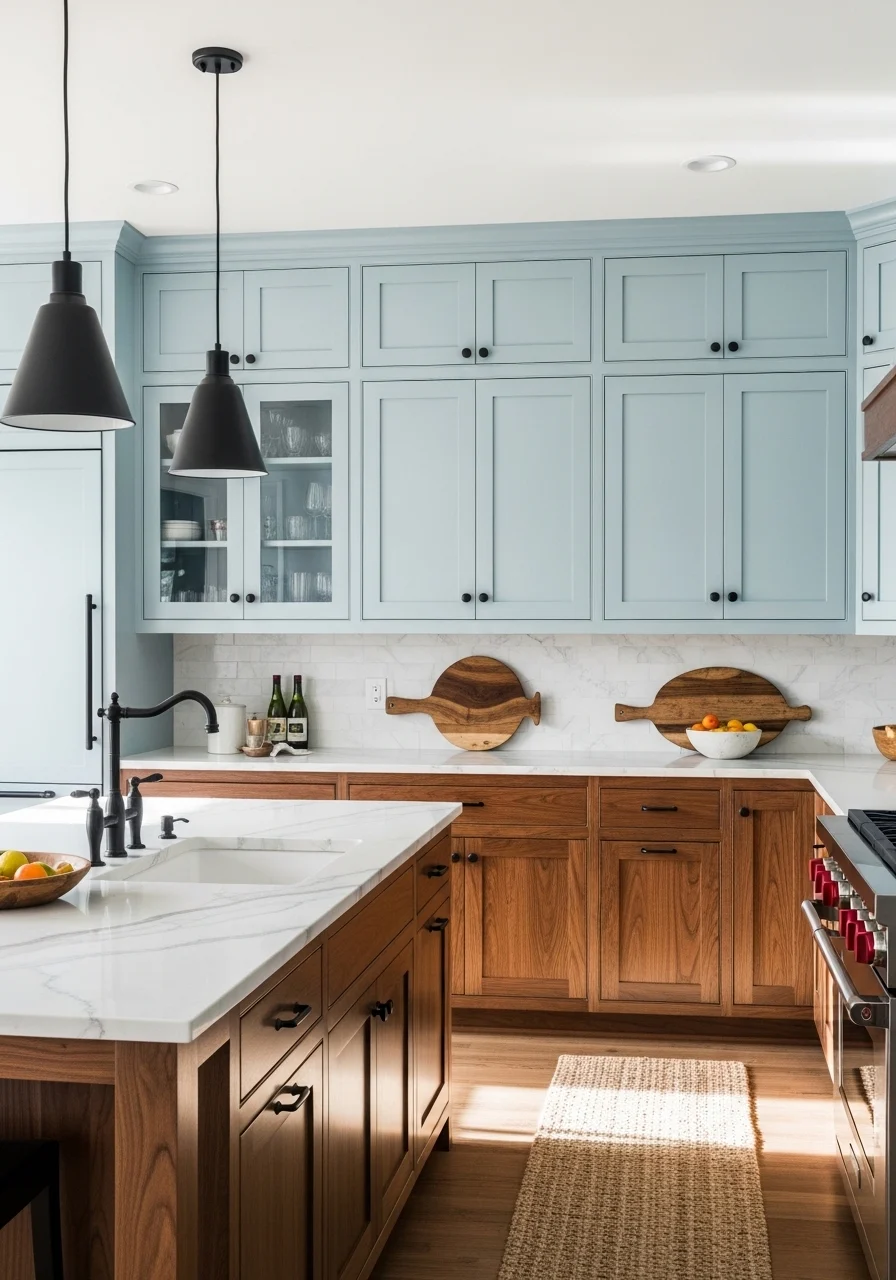
Sky blue uppers feel light and airy. Rich walnut lowers add depth and luxury. This two-tone pairing balances brightness with warmth. You’ll get a layered, inviting kitchen full of texture.
Key Elements (balance, materials)
- Upper paint: soft sky blue, semi-gloss
- Lower finish: rich walnut veneer
- Countertop: white marble or quartz
- Hardware: matte black pulls
- Lighting: warm brass or black pendants
- Floor: warm walnut or oak planks
- Backsplash: white marble or light subway tile
- Rugs: woven runner for texture
- Decor: ceramic pitchers and wooden boards
- Finish: clear coat on walnut for protection
How to Achieve This Look (veneer, paint)
- Prep and paint uppers sky blue.
- Install walnut veneer lowers and seal edges.
- Fit marble or quartz counters.
- Add matte black hardware throughout.
- Install pendant lighting and under-cabinet LEDs.
- Lay floor matching warm wood tones.
- Add woven runner and wooden accessories.
- Seal walnut and maintain with periodic oiling.
- Keep blue uppers clean with gentle wipes.
How to Style / Use It
Use black fixtures to tie walnut and blue together. Keep wooden boards and ceramics clustered for warmth. Maintain walnut by avoiding harsh detergents. Change rugs and flowers seasonally.
- Deep Teal Lower, Creamy Beige Upper
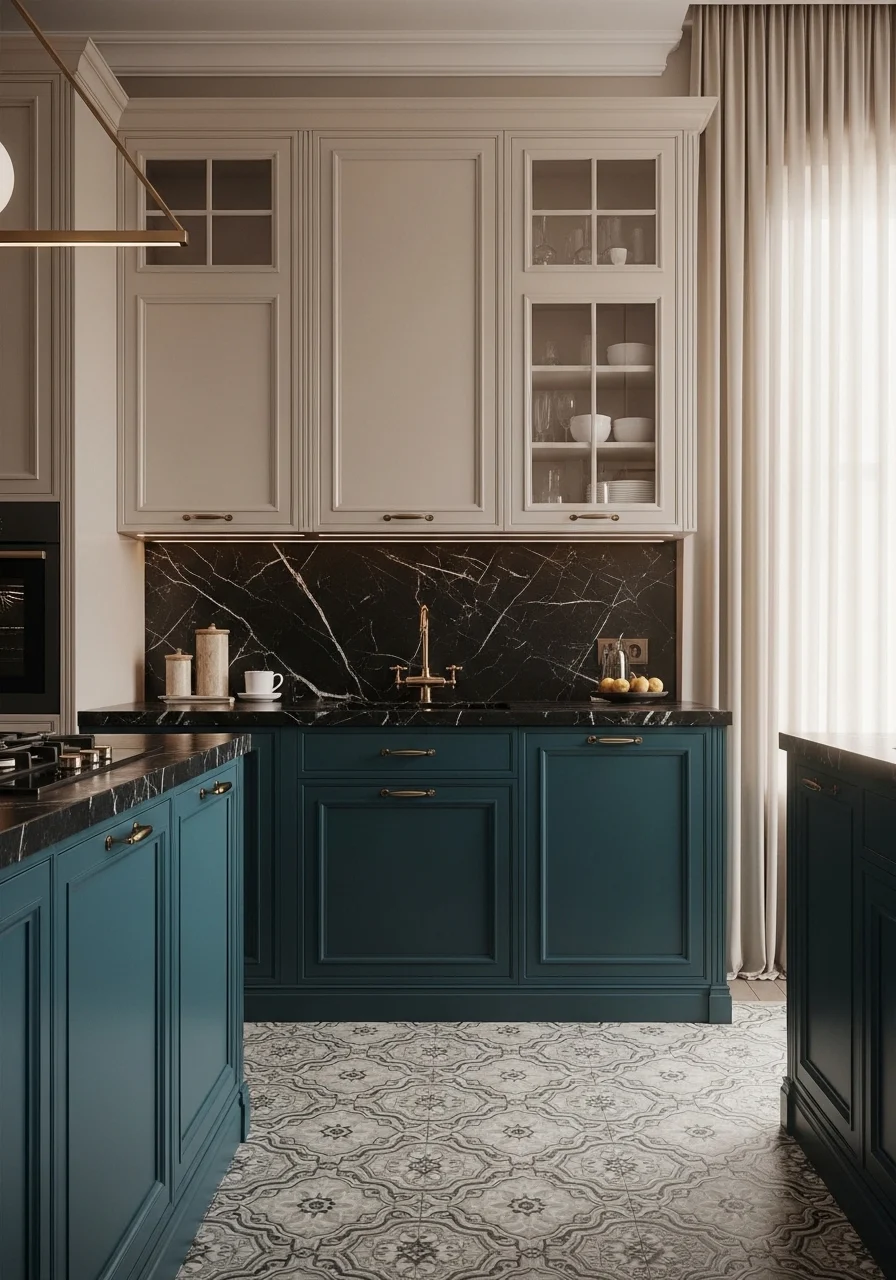
Deep teal offers richness and personality. Creamy beige uppers soften the mood. This two-tone choice feels refined and inviting. You’ll enjoy a moody but warm kitchen.
Key Elements (rich tones)
- Lower paint: deep teal satin
- Upper paint: creamy beige semi-gloss
- Countertop: dark marble or quartz
- Hardware: warm brass or antique brass
- Floor: patterned encaustic tile or dark wood
- Lighting: statement pendant with warm bulb
- Backsplash: neutral tile in warm beige
- Textiles: dark woven rug
- Accents: brass trays and dark pottery
- Sink: black composite or stainless
How to Achieve This Look (installation, accents)
- Prime and paint lowers in deep teal.
- Paint uppers creamy beige for contrast.
- Install dark marble counters and backsplash.
- Replace hardware with warm brass.
- Lay patterned tile or dark wood flooring.
- Add statement pendant lighting.
- Style with brass trays and dark pottery.
- Clean dark surfaces frequently to prevent water marks.
- Touch up paint edges as needed.
How to Style / Use It
Pair teal lowers with warm brass for luxe feel. Use rugs to protect floors under heavy use. Avoid abrasive cleaners on dark surfaces. Rotate decor to keep mood fresh.
- Olive Green Bottom, Warm Gray Upper
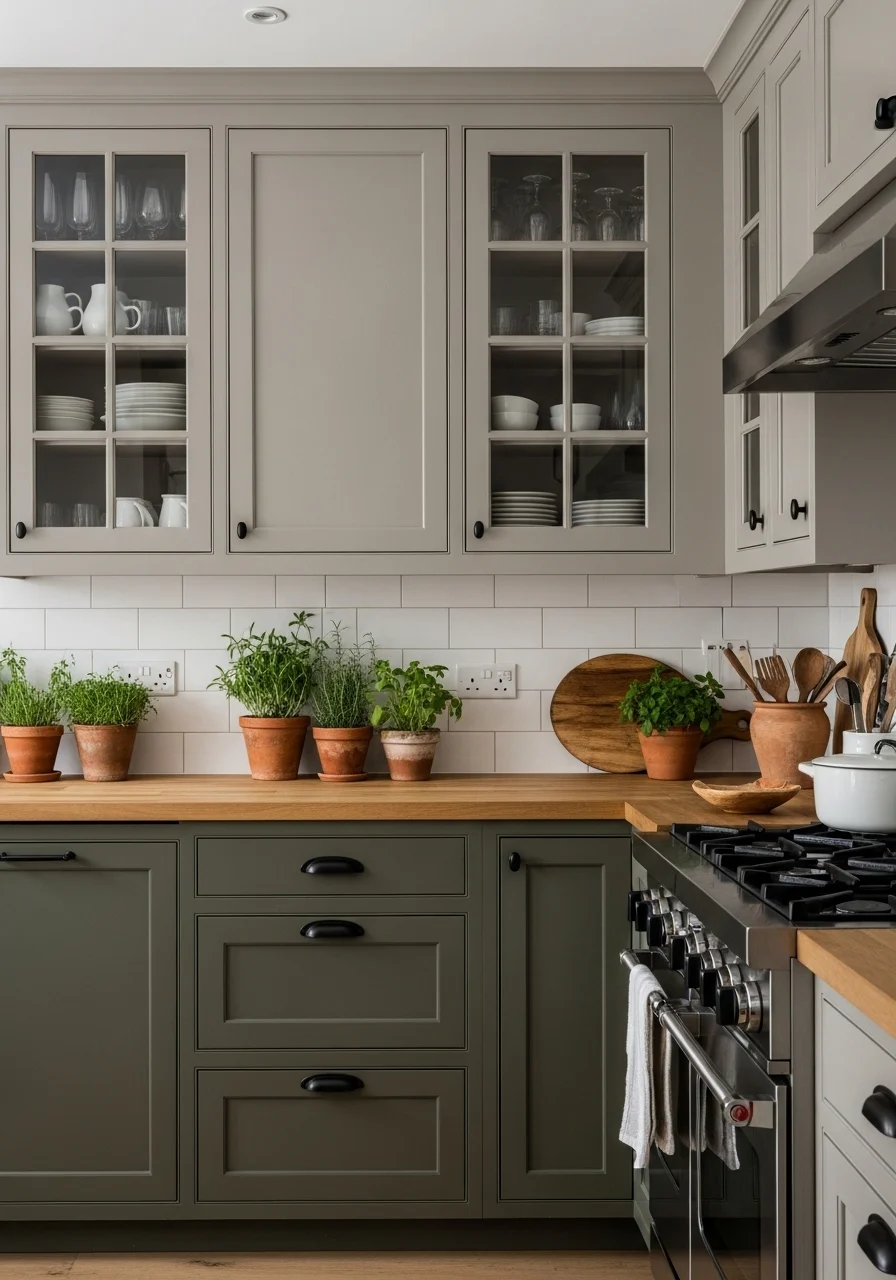
Olive green grounds a kitchen with an organic feel. Warm gray uppers keep it sophisticated. This two-tone look blends farmhouse and modern influences. You’ll feel calm and connected to nature.
Key Elements (organic palette)
- Lower paint: olive green, satin finish
- Upper paint: warm gray semi-gloss
- Countertop: oiled butcher block
- Hardware: matte black pulls and knobs
- Lighting: black or brass pendants
- Floor: wide plank hardwood
- Backsplash: warm gray ceramic tile or beadboard
- Accessories: terracotta pots and wooden utensils
- Sink: stainless or black composite
- Finish: butcher block oil and sealing
How to Achieve This Look (wood care, paint)
- Prep cabinets and prime properly.
- Paint lowers olive green in two coats.
- Paint uppers warm gray for cohesion.
- Install butcher block counters and seal.
- Replace hardware with matte black finishes.
- Install backsplash and lighting.
- Style with terracotta pots and herbs.
- Oil butcher block regularly to maintain finish.
- Touch up paint chips promptly.
How to Style / Use It
Use herbs and clay pots to echo olive tones. Keep butcher block sealed to prevent stains. Pair with woven textiles and warm metals. Swap seasonal plants for variety.
- Two-Tone with Patterned Accents: Navy and White with Tile Fronts
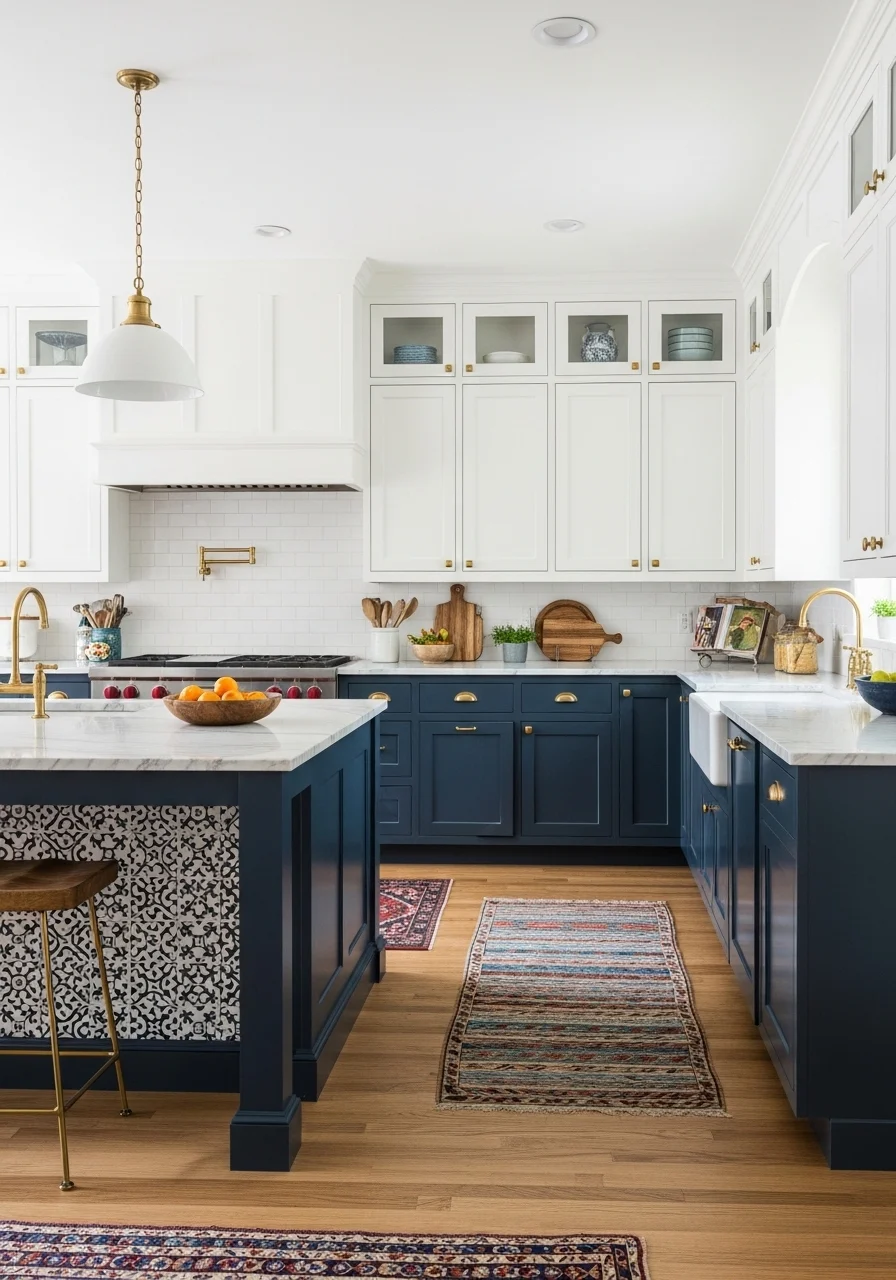
Add patterned tile fronts to a navy-and-white two-tone base for extra personality. Tiles create focal interest on islands or pantry doors. This idea is playful and custom. You’ll get a joyful, handcrafted feel.
Key Elements (pattern, contrast)
- Lower cabinets: navy paint
- Upper cabinets: crisp white
- Feature: patterned ceramic tile applied to island fronts
- Countertop: white or light marble
- Hardware: brass knobs and pulls
- Lighting: pendant with decorative shades
- Floor: neutral tile or pale wood
- Backsplash: simple white tile to balance pattern
- Accents: colorful ceramics and textiles
- Sealant: grout and tile sealer for durability
How to Achieve This Look (tile application)
- Paint cabinets navy and white as base.
- Choose patterned ceramic tile for feature area.
- Prepare island or cabinet fronts by priming surface.
- Apply tile with thinset, ensure level.
- Grout and seal tile for protection.
- Install counters and hardware as planned.
- Add pendant lighting over the feature island.
- Style with colorful textiles and ceramics.
- Clean grout regularly to maintain brightness.
How to Style / Use It
Use patterned tile sparingly to avoid visual overload. Keep surrounding surfaces neutral for balance. Seal tile and grout to protect from splashes. Change accent textiles seasonally for new looks.
- Smoky Blue Bottom, Chalk White Upper, Brass Details
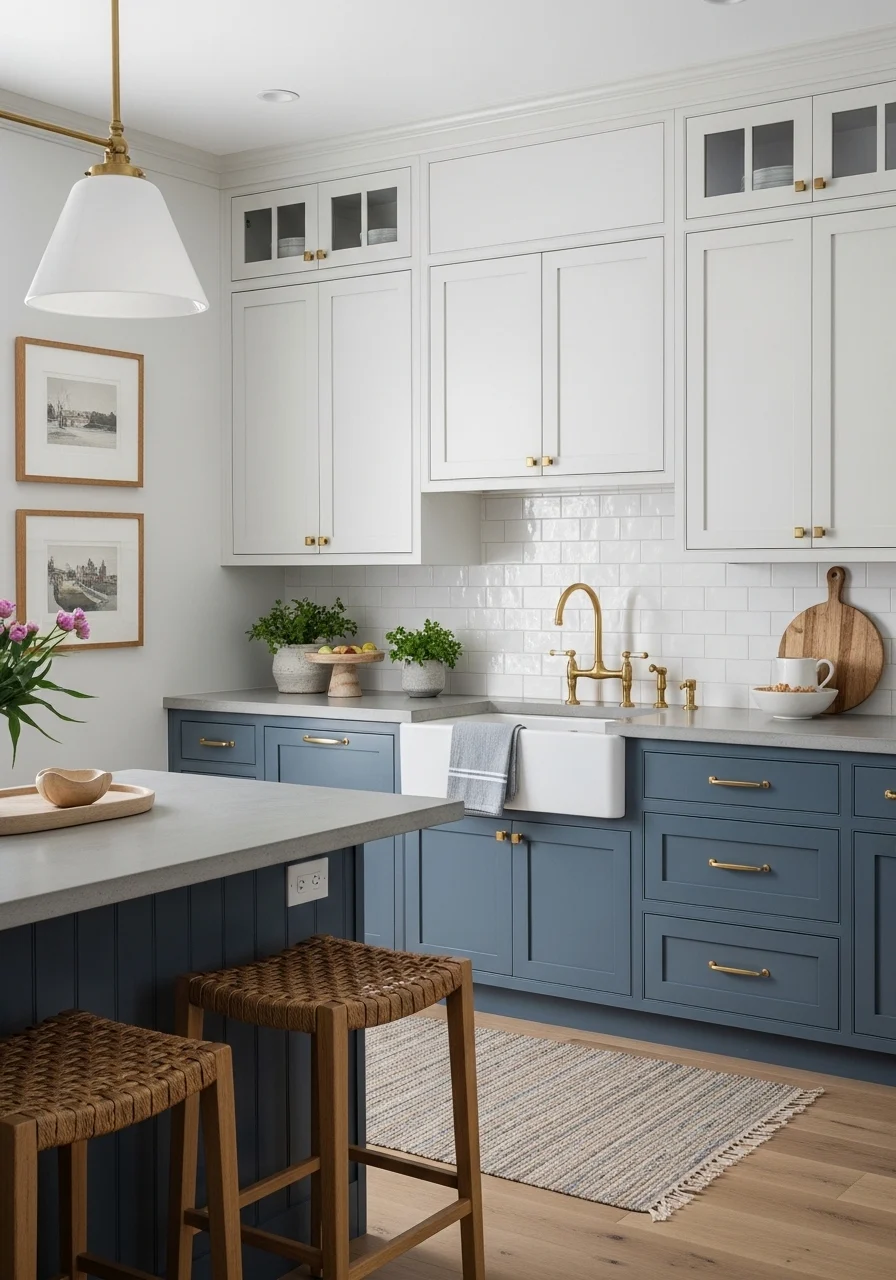
Smoky blue is moody without feeling heavy. Chalk white uppers and brass details add warmth and brightness. This two-tone look is curated and sophisticated. You’ll love the balanced personality.
Key Elements (palette, metals)
- Lower paint: smoky blue, satin
- Upper paint: chalk white semi-gloss
- Countertop: concrete-look quartz
- Hardware: polished brass handles and faucet
- Lighting: brass pendants with warm bulbs
- Floor: warm wood or pale stone
- Backsplash: subtle textured tile
- Seating: woven stools or leather seats
- Accessories: framed art and ceramic vases
- Finish: brass polish and paint touch-ups
How to Achieve This Look (installation, polish)
- Prime and paint smoky blue lowers.
- Paint uppers chalk white for contrast.
- Install concrete-look counters and textured backsplash.
- Fit polished brass hardware and faucet.
- Add brass pendant lighting above island.
- Place woven stools for texture.
- Hang a piece of framed art for personality.
- Polish brass periodically to keep shine.
- Touch up paint chips as needed.
How to Style / Use It
Pair smoky blue with brass for a balanced contrast. Keep countertops curated with a few statement items. Polish brass occasionally to maintain luster. Use soft textiles to soften harder surfaces.
- High-Contrast Monochrome: Gloss Black Lower, Matte Charcoal Upper
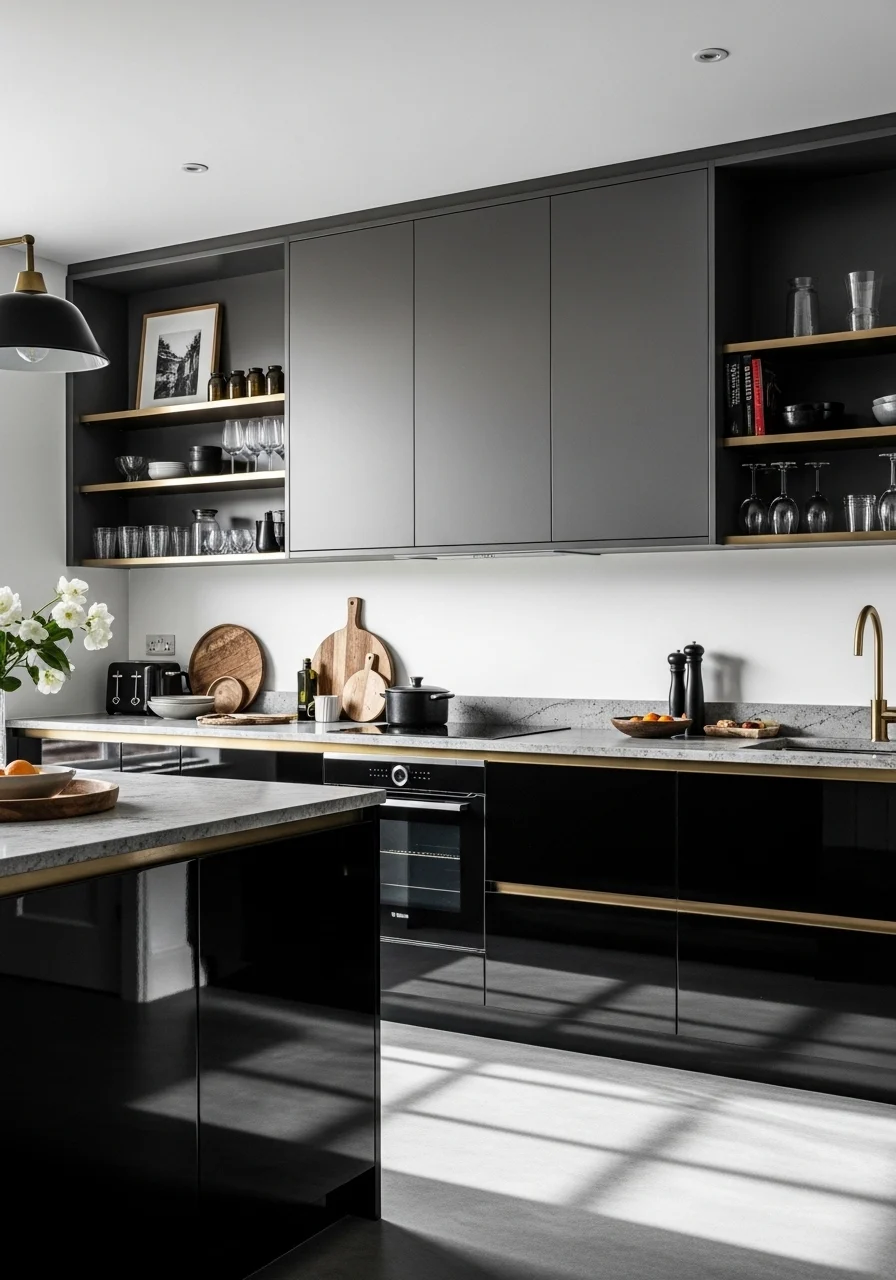
Gloss black lowers juxtaposed with matte charcoal uppers create a dramatic monochrome statement. Texture contrast prevents the space from feeling flat. This two-tone approach is bold and modern. You’ll get wow factor while staying refined.
Key Elements (contrast, texture)
- Lower finish: high-gloss black lacquer
- Upper finish: matte charcoal paint
- Countertop: white or pale stone for contrast
- Hardware: selective brass accents or matte black
- Backsplash: pale stone or textured tile
- Lighting: sculptural brass or black pendants
- Floor: pale wood or light tile for contrast
- Accessories: minimal ceramics and metal trays
- Appliances: stainless or black integrated
- Maintenance: gentle cleaners for lacquer surfaces
How to Achieve This Look (lacquer care, steps)
- Prepare and prime cabinet faces thoroughly.
- Apply high-gloss lacquer to lower doors carefully.
- Paint uppers matte charcoal with even strokes.
- Install pale stone counters to balance darkness.
- Add brass or black hardware as accents.
- Fit statement lighting to draw the eye.
- Lay pale flooring to offset dark cabinets.
- Use soft cloths to clean glossy surfaces.
- Touch up lacquer with recommended products.
How to Style / Use It
Keep decor minimal to let finishes stand out. Use pale countertops and floors for needed contrast. Clean glossy surfaces with soft microfiber to avoid scratches. Rotate accents like brass trays for seasonal changes.
You’ve just scanned 21 two-tone kitchen cabinet ideas that range from classic contrasts to playful pastels. There are practical steps here you can follow whether you’re painting, re-facing, or adding new hardware. Pin the looks that match your style and try one in a small area first.
Which two-tone idea sparked your imagination? Save the post and share it with a friend who’s planning a kitchen refresh. Try mixing elements from different ideas — like warm wood plus navy lowers — for a custom result you’ll love.