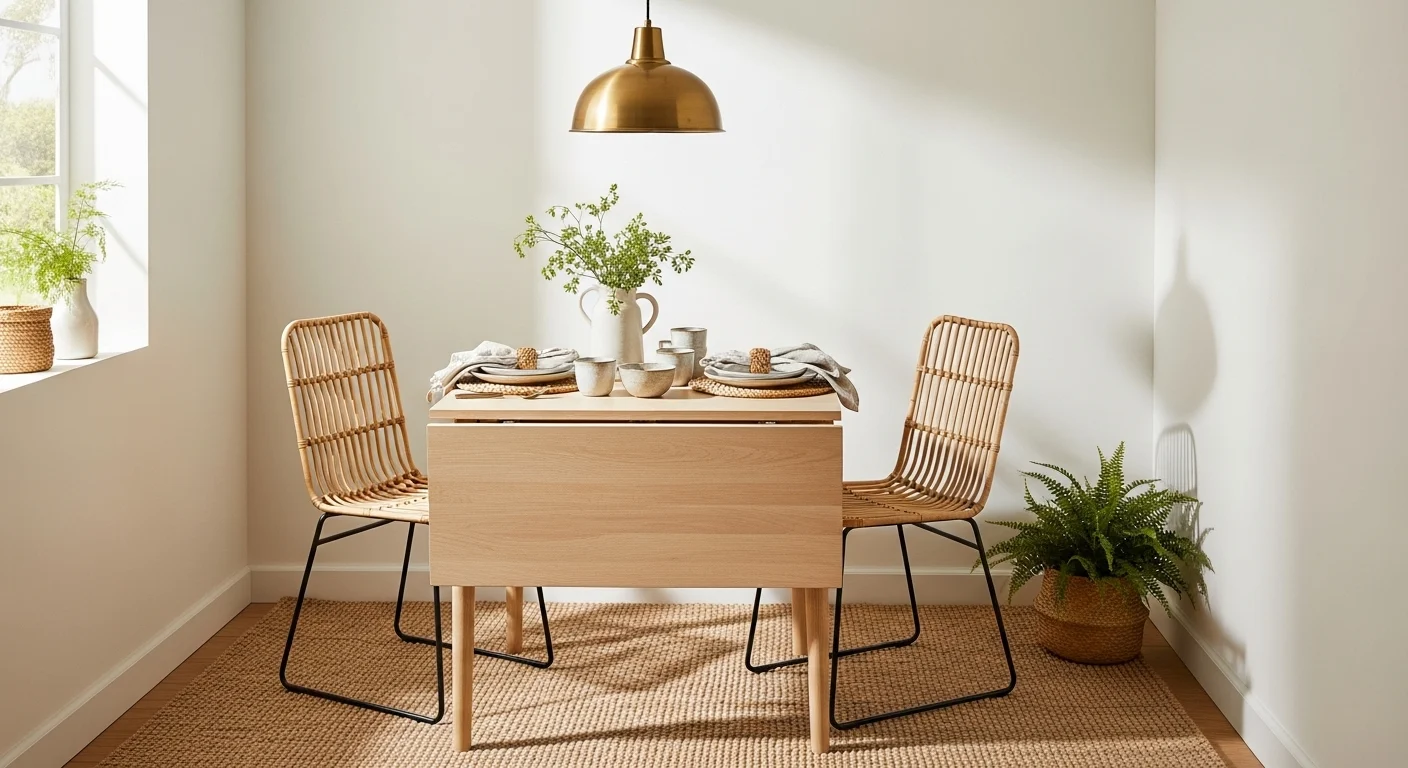
21 Small Dining Room Ideas That Save Space

You’ve probably squeezed through doorways carrying bulky chairs, wondering how to make meals feel cozy and functional in a small footprint. These 21 small dining room ideas that save space are made for exactly that moment. They focus on space-saving dining solutions that make every square foot work harder, while keeping your style intact.
You’ll find ideas for fold-down tables, banquette seating, smart storage, and visual tricks that make a tiny dining area feel larger. Each idea includes what to buy, step-by-step setup, and styling tips you can use today. Whether you live in a studio, small apartment, or just want a tidier eat-in nook, these small dining room ideas that save space give practical options you’ll actually enjoy living with. Pin the ones you love and try one this weekend.
1. Floating Fold-Down Table
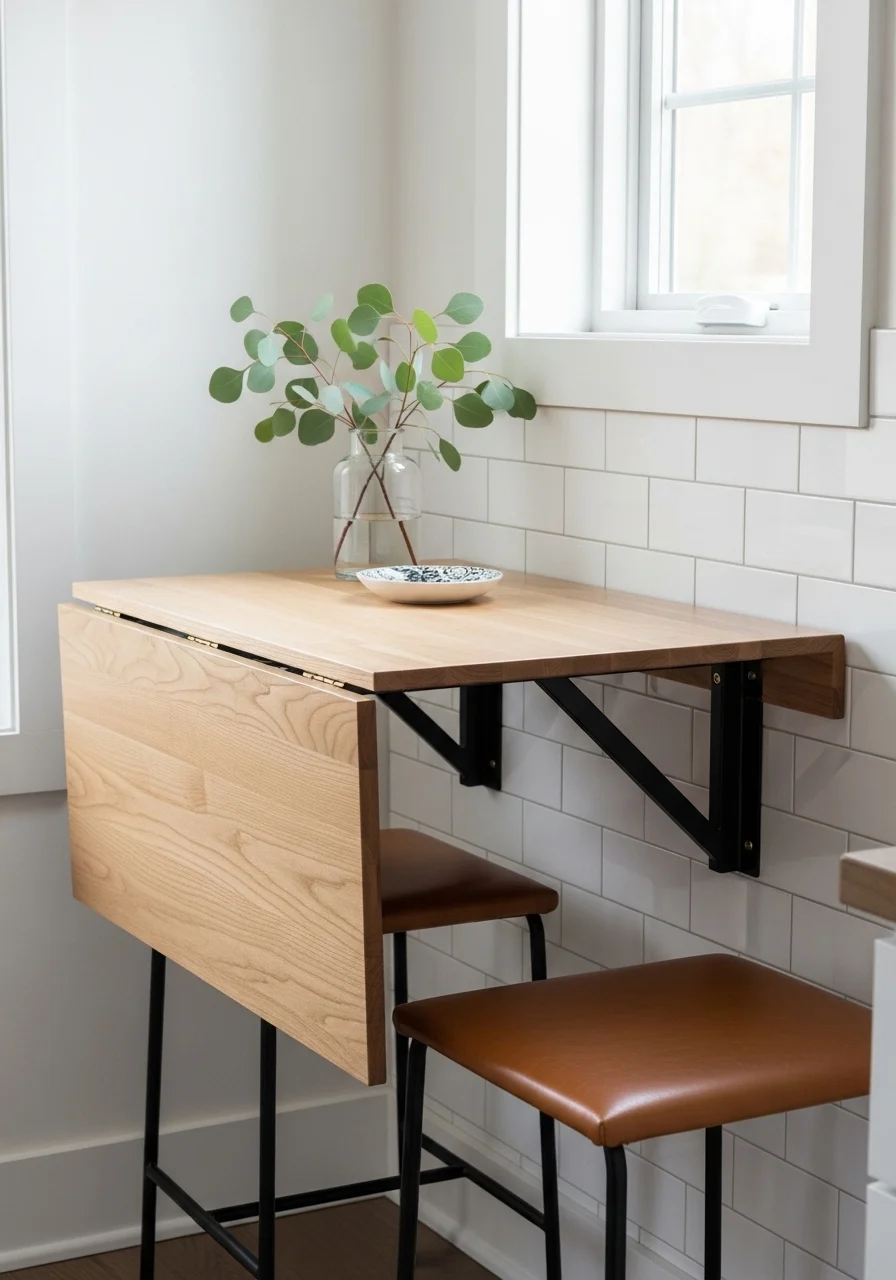
This fold-down table tucks away when not used, freeing floor space instantly. It pairs warm wood tones with matte black hardware for a modern look. The drop-leaf creates a tidy wall profile and invites impromptu meals or a laptop session. You’ll love this if you want dining functionality without permanent bulk. The vibe is airy, clean, and quietly practical.
Key Elements (space-saving dining, wall-mounted table)
- Solid wood or laminate wall-mounted table top (24–36" wide)
- Heavy-duty folding hinges (matte black or brass)
- Wall cleat or bracket mounting system
- 2 slim stools or foldable chairs (stackable)
- Small vase or tray for centerpiece
- Wipeable placemats (vinyl or cork)
- Neutral paint or shiplap wall finish
- Soft runner rug (narrow)
- Cable-friendly gap behind table for lamp
- Compact pendant or wall sconce
How to Achieve This Look
- Pick a wall with at least 36" width and stud access.
- Mount a cleat or heavy bracket at standard table height (28–30").
- Attach the fold-down tabletop to the hinges and test the swing.
- Secure the tabletop with a latch when upright.
- Choose slim stools that tuck fully beneath the folded top.
- Add a small runner rug to define the space.
- Style with a low-centered vase or tray for easy clearing.
- Install a wall sconce or narrow pendant above for task light.
- Keep table surfaces wipeable for fast cleanup.
How to Style / Use It
Set two place settings for breakfast, then fold the table after meals. Pair with textured placemats and a single low centerpiece. Use fold-away stools that double as extra seating elsewhere. For a night of guests, pull the table down and use stacking chairs with cushions.
2. Round Pedestal Table for Flow
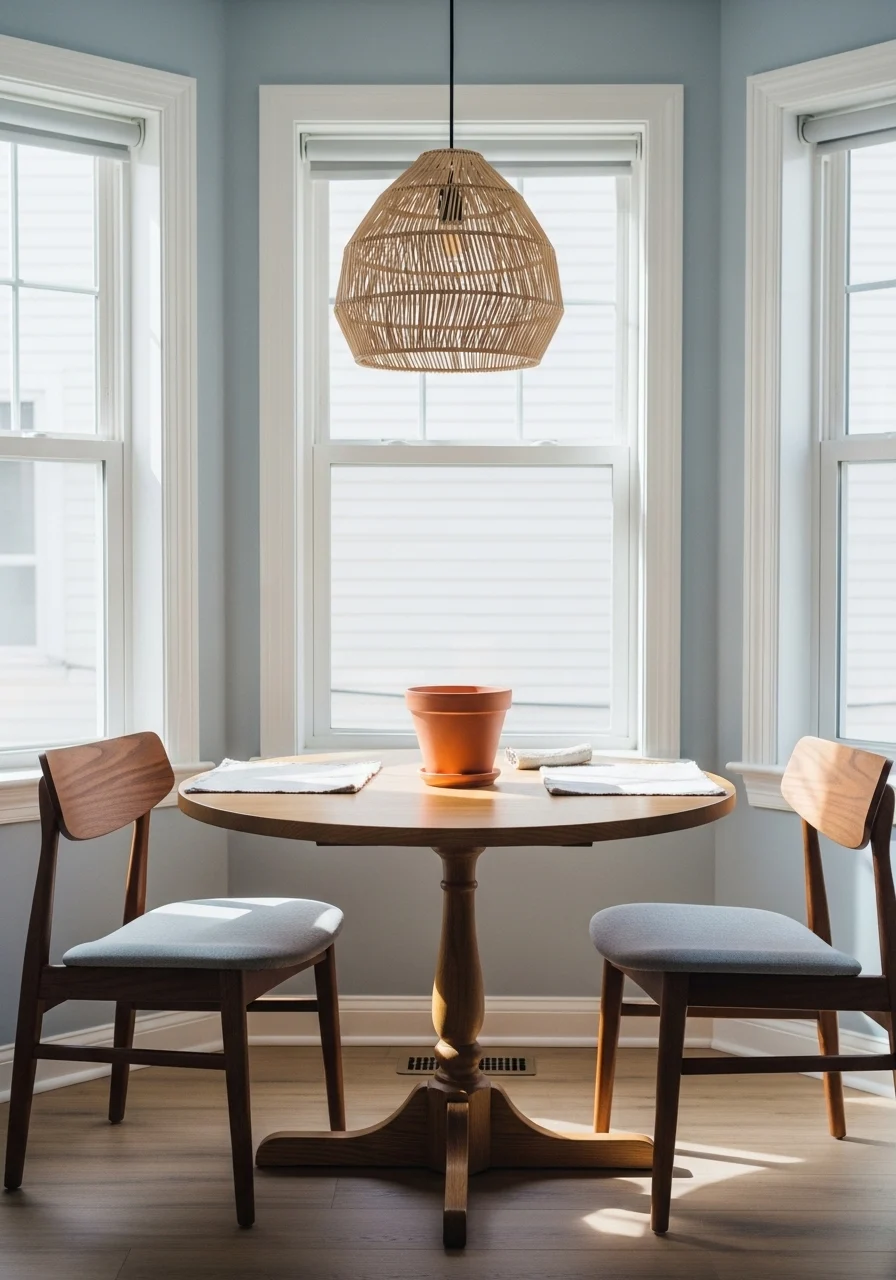
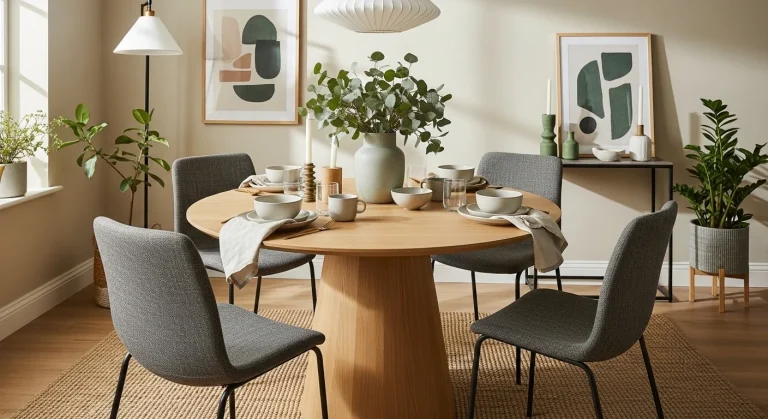
A round pedestal table maximizes movement and feels less visually heavy than four legs. Curves soften narrow rooms and allow seating flexibility. This option fits in a corner or center and works with bench seating or chairs. It’s perfect if you want intimate meals and easy traffic flow.
Key Elements (compact dining room layout)
- 30–36" diameter round table with single pedestal
- Two to three slim-profile chairs
- Curved or upholstered seats for comfort
- Small woven pendant or flush mount
- Lightweight area rug (round or oval)
- Neutral tabletop (oak, white lacquer, or marble effect)
- Minimal centerpiece (single bowl or candle)
- Wall mirror nearby to deepen space
- Narrow console or floating shelf behind
How to Achieve This Look
- Choose a round table no larger than 36" in diameter.
- Place table where it allows 30" clearance on at least two sides.
- Select lightweight chairs that tuck close to the table.
- Add a small rug that anchors without crowding.
- Hang a pendant slightly off-center if positioned in a corner.
- Use a shallow console if you need storage nearby.
- Keep tabletop clutter-free to maintain openness.
- Add a wall mirror to visually expand the room.
How to Style / Use It
Use bright textiles or a patterned runner to add personality. Pair with mixed chairs for eclectic charm. Rotate small centerpieces to match seasons. Keep table glossy or untextured for easy cleanup after meals.
3. Banquette Bench with Under-Seat Storage
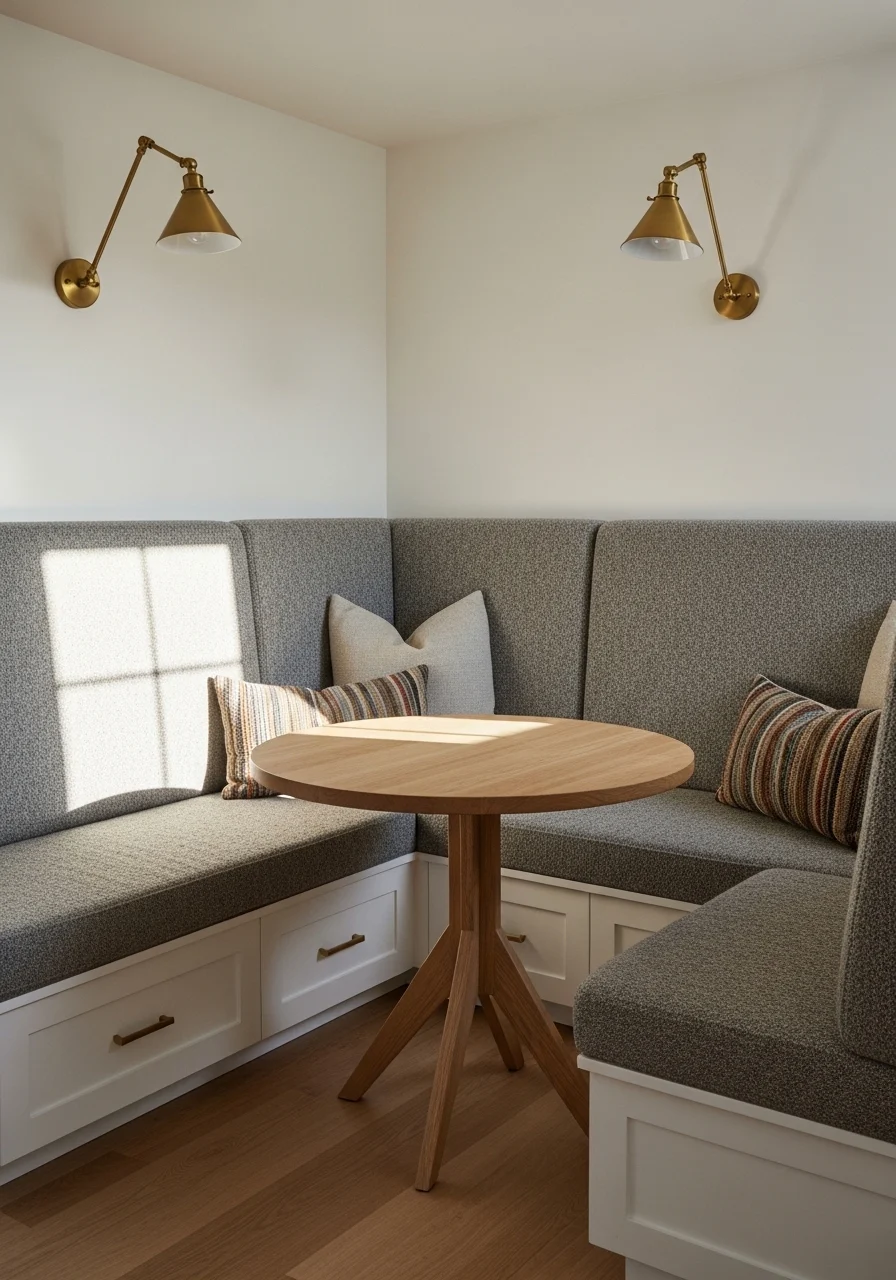
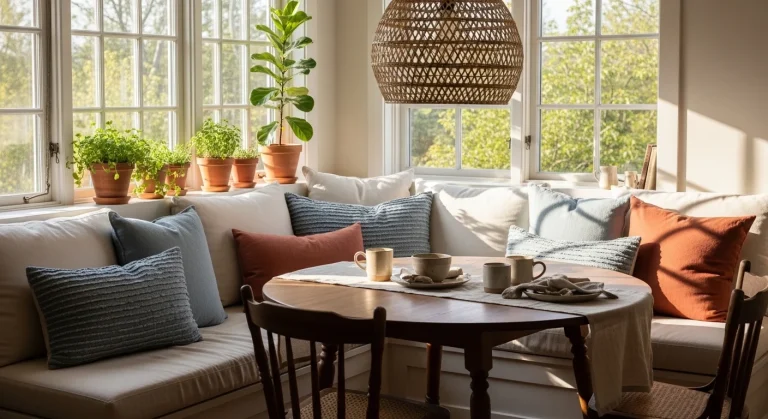
A banquette eats into corner space but gives generous seating without many chairs. Add under-seat drawers or lift-up storage to hide linens, boards, or kids’ crafts. It creates a cozy, built-in look that’s efficient and stylish. This works especially well when you want seating for 3–4 in a compact zone.
Key Elements (built-in seating, compact dining)
- L-shaped bench or straight banquette (custom or modular)
- Upholstery: boucle, linen, or leather look
- Deep storage drawers or lift hinges
- Round or small rectangular table (pedestal base)
- Mix of throw cushions in two patterns
- Low-profile back or no back for airy feel
- Wall-mounted lighting to save floor space
- Narrow floating shelf for decor and keys
- Durable upholstery fabric (stain-resistant)
How to Achieve This Look
- Measure your corner to determine bench length and depth.
- Decide on drawer fronts or lift-up seats for storage.
- Build or buy a modular banquette that fits your dimensions.
- Choose upholstery that hides wear and resists stains.
- Add a small table with a pedestal so chairs fit snugly if needed.
- Install wall sconces to avoid floor lamps.
- Add cushions for comfort and to coordinate with wall color.
- Use the under-seat storage for table linens, placemats, and extra dishware.
How to Style / Use It
Rotate cushions seasonally to refresh the look. Use bench storage for board games or seasonal decor. Pair with a round table to prevent sharp corners. Keep upholstery neutral if you have kids, and use washable slipcovers when needed.
4. Slim Console That Converts to Table
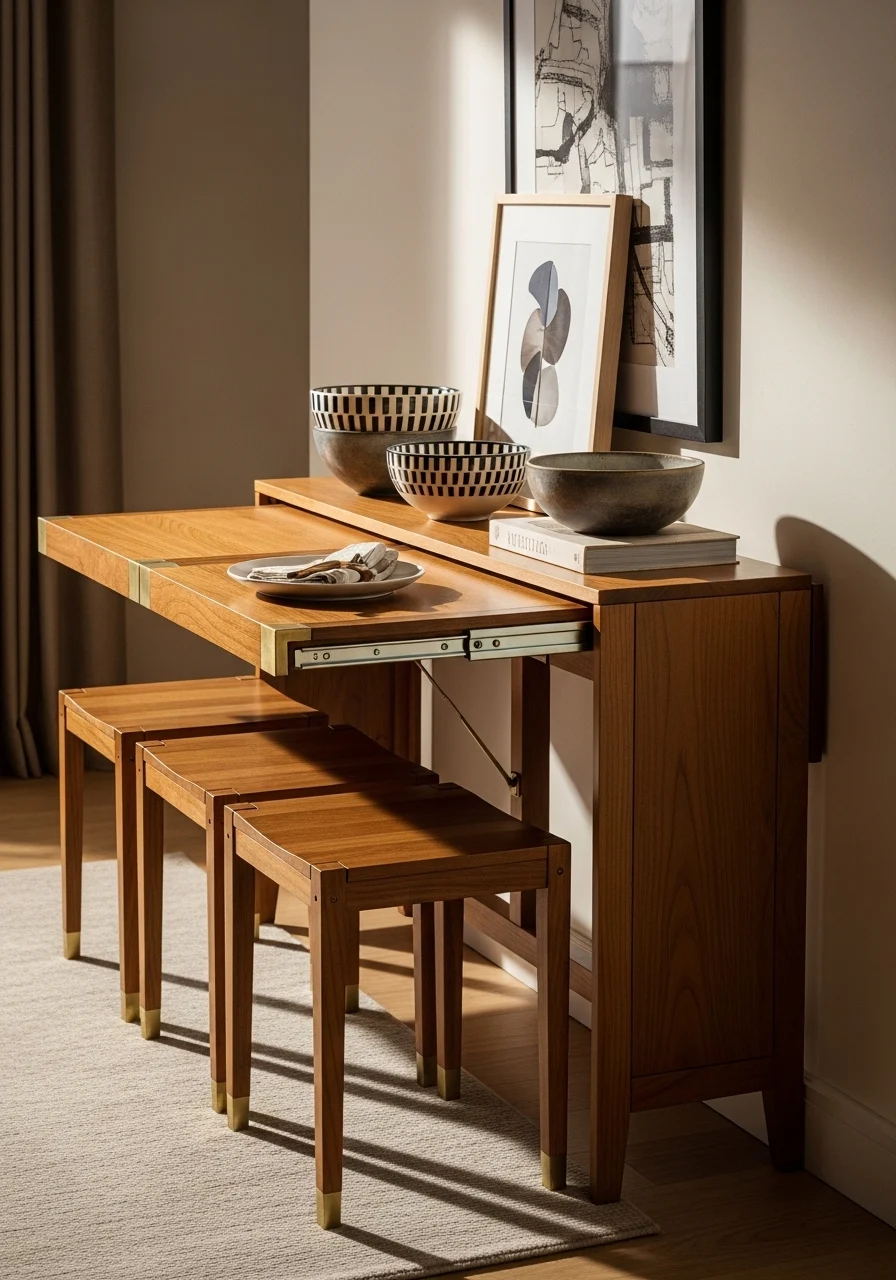
A slim console can double as a dining table for two or three. It’s graceful when closed and practical when opened. This is ideal for narrow entryways or behind a sofa that needs a dining surface on demand.
Key Elements (folding console, narrow dining)
- Console table 12–16" deep closed
- Pull-out or flip-out leaf mechanism
- Pair of folding or slim chairs
- Table runner for quick setting
- Small tray for condiments or candles
- Durable finish (laminate or sealed wood)
- Wall art above console
- Cord management for nearby outlets
- Felt pads to protect flooring
How to Achieve This Look
- Choose a console with a reliable extension mechanism.
- Mount it at typical dining height or slightly higher for stools.
- Keep two foldable chairs stored nearby.
- Pull the console out and engage the support legs.
- Add a runner and two place settings.
- Use trays to move items quickly when you collapse it.
- Store table linens in a nearby basket or drawer.
- Add a decorative bowl when the console is closed.
How to Style / Use It
Use the console as a workspace during the day and a dining surface at meals. Keep cloth napkins in a drawer for easy setup. Match the console finish with nearby furniture to blend it into the room.
5. Wall-Mounted Drop Leaf Table (Classic Drop-Leaf)
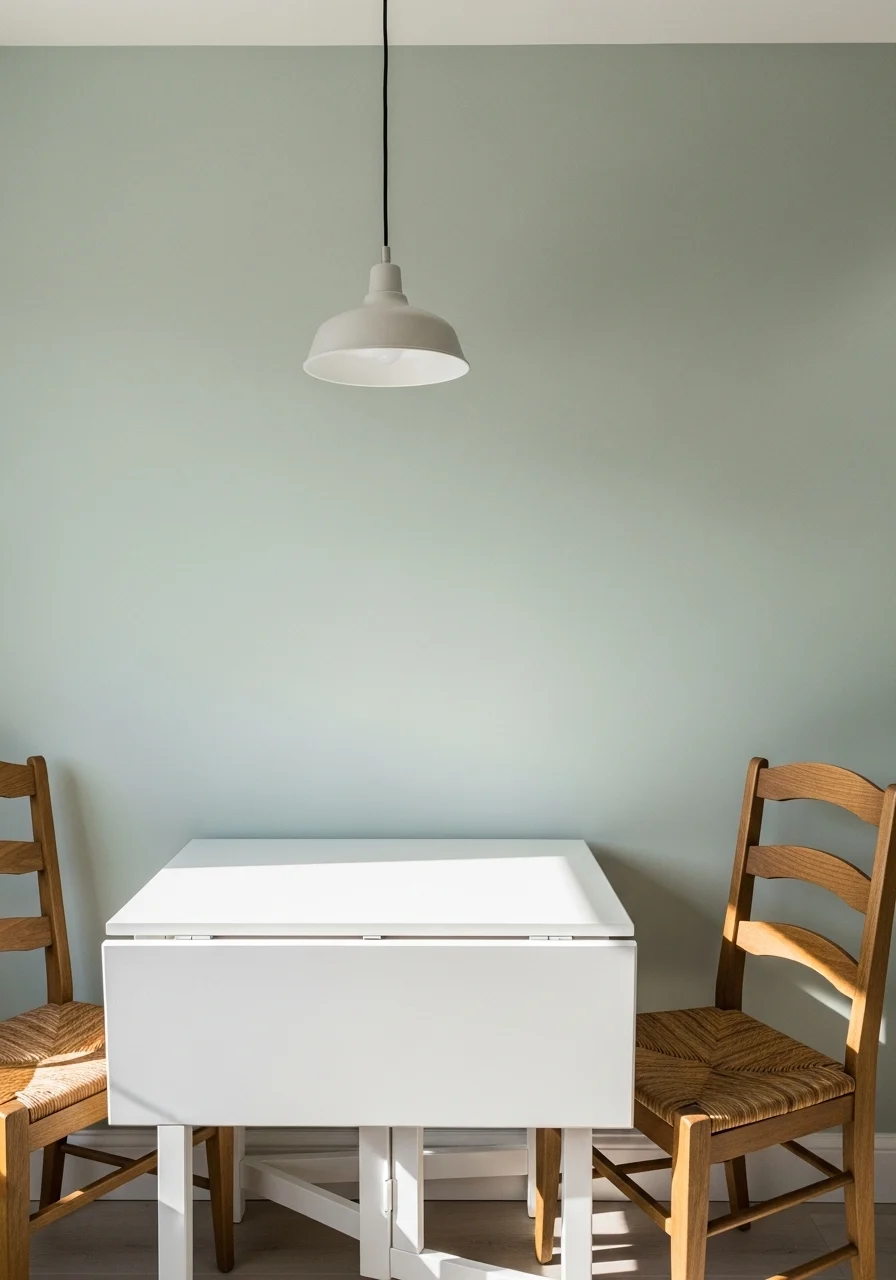
A classic drop-leaf table reduces footprint when not in use. It looks especially charming in farmhouse or cottage schemes. The wall-mounted style adds stability without bulky legs. This suits you if you want a timeless piece with flexible function.
Key Elements (drop-leaf, space-saving dining)
- Wall-mounted drop-leaf table (wood or painted MDF)
- Folding brackets or drop-leaf supports
- Two ladder-back or rattan chairs
- Small centerpiece like a mason jar of flowers
- Wall paint in a warm neutral or soft color
- Overhead pendant or wall sconce lighting
- Narrow rug or runner
- Metal latch or peg to secure leaf
How to Achieve This Look
- Find a position on a stud or use anchors.
- Install robust drop-leaf brackets at table height.
- Attach the tabletop and test folding movement.
- Choose chairs that can be stored against the wall.
- Use a slim pendant to hang over the table.
- Add a quick-to-clear centerpiece.
- Use coasters or placemats to protect the tabletop.
- Secure with a latch if near a walkway.
How to Style / Use It
Pair with woven textures to soften the structure. Use the table for casual breakfasts and homework. Keep one or two bench cushions nearby for extra comfort. Lock the leaf when you need a flat wall for photos or extra floor space.
6. Expandable Leaf Table for Occasional Guests
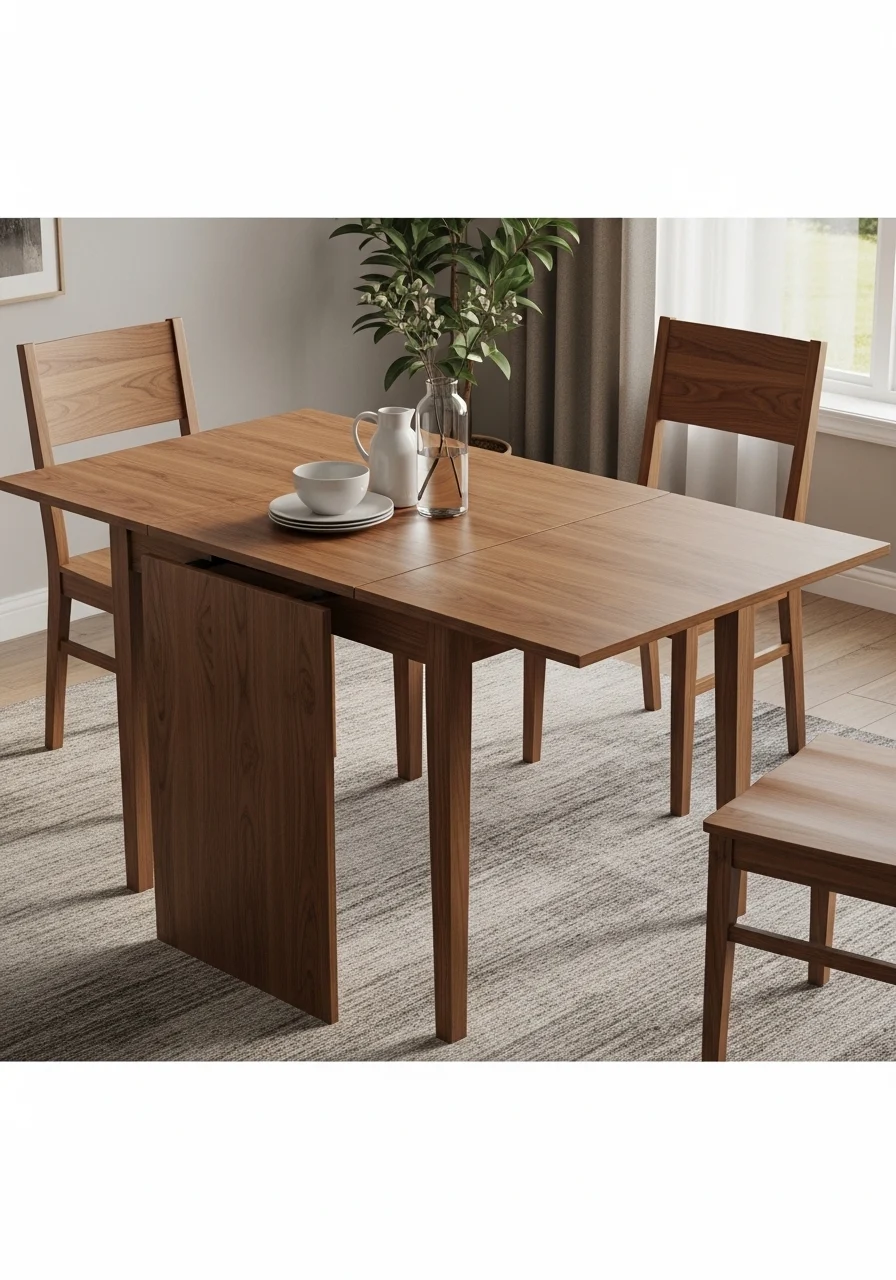
An extendable leaf table stays compact for daily use but expands for guests. Look for butterfly leaves or hidden storage under the tabletop. The result is a tidy baseline and surprise seating when needed.
Key Elements (extendable table, compact dining)
- 42–54" table with removable or butterfly leaf
- Smooth extension mechanism (metal runners)
- Slim upholstered chairs
- Under-table storage or sideboard for leaf
- Durable tabletop finish
- Round edges to save space in traffic flow
- Neutral rug to anchor the set
- Small overhead light or cluster light
How to Achieve This Look
- Choose a table with a reliable extension design.
- Measure traffic paths to ensure clearance when expanded.
- Store the extra leaf nearby or inside the table.
- Use foldable or nesting chairs for additional seating.
- Practice extending the table smoothly to avoid jamming.
- Place a runner in the center to visually unify the extra leaf.
- Keep everyday place settings simple to shift quickly.
- Use a slim sideboard for serving dishes when hosting.
How to Style / Use It
Keep a matching set of lightweight service platters for guests. Use place cards for formal dinners to create focus. For daily meals, leave the leaf removed to free space.
7. Compact Bistro Set for Balcony or Nook
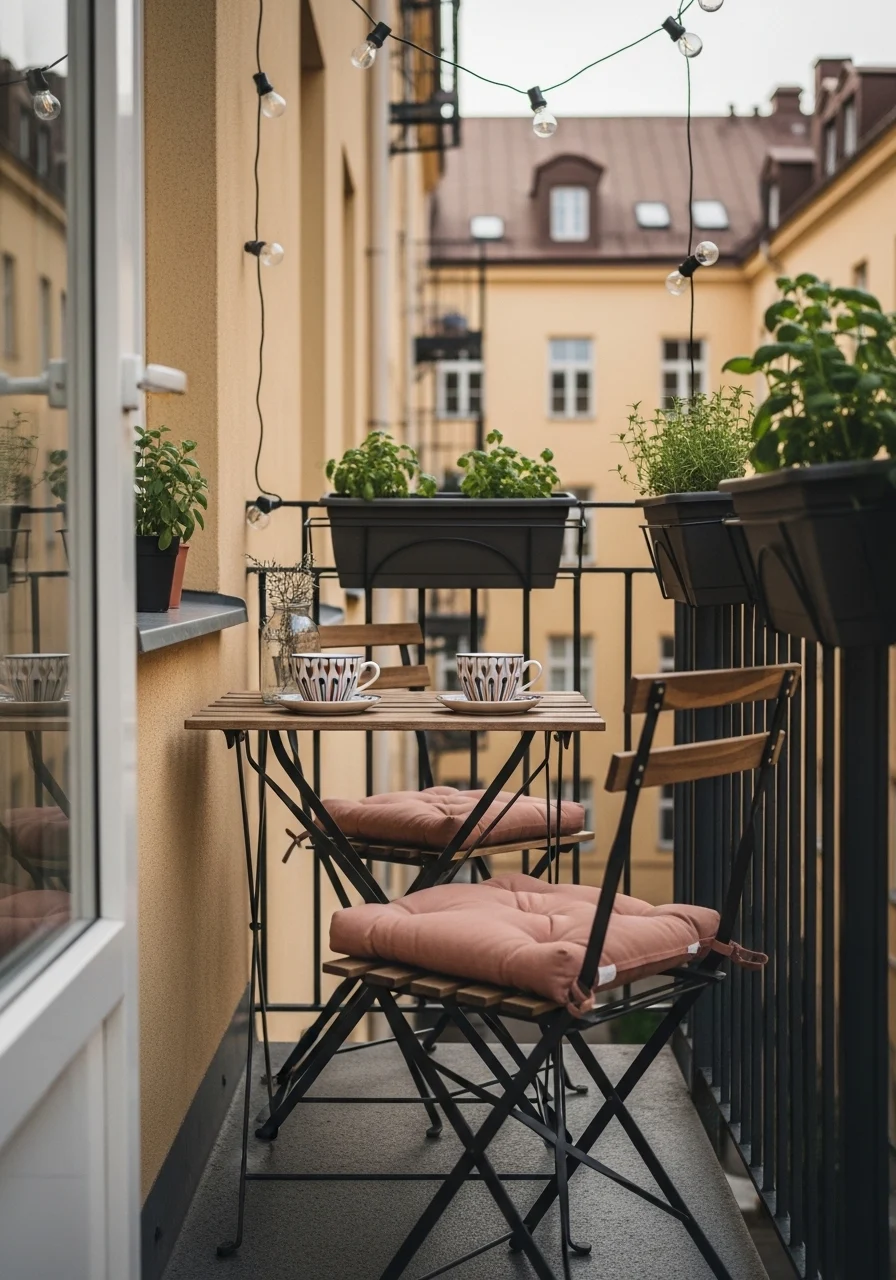
A small bistro set is perfect for a tiny dining corner or balcony. It reads light and airy, easy to move, and instantly creates a dining moment. It’s best if you want outdoor flexibility or a petite indoor nook.
Key Elements (bistro dining, small dining room ideas)
- 24–28" bistro table (metal or compact wood)
- Two foldable or stackable chairs
- Seat cushions for comfort
- Small planter or herb pots
- Outdoor-safe rug or mat
- String lights or small lantern
- Weather-resistant finish if outdoors
- Compact umbrella option for shade
How to Achieve This Look
- Find the smallest table that still fits two place settings.
- Choose chairs that fold flat for storage.
- Add seat cushions for comfort on metal chairs.
- Place a small rug to anchor the set.
- Use planters to create privacy and scale.
- Hang string lights for mood in evening.
- Bring indoor versions of cushions inside when it rains.
How to Style / Use It
Swap cushions seasonally for fresh color. Keep serving trays ready for coffee or brunch. Use the bistro as a secondary dining spot when you need a change of scenery.
8. Built-In Cabinet with Pull-Out Table
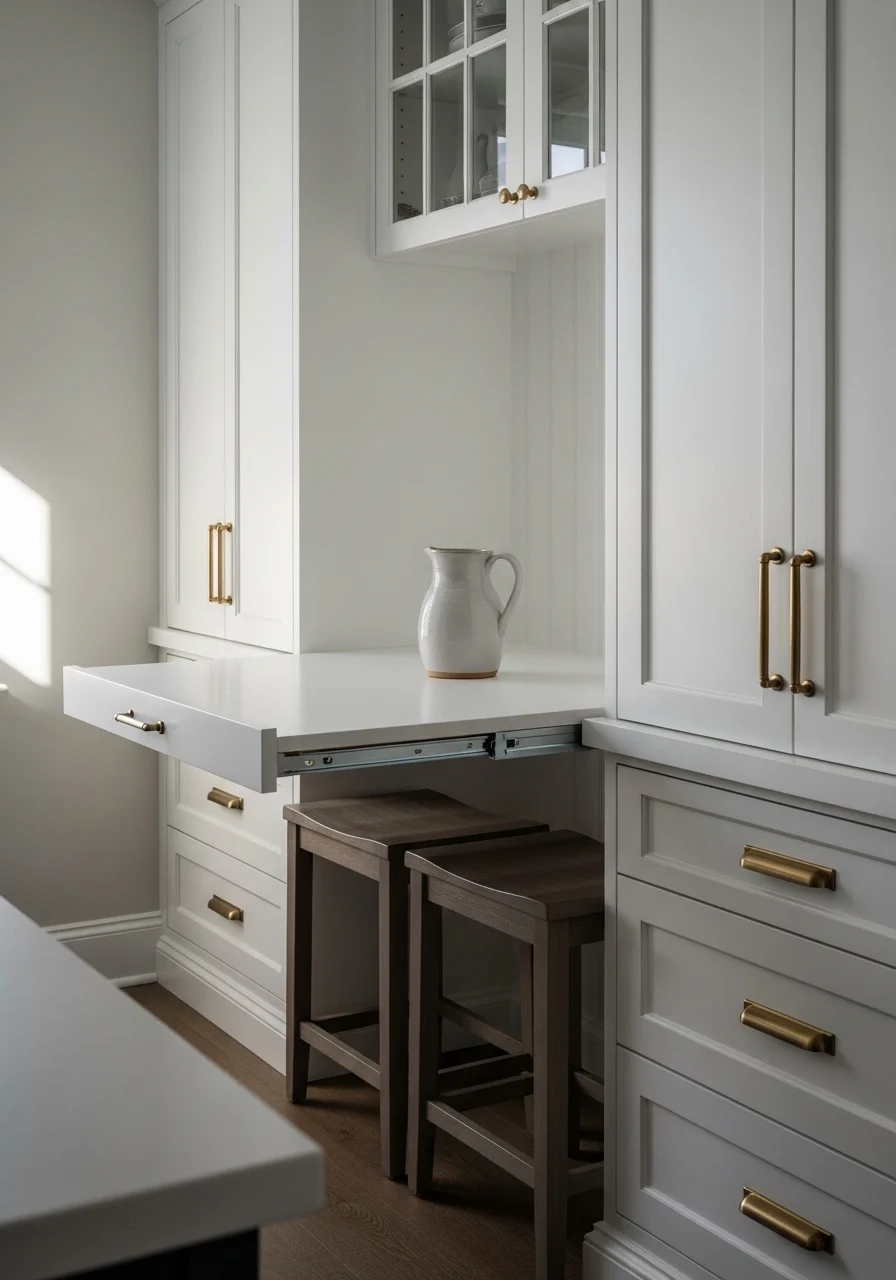
A built-in cabinet that hides a pull-out table combines storage and seating in one wall. It keeps clutter off the dining surface and makes cleanup fast. This is ideal when you want a polished, permanent solution that saves room.
Key Elements (built-in dining, hidden table)
- Custom built-in cabinet (base depth 18–24")
- Pull-out tabletop mechanism on runners
- Two or three stools stored beneath
- Cupboard doors for plates and linens
- Recessed lighting above cabinet
- Durable laminate or sealed wood tabletop
- Magnetic catches to secure sliding top
- Decorative hardware that matches room tone
How to Achieve This Look
- Plan cabinet depth and height for comfortable table use.
- Install heavy-duty drawer runners sized for the tabletop.
- Ensure stools slide fully under the closed cabinet.
- Organize dishware and linens inside for quick setup.
- Add a protective strip where the tabletop slides.
- Mount lighting to illuminate the work surface when open.
- Close when not in use to maintain a clean wall plane.
- Use the cabinet top for styling when the table is closed.
How to Style / Use It
Keep dishes and placemats within the cabinet. Use a small vase or bowl when open, and display larger decor when closed. Store seasonal napkins in labeled boxes for quick swaps.
9. Small Dining Room Ideas That Save Space: Kitchen Island That Doubles as Table
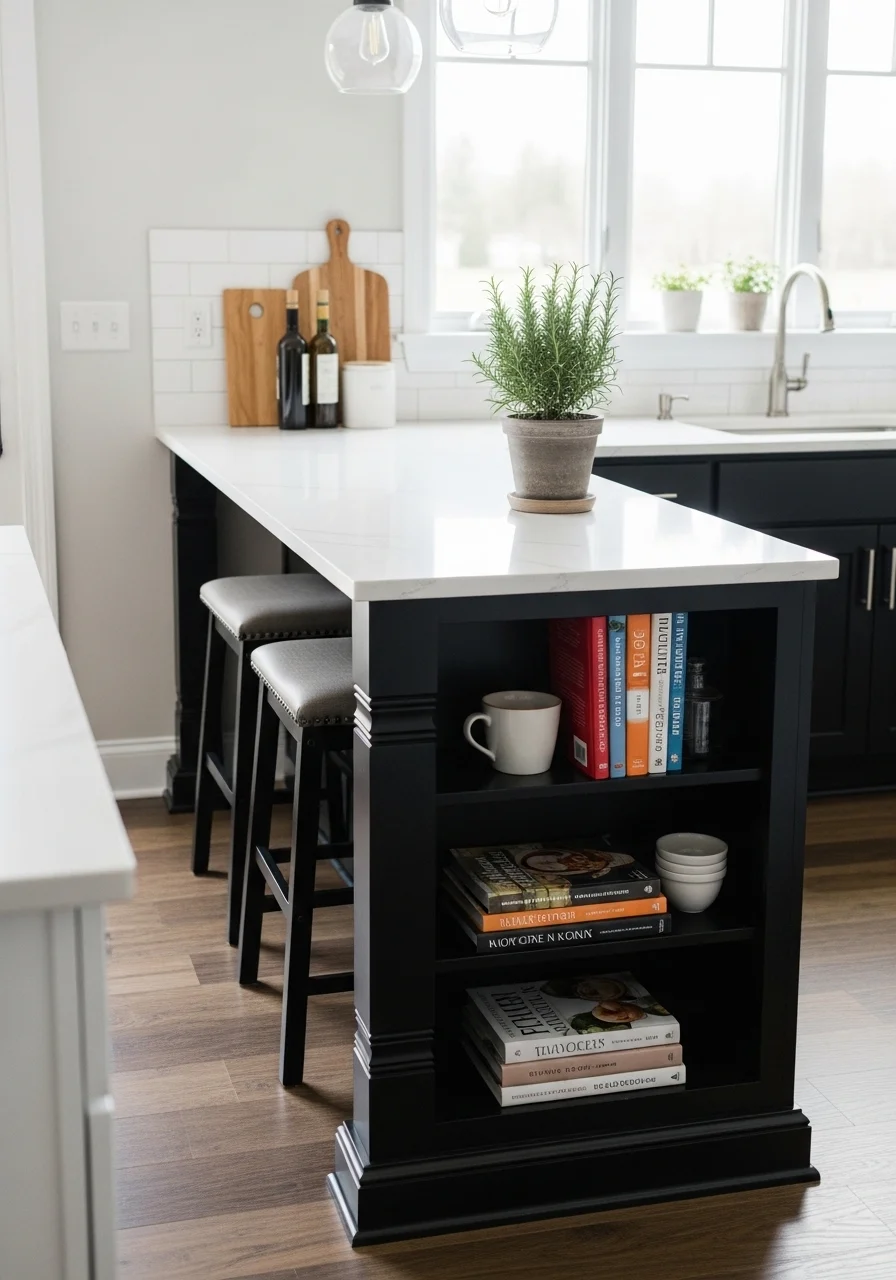
A narrow island with an overhang acts as counter and dining surface. It’s perfect when the kitchen and dining areas overlap. This multifunctional approach makes the most of limited square footage.
Key Elements (kitchen island dining, space-saving dining)
- Narrow island with 10–12" overhang for seating
- Two counter-height stools
- Quartz or butcher block countertop
- Open shelving for frequently used items
- Drawer for placemats and napkins
- Under-counter lighting or toe-kick lighting
- Power outlet on the island side
- Durable stool finishes (metal or wood)
How to Achieve This Look
- Measure for at least 24" per seated person at the overhang.
- Choose an island depth that allows work and seating.
- Pick stools that tuck under the overhang fully.
- Use open shelving for easy access to daily items.
- Install outlets on the side for charging and appliances.
- Keep a narrow runner or placemats to protect the surface.
- Use hooks or a small rail for dish towels.
- Keep the island clutter-free to allow quick meal setup.
How to Style / Use It
Use the island as a prep surface and serving station. Place seasonal centerpiece items in a small tray. For larger gatherings, move extra stools and use fold-out trays.
10. Corner Dining Nook with Triangular Table
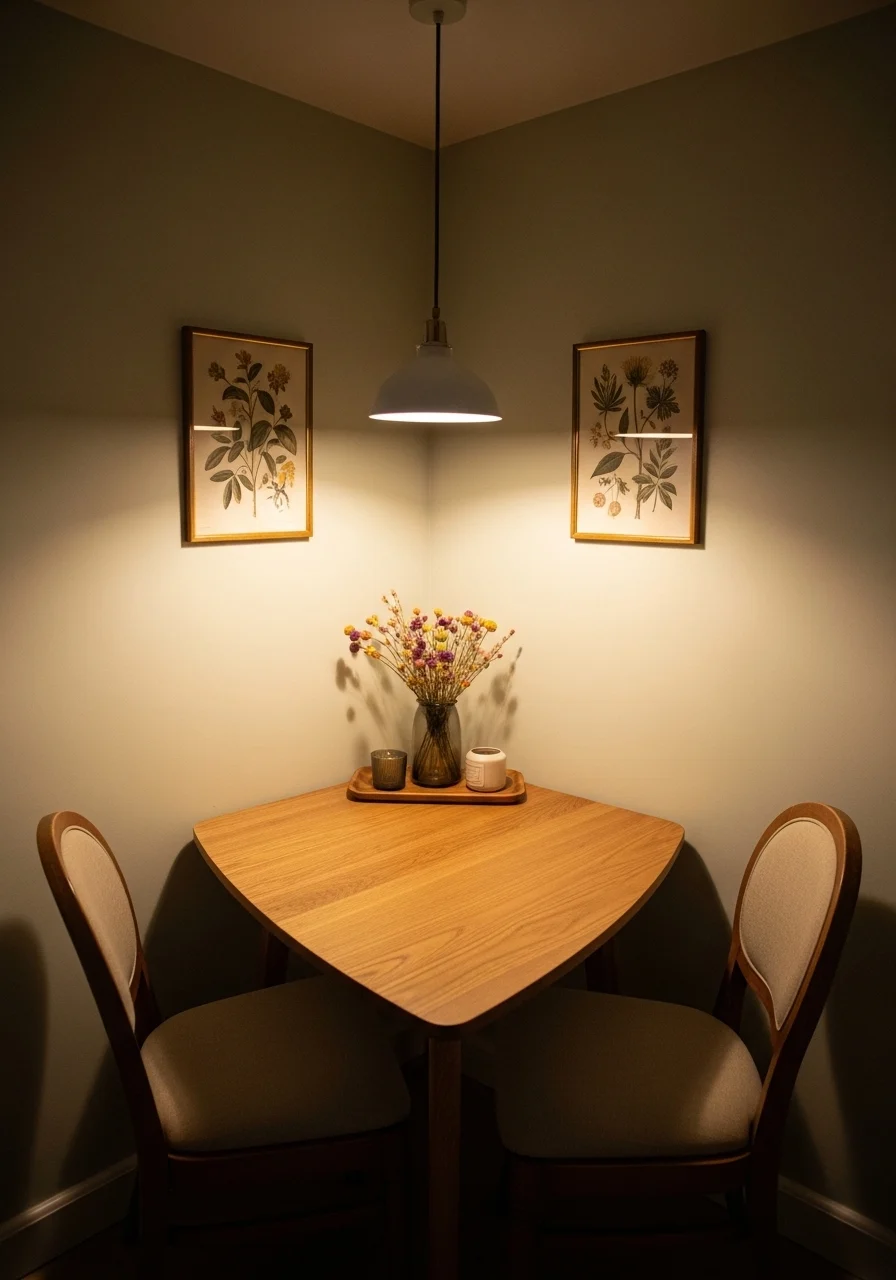
Triangular or wedge tables fit snugly into corners and allow decent seating with minimal footprint. The geometry uses corner space that’s often wasted. It’s a clever move when you need a cozy breakfast area.
Key Elements (corner dining, compact table)
- Triangular or wedge table top
- Two curved or armless chairs
- Wall-mounted lamp or sconce
- Small shelf for condiments or napkins
- Cushioned seats for comfort
- Tabletop protector or placemats
- Light-reflecting paint color
- Small focal art piece above
How to Achieve This Look
- Measure corner angles and available floor space.
- Choose a triangular table sized for your corner.
- Select armless chairs that slide under the table.
- Install a sconce to avoid floor lamps.
- Add a small floating shelf for essentials.
- Use a slim area rug to define the nook.
- Keep decor minimal to prevent visual clutter.
- Add a cushion for each chair for extra comfort.
How to Style / Use It
Make it your morning coffee spot with mugs and a small jar of sugar. Use corner shelves to hold seasonal decor. Keep the table clear except for a small vase for daily use.
11. Open Shelves and Vertical Storage to Free Floor Space
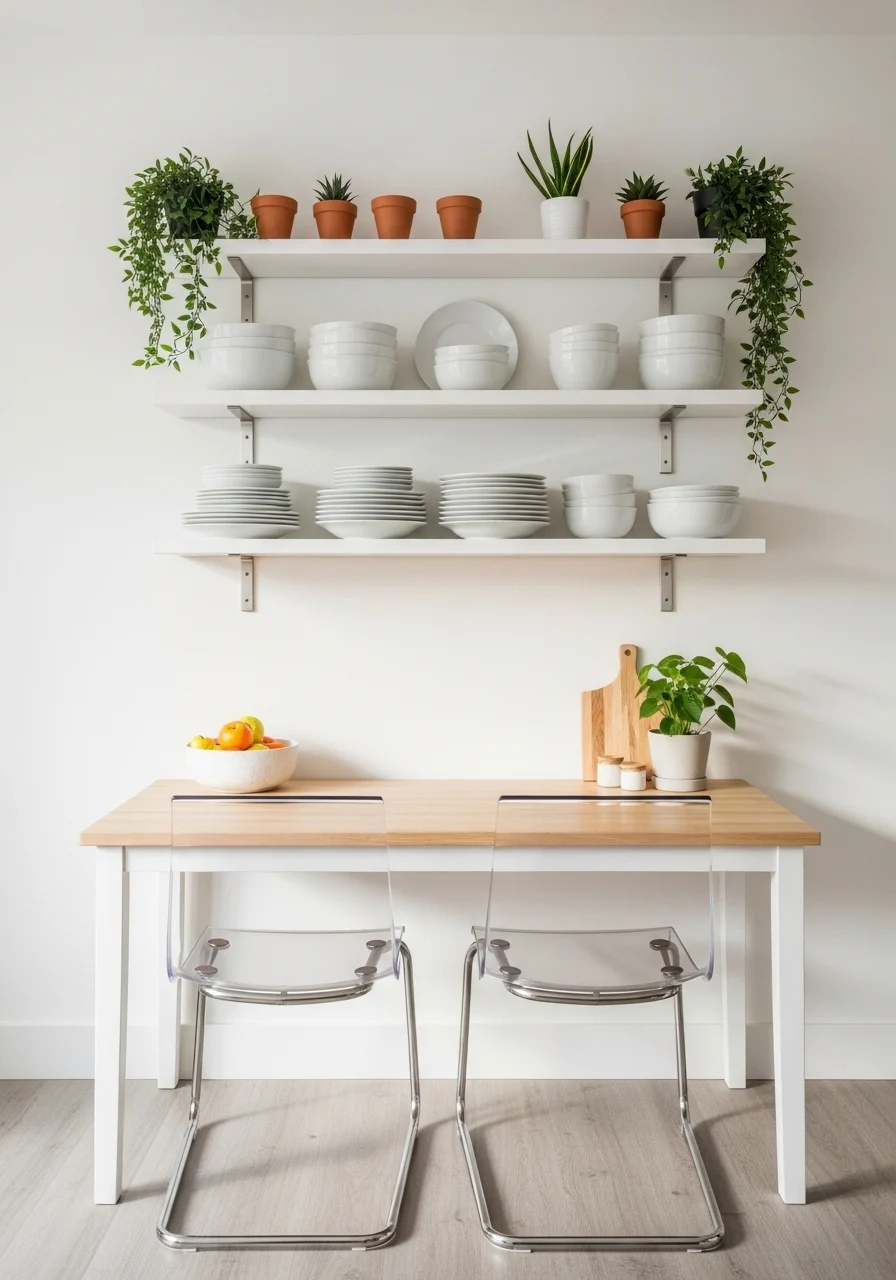
Open shelving moves storage off the floor and makes essentials accessible. It also draws the eye upward, making the room feel taller. This solution helps you store dishes, glassware, and decor without losing square footage.
Key Elements (vertical storage, space-saving dining)
- Floating shelves in wood or white
- Plate racks or vertical dividers
- Baskets for linens and napkins
- Hooks beneath shelves for mugs
- Slim narrow dining table or console
- Accent lighting under shelves
- Wall-mounted spice rails if near kitchen
- Decorative boxes to conceal clutter
How to Achieve This Look
- Identify a wall near the dining spot for shelving.
- Install shelves staggered for visual interest.
- Store everyday plates and glasses on lower shelves.
- Use baskets and boxes for small items and linens.
- Add hooks beneath for mugs or utensils.
- Install puck lights under shelves for warm task lighting.
- Keep heavy items low and lighter decor high.
- Rotate displayed items seasonally to refresh the look.
How to Style / Use It
Display a mix of function and decor to stay pretty and useful. Use matching baskets to keep the look tidy. Label boxes for fast access when you host.
12. Glass Table and Lucite Chairs for Visual Space
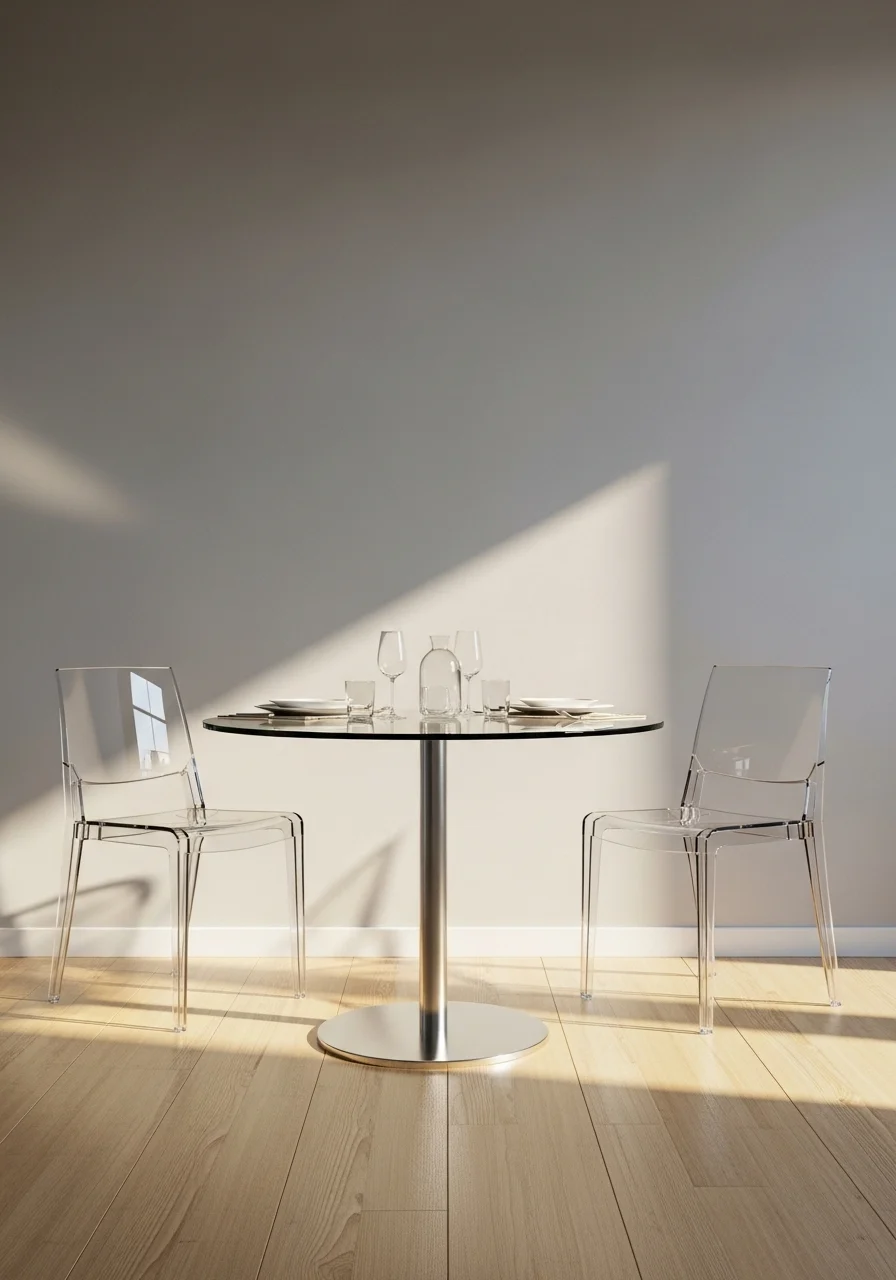
Clear furniture reduces visual clutter and keeps sightlines open. A glass table and lucite chairs make a room feel less crowded without sacrificing function. This is perfect if you want a modern, airy feel.
Key Elements (transparent furniture, open feel)
- Tempered glass tabletop (round preferred)
- Lucite or acrylic chairs
- Minimal metal or brass accents
- Simple centerpiece (single candle or small plant)
- Low-profile rug
- Natural light to amplify clarity
- Soft cushion inserts for chair comfort
- Neutral wall color
How to Achieve This Look
- Choose a sturdy tempered glass table sized for the space.
- Pick lucite chairs for transparency and lightness.
- Add a thin rug to anchor the table.
- Keep tabletop styling minimal to avoid clutter.
- Place lighting to avoid harsh reflections.
- Use felt pads under chair feet to prevent scratches.
- Consider seat cushions for longer comfort.
- Clean surfaces regularly to keep the look pristine.
How to Style / Use It
Pair with metallic accents to add warmth. Swap cushions for seasonal color. Use glass surfaces for quick visual continuity in open-plan rooms.
13. Small Dining Room Ideas That Save Space: Bench with Hidden Storage
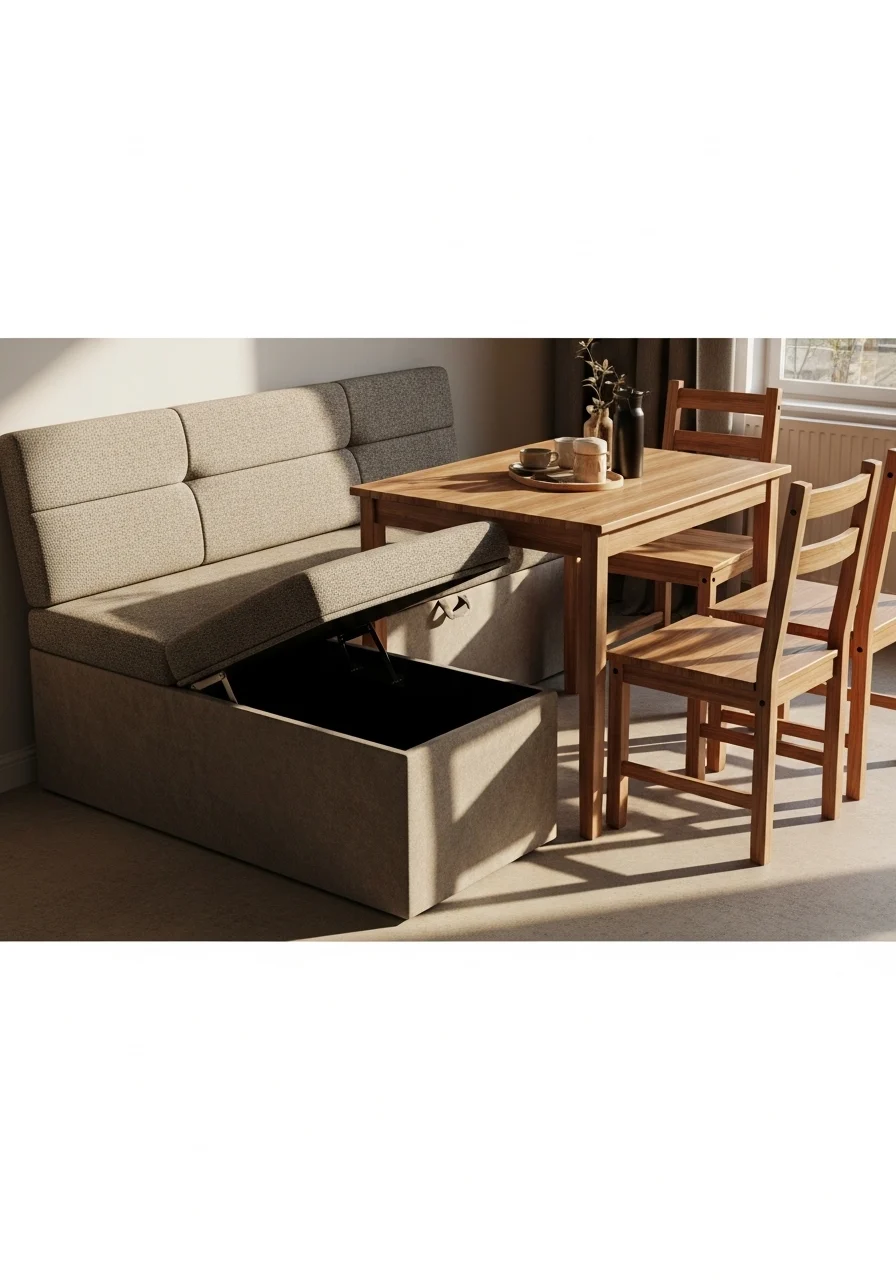
A storage bench combines seating plus tucked-away storage for linens, board games, or cookware. It keeps dining essentials close and out of sight. This approach is great if you want practical seating that hides clutter.
Key Elements (bench storage, compact dining)
- Upholstered bench with hinged seat
- Durable fabric: performance linen or microsuede
- Rectangular or narrow table
- Two slim chairs opposite bench
- Soft throw pillows for comfort
- Felt-lined storage compartment
- Small tray on tabletop
- Neutral or warm color palette
- Stain-resistant finish on upholstery
How to Achieve This Look
- Select a bench sized to the table length.
- Ensure the hinge mechanism is sturdy and safe.
- Line storage with felt or fabric bins to protect contents.
- Pair with simple chairs on the opposite side.
- Add pillows that coordinate but don’t overwhelm.
- Keep heavier items at the bottom of storage.
- Use a tray on top of the bench when seating isn’t required.
- Keep upholstery treated for stains if you have kids.
How to Style / Use It
Use the bench for everyday meals and hide tablecloths, chargers, or toys inside. Rotate pillow covers to refresh looks. Keep the top of the bench free when guests arrive to allow for seating.
14. Mirror Wall and Slim Buffet for Visual Depth
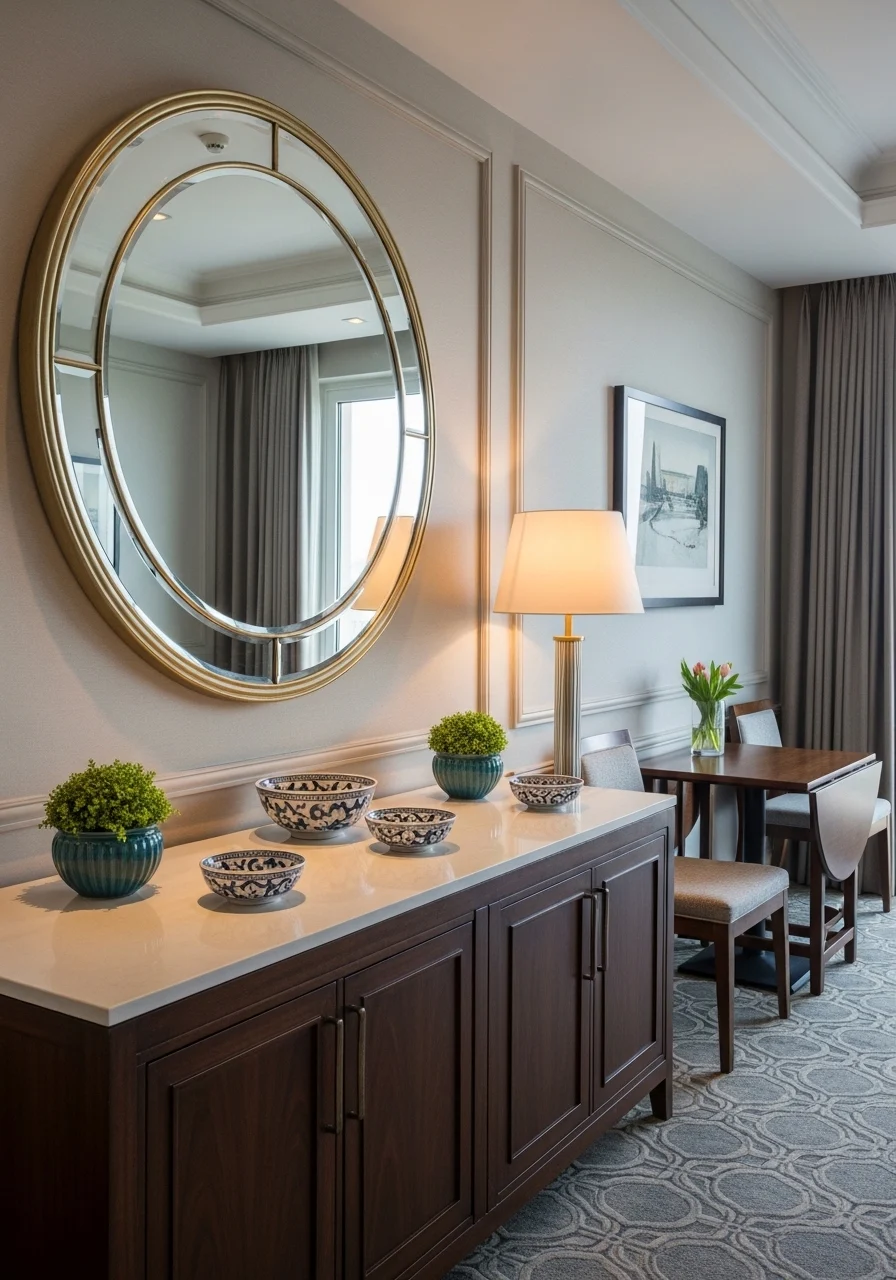
Mirrors reflect light and visually widen small dining rooms. A slim buffet provides necessary storage without bulk. This combo brightens the space and creates a polished entertaining zone.
Key Elements (visual expansion, slim storage)
- Large round or rectangular mirror
- Slim buffet or credenza (12–16" deep)
- Two chairs or stools nearby
- Minimal tabletop decor (tray, plant)
- Matching hardware finishes
- Warm metallic accents for contrast
- Task lighting (sconces or a pendant)
- Neutral wall paint to maximize reflection
How to Achieve This Look
- Hang a large mirror across from a light source if possible.
- Choose a slim buffet that stores dishes and linens.
- Keep the tabletop organized with trays and essentials.
- Use matching finishes for a cohesive look.
- Add sconces on either side of the mirror for balance.
- Use the buffet top as a serving station when hosting.
- Keep the mirror clean to sustain the illusion of space.
- Use low-profile rugs to prevent visual chopping.
How to Style / Use It
Place drinks and appetizers on the buffet during parties. Store seasonal tableware inside to minimize countertop clutter. Switch mirror shapes or frames to change the room’s mood.
15. Small Dining Room Ideas That Save Space: Slim Folding Chairs That Stash Away
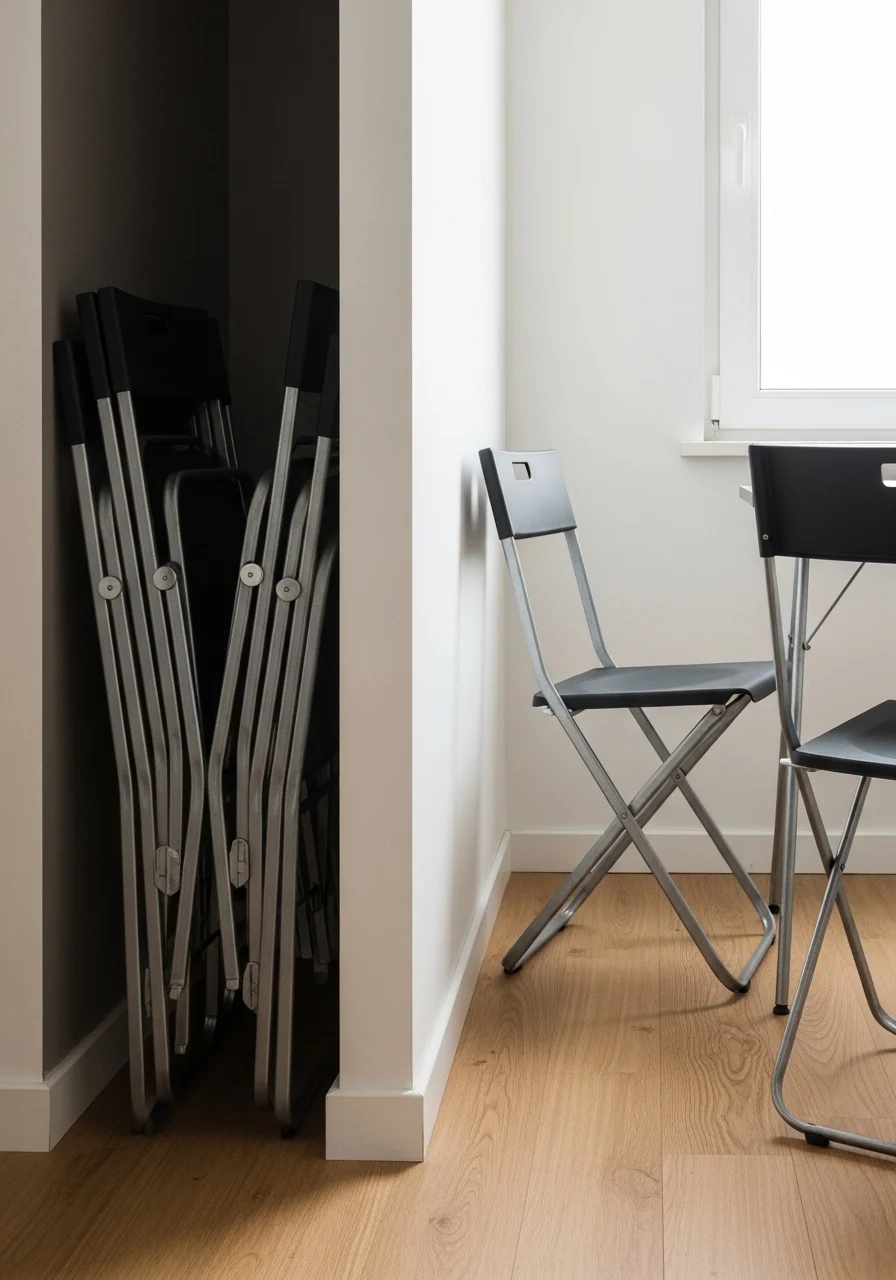
Slim folding chairs are lifesavers for flexible seating. You can keep them folded in a closet or behind a door. Choose models that are comfortable and attractive so they don’t feel like second-class seating.
Key Elements (folding seating, flexible dining)
- Slim metal or wood folding chairs
- Comfortable seat padding or cushions
- Coordinating chair colors (neutral palette)
- Compact storage rack or hanging hooks
- Lightweight throw cushions
- Non-marring feet or pads
- Matching table that pairs well with chairs
- Small storage basket for cushions
How to Achieve This Look
- Choose folding chairs that balance comfort and thin profile.
- Add thin removable cushions for longer meals.
- Install a vertical rack or wall hooks in a closet for storage.
- Keep a small carrying bag or strap for easy transport.
- Practice setup and fold-down so it’s quick.
- Match chair color to your table for cohesion.
- Use felt pads to protect floors.
- Replace cushions as needed for wear.
How to Style / Use It
Keep folded chairs in a narrow closet or behind furniture. Add patterned cushions for personality during gatherings. Use them in other rooms when needed, then return them to storage.
16. Nesting Tables and Collapsible Trays for Serving Flexibility
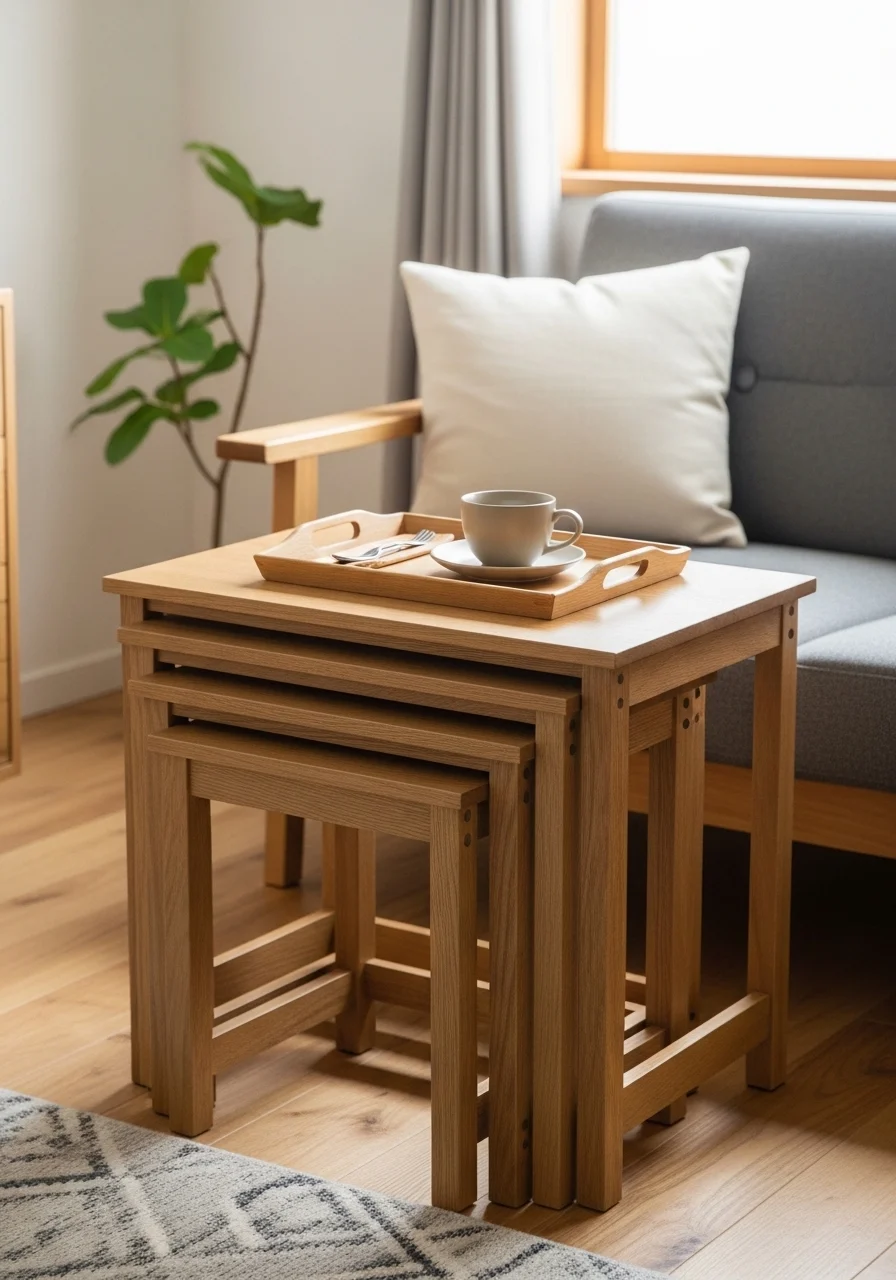
Nesting tables and trays expand surfaces only when you need them. They’re handy for serving, working, or holding extra plates during dinners. When not in use, they hide away neatly.
Key Elements (nesting tables, serving trays)
- Set of 2–3 nesting tables in wood or metal
- Collapsible serving trays with handles
- Lightweight, stackable design
- Durable surface finishes
- Small storage basket for trays
- Coordinating tabletop decor
- Felt or rubber feet to protect floors
How to Achieve This Look
- Pick nesting tables sized to slide beneath the main table or sideboard.
- Store trays in a basket or cabinet when not in use.
- Use nesting tables for extra plate space during dinners.
- Pull out only as many tables as required.
- Choose trays with raised edges to avoid spills.
- Group trays with napkins and cutlery on one table for easy passing.
- Collapse or nest them back after the meal.
How to Style / Use It
Use nesting tables as temporary serving stations. Keep a set near your dining area for parties. Choose tray patterns or colors that fit your room’s scheme.
17. Stackable Stools That Double as Side Tables
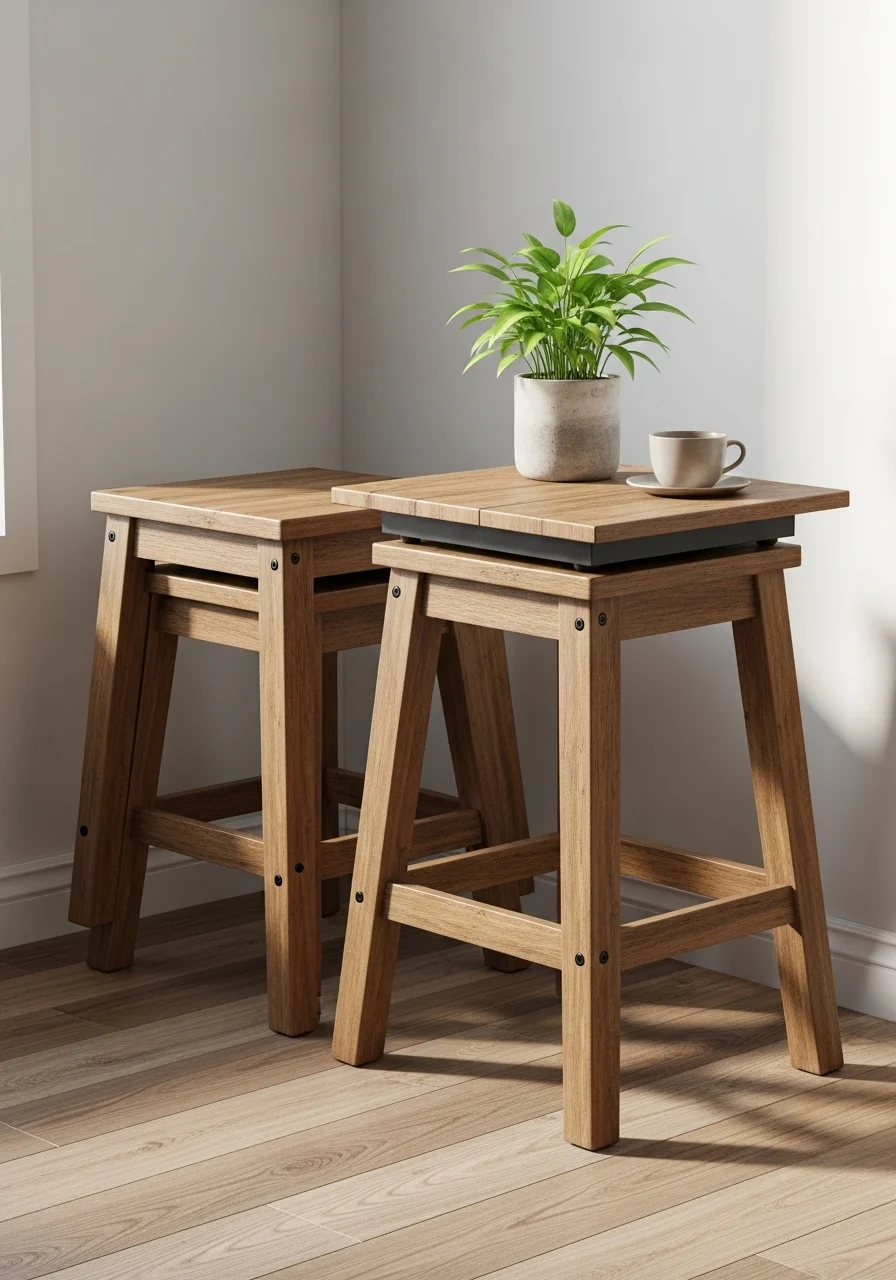
Stackable stools are easy to store and very versatile. Pull them out for guests, or use one as a side table in a pinch. They’re ideal when every inch of floor real estate matters.
Key Elements (stackable seating, multi-use)
- Lightweight wooden or metal stools
- Non-slip stacking design
- Seat pads for comfort
- Protective feet to prevent floor marks
- Small tray for tabletop use
- Matching finishes with other furniture
How to Achieve This Look
- Choose stools that stack neatly to a compact height.
- Keep them near the dining area for quick access.
- Add thin cushions for comfortable seating.
- Use one stool as a side table with a small tray.
- Stack them when not in use to save floor space.
- Wipe down regularly to prevent scuffs.
- Add rubber bumpers for silent stacking.
How to Style / Use It
Stack near a closet or nook. Use them as extra seating for game night. Rotate cushions for seasonal color updates.
18. Vertical Herb Garden to Free Counter Space
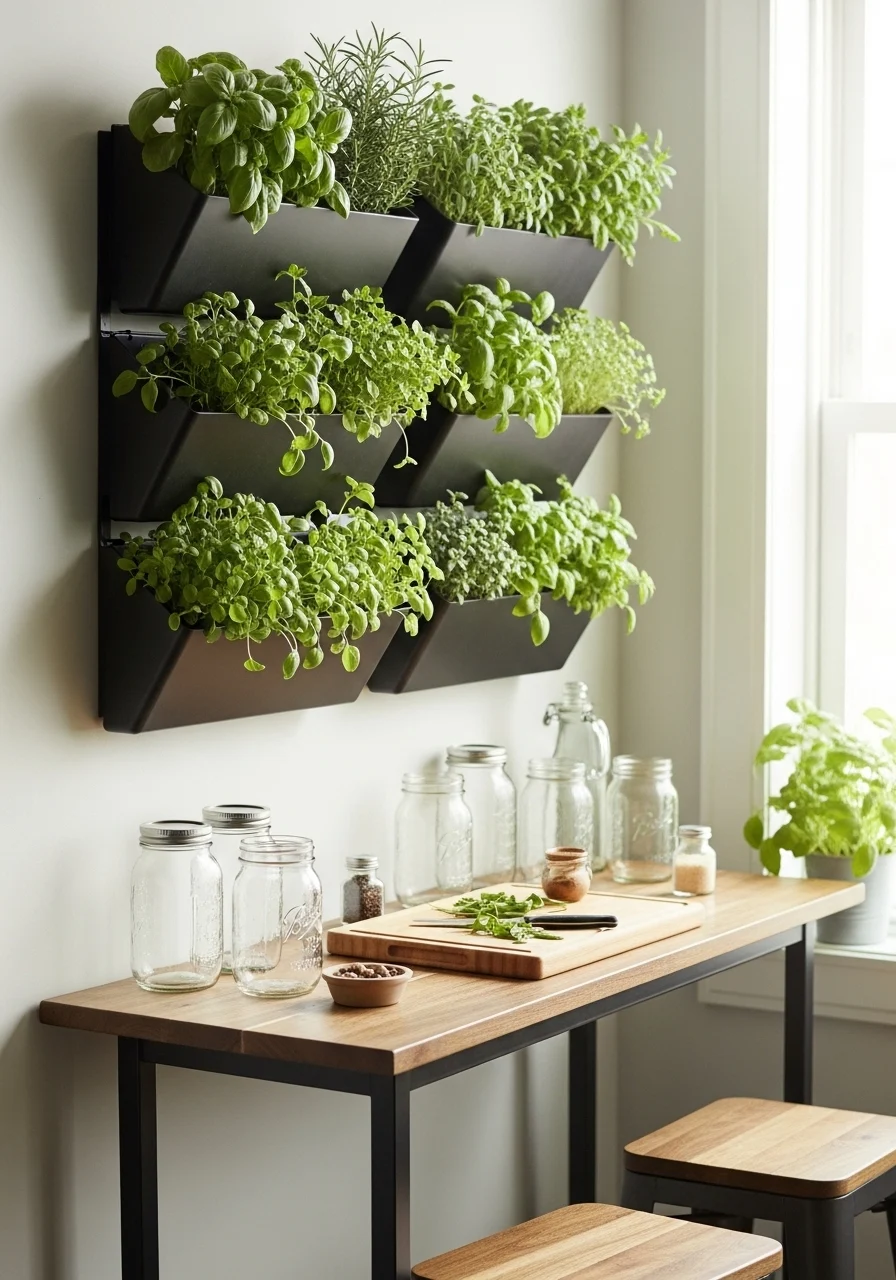
A vertical herb garden brings life and function without taking floor space. It keeps fresh herbs within arm’s reach and replaces bulkier pots on counters. The greenery also softens the room and improves air quality.
Key Elements (vertical garden, kitchen dining)
- Wall-mounted planter or tiered shelf
- Herb pots: basil, rosemary, mint, thyme
- Drip-proof tray or saucer system
- Small narrow table or ledge beneath
- Grow lights if low-light area
- Watering bottle or spray for maintenance
- Wall anchors for planter stability
How to Achieve This Look
- Choose a sunny wall or add grow lights.
- Mount planters at reachable heights for harvesting.
- Use lightweight pots with proper drainage.
- Place a narrow table beneath for harvesting and prep.
- Water carefully to avoid drips on the floor.
- Rotate pots occasionally for even growth.
- Trim herbs regularly to encourage fuller plants.
- Replace seasonal herbs as needed.
How to Style / Use It
Use fresh herbs in meals straight from the wall. Swap plants seasonally to keep the display lively. Keep a small pair of scissors nearby for quick snips.
19. Built-In Banquette with Under-Seat Drawers (Custom)
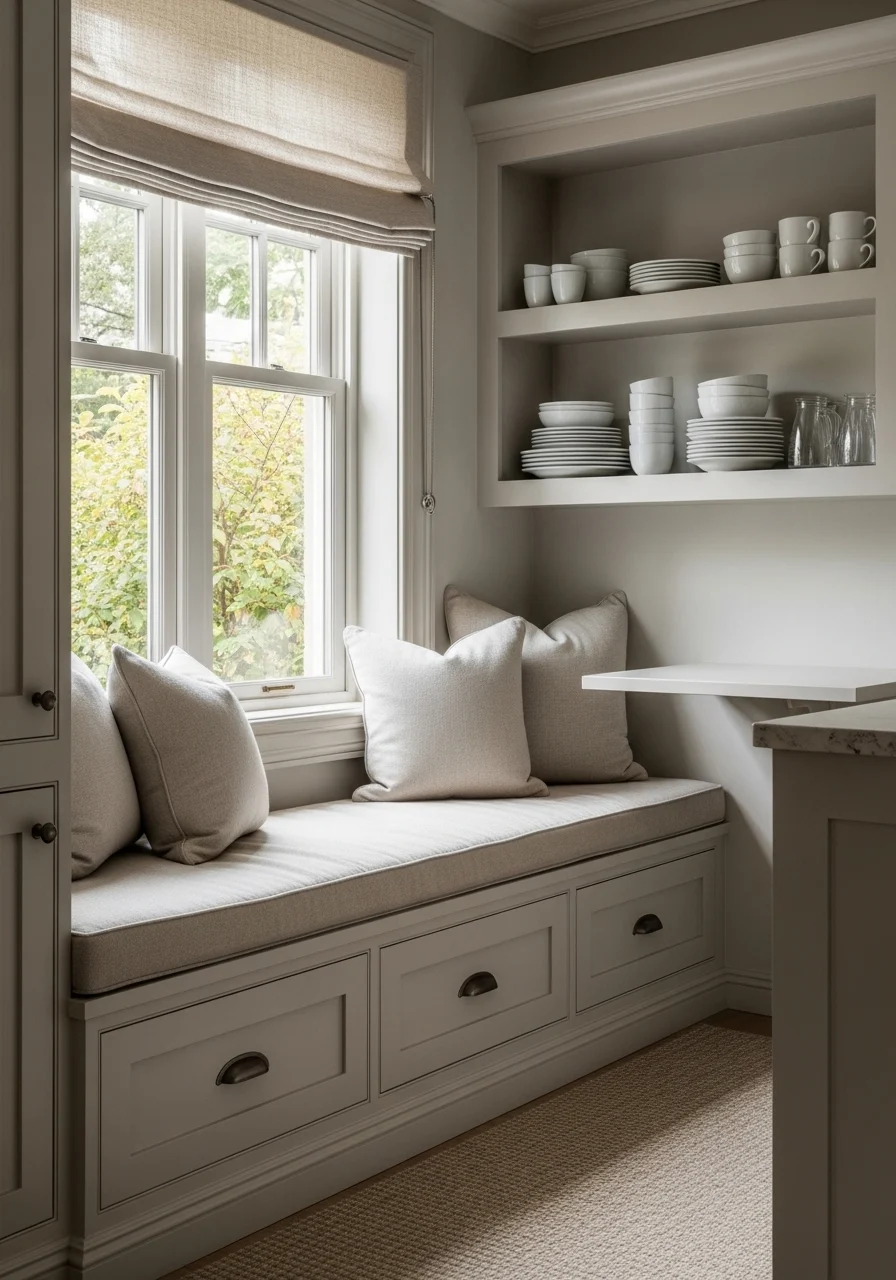
A custom-built banquette with deep drawers offers large hidden storage and neat lines. It’s a long-term investment that maximizes under-seat space for bulky items. This is ideal if you want a tailored, streamlined dining area.
Key Elements (custom banquette, hidden storage)
- Built-in bench with full-depth drawers
- Soft cushion and removable covers
- Oversized drawer pulls or push-latch system
- Slim table with sturdy base
- Wall protective paint or backsplash
- Coordinated throw pillows
- Drawer organizers or bins
- Floor glides to protect finish
How to Achieve This Look
- Measure bench area and drawer depth requirements.
- Build or commission drawers on smooth glides.
- Choose removable cushion covers for cleaning.
- Add matching pillows and a durable table top.
- Organize drawers with bins for linens, board games, or cookware.
- Ensure drawer access clears table legs.
- Install wall lighting to avoid floor fixtures.
- Maintain drawer glides to avoid sticking.
How to Style / Use It
Use drawers for rarely used platters and seasonal serving pieces. Keep cushion covers neutral and swap pillows for seasonal color. Use drawer labels internally for quick retrieval.
20. Light Colors, Minimal Patterns, and Slim Lighting
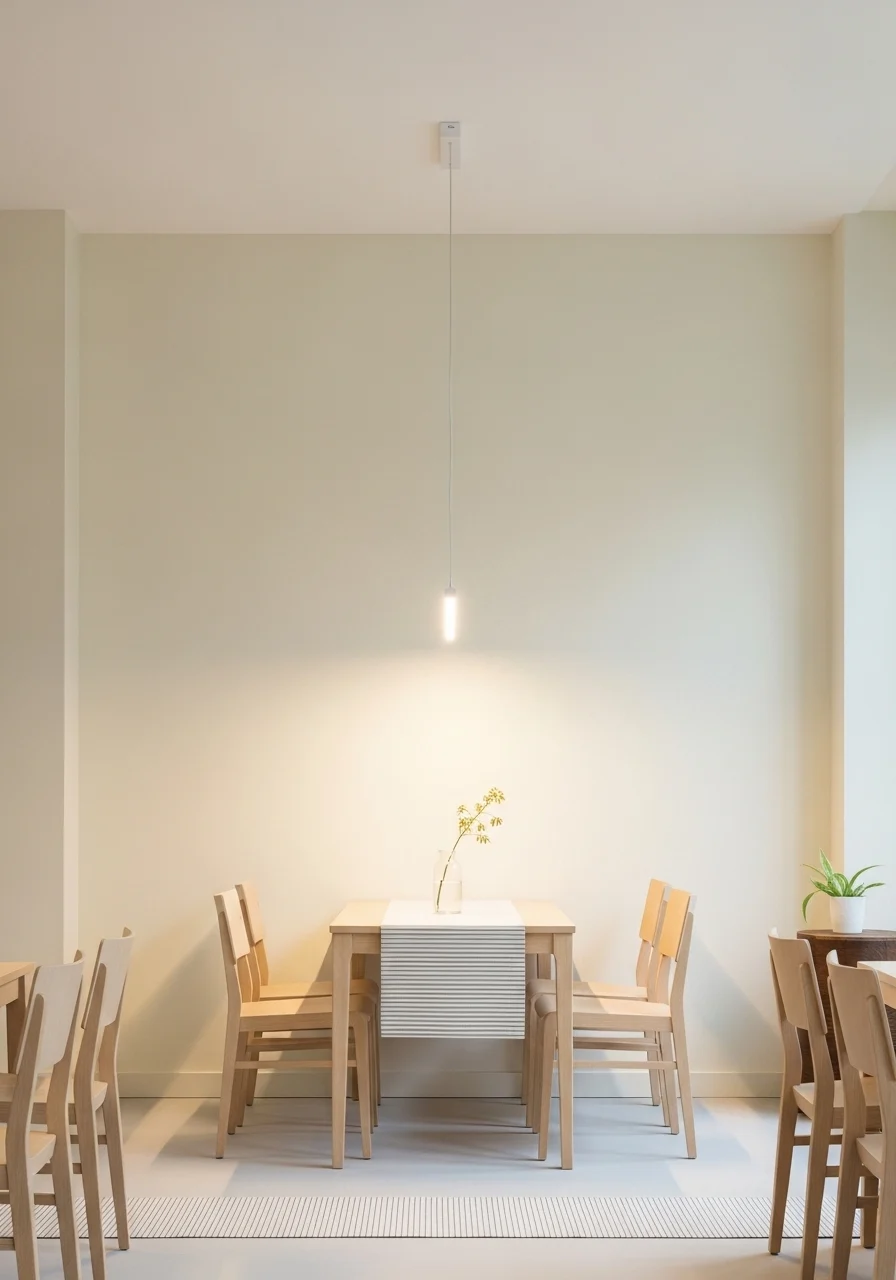
Light colors and minimal patterns visually expand small dining rooms. Slim, linear lighting keeps the eye moving vertically and avoids visual bulk. Together they create a breezy, spacious feeling.
Key Elements (visual tricks, light palette)
- Pale wall paint (cream, soft gray, pale blue)
- Slim pendant or linear light
- Neutral furniture with clean lines
- Minimal patterned textiles
- Lightweight curtains or none at all
- Reflective surfaces like subtle gloss or glass
- Small-scale artwork
- Low-profile rug
How to Achieve This Look
- Paint walls in a light, warm tone to reflect light.
- Choose slim-profile lighting that hangs above the table.
- Keep furniture scale small and proportionate.
- Use minimal patterns and one accent color.
- Add a mirror to further bounce light.
- Keep window treatments sheer to let in daylight.
- Maintain uncluttered tabletops for visual calm.
- Change small accents seasonally to refresh.
How to Style / Use It
Rotate accent color through pillows and placemats. Use soft lighting for evenings to create atmosphere. Keep surfaces clear to emphasize openness.
21. Define the Dining Zone with a Rug and Pendant
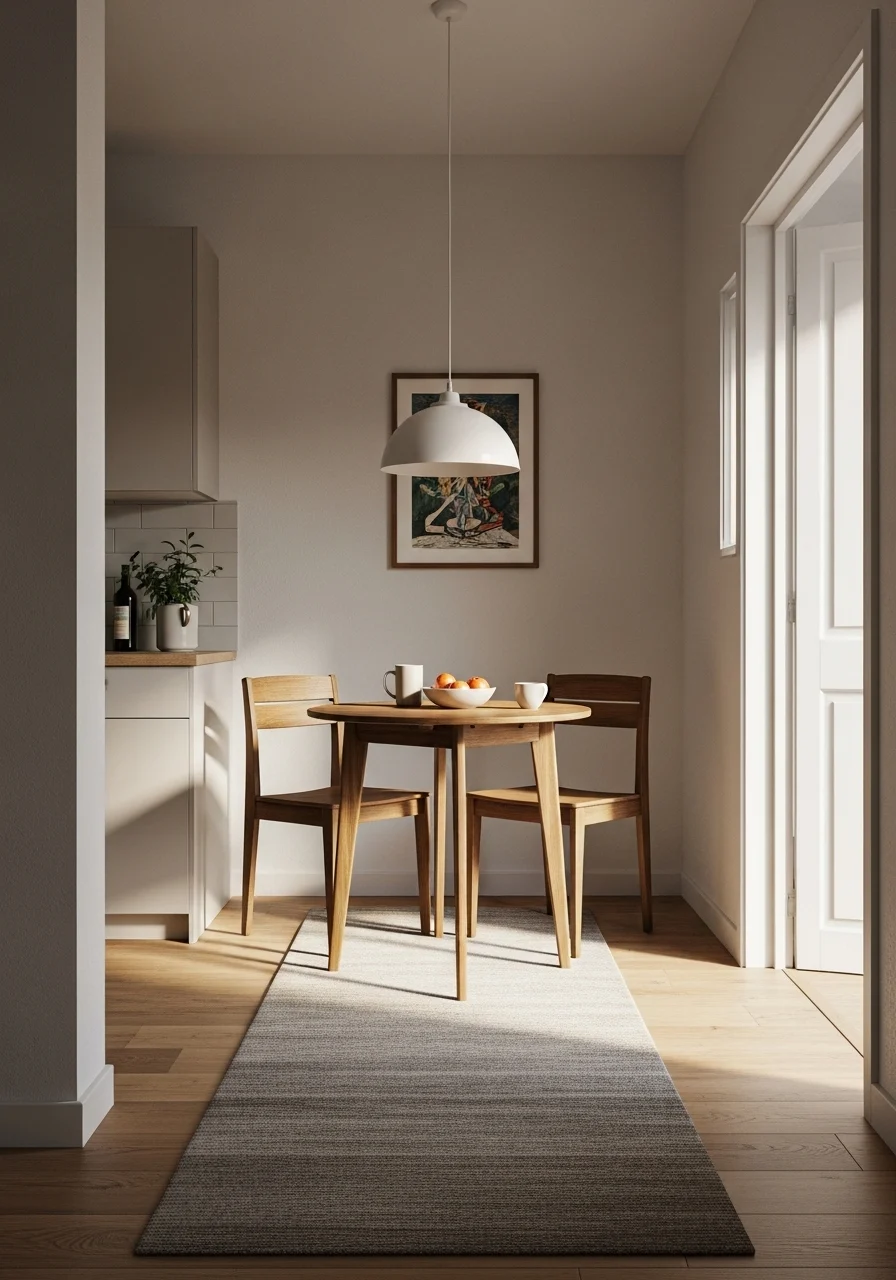
A well-chosen rug and pendant define a dining zone in an open-plan room. The rug visually separates the area, while the pendant provides focused light without eating floor space. This makes a small dining spot feel like a dedicated room.
Key Elements (zone definition, dining area)
- Narrow rectangular or round rug sized for chairs
- Single pendant centered over the table
- Small-scale table and chairs
- Coordinated color accent in rug and light
- Non-slip rug pad
- Wall art or floating shelf to anchor
- Low clutter tabletop items
- Soft chair cushions
How to Achieve This Look
- Measure so chairs remain on the rug when pulled out.
- Hang the pendant 28–34" above the tabletop.
- Choose a rug with a low pile for easy cleaning.
- Use a non-slip rug pad to prevent sliding.
- Add a small shelf or art to frame the zone visually.
- Keep table styling minimal to avoid clutter.
- Replace rug or lamp for seasonal updates.
- Maintain chair leg protectors to preserve the rug.
How to Style / Use It
Use the rug color to tie in cushions and wall art. Keep the pendant dimmable for mood control. Use the defined zone for daily meals and occasional work.
You now have 21 practical, stylish small dining room ideas that save space and reflect real-life needs. From fold-down tables to built-in banquettes and visual tricks like mirrors and light colors, there’s a solution for every tight footprint and decorating taste. Try one idea this weekend — even a small change can make mealtime feel more deliberate and pleasant.
Which idea caught your eye first? Pin the ones you love and share them with anyone wrestling with a tiny dining space. If you try one, come back and tell how it worked for your floor plan — we’d love to hear your before-and-after.