23 Study Room Decor Ideas That Feel Calm & Inspiring

A well-designed study room isn’t just about aesthetics. It directly shapes how you think, focus, and perform. The right environment reduces distractions, supports longer concentration, and creates a smoother workflow between tasks.
Soft tones calm the mind, natural materials add balance, and intentional lighting helps reduce fatigue during long hours of work or study. When planned well, even a small corner can function like a high-performance workspace.
This collection of ideas is designed to help you build a study environment that feels structured yet comfortable. Each concept is practical, adaptable, and easy to implement.
Use these ideas as flexible building blocks to refine your study room set up, improve your room redesign, and elevate your everyday study desk decor without overcomplicating the process.
1. Soft Neutral Palette with Warm Wood Accents
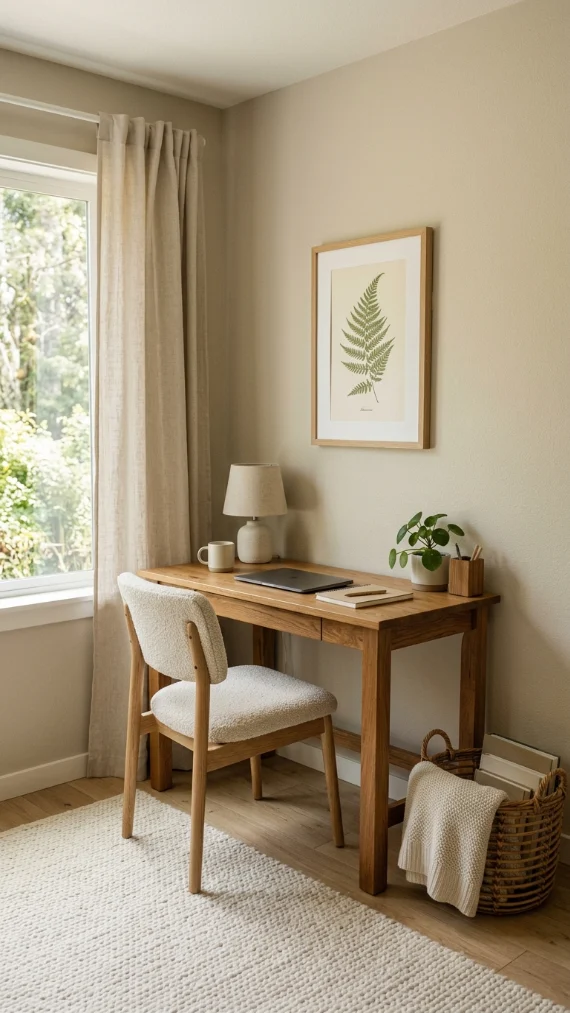
A soft neutral color palette is one of the easiest ways to create a calming and productive study space. Shades like warm white, greige, beige, and soft taupe help reduce visual distractions while making the room feel brighter and more open.
For a balanced room redesign, pair these soothing tones with warm wood finishes such as oak desks, walnut shelves, or bamboo storage pieces. Layer in linen curtains, woven baskets, and textured rugs to add warmth without cluttering the room.
Keep wall decor simple with a framed botanical print or minimalist artwork. This timeless combination works beautifully for home study rooms because it creates a focused atmosphere that feels both inviting and functional.
It also provides a versatile foundation for future study desk decor updates as your style evolves.
2. Biophilic Greens: Indoor Plants for Focus
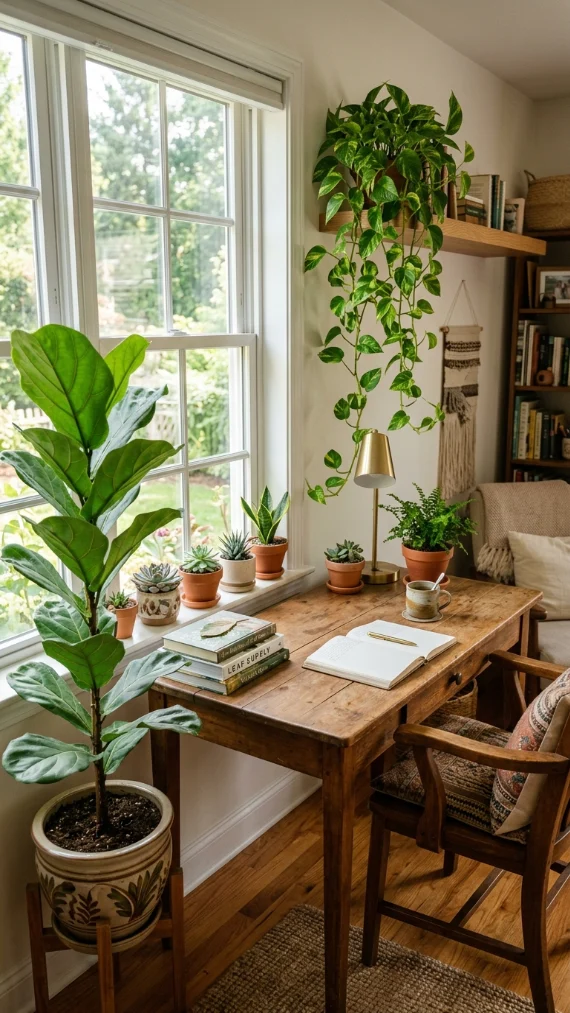
Bringing plants into your study room is a simple way to make the space feel more relaxing and inspiring. A thoughtful study room set up often includes greenery because natural elements help soften hard surfaces and add visual balance.
Choose easy-care plants such as pothos, snake plants, or zz plants for desks and shelves, while larger options like monstera or fiddle leaf figs can anchor empty corners.
In smaller home study rooms, wall-mounted planters or hanging baskets help save valuable desk space. Pair plants with ceramic pots or woven planters to introduce texture and warmth.
Even a few carefully placed plants can make the room feel more vibrant while supporting a calm environment that encourages focus and productivity throughout the day.
3. Ergonomic Desk Layout for Comfort & Flow

A beautiful study room should also support comfort during long hours of work or learning. An ergonomic layout starts with a desk and chair that encourage proper posture while keeping essential items within easy reach.
Position your monitor at eye level, keep your keyboard at a comfortable height, and ensure your feet REST flat on the floor. These practical adjustments can significantly improve your overall study room set up.
Add functional study room essentials such as a monitor riser, desk lamp, and document holder to make daily tasks easier.
Keep frequently used supplies organized in drawers or trays to reduce unnecessary movement and clutter. A comfortable workspace not only looks polished but also helps maintain focus and productivity throughout the day.
4. Layered Lighting: Task, Ambient & Accent
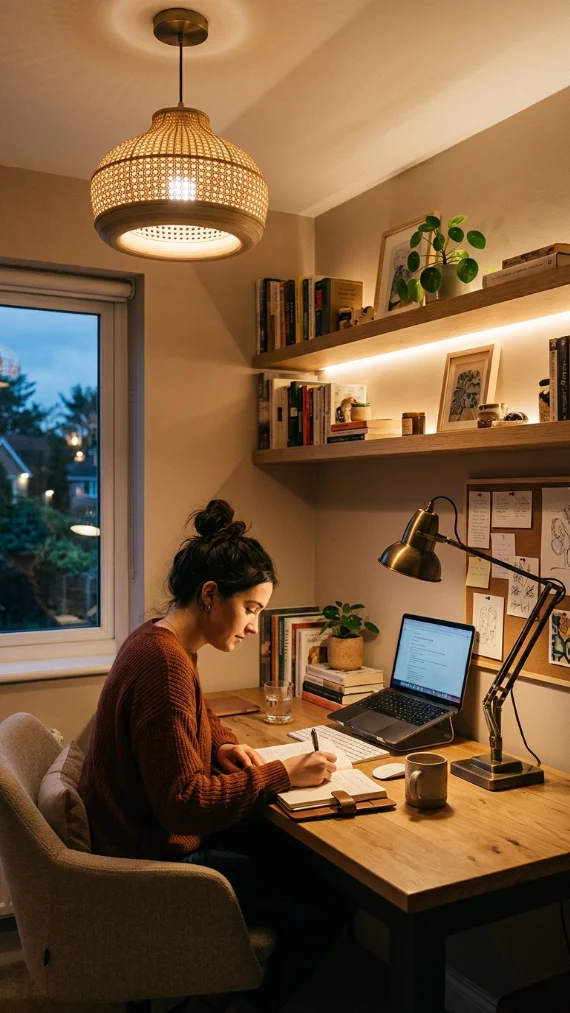
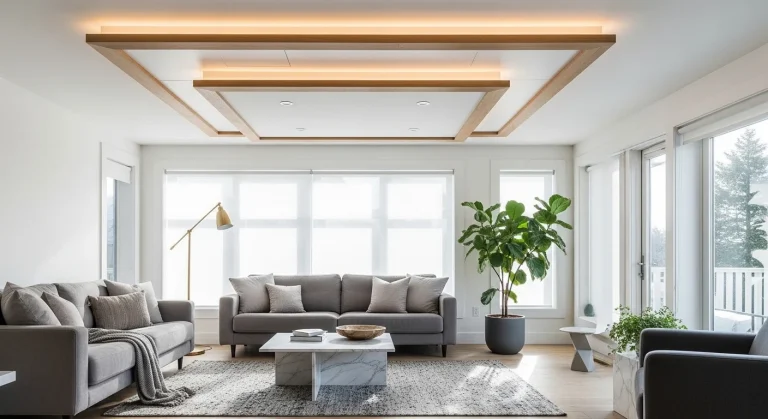
Lighting plays a major role in how a study room feels and functions. The most effective approach combines task, ambient, and accent lighting to create a space that adapts to different activities.
Start with a quality desk lamp to illuminate your work surface, then add overhead lighting to brighten the room evenly. Accent lighting, such as LED strips on shelves or wall sconces, introduces warmth and depth.
During a room redesign, lighting is often overlooked, yet it can completely transform the atmosphere of home study rooms.
Smart bulbs make it easy to switch between bright lighting for studying and softer lighting for relaxing. A layered lighting plan reduces eye strain while making the room feel more comfortable and inviting.
5. Cozy Reading Nook with a Comfy Chair
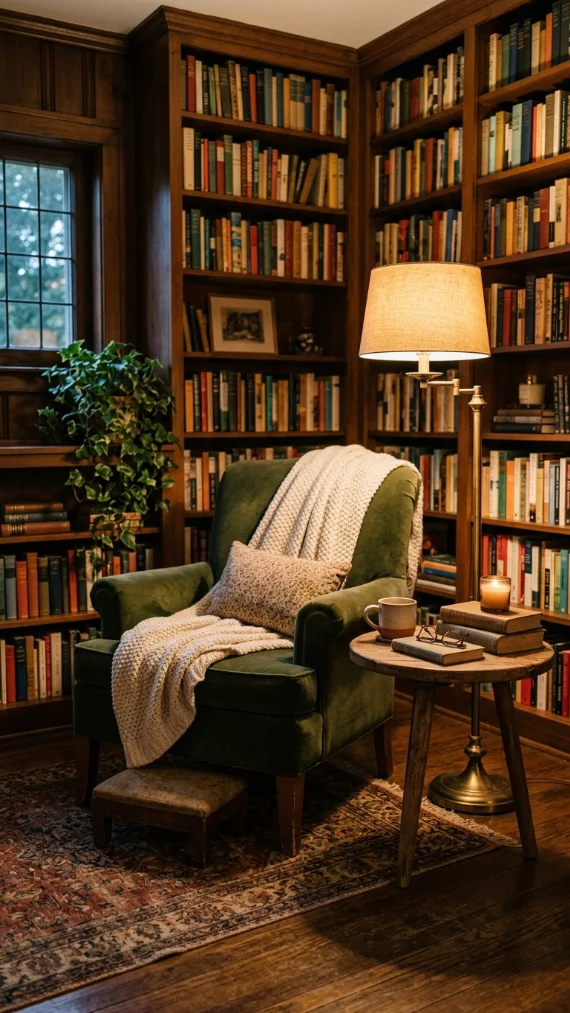
A reading nook adds comfort and versatility to any study space. Even in compact rooms, a comfortable chair, small side table, and floor lamp can create a dedicated area for reading, brainstorming, or taking a break between tasks.
This type of feature works especially well in home study rooms because it separates focused desk work from relaxation. Choose an upholstered chair with supportive cushions and add a soft throw blanket for extra comfort.
A nearby bookshelf or basket stocked with favorite reads makes the area feel intentional and organized. For a thoughtful study room set up, use a patterned rug to visually define the nook and complement your overall study desk decor.
A cozy retreat encourages restorative breaks that can improve concentration and productivity.
6. Minimalist Declutter System: Everything Has a Home
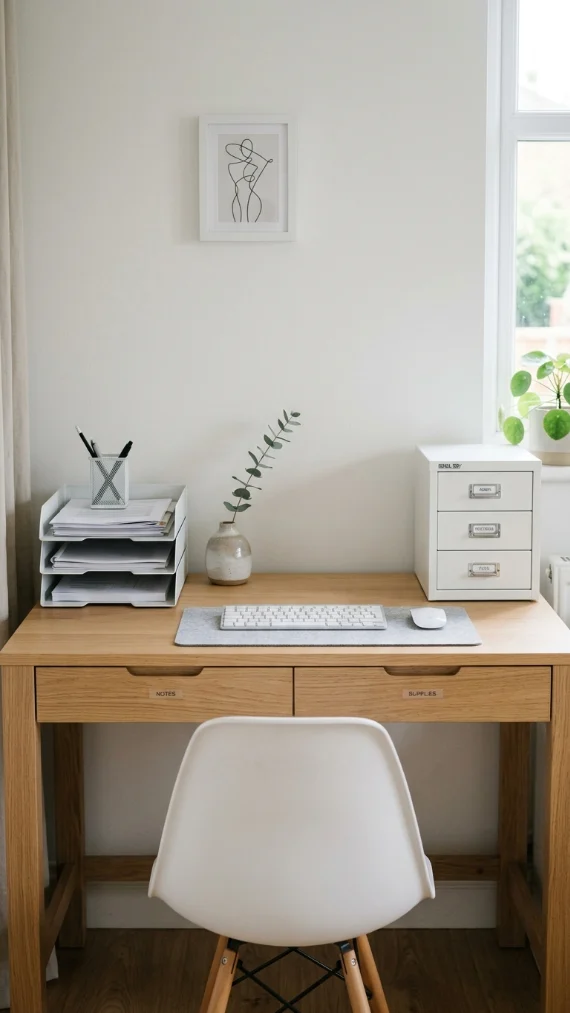
A clutter-free study room makes it easier to focus and stay productive throughout the day. Instead of allowing supplies and paperwork to pile up, create dedicated storage zones for everything you use regularly.
Drawer organizers, file holders, storage boxes, and labeled baskets are practical study room essentials that help maintain order without sacrificing style.
During a room redesign, prioritize closed storage whenever possible to reduce visual distractions. Keep your desktop limited to daily necessities and establish a quick end-of-day reset routine to maintain a tidy environment.
This approach works particularly well in smaller home study rooms, where every surface matters. A clean and organized study space feels calmer, functions better, and supports long-term productivity.
7. Statement Wall with a Calming Mural or Wallpaper
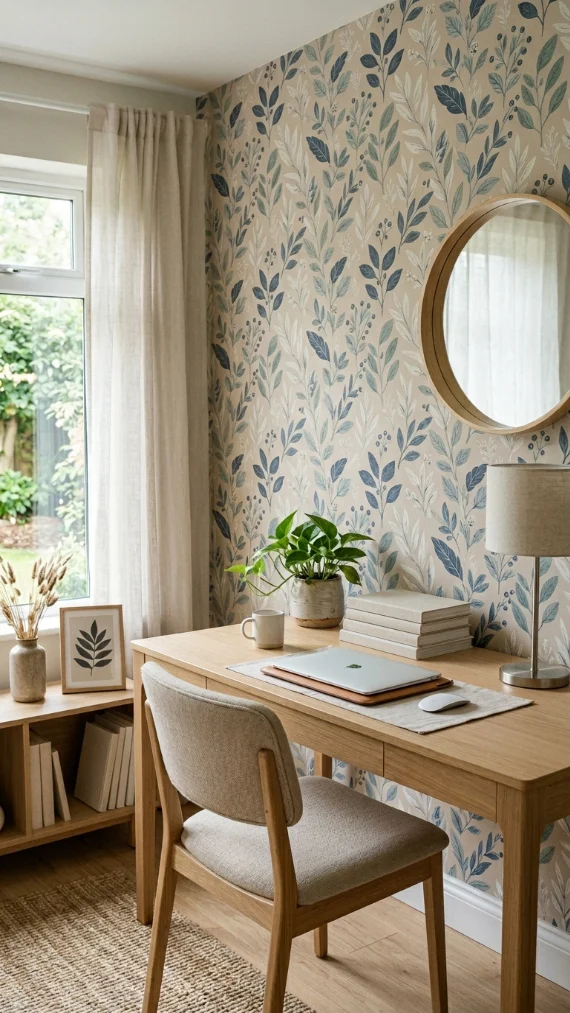
A statement wall can add character to a study room while maintaining a peaceful atmosphere. The key is choosing designs that feel inspiring rather than overwhelming.
Soft botanical wallpaper, watercolor-inspired murals, or subtle textured finishes create visual interest without becoming distracting. For a successful room redesign, limit the statement treatment to a single wall, ideally behind the desk or reading nook.
Pair it with simple furnishings and neutral colors to keep the room balanced. This design strategy works beautifully in home study rooms because it adds personality without creating clutter.
Whether you choose peel-and-stick wallpaper or a painted feature wall, the result is a more customized and inviting space that enhances your overall study room set up.
8. Sound-Soothing Acoustics: Rugs & Panels
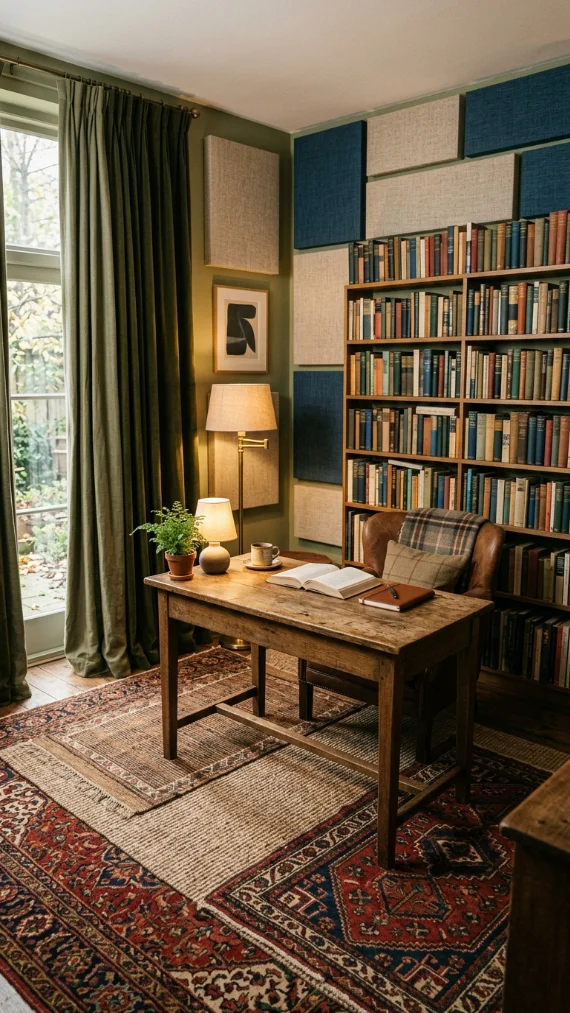
Noise and echoes can make concentrating more difficult, especially in busy households or apartments. Soft furnishings help absorb sound while making the room feel more comfortable and welcoming.
A large area rug, upholstered seating, thick curtains, and fabric-covered wall panels all contribute to a quieter environment. When planning a study room set up, consider sound control as one of the most valuable study room essentials.
Bookshelves filled with books can also act as natural sound barriers while adding storage and style. Layering different materials creates a more comfortable acoustic experience without compromising aesthetics.
A study room that feels quieter and more insulated encourages longer focus sessions and supports a more productive daily routine.
9. Multifunctional Storage: Baskets, Cubes & Closed Cabinets
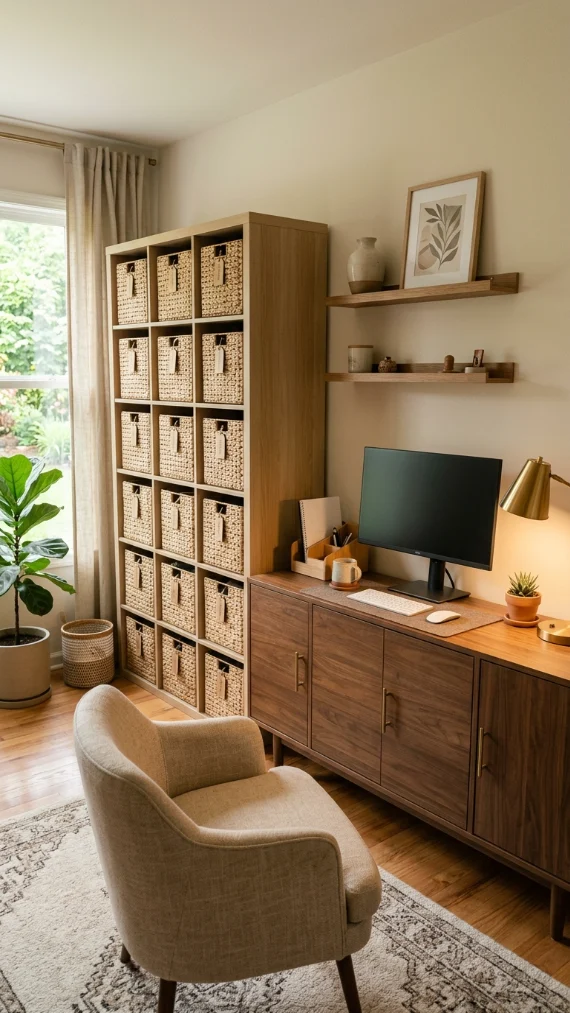
Smart storage solutions help maximize space while keeping everyday items organized and accessible. Cube shelving with baskets, closed cabinets, and under-desk drawers provide plenty of room for supplies without making the room feel crowded.
During a room redesign, look for furniture that serves multiple purposes, such as benches with storage compartments or credenzas that double as printer stations.
Organize items by category and store them in labeled containers to simplify daily routines. This approach is especially useful for home study rooms that must accommodate work materials, books, and personal belongings.
Combining open shelving with concealed storage creates a balanced look that feels organized and polished while supporting an efficient study room set up.
10. Color Pops for Brain Focus: Accent Colors Strategically
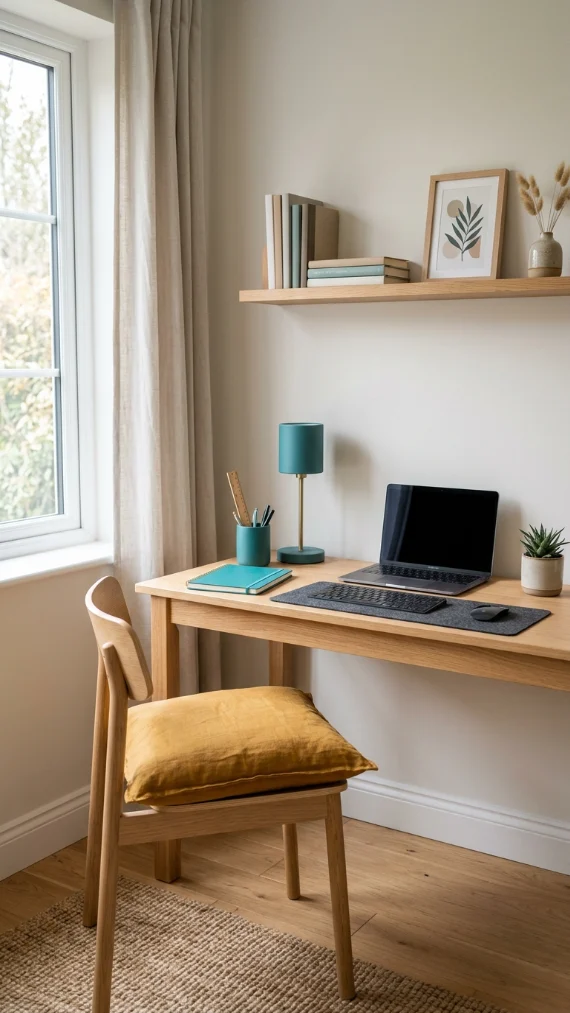
While neutral colors create a calm foundation, strategic accent colors can bring energy and personality to a study room.
Blues and greens are often associated with concentration, while warmer tones like mustard or terracotta can encourage creativity.
Rather than overwhelming the space, introduce color through study desk decor, artwork, cushions, storage boxes, or a painted bookshelf backing.
For a cohesive room redesign, limit accent colors to one or two shades that complement your primary palette. Small color moments can make the room feel more dynamic without creating visual clutter.
This thoughtful balance helps home study rooms remain productive and inviting while reflecting your personal style and supporting different types of work.
11. Natural Materials: Linen, Jute & Stone
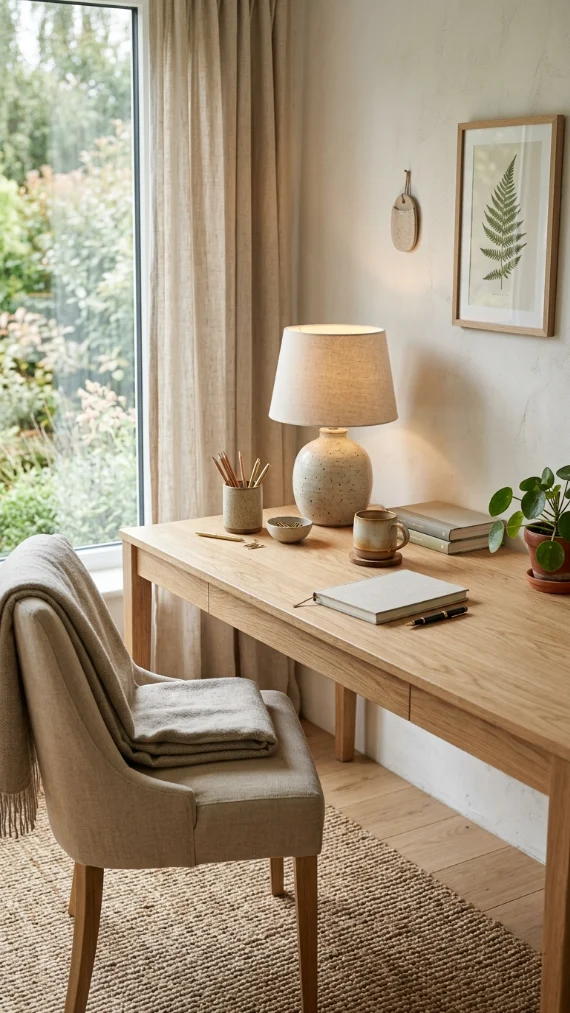
Natural materials bring texture, warmth, and timeless appeal to a study room. Elements such as oak desks, linen curtains, jute rugs, and ceramic accessories create a space that feels calm and welcoming without appearing overly decorated.
When planning a study room set up, focus on mixing a few natural finishes rather than introducing too many competing materials.
A woven basket for storage, a stone coaster, or a handcrafted ceramic pencil holder can add subtle character to your desk. These details work beautifully in home study rooms because they soften the look of technology and office furniture.
Natural materials also pair effortlessly with plants, neutral color palettes, and minimalist study desk decor, creating a balanced environment that supports focus and creativity.
12. Vintage Finds to Add Character
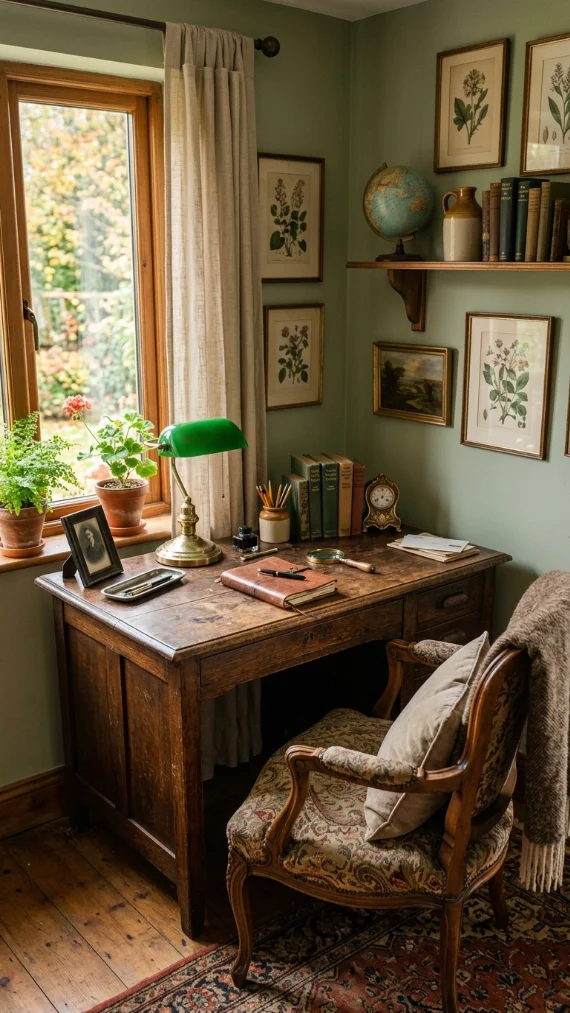
Vintage furniture and accessories can make a study room feel more personal and distinctive. A secondhand writing desk, antique lamp, or classic bookshelf introduces charm while helping the space feel collected over time.
During a room redesign, consider mixing one or two vintage finds with modern furnishings to create contrast without making the room feel dated.
A vintage piece often becomes a focal point that adds personality to otherwise simple home study rooms. Look for functional items that can be updated with new upholstery, fresh paint, or modern hardware if needed.
Paired with contemporary study room essentials, vintage accents create a study space that feels both practical and full of character, making everyday work and learning more enjoyable.
13. Floating Shelves & Creative Shelving Arrangements
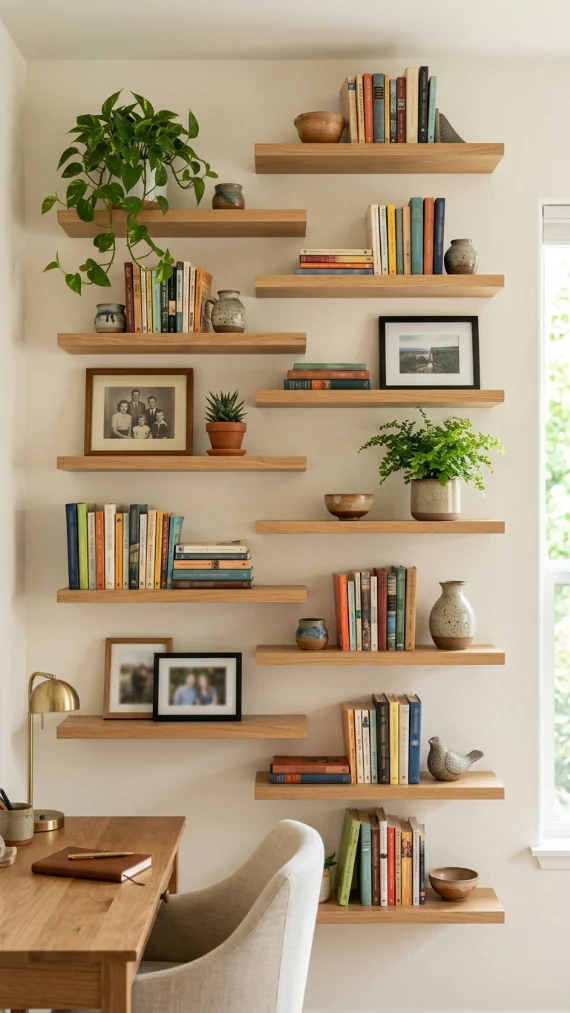
Floating shelves are a smart solution for maximizing vertical space while keeping the room visually open. They provide storage without the bulky appearance of large bookcases, making them ideal for smaller home study rooms.
Use shelves to display books, framed photos, decorative objects, and small plants while keeping frequently used materials within reach. For a functional study room set up, install shelves above or beside the desk to free up valuable workspace.
Vary the arrangement by mixing practical items with decorative accents to create a balanced look. Floating shelves also offer an easy way to refresh your study desk decor throughout the year.
The result is a room that feels organized, personalized, and thoughtfully designed without appearing crowded.
14. Goal Wall: Corkboard, Whiteboard, and Habit Trackers
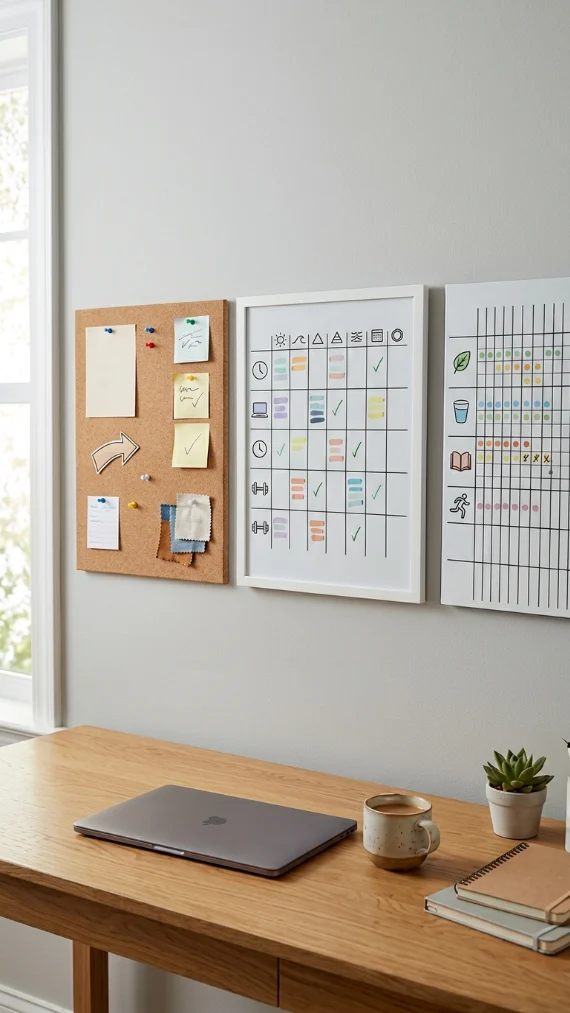
A dedicated goal wall helps keep priorities visible while reducing mental clutter. Combining a corkboard, whiteboard, calendar, or habit tracker creates a central place for planning projects, tracking deadlines, and celebrating progress.
This feature works particularly well in home study rooms because it supports productivity while adding a personal touch to the space.
During a room redesign, position the goal wall close enough to reference easily but far enough away to avoid constant distraction. Use simple color coding and keep only current priorities on display.
Alongside other study room essentials, a goal wall creates structure and encourages consistency. It transforms blank wall space into a functional design feature that supports both organization and motivation.
15. Sunlit Window Seat with Built-in Storage
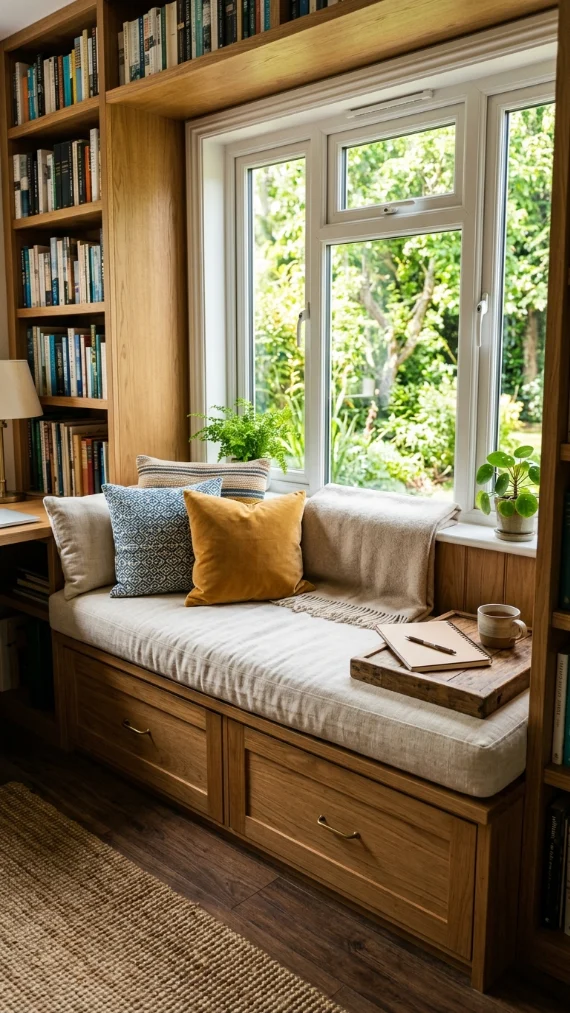
A window seat can transform an underused area into one of the most inviting spots in the room. Combining comfortable seating with hidden storage creates a feature that is both beautiful and practical.
Add cushions, throw pillows, and a small side table to create a relaxing space for reading, planning, or taking study breaks.
For a thoughtful study room set up, use the storage beneath the seat to organize books, supplies, or seasonal items. Natural light makes the area feel brighter and more uplifting, which is especially valuable in home study rooms.
Whether custom built or created using a storage bench, a window seat adds functionality, comfort, and visual appeal while maximizing available space.
16. Calming Scents & Air Quality: Diffusers & Clean Air Plants
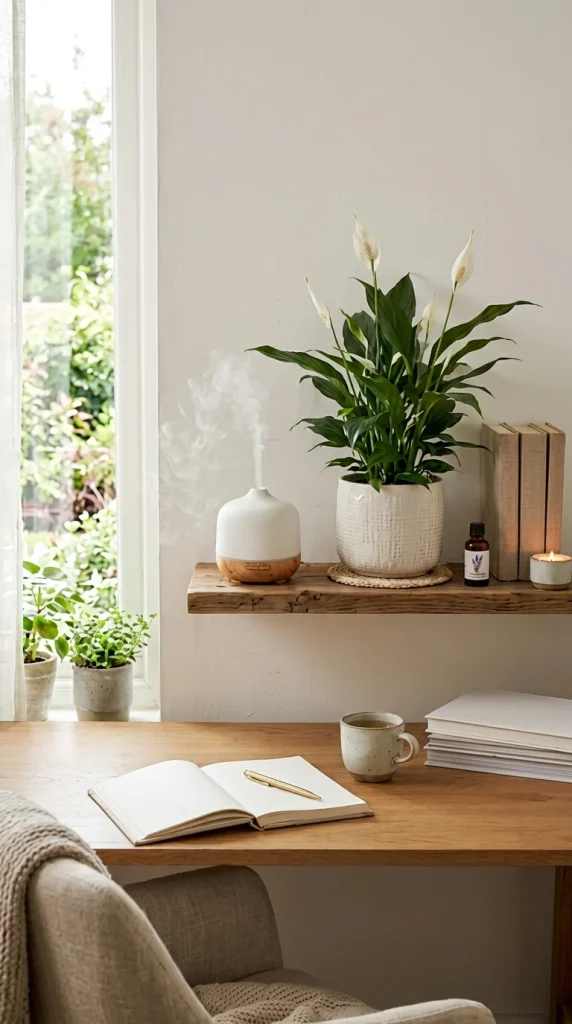
A study room should feel fresh, comfortable, and inviting throughout the day. Adding subtle scents and air-purifying plants can help create a more enjoyable environment without overwhelming the space.
Lavender, bergamot, and cedarwood are popular choices for diffusers because they provide a calming atmosphere while maintaining focus.
Pair them with easy-care plants such as peace lilies, spider plants, or rubber plants to enhance your study room set up naturally. Good ventilation is equally important, so open windows whenever possible to encourage Airflow.
These simple study room essentials contribute to a study space that feels cleaner, brighter, and more relaxing, helping you stay productive during long work or study sessions.
17. Layered Textures: Rugs, Throws & Cushions
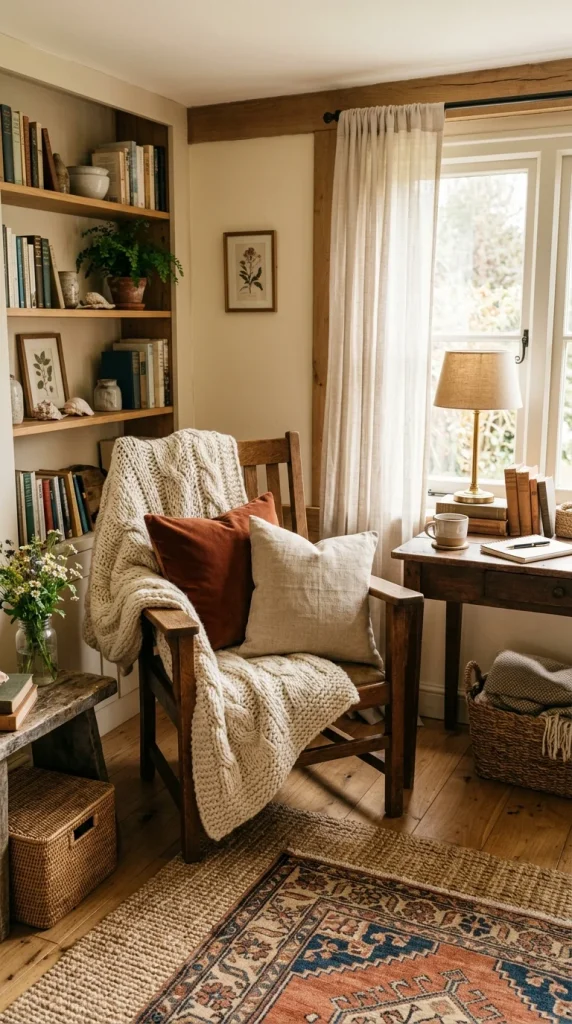
Texture is one of the easiest ways to make a study room feel warm and welcoming. Combining rugs, throws, cushions, and woven accents creates depth without relying on bold colors or excessive decor.
During a room redesign, start with a durable rug beneath the desk and add softer layers through textiles and upholstery. Mix materials like linen, cotton, wool, and knit fabrics to create visual interest while maintaining a cohesive palette.
This approach works especially well in home study rooms, where comfort can influence how much time you enjoy spending in the space.
Thoughtful textural layers also elevate your study desk decor, helping the room feel polished, inviting, and perfectly suited for focused work.
18. Personalized Inspiration: Vision Boards & Meaningful Objects
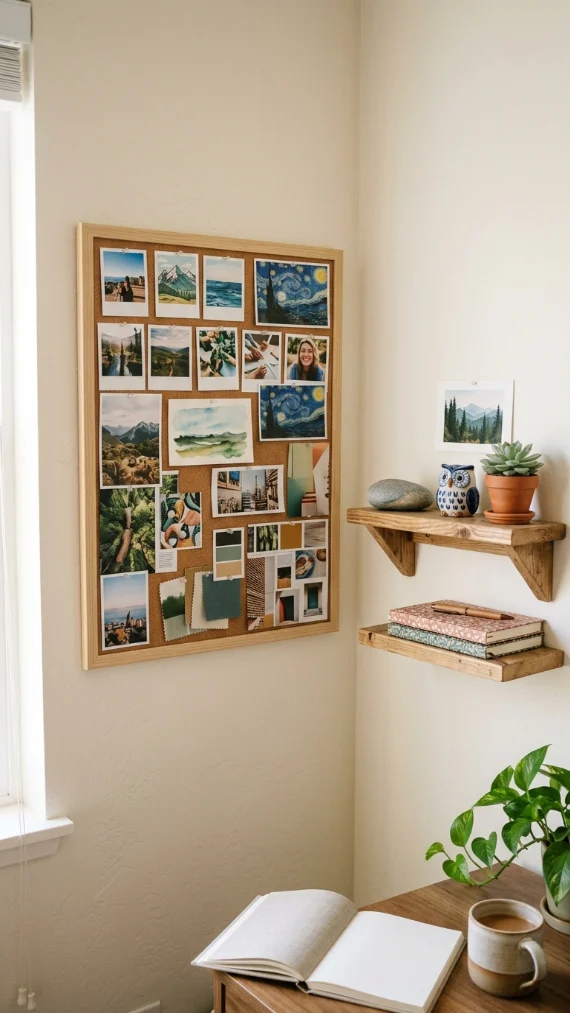
A study room should reflect your goals and interests while remaining organized and functional. A vision board is a great way to display aspirations, project ideas, favorite images, or personal achievements in a visually appealing format.
Keep the display curated and update it periodically to reflect current priorities. Complement it with meaningful decor such as travel souvenirs, framed photos, or treasured keepsakes that inspire you.
For a balanced study room set up, limit decorative items to a dedicated area rather than scattering them throughout the room. This keeps the space focused while still feeling personal.
Carefully selected decor can motivate you daily and make your home study rooms feel more connected to your goals and lifestyle.
19. Tech Tidy: Cable Management and Hidden Charging Stations
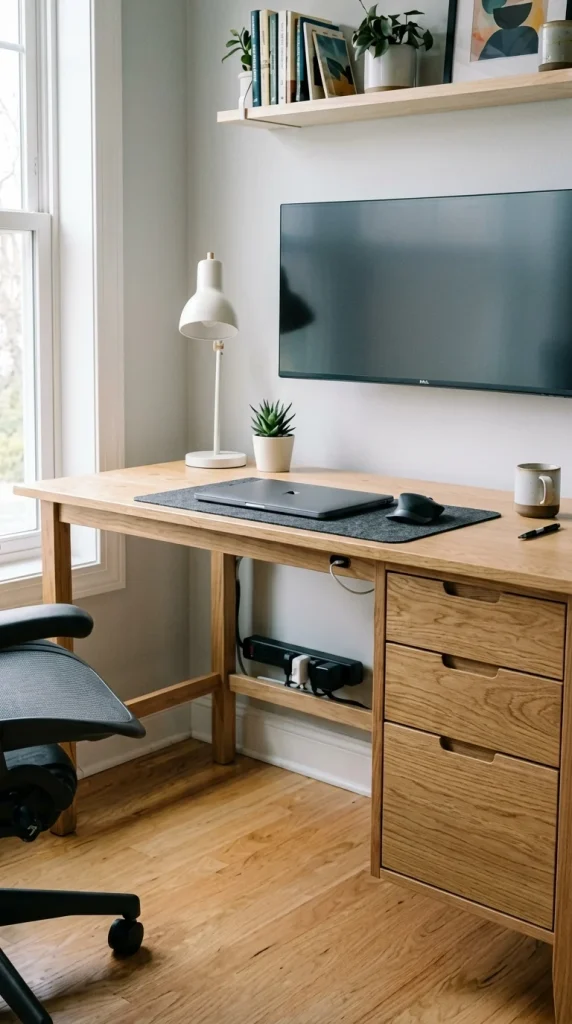
Even the most beautiful study room can feel cluttered when cables are visible everywhere. A tidy technology setup helps maintain a clean appearance while improving functionality.
Use cable trays, velcro ties, adhesive clips, and under-desk organizers to keep wires hidden and organized. During a room redesign, consider adding a concealed charging station where devices can power up without creating visual clutter.
Cable management is one of the most overlooked study room essentials, yet it can dramatically improve the overall appearance of your workspace.
Pair these solutions with streamlined study desk decor to create a clean and professional environment. A well-organized tech setup reduces distractions and helps maintain a productive atmosphere.
20. Flexible Layout: Folding Desks & Modular Furniture
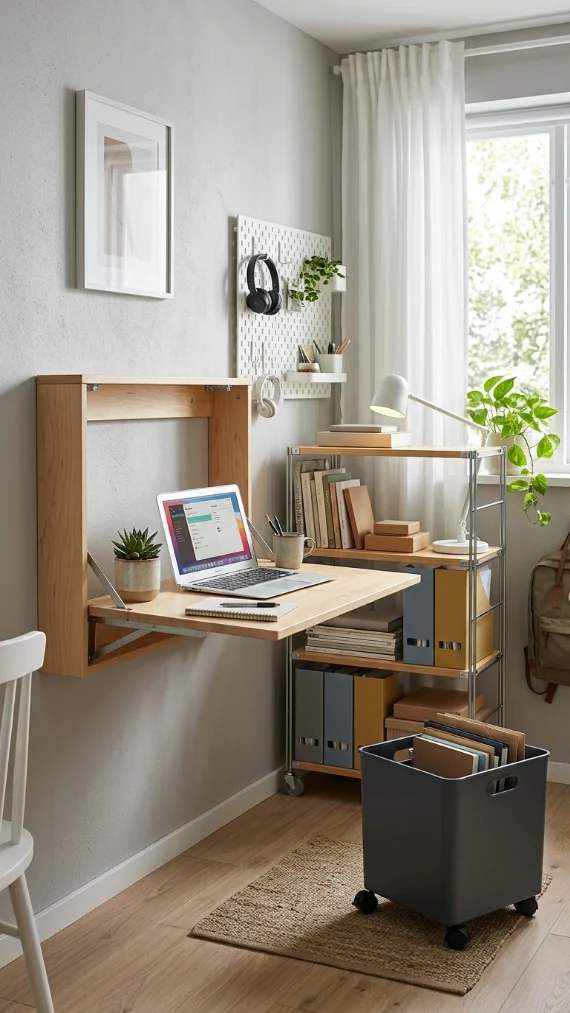
A flexible layout allows your study room to adapt as your needs change over time. Folding desks, modular shelving, rolling carts, and lightweight furniture make it easy to rearrange the space for different projects or activities.
This approach is especially valuable in smaller home study rooms that may serve multiple purposes throughout the day. When planning your study room set up, prioritize pieces that offer versatility without sacrificing style.
Storage cubes can be reconfigured, wall-mounted desks can fold away when not in use, and mobile carts can move wherever they are needed.
Flexible furnishings support both functionality and creativity, making them an excellent investment for a practical and future-proof room redesign.
21. Nighttime Mode: Low-Blue Light Lighting & Cozy Evening Setup

A well-designed study room should transition smoothly from daytime productivity to evening calm. Creating a nighttime mode helps protect your sleep while still allowing focused work when needed.
Use warm, low-color-temperature lighting in the evening to reduce eye strain and avoid harsh overhead lights. Lamps with dimmers or smart bulbs are useful study room essentials for controlling brightness levels.
During a room redesign, consider layering soft ambient lighting with a single focused desk lamp to maintain clarity without overstimulation.
Keep your study desk decor minimal at night to reduce visual noise and encourage relaxation after work sessions. This setup helps home study rooms feel more comfortable, balanced, and adaptable to different times of day.
22. Study Zones: Zoning with Rugs, Screens, or Furniture
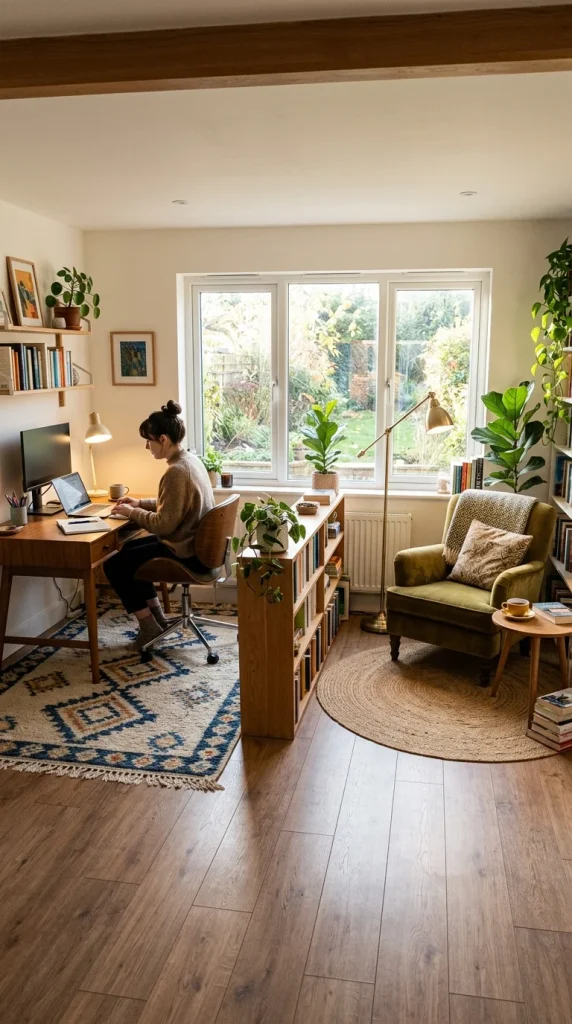
Creating distinct zones within a study room improves organization and mental clarity. Separating areas for working, reading, and planning helps the brain switch tasks more efficiently.
Use rugs, shelving units, or furniture placement to visually divide the space without closing it off. In a well-planned study room set up, each zone should have a clear purpose and minimal overlap to reduce distraction.
This approach works especially well in multifunctional home study rooms, where space is limited but needs are varied.
Keep your study room essentials aligned with each zone such as a focused desk area, a comfortable reading chair, and a planning station. Clear zoning creates structure, improves productivity, and makes the room feel more intentional and organized.
23. DIY Accent Projects: Painted Desk, Handmade Bulletin Board
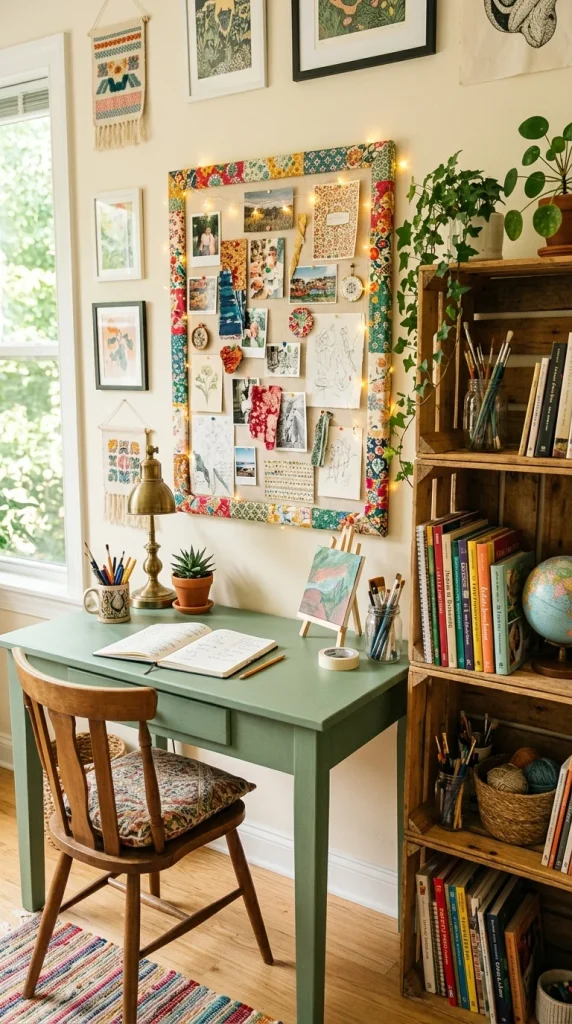
DIY projects are an effective way to personalize your study room while staying within budget. Simple updates like painting a desk, creating a fabric-covered pinboard, or repurposing storage crates can completely refresh the space.
These projects add character and make your room feel uniquely yours. During a room redesign, DIY elements allow you to tailor your study desk decor and storage solutions to your exact needs and style preferences.
Even small changes, like repainting accessories or updating drawer handles, can make a noticeable difference. In home study rooms, DIY touches bring warmth and individuality while maintaining functionality.
The result is a space that feels creative, intentional, and fully aligned with your daily study or work habits.