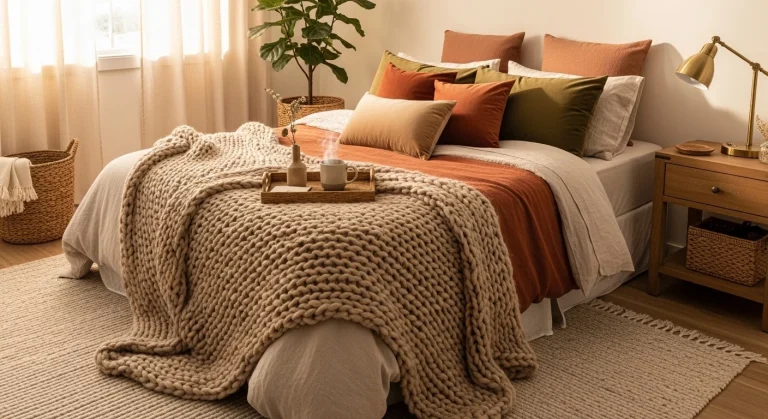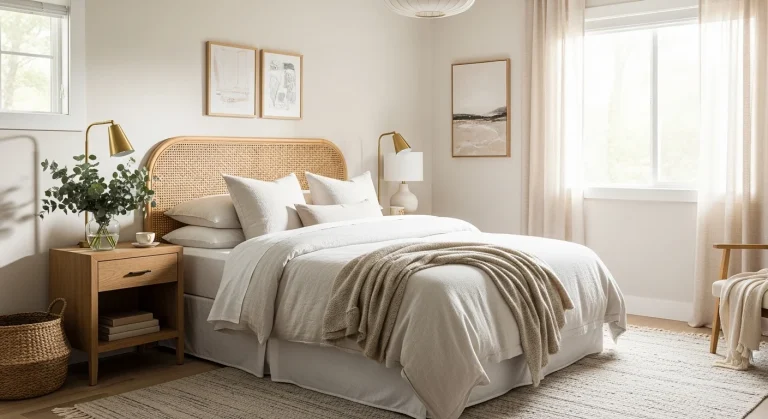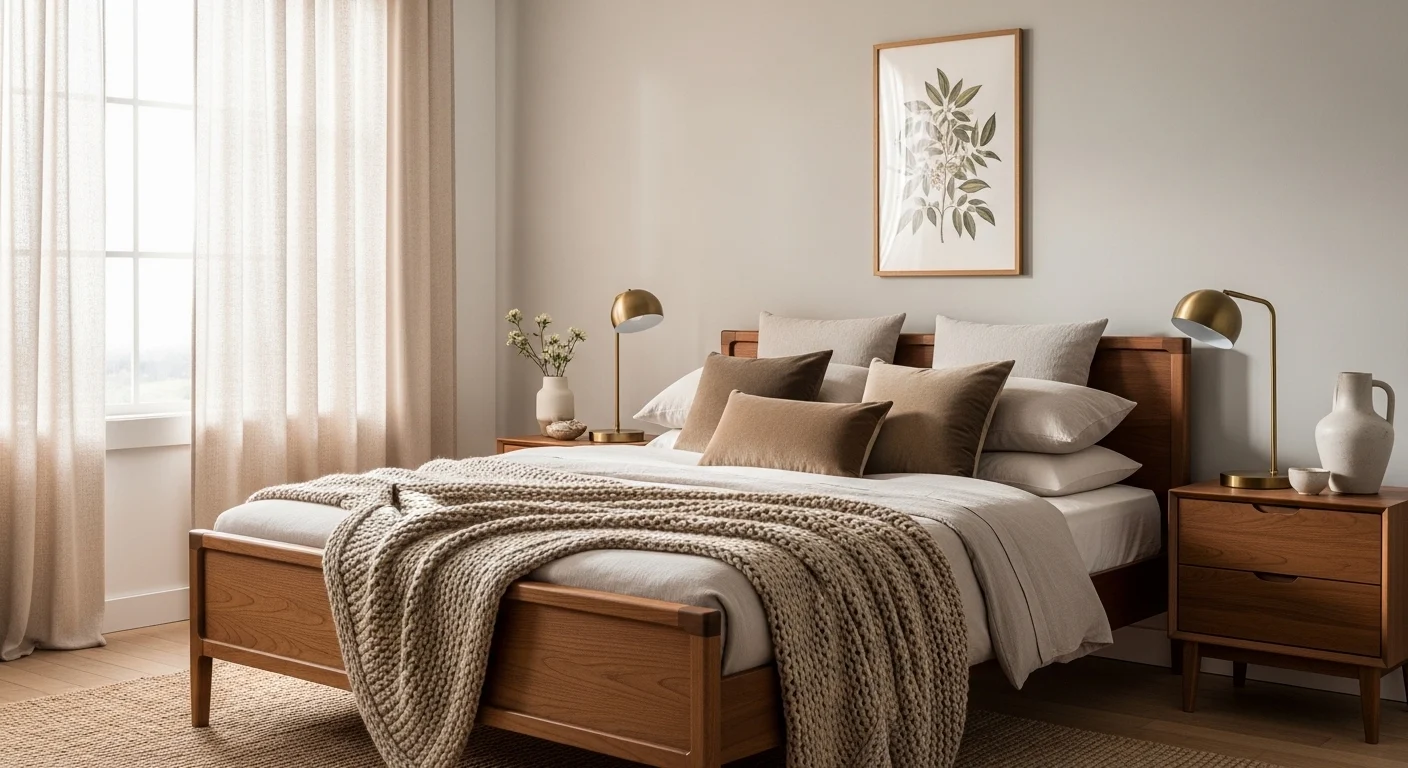
19 Bedroom Wall Color Ideas That Change Everything

You stare at your blank wall and imagine a whole new mood for your room. A fresh color can change how your space feels, how you sleep, and how you wake up. These bedroom wall color ideas help you pick a tone that suits your style and routine.
Inside you'll find 19 distinct looks. Each idea has a visual prompt, a list of exact elements, step-by-step setup, and styling tips. Use this as a mood-board guide for paint choices, finishes, and decor pairings.
Whether you want calm, cozy, moody, or bright, these bedroom wall color ideas will guide you through color, texture, and lighting decisions. Pin the ones you love and try one on a test patch first.
- Soft Greige — The Calm Neutral
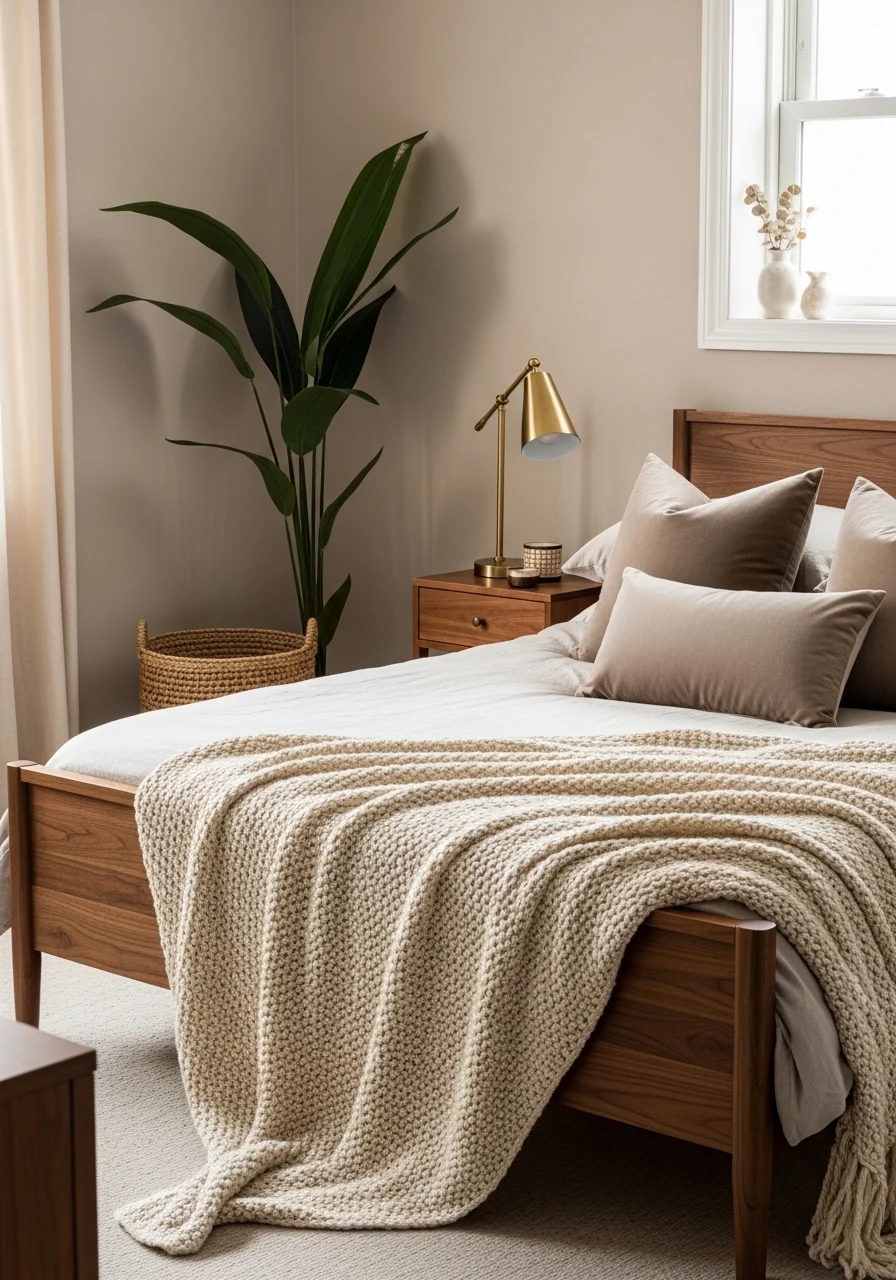
This soft greige feels warm without being too brown. It blends beige and grey for a chic neutral backdrop. The result is flexible and calming for most decor styles.
Greige works with warm woods and cool metals. It reduces glare and softens bright morning light. People who love understated calm will adore this.
Key Elements (colors, textures, paint finishes)
- Paint: greige, low-sheen eggshell finish
- Bed frame: walnut or oak, warm wood grain
- Bedding: cream linen duvet, beige sheets
- Throws: chunky knit in soft taupe
- Pillows: velvet in dusty mauve and taupe
- Lighting: matte brass bedside lamps
- Rug: natural jute or low-pile wool in sand tone
- Accessories: ceramic vase, woven basket, green plant
- Art: minimal botanical print with white mat
- Trim: crisp white, semi-gloss finish
How to Achieve This Look
- Prep the room and tape trim. Sand and clean surfaces.
- Prime walls if they’re dark or stained.
- Paint two coats of greige in eggshell for even coverage.
- Install walnut bed and center it on wall.
- Layer cream linen bedding and a chunky taupe throw.
- Add velvet pillows in complementary shades.
- Place a jute rug under the bed’s lower two-thirds.
- Set brass lamps on walnut nightstands for warmth.
- Add a tall fiddle-leaf or rubber plant in a woven basket.
- Hang the botanical print slightly off-center above the bed.
How to Style / Use It
This greige wall pairs with both warm woods and cool metals. Add textured throws and layered pillows for depth. Keep trim crisp white for a clean frame. For seasonal updates, swap pillow colors and blooms. Greige also masks scuffs, so it holds up well in busy homes.
- Deep Navy Accent — Moody and Elegant
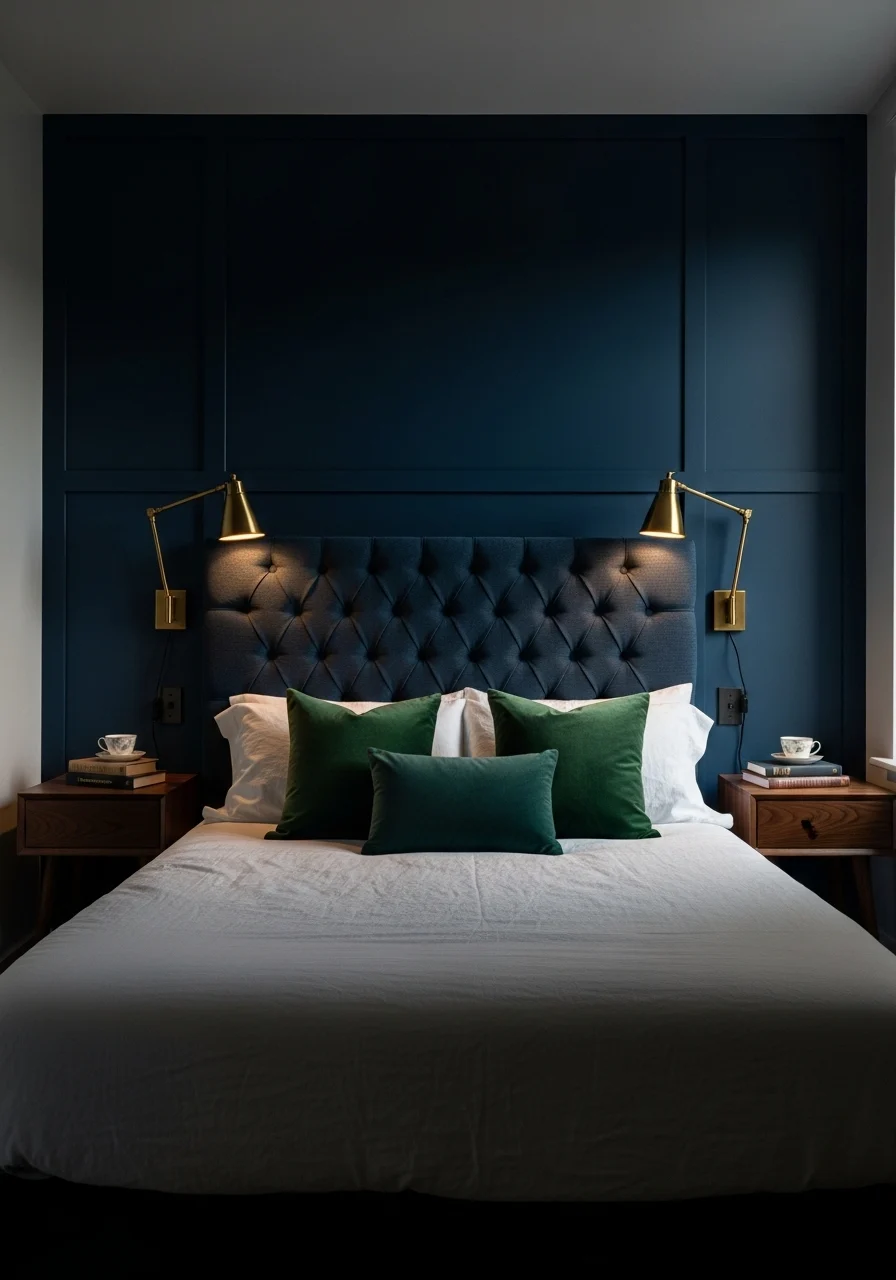
A deep navy wall creates drama without closing the room. It anchors a bed and highlights metallic accents. Navy makes white trim and linens pop.
This idea fits lovers of classic glamour and modern moody decor. It’s great for rooms with good natural light or strong layering.
Key Elements (colors, textures, paint finishes)
- Paint: deep navy, satin finish
- Trim: bright white, semi-gloss
- Bed: upholstered tufted headboard in cream or charcoal
- Bedding: crisp white sheets, navy duvet or throw
- Pillows: emerald velvet and navy linen
- Lighting: matte brass sconces and table lamps
- Nightstands: dark walnut or black lacquer
- Rug: patterned wool with navy accents
- Art: gold-framed prints or mirrors
- Hardware: brass drawer pulls
How to Achieve This Look
- Clean and prime the accent wall.
- Paint two coats of deep navy in satin for subtle sheen.
- Install a tufted headboard centered on the wall.
- Place white bedding as a high-contrast base.
- Add emerald and navy pillows for richness.
- Mount brass sconces for layered lighting.
- Position dark nightstands and add gold-accent decor.
- Lay a patterned rug to connect colors across the floor.
- Hang a single gold mirror to reflect light.
- Balance with white curtains to keep the room bright.
How to Style / Use It
Use navy as an anchoring accent behind the bed or a focal wall. Pair with brass and jewel tones for an elegant feel. Keep bedding mostly white to avoid heaviness. Nighttime, dimmable lamps make the navy feel cozy. For summer, swap velvet for linen textures.
- Sage Green Serenity — Botanical Calm
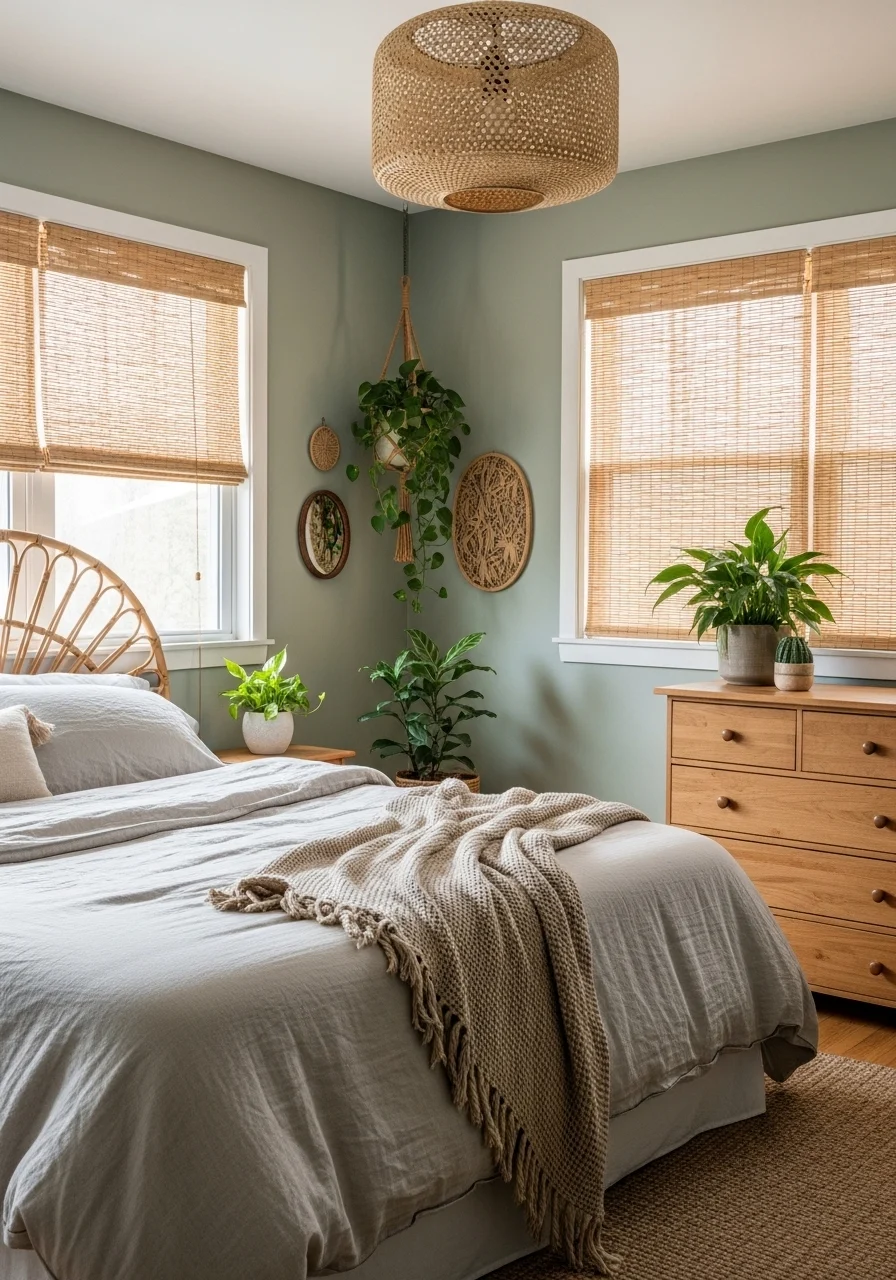
Sage green brings a muted botanical calm to your room. It feels organic and pairs well with natural materials. The color soothes the eye and invites rest.
This is perfect for plant lovers and fans of Scandinavian or farmhouse styles. It creates a spa-like, restful vibe.
Key Elements (colors, textures, paint finishes)
- Paint: sage green, eggshell finish
- Trim: warm white, semi-gloss
- Headboard: rattan or woven cane
- Bedding: oatmeal linen duvet and cotton sheets
- Throws: light knit in cream
- Pillows: patterned botanical and solid moss green
- Furniture: light oak dresser and bedside tables
- Blinds: woven bamboo or linen curtains
- Plants: snake plant, pothos, small ferns
- Rug: sisal or low-pile wool in natural tone
How to Achieve This Look
- Tape trim and prime walls if needed.
- Paint two coats of sage green in eggshell.
- Install a rattan headboard for texture.
- Layer linen bedding in neutral tones.
- Add botanical-patterned pillows and solid moss cushions.
- Place woven blinds or linen curtains for soft light.
- Group a trio of plants by the window.
- Add a light oak dresser and styled tray with ceramics.
- Use a sisal rug for grounding texture.
- Finish with a soft knit throw at the foot of the bed.
How to Style / Use It
Sage walls pair well with warm woods and woven textures. Group plants at varying heights for a natural feel. Rotate throw pillow patterns to refresh the look. For cooler months, introduce bronze accents for extra warmth. This color masks small marks and keeps the room calming.
- Warm Terracotta — Cozy Sunset Vibes
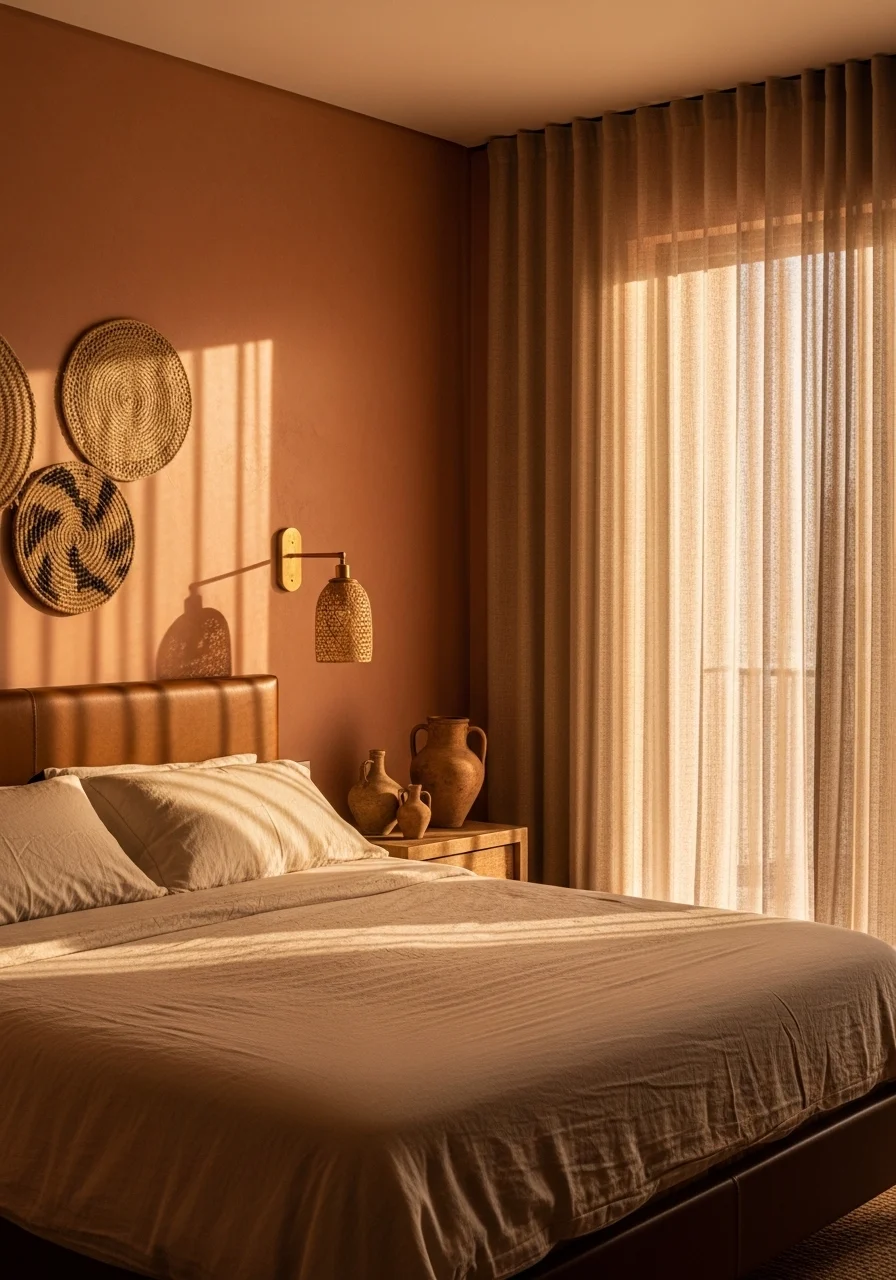
Terracotta brings a warm, earthen glow that feels like a hug. It creates a cozy, layered atmosphere that’s especially lovely in cool climates. The color pairs beautifully with leather and natural fibers.
This works for boho, rustic, and Mediterranean-inspired spaces. Expect the room to feel enveloping and restful.
Key Elements (colors, textures, paint finishes)
- Paint: terracotta, matte finish
- Trim: off-white, semi-gloss
- Headboard: brown leather or reclaimed wood
- Bedding: cream cotton with terracotta throw
- Pillows: woven and embroidered in rust, cream
- Lighting: aged brass or black metal
- Accessories: clay pots and terracotta planters
- Rug: flatweave in neutral tones with subtle pattern
- Wall decor: woven wall hanging or macramé
- Side table: distressed wood or rattan
How to Achieve This Look
- Prime walls to prevent tanning effects showing through.
- Paint two coats of terracotta with a matte finish.
- Install a leather or reclaimed wood headboard.
- Layer cream bedding and add a terracotta throw.
- Mix woven and embroidered pillows for texture.
- Add brass lighting for warm highlights.
- Place clay pots with succulents on nightstands.
- Hang a woven wall piece to complement the color.
- Position a neutral flatweave rug under the bed.
- Add a woven basket for extra textiles.
How to Style / Use It
Terracotta walls pair best with neutral bedding and natural textures. Keep art simple; organic shapes work best. For contrast, add cool green plants. Rotate throws and pillows seasonally for fresh warmth. The color hides small scuffs but shows light marks when scratched, so use durable headboard finishes.
- Blush Pink Revival — Soft Romantic Vibe (bedroom wall color ideas)
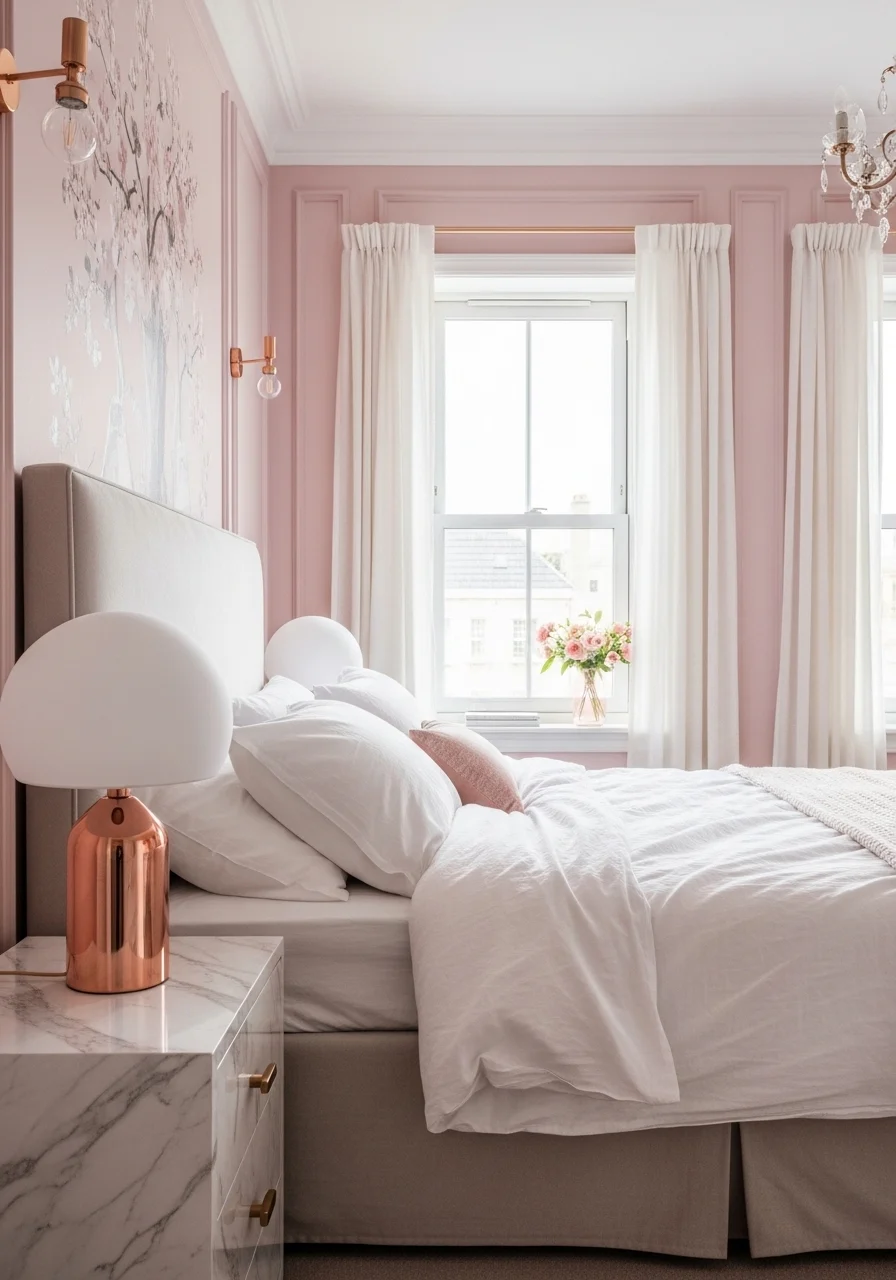
Blush pink gives a tender, modern romantic feel without being sugary. It’s soft enough for all ages and pairs well with warm metals. The color reads as calming rather than overtly feminine.
This choice suits anyone wanting gentle warmth and a cozy glow. It works for small rooms that need a soft lift.
Key Elements (colors, textures, paint finishes)
- Paint: blush pink, eggshell sheen
- Trim: warm white, semi-gloss
- Headboard: tufted velvet in cream or dusty rose
- Bedding: white linen or cotton percale
- Throws: faux fur or cashmere touch in pale rose
- Pillows: mix of silk, velvet, and linen in blush tones
- Lighting: rose gold or brass bedside lamps
- Nightstands: white lacquer or pale wood
- Art: soft-abstract or floral prints in muted tones
- Rug: plush cream shag or pale blush low-pile
How to Achieve This Look
- Clean and prime walls for even coverage.
- Paint two coats of blush pink in eggshell finish.
- Mount a plush tufted headboard centered on wall.
- Layer white bedding for high contrast.
- Add mixed-texture pillows in blush and cream.
- Place rose gold lamps on pale nightstands.
- Lay a plush rug under the bed for softness.
- Arrange delicate florals in glass vases.
- Hang soft-abstract art with pale frames.
- Finish with a faux fur throw draped casually.
How to Style / Use It
Use blush walls with white bedding and metallic accents. Keep art and accessories soft to maintain the romantic mood. For a more neutral look, swap rose gold for matte brass. In summer, bring in linen textures; in winter, add velvet and fur for extra warmth. Blush hides small imperfections but can show grease, so avoid touching the walls frequently.
- Charcoal Accent Wall — Modern Contrast
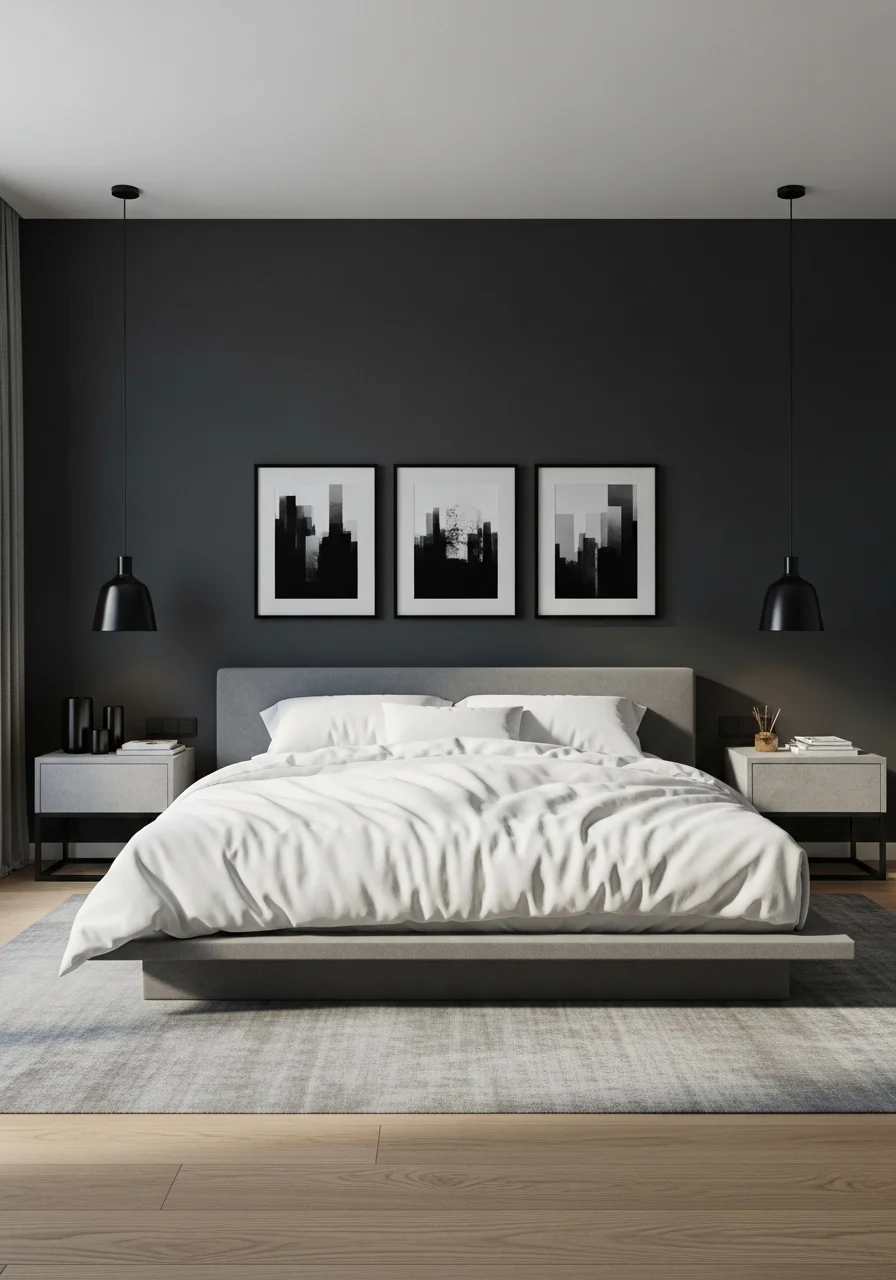
Charcoal adds instant modern contrast and depth. It pairs especially well with minimalist or industrial decor. The darkness makes lighter elements stand out sharply.
This idea suits bold, modern interiors or rooms with clean-lined furniture. Charcoal creates a dramatic backdrop without feeling heavy when balanced.
Key Elements (colors, textures, paint finishes)
- Paint: charcoal, satin finish
- Trim: bright white, semi-gloss
- Bed: low-profile platform in walnut or black
- Bedding: crisp white sheets, textured gray throw
- Pillows: charcoal linen and patterned monochrome
- Nightstands: concrete-look or matte black
- Lighting: black metal sconces or floor lamp
- Rug: light gray wool rug
- Art: black frames with white matting
- Accessories: minimal ceramics, black hardware
How to Achieve This Look
- Prime the wall, especially over existing bright colors.
- Paint two coats of charcoal in satin for even sheen.
- Position a low platform bed centered on the wall.
- Layer white bedding to contrast the dark wall.
- Add charcoal and patterned pillows for cohesion.
- Select concrete-look or black nightstands.
- Mount black metal sconces for task lighting.
- Place a light gray rug to keep the floor bright.
- Hang framed monochrome art to echo the palette.
- Keep accessories minimal to maintain the modern vibe.
How to Style / Use It
Treat charcoal as an accent behind a bed or dresser. Contrast with white bedding and light rugs to avoid a cave effect. Use warm wood or brass accents for balance. Charcoal hides minor scuffs but may show dust—wipe surfaces lightly. For change, swap pillows to add color pops.
- Creamy White — Bright and Breezy
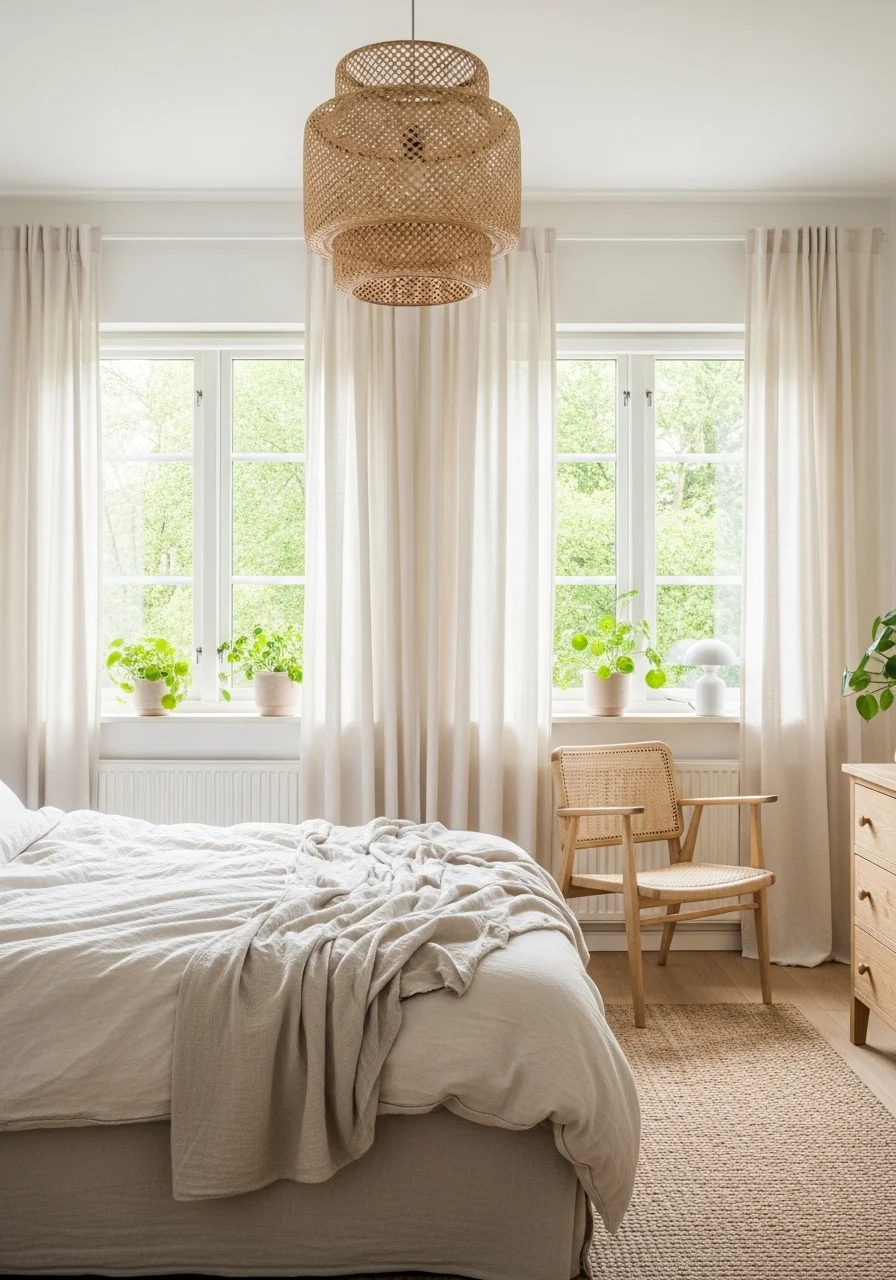
Creamy white makes a room feel larger and brighter. It creates a clean backdrop for any style. The subtle warmth avoids a sterile look.
This suits small rooms, rental spaces, and anyone wanting a fresh palette. It lets you switch accent colors easily.
Key Elements (colors, textures, paint finishes)
- Paint: creamy white, eggshell finish
- Trim: bright white, semi-gloss
- Bed: pale oak or white painted frame
- Bedding: cotton voile or linen in cream
- Throws: lightweight knit in beige
- Pillows: white with textured accents
- Curtains: semi-sheer cotton voile
- Nightstands: pale wood or white
- Rug: light jute or sisal
- Plants: simple potted greenery
How to Achieve This Look
- Patch walls and apply primer if needed.
- Paint two coats of creamy white in eggshell.
- Place pale oak bed and center it on wall.
- Add linen bedding and a lightweight throw.
- Install voile curtains to filter soft light.
- Set textured pillows and a simple rug for warmth.
- Arrange a few plants for color and life.
- Add pale wood nightstands and minimal lamps.
- Style a tray with ceramics and a small book.
- Keep surfaces tidy to maintain the breezy feel.
How to Style / Use It
Creamy white walls suit any accent color. Use colorful throws or art for seasonal updates. Keep curtains light to maximize daylight. Regular dusting keeps the bright look. It’s a great choice if you plan to redecorate often.
- Soft Lavender — Calm and Dreamy
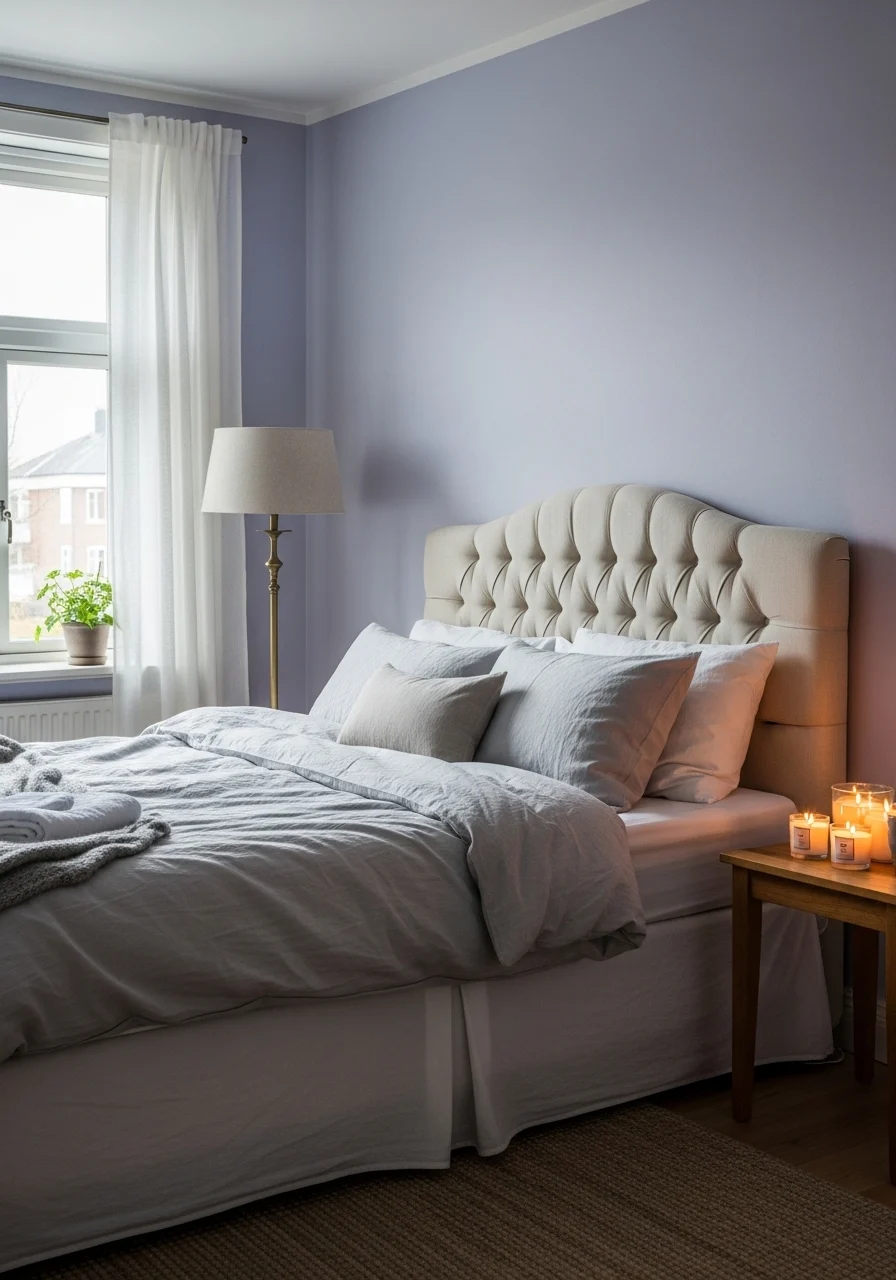
Soft lavender introduces a gentle, dreamlike quality. It feels calming and slightly whimsical. The hue soothes and pairs well with cool greys and warm creams.
This color is perfect for a restful retreat or a guest room. It adds subtle personality without overwhelming the space.
Key Elements (colors, textures, paint finishes)
- Paint: soft lavender, eggshell finish
- Trim: warm white, semi-gloss
- Headboard: tufted cream or pale gray
- Bedding: pale gray cotton with lavender throw
- Pillows: mix of lavender and cream velvet
- Lighting: vintage brass floor lamp or sconces
- Rug: soft gray low-pile
- Accessories: lavender candles, small bouquets
- Art: minimal prints in pastel tones
- Nightstand: white or light wood with brass hardware
How to Achieve This Look
- Prime walls with a light primer.
- Paint two coats of soft lavender in eggshell.
- Center a tufted headboard on the feature wall.
- Layer bedding in pale gray with a lavender throw.
- Add velvet pillows for a plush feel.
- Position a brass floor lamp for warm light.
- Place scented candles and small floral arrangements.
- Lay a soft gray rug beneath the bed.
- Hang pastel prints with simple frames.
- Keep decor minimal to maintain the calm vibe.
How to Style / Use It
Lavender pairs nicely with gray, cream, and brass. Use scented candles for a spa-like feel. Switch pillow textures seasonally for variety. Lavender reads cool, so add warm woods to balance. It’s great for creating a peaceful sleep environment.
- Muted Teal — Retro Modern Cool
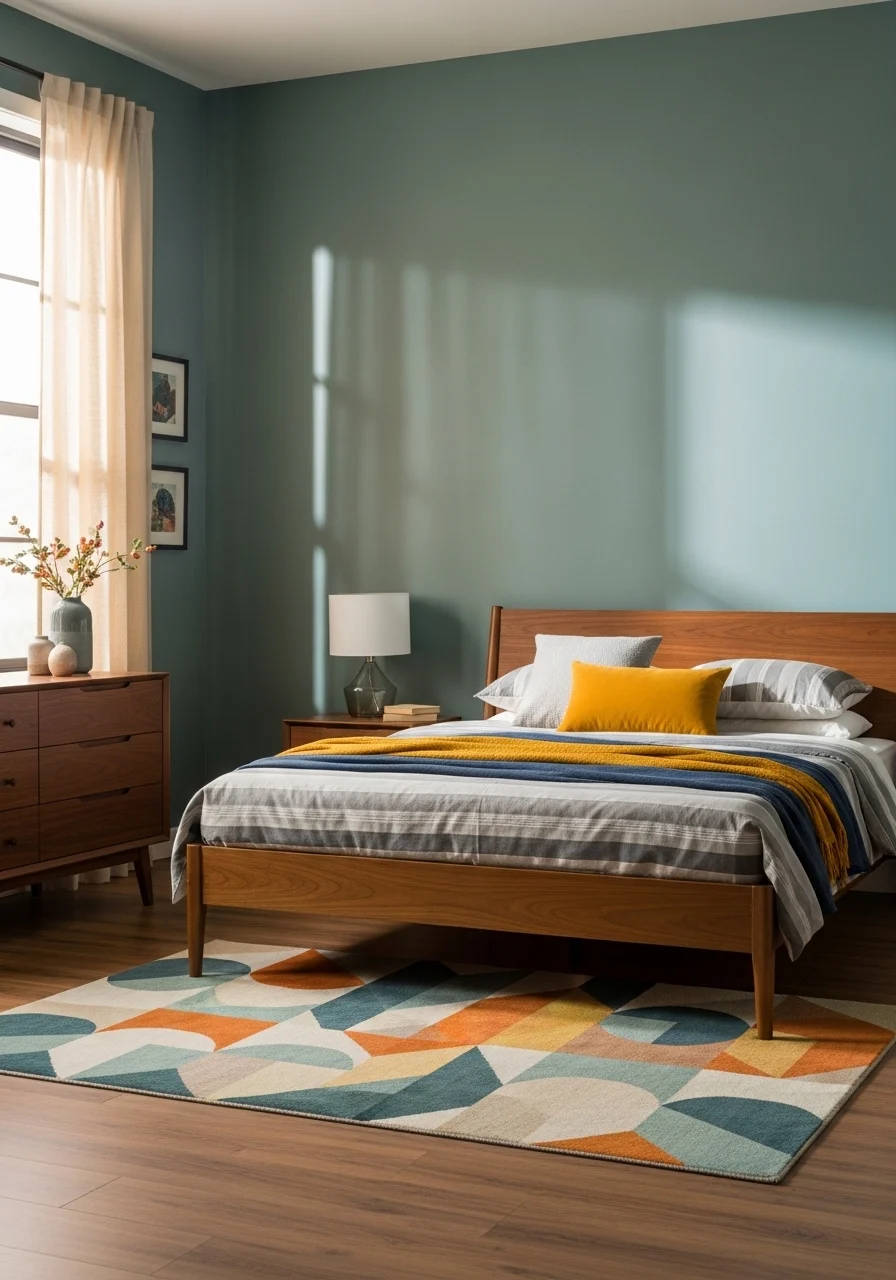
Muted teal delivers a vintage-modern energy. It has enough color to feel lively but remains subdued. Teal pairs well with mustard, walnut, and brass.
This color suits eclectic, mid-century, and modern interiors. It creates a cheerful yet grounded atmosphere.
Key Elements (colors, textures, paint finishes)
- Paint: muted teal, satin finish
- Trim: off-white, semi-gloss
- Bed: mid-century frame in walnut
- Bedding: cream base with teal throw
- Pillows: mustard velvet and teal linen
- Rug: geometric pattern with teal accents
- Lighting: brass pendant or bedside lamps
- Dresser: walnut or teak
- Art: mid-century inspired prints
- Accessories: ceramic vases in warm tones
How to Achieve This Look
- Prime the wall for rich teal pigment.
- Paint two coats of muted teal in satin.
- Position a walnut mid-century bed centered on wall.
- Layer cream bedding with a teal throw.
- Add mustard and teal pillows for contrast.
- Place a geometric rug to connect colors.
- Install brass lighting for warm highlights.
- Add walnut dresser and styled ceramics.
- Hang mid-century prints in simple frames.
- Finish with small plants for life.
How to Style / Use It
Use muted teal as a main wall color or accent. Pair with mustard or burnt orange for retro appeal. Walnut and brass bring warmth. Keep bedding light to balance the color. Teal hides small marks and works well in both sunny and north-facing rooms.
- Graphite Gray with Trim Contrast — Sophisticated Edge (bedroom wall color ideas)
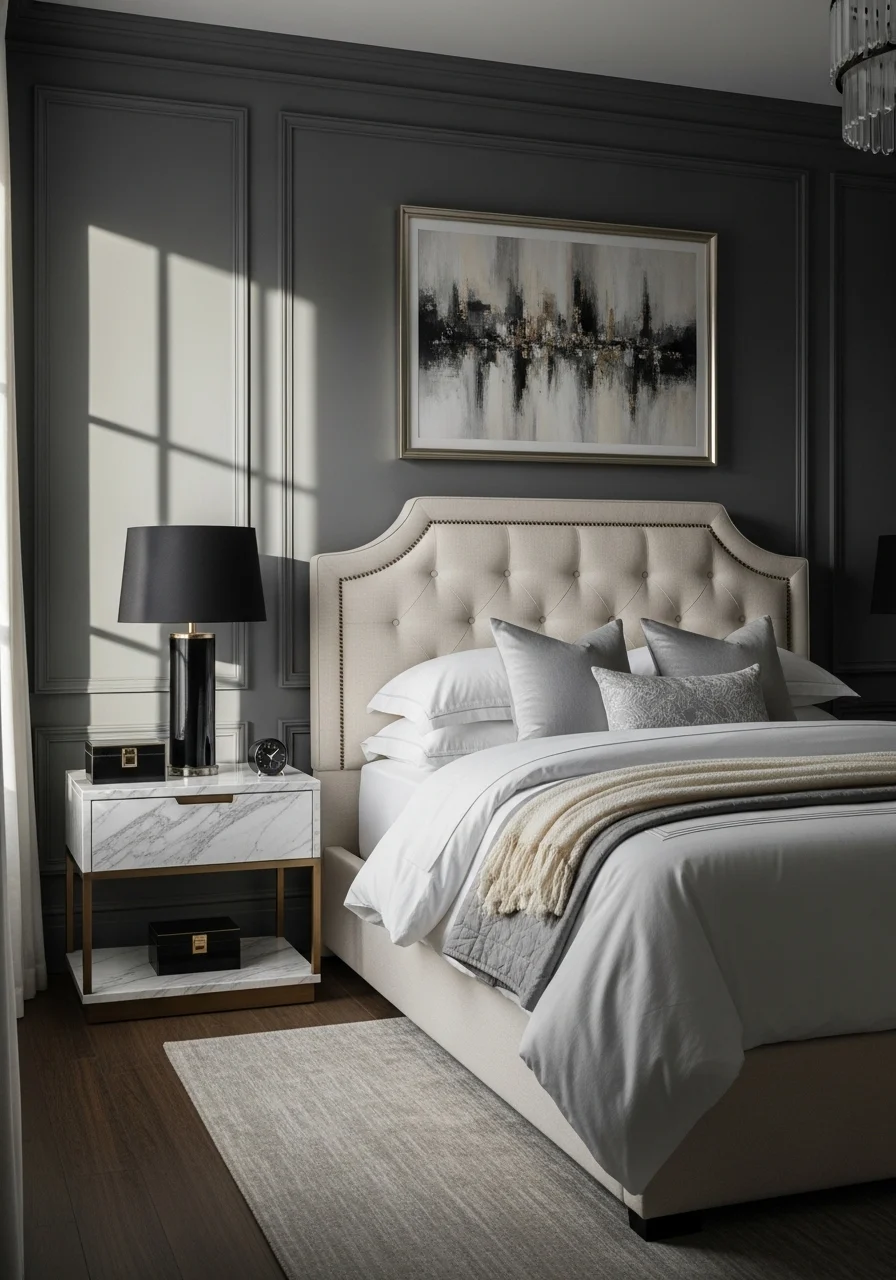
Graphite gray feels modern and sophisticated. Paired with crisp white trim, it creates instant polish. The contrast frames architectural details beautifully.
This choice works in formal bedrooms and loft-style spaces. It adds depth while staying elegantly neutral.
Key Elements (colors, textures, paint finishes)
- Paint: graphite gray, satin finish
- Trim: pure white, semi-gloss
- Headboard: cream upholstered or tufted
- Bedding: white with gray accents
- Pillows: textured gray and cream
- Nightstands: marble-top or lacquer white
- Lighting: black metal or brass fixtures
- Rug: light gray wool
- Art: black frames, neutral prints
- Accessories: onyx or ceramic accents
How to Achieve This Look
- Mask off trim and prime walls thoroughly.
- Paint two coats of graphite gray in satin.
- Repaint trim in pure white semi-gloss for contrast.
- Place a cream upholstered headboard on the wall.
- Layer white bedding with gray accents and throws.
- Add black or brass lighting fixtures.
- Position marble-top nightstands for a luxe touch.
- Lay a light gray rug to maintain balance.
- Hang neutral prints in black frames to echo contrast.
- Keep decor streamlined for a polished feel.
How to Style / Use It
Graphite walls read formal and modern. Use crisp white bedding to keep the room fresh. Black accents add definition, while brass warms the palette. For a softer look, add plush textures and layered lighting. Graphite can show dust, so dust surfaces regularly.
- Mustard Yellow Accent — Bold Warmth
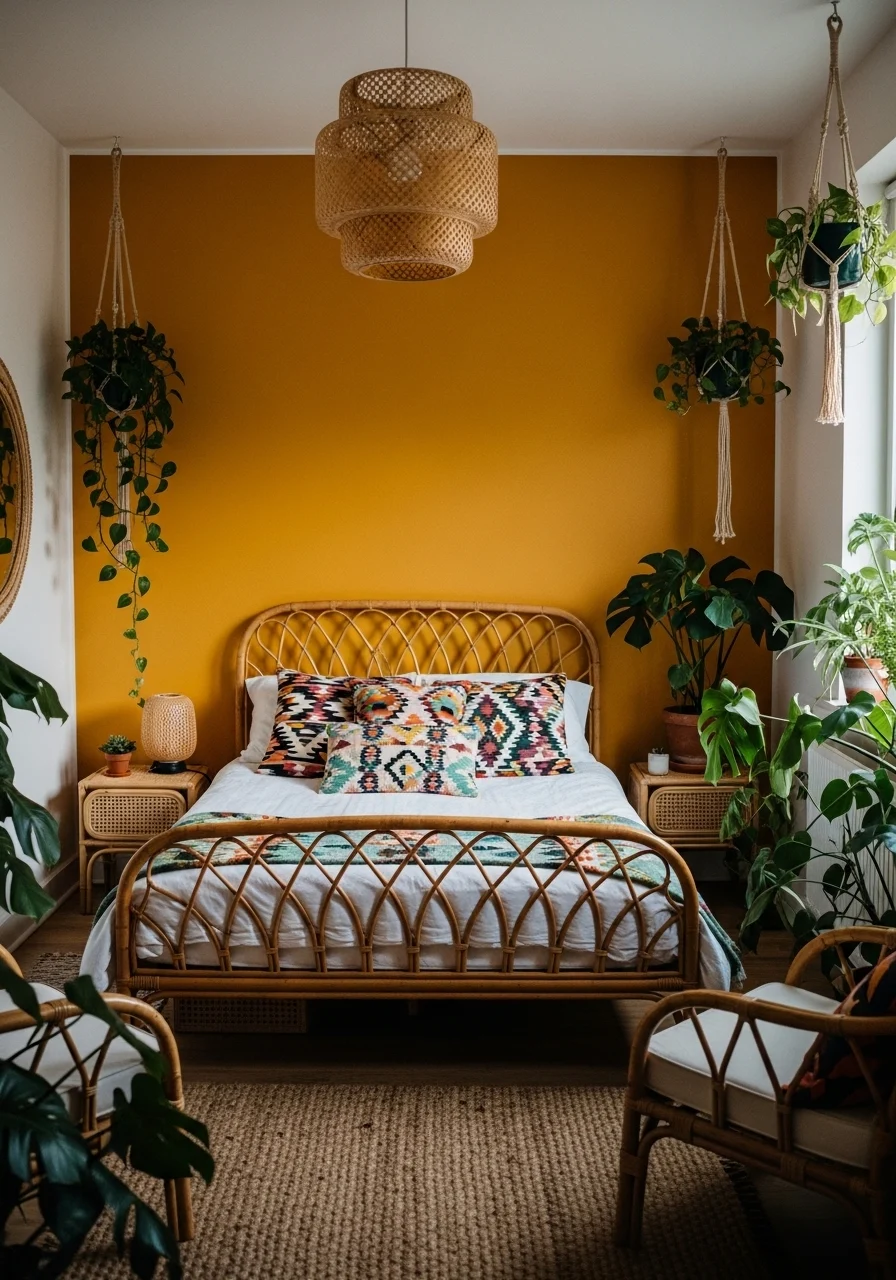
Mustard yellow introduces sunny warmth without being neon. It energizes the room while feeling grounded. The hue looks great with green and walnut.
This idea suits eclectic or boho styles and works as a statement behind the bed. It lifts darker rooms with a cozy glow.
Key Elements (colors, textures, paint finishes)
- Paint: mustard yellow, eggshell finish
- Trim: warm white, semi-gloss
- Bed: simple wood frame in walnut
- Bedding: cream base with patterned throw
- Pillows: mustard, green, and terracotta
- Rug: patterned flatweave with warm tones
- Lighting: woven pendant or brass lamps
- Accessories: rattan chair, woven baskets
- Plants: leafy greens to balance warmth
- Art: bold prints with white matting
How to Achieve This Look
- Prime the accent wall for even pigment.
- Paint two coats of mustard yellow in eggshell.
- Position a walnut bed in front of the wall.
- Layer cream bedding and a patterned throw.
- Add a mix of mustard, green, and terracotta pillows.
- Place rattan furniture and woven baskets for texture.
- Hang a woven pendant or brass lamps for warmth.
- Lay a patterned rug to tie the palette together.
- Add plants to soften the bold color.
- Finish with bold art and simple ceramics.
How to Style / Use It
Mustard works as an accent or on multiple walls for drama. Pair with green plants and wood for an organic feel. Keep bedding light to avoid heaviness. For cooler months, add richer textiles. Mustard hides scuffs well but can feel strong—balance with neutrals.
- Pale Sky Blue — Airy Retreat (bedroom wall color ideas)
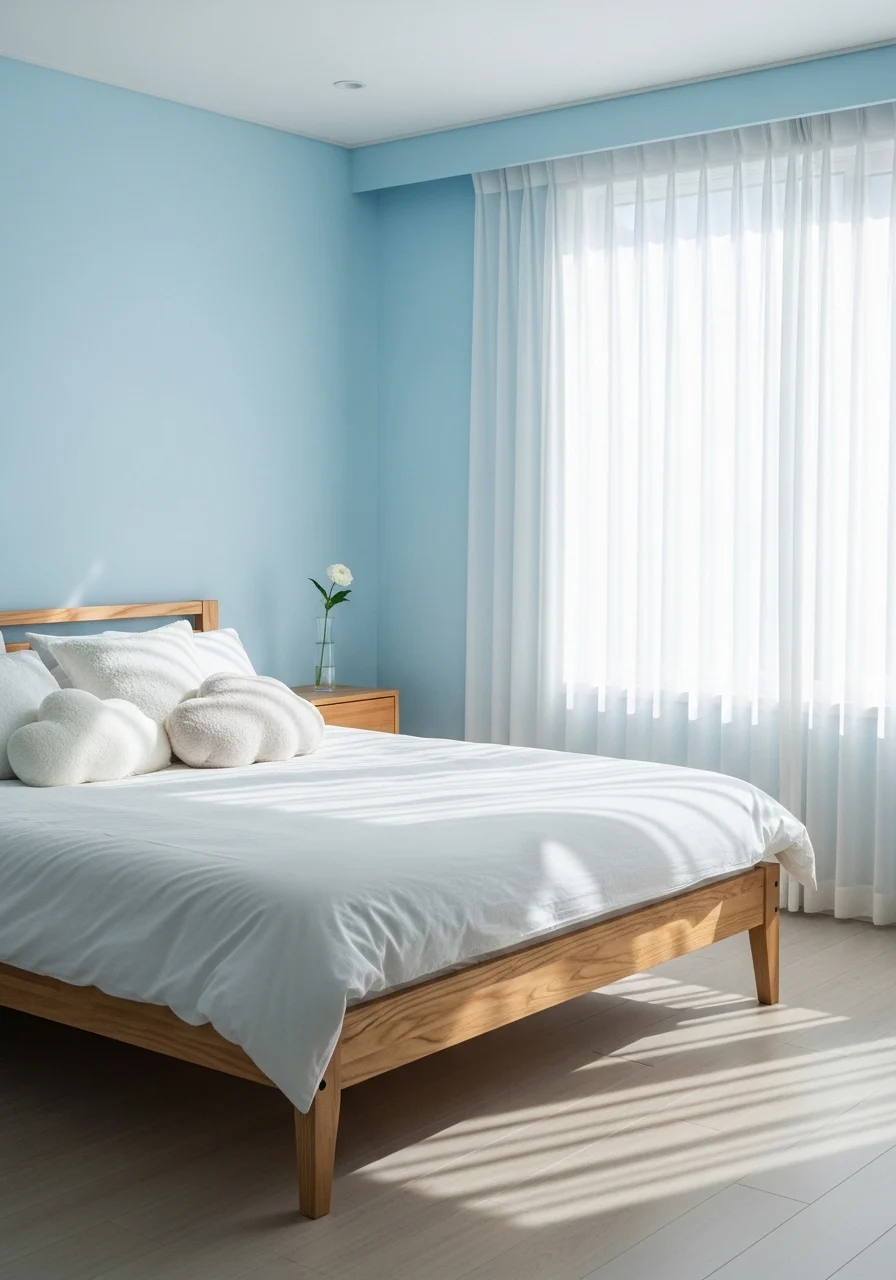
Pale sky blue evokes openness and calm. It brings a subtle freshness that mimics daylight. The shade supports restful sleep and a relaxed vibe.
This color suits coastal, Scandinavian, and minimalist styles. It brightens small rooms and keeps the mood light.
Key Elements (colors, textures, paint finishes)
- Paint: pale sky blue, eggshell finish
- Trim: crisp white, semi-gloss
- Bed: natural wood or white frame
- Bedding: white cotton or linen
- Throws: lightweight knit in pale blue
- Pillows: cloud-white and pale blue patterns
- Curtains: sheer white voile
- Rug: pale gray or natural fiber
- Accessories: light wood and ceramic pieces
- Plants: small potted succulents
How to Achieve This Look
- Prep and prime walls for a clean base.
- Paint two coats of pale sky blue in eggshell.
- Install a natural wood bed centered on wall.
- Use white bedding and pale blue accents.
- Add cloud-like pillows and a soft throw.
- Hang sheer curtains to maximize light.
- Place a pale rug to ground the bed.
- Style with light wood nightstands and ceramics.
- Add small plants for life and texture.
- Keep decor minimal to let the blue breathe.
How to Style / Use It
Pale sky blue pairs with whites and light woods for a coastal feel. Add navy accents for contrast, or keep it monochrome for serenity. Regularly launder sheer curtains to keep them bright. This color works well year-round and keeps the room feeling fresh.
- Dusty Mauve — Quiet Luxe
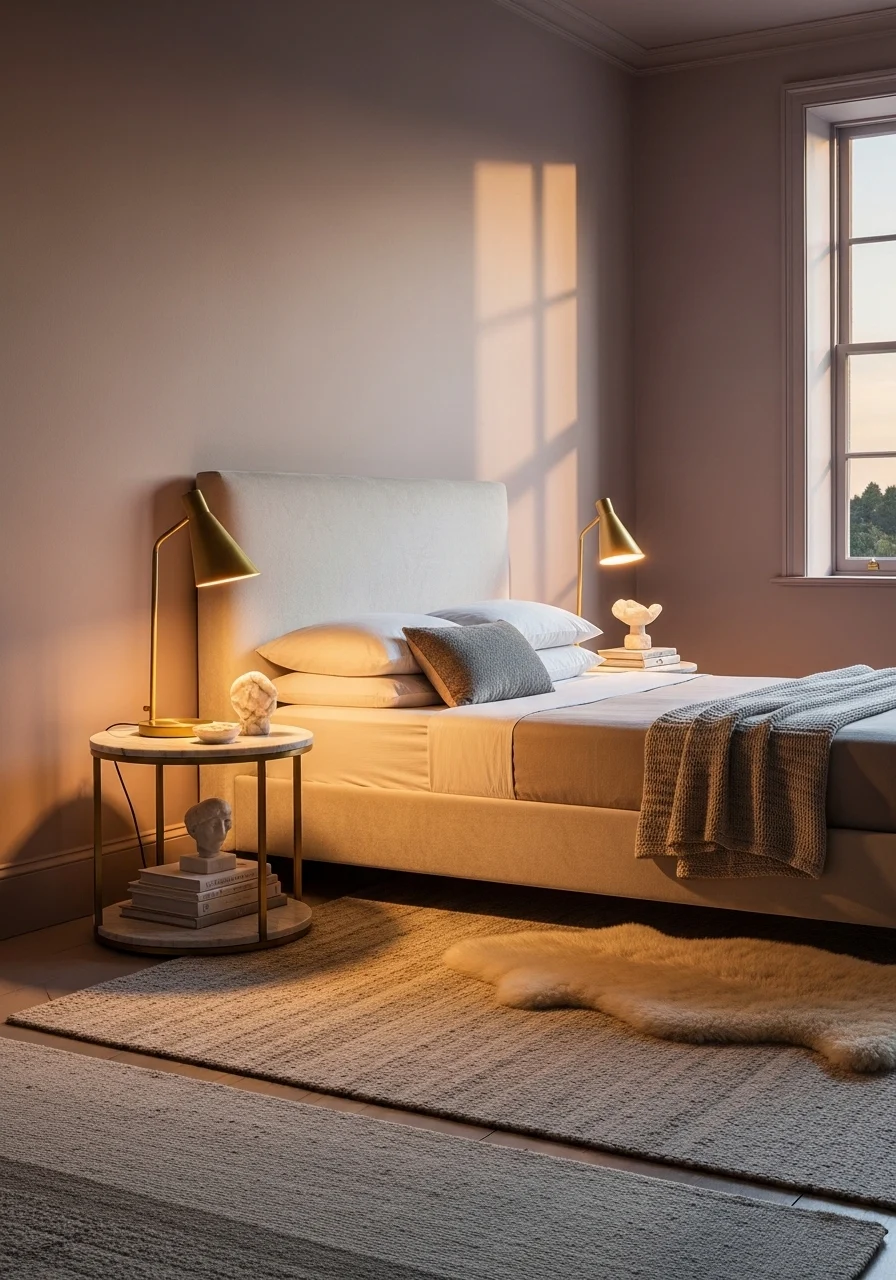
Dusty mauve reads like a muted pink with gray undertones. It brings warmth without being overly sweet. The tone feels sophisticated and intimate.
This is great for romantic, vintage, or contemporary looks. It adds personality while remaining refined.
Key Elements (colors, textures, paint finishes)
- Paint: dusty mauve, eggshell finish
- Trim: warm white, semi-gloss
- Headboard: cream velvet or tufted
- Bedding: ivory with mauve throw
- Pillows: velvet and embroidered in mauve
- Lighting: antique brass bedside lamps
- Rug: layered neutral rugs for depth
- Accessories: marble tray and ceramic vases
- Art: soft-toned prints in warm frames
- Nightstands: pale wood or painted white
How to Achieve This Look
- Prime walls and paint two coats of dusty mauve.
- Mount a cream velvet headboard on the wall.
- Use ivory bedding and layer a mauve throw.
- Add velvet and embroidered pillows for depth.
- Position brass lamps on nightstands for warmth.
- Use layered rugs to add softness underfoot.
- Style marble and ceramic accessories on surfaces.
- Hang soft-toned art to maintain calm.
- Introduce a small plant for contrast.
- Keep lighting soft to accentuate the mauve.
How to Style / Use It
Dusty mauve works with creams, brass, and marble. Use velvet and textured pillows for a luxe feel. Swap pillow covers seasonally for easy updates. For a bolder look, add deep plum accents. Dust mauve can obscure minor flaws, but test in your light first.
- Olive Green — Earthy Sophistication
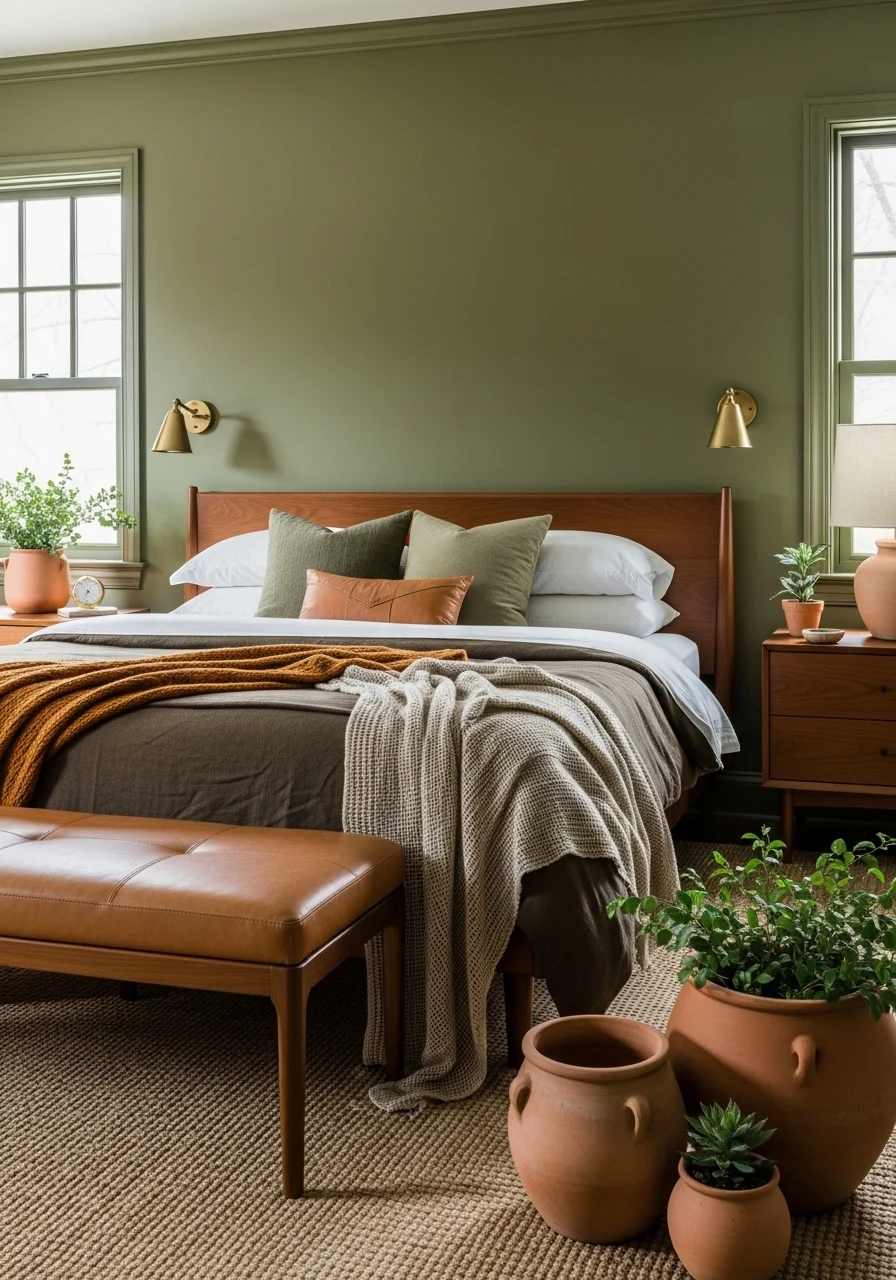
Olive green gives an earthy, sophisticated vibe. It feels grown-up and cozy. The color balances warm woods and leather beautifully.
This suits eclectic, mid-century, and modern rustic styles. Olive creates a grounded sanctuary that still feels stylish.
Key Elements (colors, textures, paint finishes)
- Paint: olive green, eggshell or matte
- Trim: warm white, semi-gloss
- Bed: walnut or teak frame
- Bedding: cream base with olive accents
- Pillows: leather, linen, and patterned greens
- Bench: tan leather at foot of bed
- Rug: flatweave with natural tones
- Plants: large leafy varieties
- Lighting: aged brass or black metal
- Accessories: terracotta pots and woven baskets
How to Achieve This Look
- Prime and paint walls two coats of olive green.
- Place a walnut bed against the green wall.
- Add cream bedding and olive-accent pillows.
- Position a tan leather bench at the foot of the bed.
- Lay a natural-toned rug beneath the bed.
- Add large plants for life and scale.
- Use brass or black lighting for character.
- Style terracotta pots and woven accessories.
- Hang a simple mirror to reflect light.
- Keep surfaces layered but uncluttered.
How to Style / Use It
Olive walls pair well with leather and warm woods. Add patterned textiles to break up the solid color. For a lighter look, paint only one wall olive as an accent. Olive hides minor imperfections and ages gracefully. Swap plant varieties seasonally for variety.
- Black Matte — Bold and Intimate
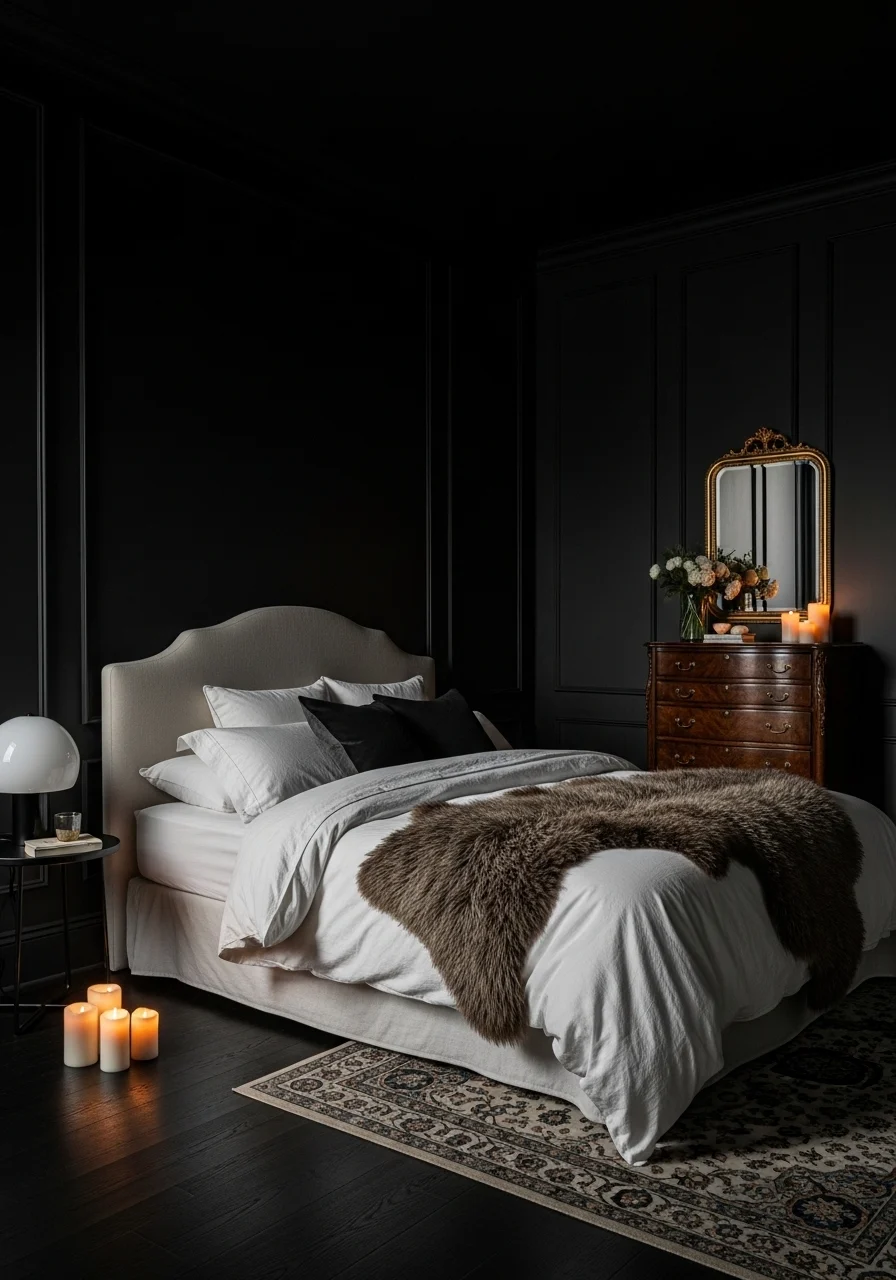
Black matte walls create intimacy and drama. They absorb light and highlight textures. The finish reads velvety and luxe.
This suits creative personalities and rooms used at night. Balance dark walls with light textiles and reflective surfaces.
Key Elements (colors, textures, paint finishes)
- Paint: true black matte
- Trim: deep charcoal or white, semi-gloss
- Bed: cream or light upholstered headboard
- Bedding: white or cream with textured throws
- Throws: sheepskin or chunky knit in cream
- Pillows: mix of white and charcoal textures
- Lighting: sculptural lamps with warm bulbs
- Rug: cream shag or light wool
- Accessories: mirrored or brass accents
- Art: neutral or metallic pieces
How to Achieve This Look
- Prime walls with tinted primer for full coverage.
- Paint two coats of black matte; watch for streaks.
- Use a cream upholstered headboard for contrast.
- Layer white bedding and textured throws.
- Add warm, low-level lighting for coziness.
- Place a light rug underfoot to brighten the floor.
- Introduce reflective accents like brass or mirror.
- Hang minimal art; let textures take center stage.
- Keep clutter hidden to maintain a calm mood.
- Touch up scuffs carefully; matte shows marks.
How to Style / Use It
Black matte is best as a full room choice for intimate spaces or as a single accent. Use layered lighting to avoid a cave feel. Swap linens seasonally to shift mood. Black shows dust and scuffs more than mid-tones, so clean surfaces often.
- Sandy Beige — Soft Coastal Neutral
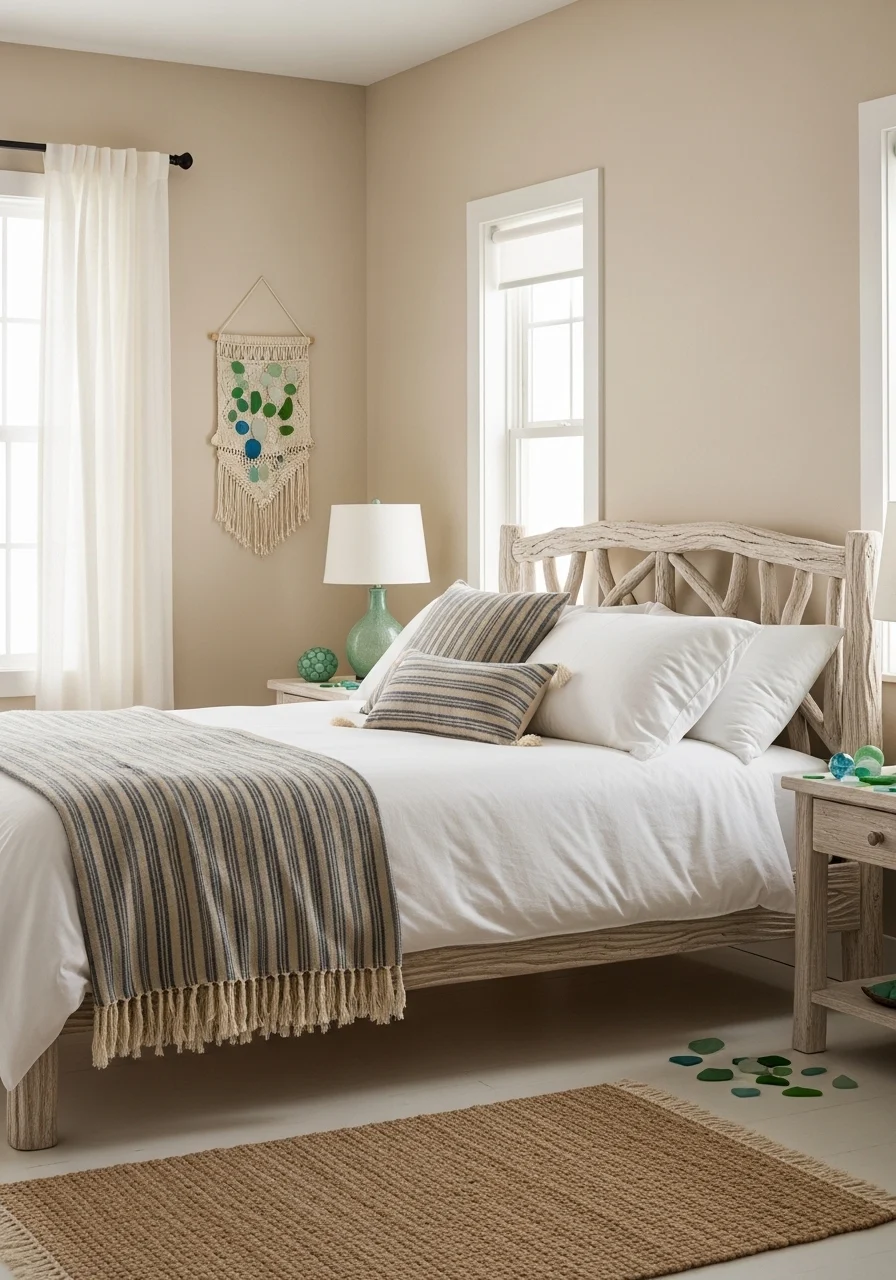
Sandy beige is warm and soothing, with a beachy edge. It creates a relaxed backdrop without stark whiteness. The tone pairs with blues, whites, and natural fibers.
This is perfect for coastal, cottage, or casual modern styles. It keeps the room feeling light and welcoming.
Key Elements (colors, textures, paint finishes)
- Paint: sandy beige, eggshell finish
- Trim: warm white, semi-gloss
- Bed: driftwood or white painted wood
- Bedding: white with blue striped throw
- Pillows: nautical stripes and textured beige
- Rug: natural fiber or pale jute
- Accessories: sea glass, driftwood decor, shells
- Lighting: white ceramic lamps or woven pendants
- Nightstands: white or light wood
- Curtains: linen in off-white
How to Achieve This Look
- Prime and paint two coats of sandy beige.
- Place a driftwood bed centered on the wall.
- Layer white bedding with a striped throw.
- Add nautical-striped and textured pillows.
- Install linen curtains to filter sunlight softly.
- Style with sea-glass and driftwood accessories.
- Use woven pendants or ceramic lamps for light.
- Lay a natural fiber rug underfoot.
- Add simple fresh flowers or coastal greenery.
- Keep surfaces relaxed and slightly imperfect for charm.
How to Style / Use It
Pair sandy beige with blues and whites for a coastal feel. Use woven textures and sea-inspired accessories. Rotate pillow patterns with seasons for a fresh look. Regular dusting keeps the light palette bright. Sandy beige is forgiving of small marks.
- Two-Tone Wainscot — Painted Detail
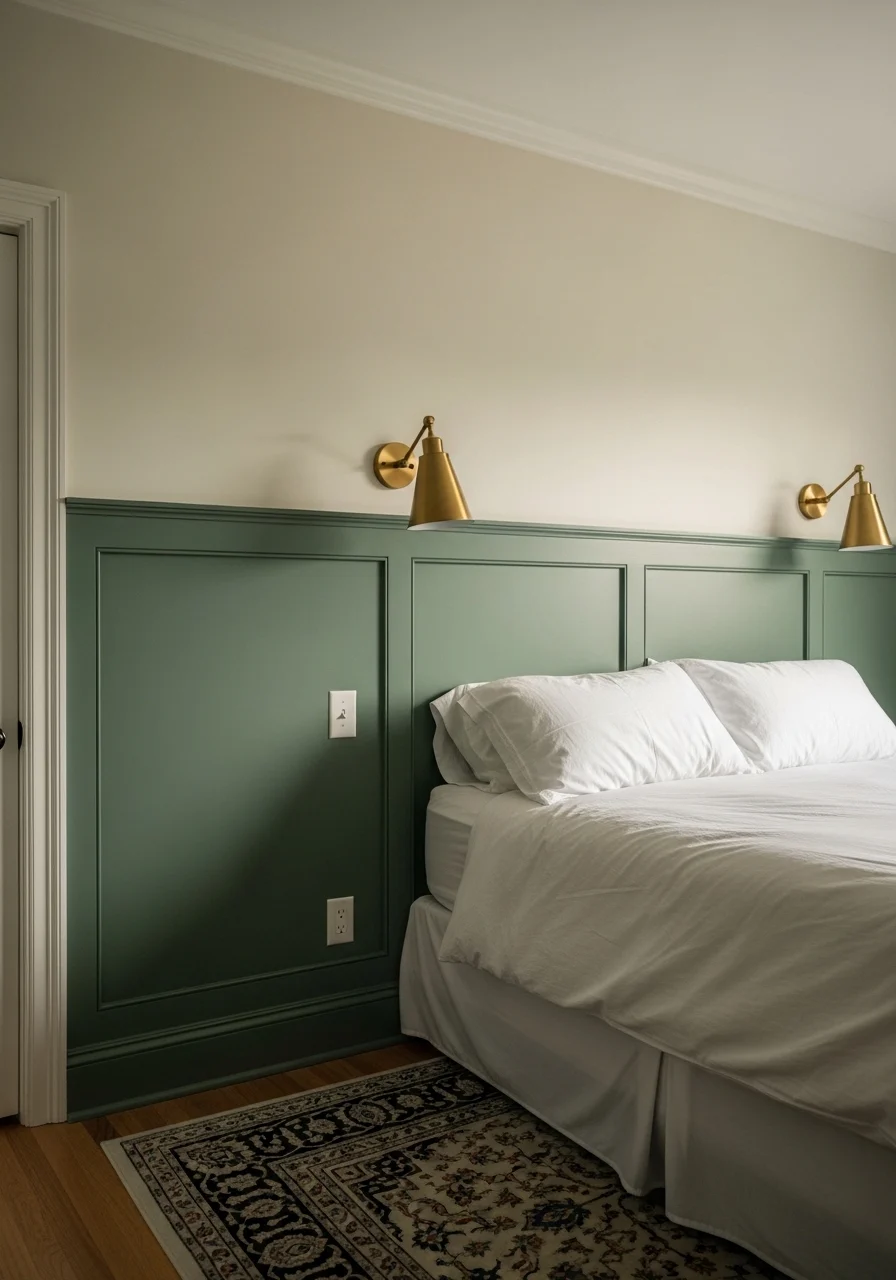
Two-tone wainscot adds architectural interest and color balance. Paint the lower section darker for grounding. The upper lighter tone keeps the room airy.
This approach works in older homes and new builds alike. It adds visual height and charm.
Key Elements (colors, textures, paint finishes)
- Paint: lower panel deep sage (satin), upper wall pale cream (eggshell)
- Trim: crisp white, semi-gloss
- Bed: simple wood or upholstered headboard
- Bedding: white with colored throws matching lower panel
- Pillows: coordinated with lower and upper tones
- Lighting: brass wall sconces or bedside lamps
- Rug: patterned with both tones
- Nightstands: white or light wood
- Accessories: framed prints and small plants
- Molding: classic wainscot panels and chair rail
How to Achieve This Look
- Install wainscot panels and chair rail securely.
- Sand and prime all woodwork and walls.
- Paint lower panels deep sage in satin finish.
- Paint upper walls pale cream in eggshell.
- Repaint trim crisp white for clean lines.
- Position bed centered above the wainscot.
- Add white bedding and a throw that echoes the sage.
- Layer pillows to tie both colors together.
- Hang brass sconces above nightstands.
- Style a patterned rug that brings both tones together.
How to Style / Use It
Two-tone wainscot suits both modern and traditional rooms. Use the lower color to hide scuffs near furniture. Swap upper color seasonally without changing the architecture. For a bold look, reverse tones or use a patterned wallpaper above the rail.
- Soft Ombre Gradient — Subtle Drama
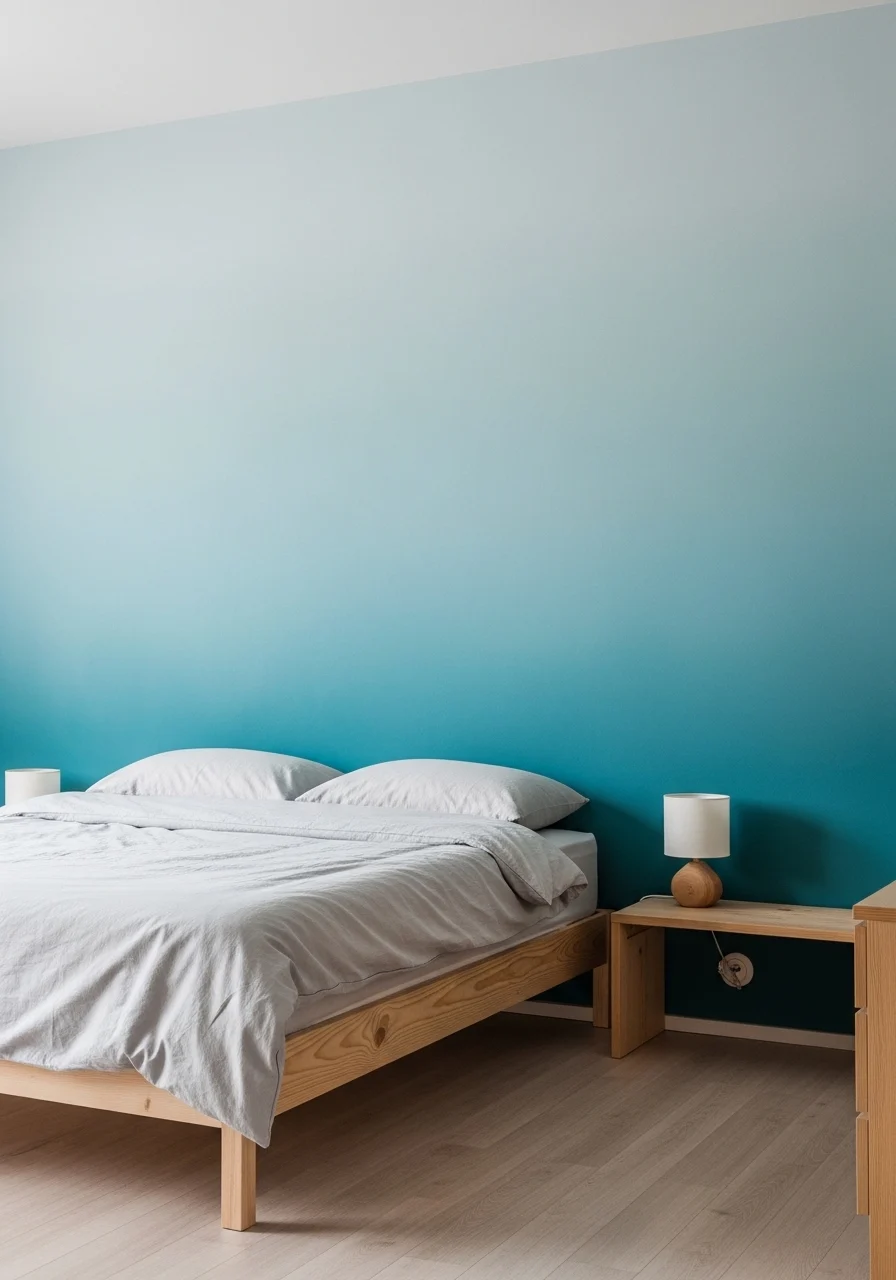
A soft ombre adds artistic interest with a gentle gradient. It creates movement and depth without bold pattern. The effect feels custom and expressive.
This suits creative, coastal, or boho interiors. Ombre draws the eye and creates a soothing backdrop.
Key Elements (colors, textures, paint finishes)
- Paint: gradient of three coordinating shades (eggshell)
- Trim: soft white, semi-gloss
- Bed: simple wood or upholstered frame
- Bedding: white with gradient-hued throw
- Pillows: colors pulled from the gradient
- Lighting: soft-glow bedside lamps
- Rug: neutral low-pile
- Accessories: minimal ceramics or glass
- Art: abstract pieces that echo the gradient
- Tools: blending brushes and foam rollers
How to Achieve This Look
- Choose three coordinating paint shades from light to dark.
- Mark horizontal bands with laser level or tape.
- Paint each band using a roller and let dry slightly.
- Use a large dry brush or sponge to blend between bands.
- Work quickly to soften seams before paint dries.
- Step back often to judge transitions and balance.
- Touch up edges and trim with a small brush.
- Install bed and bedding that echo the color flow.
- Add pillows and throws that coordinate with tones.
- Keep other decor minimal to highlight the wall.
How to Style / Use It
Ombre walls pair nicely with simple furniture that doesn’t compete visually. Use bedding and pillows to echo the gradient. Keep accessories minimal to let the wall be the focal point. Ombre requires careful blending, so practice on plywood first if unsure. Light affects the gradient, so view samples in different light.
- Venetian Plaster Texture — Old-World Warmth
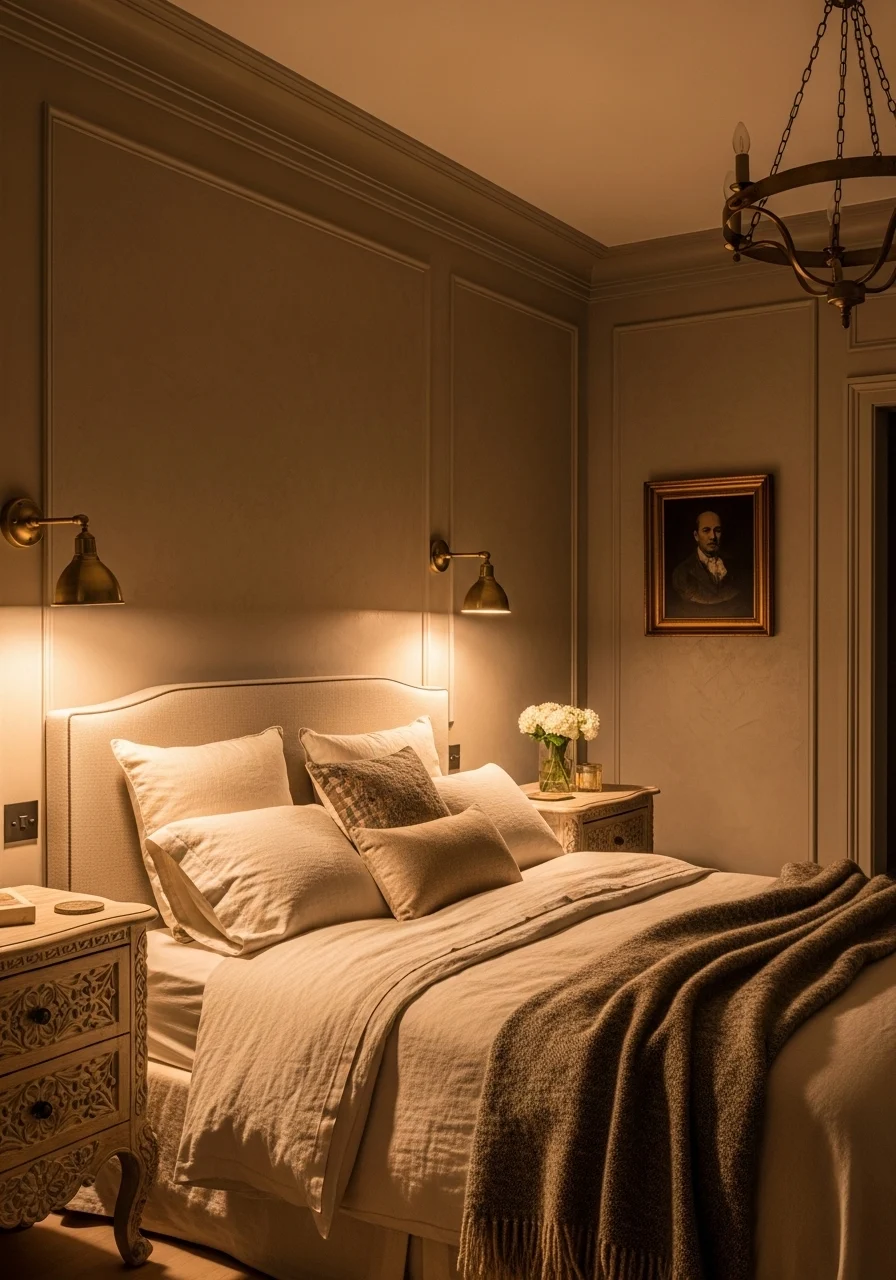
Venetian plaster adds a tactile, slightly glossy texture that reads like craftsmanship. It adds depth and subtle sheen to the walls. The finish brings old-world warmth to modern interiors.
This suits classic, Mediterranean, and boho-luxe spaces. It’s tactile and special, creating a rich backdrop.
Key Elements (colors, textures, paint finishes)
- Finish: Venetian plaster in muted taupe or warm cream
- Trim: soft white, semi-gloss
- Bed: carved wood or upholstered in neutral linen
- Bedding: cream linen with textured throws
- Pillows: mix of linen and velvet in warm tones
- Lighting: antique brass or wrought iron
- Nightstands: carved wood or distressed finish
- Rug: layered natural rugs or Persian runner
- Accessories: ceramic and aged-metal accents
- Tools: trowel and plastering tools for application
How to Achieve This Look
- Prep walls; plaster needs a clean, stable surface.
- Apply base coat of plaster primer.
- Mix Venetian plaster per manufacturer instructions.
- Apply thin layers with a stainless-steel trowel.
- Burnish the final layer for a subtle sheen.
- Allow full curing time before hanging art.
- Install carved wood bed and linen bedding.
- Add brass lighting to highlight texture.
- Layer rugs and place ceramics to complete the look.
- Seal with recommended topcoat for durability.
How to Style / Use It
Venetian plaster pairs with antique brass and carved woods. Keep bedding neutral to showcase wall texture. This finish is durable but avoid heavy scrubbing; use gentle dusting. For smaller budgets, consider a faux plaster paint kit. The subtle sheen changes with light, so pick your room’s best exposure.
You now have 19 thoughtful bedroom wall color ideas to try. From soft greige to black matte and Venetian plaster, there’s a palette for every mood and style. Try a sample patch before committing. Pin the looks you love and test them with your bedding and lighting.
Which color are you most tempted to try first? Share this with a friend who’s repainting their room, and save your favorite ideas for later.