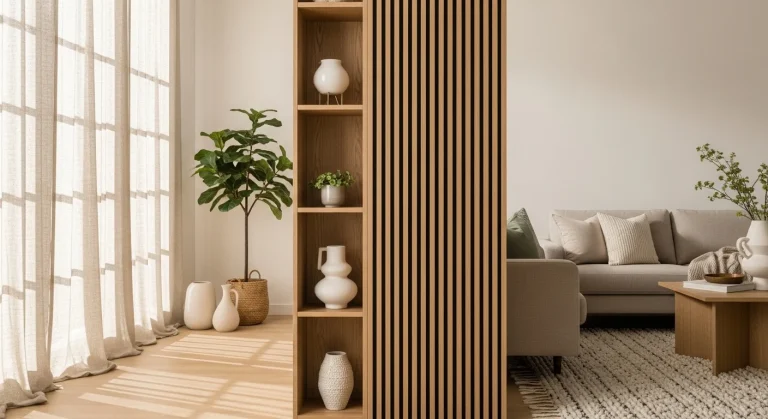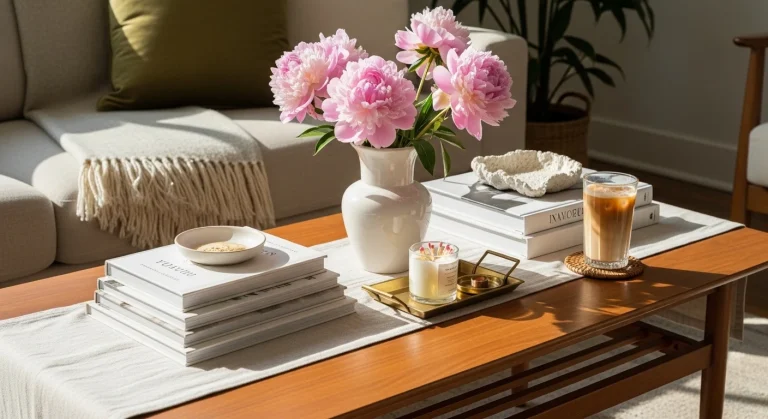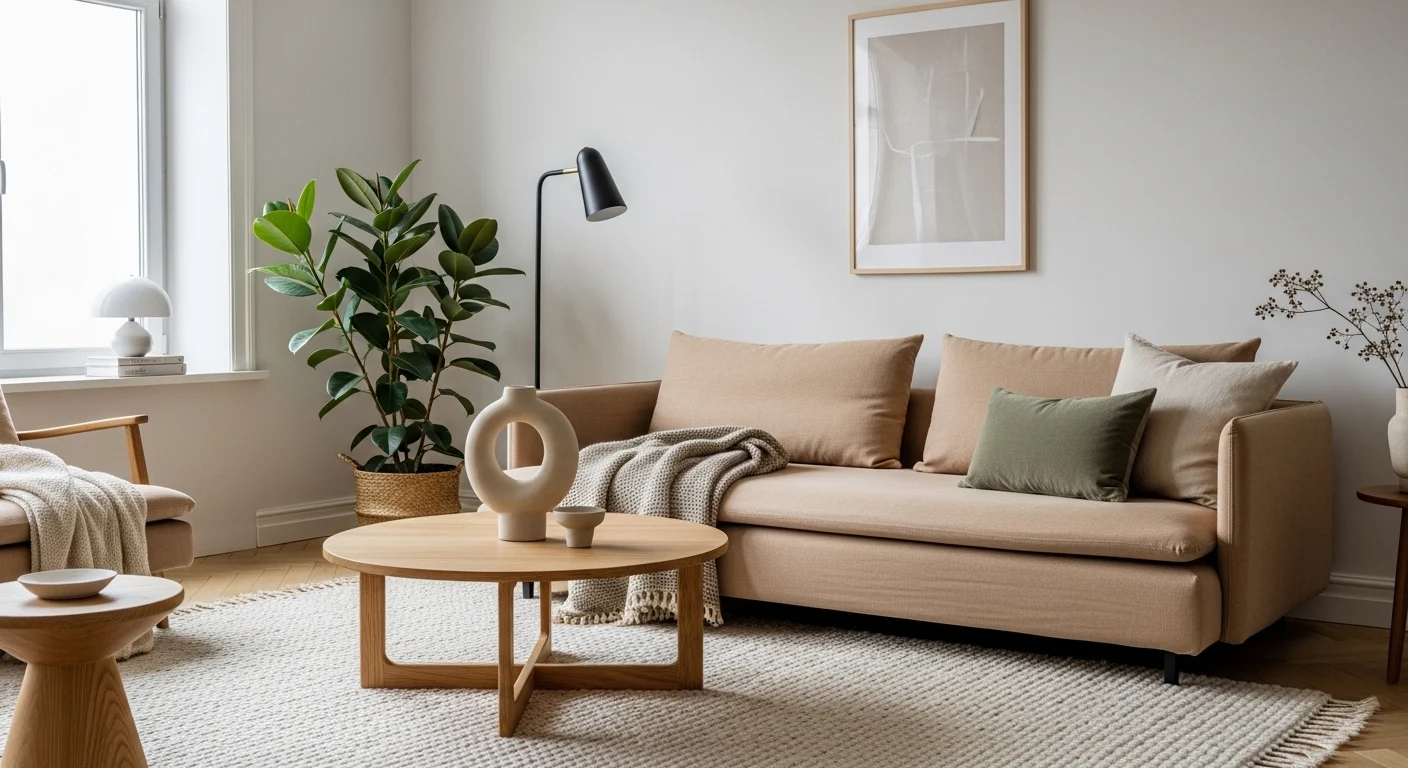
21 Minimalist Living Room Ideas for a Calm Space

You want a calm, collected living room that feels like a breath of fresh air the moment you walk in. Minimalist Living Room Ideas for a Calm Space focus on fewer pieces, tactile textures, and a muted palette so your room feels restful and intentional.
This article gives you 21 minimalist living room ideas for a calm space — each with a styled image prompt, a quick description, a detailed elements list, step-by-step setup, and practical styling tips. You’ll find looks from Scandinavian simplicity to warm-modern and soft-boho minimalism.
Pin the ideas you love, try one small change first, and build a calm home one thoughtful choice at a time. Read on for simple, realistic setups you can recreate without a designer.
1. Minimalist Living Room Ideas for a Calm Space
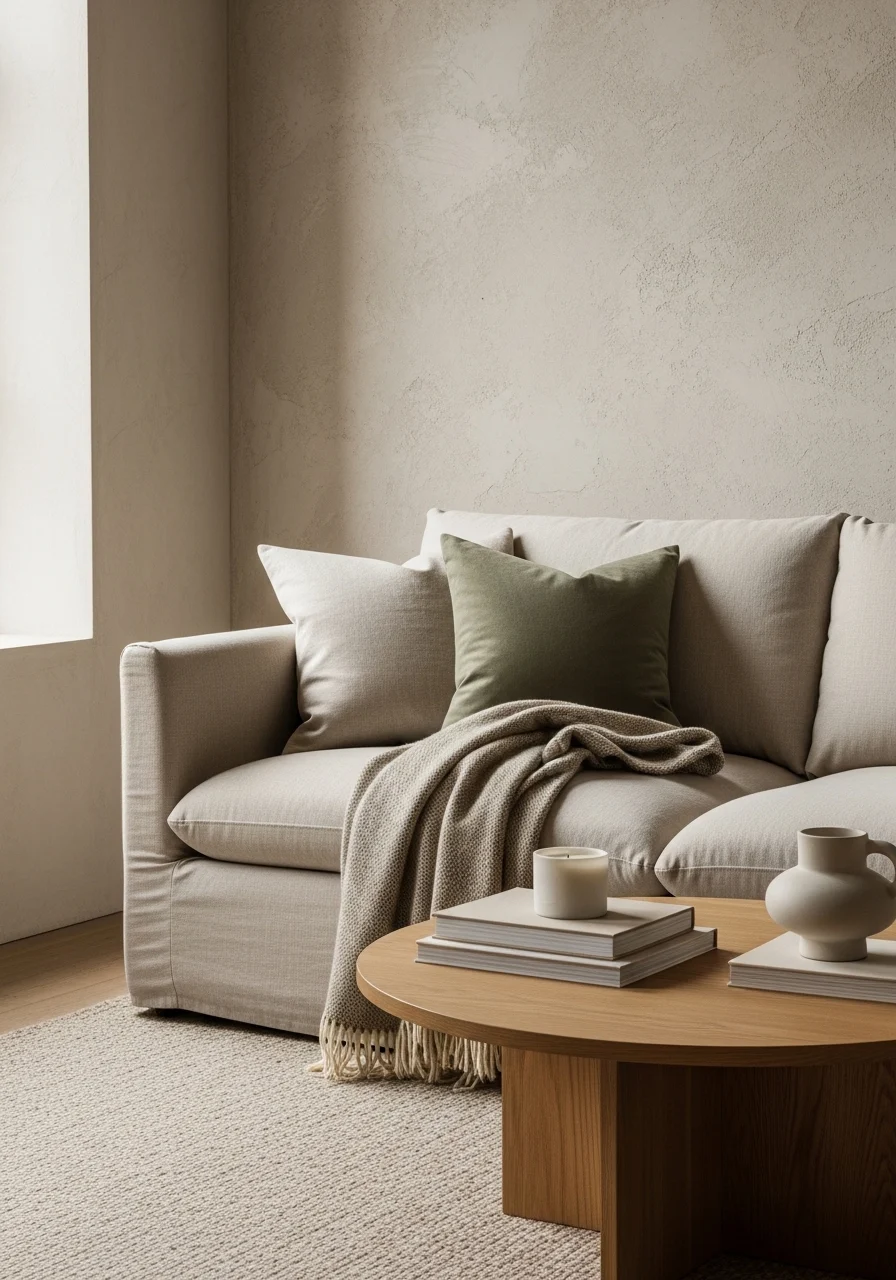
This neutral linen lounge feels serene because it limits color and emphasizes texture. The linen sofa softens the room while wood and ceramics add warmth. It’s perfect for anyone who craves a gentle, lived-in calm.
You’ll notice breathable fabrics, rounded furniture, and layered neutrals that soothe the eyes. The vibe is quiet, warm, and tactile.
Key Elements (minimalist decor)
- Linen sofa in warm beige
- Round oak or ash coffee table, light finish
- Ivory wool or cotton rug, low pile
- Ceramic vase with single branch or dried grass
- Matte black floor lamp with simple shade
- Soft-knit throw in oatmeal tone
- One muted green or terracotta accent cushion
- Plaster or matte painted wall in off-white
- Stacked art books with neutral covers
- Minimal media console in wood or white lacquer
How to Achieve This Look
- Start with a neutral wall in warm off-white.
- Place a linen sofa against the wall as the anchor piece.
- Add a round oak coffee table centered on the rug.
- Layer an ivory low-pile rug under sofa and table.
- Position a matte black floor lamp beside the sofa.
- Add a single ceramic vase with a dried branch on the table.
- Fold a soft-knit throw over one arm of the sofa.
- Use one muted accent cushion for subtle contrast.
- Keep surfaces mostly clear — one tray or book stack only.
How to Style / Use It
Keep accessories minimal and tactile. Pair with a woven basket for throws. Rotate cushions seasonally. Lighter linens in summer, textured wool in winter. Dust wood and ceramics weekly to keep the calm look. Add soft instrumental music for cozy evenings.
2. Monochrome Minimal with Graphic Contrast
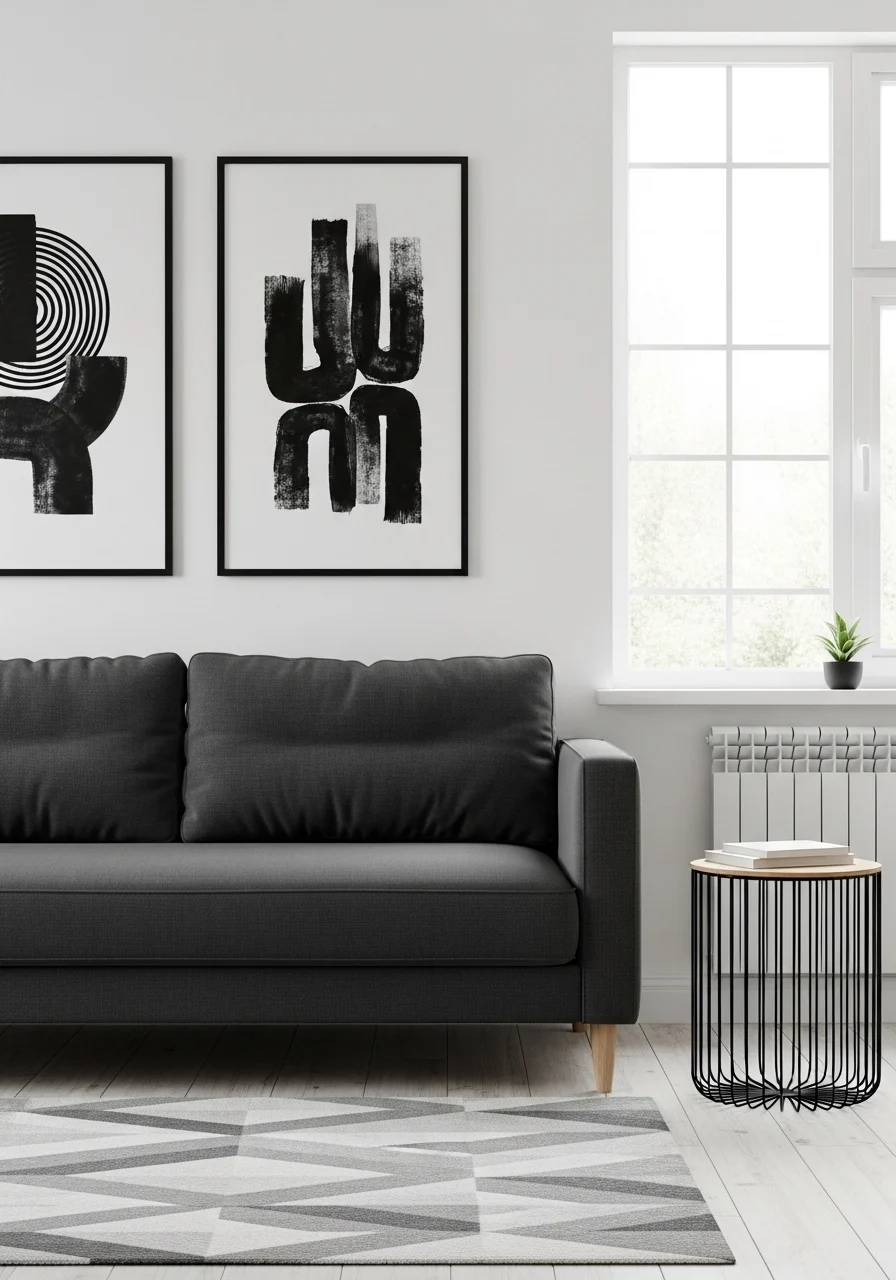
This look uses a tight monochrome palette and a bold graphic rug to create visual interest. Limited colors keep the space calm while high-contrast accents add personality.
It suits someone who likes modern lines and crisp visuals. Texture comes from textiles and rug pile, not color.
Key Elements (calm living room)
- Charcoal or deep-gray sofa with clean lines
- White matte walls
- Black metal side table with minimal profile
- Geometric gray/white rug
- Black-and-white abstract print in slim frame
- Leather or faux-leather accent pillow
- Concrete or matte ceramic planter
- Slim floor lamp with metal finish
- Minimal TV console in low gloss white
- Sleek cable management solutions
How to Achieve This Look
- Paint walls white and install simple baseboards.
- Place a charcoal sofa as focal seating.
- Lay a geometric rug beneath the seating area.
- Hang one large black-and-white art piece above sofa.
- Add a black metal side table with one ceramic cup or small plant.
- Use a leather cushion for texture contrast.
- Tuck a concrete planter with a sculptural plant into a corner.
- Use discreet cable channels for electronics.
How to Style / Use It
Let strong shapes speak. Keep patterns to one bold piece. Clean lines work well with metal and concrete finishes. Wipe surfaces with a damp cloth weekly. This look fits a modern apartment or loft.
3. Warm Minimalism with Natural Wood Accents
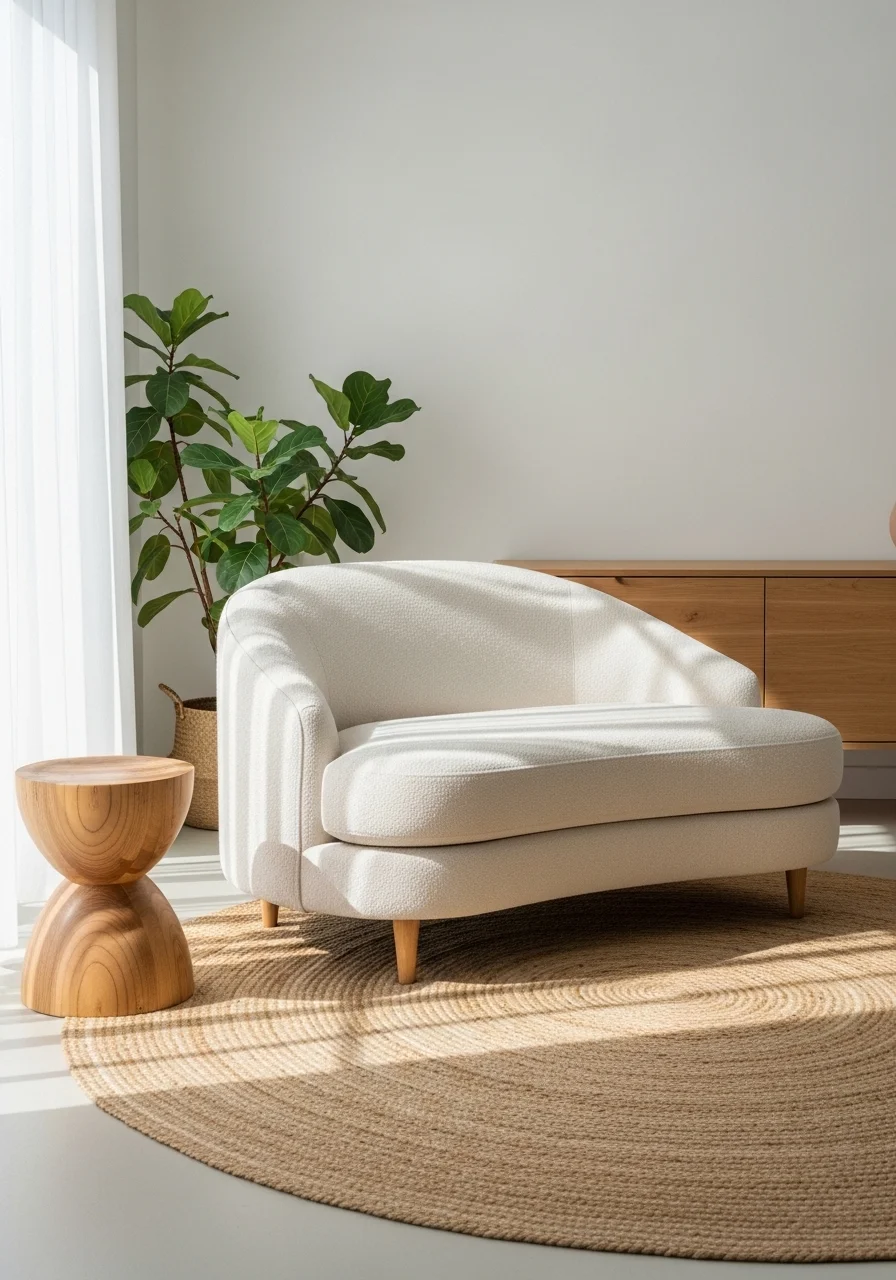
Warm minimalism pairs soft neutrals with wood tones. It feels inviting while staying pared back. Organic materials make the room feel calm and human.
This suits anyone who wants minimal style without feeling cold.
Key Elements (minimalist decor)
- Curved cream or off-white sofa
- Light walnut media console
- Jute or seagrass rug
- Sculptural wooden stool or side table
- Terracotta or clay vase
- Soft linen cushions in sandy tones
- Woven basket for storage
- Potted fiddle-leaf or rubber plant
- Brass or warm-metal task lamp
- Simple, neutral window linen panels
How to Achieve This Look
- Place a cream sofa centered on a jute rug.
- Install a low walnut console opposite the sofa.
- Add a wooden sculptural stool as a side table.
- Use linen curtains in a sandy color at windows.
- Set a clay vase on the console with a single branch.
- Group cushions in slightly different sandy tones.
- Add a woven basket for throws or magazines.
- Position a warm-metal floor lamp for reading.
How to Style / Use It
Keep wood surfaces oiled and dust-free. Rotate plant placement for light needs. Pair with warm lighting (2700–3000K). This style works well in homes that favor natural daylight.
4. Soft-Boho Minimal with Tactile Layers
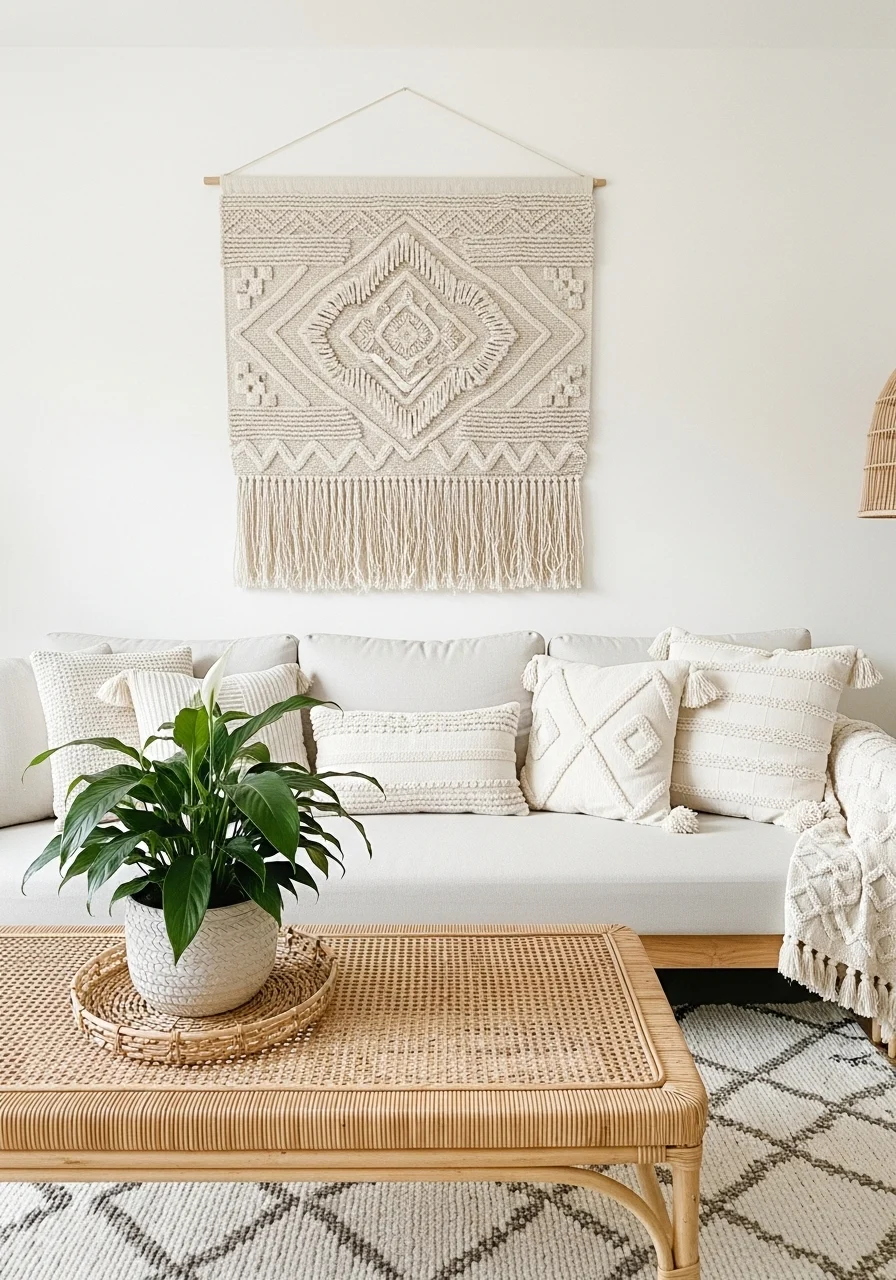
Soft-boho minimal blends minimalism with tactile, handmade pieces. Textural layers make the room feel cozy without clutter. It works for creative souls who value softness and serenity.
You’ll enjoy neutral yarns, woven textures, and earthy finishes.
Key Elements (calm living room)
- Low-profile sofa with neutral upholstery
- Woven wall hanging in natural fibers
- Rattan or cane coffee table
- Macramé or textured throw pillows
- Soft cotton or wool throw in cream
- Layered low-pile rug plus small woven mat
- Clay or terracotta decorative bowls
- Potted greenery in a woven planter
- Slim wooden shelving with minimal objects
- Soft ambient pendant or floor lamp
How to Achieve This Look
- Anchor the space with a neutral sofa.
- Hang a woven wall piece above the sofa.
- Add a rattan coffee table in front.
- Layer cushions in different knit textures.
- Place a small woven rug over a neutral base rug.
- Add clay bowls to the console for handcrafted charm.
- Introduce one large plant in a woven basket.
- Use warm, diffused lighting to soften shadows.
How to Style / Use It
Emphasize touch and texture. Keep decor limited to a few handcrafted pieces. Spot-clean textiles and air woven items outdoors occasionally. Rotate throws for freshness.
5. Scandinavian Minimal with Pops of Pastel
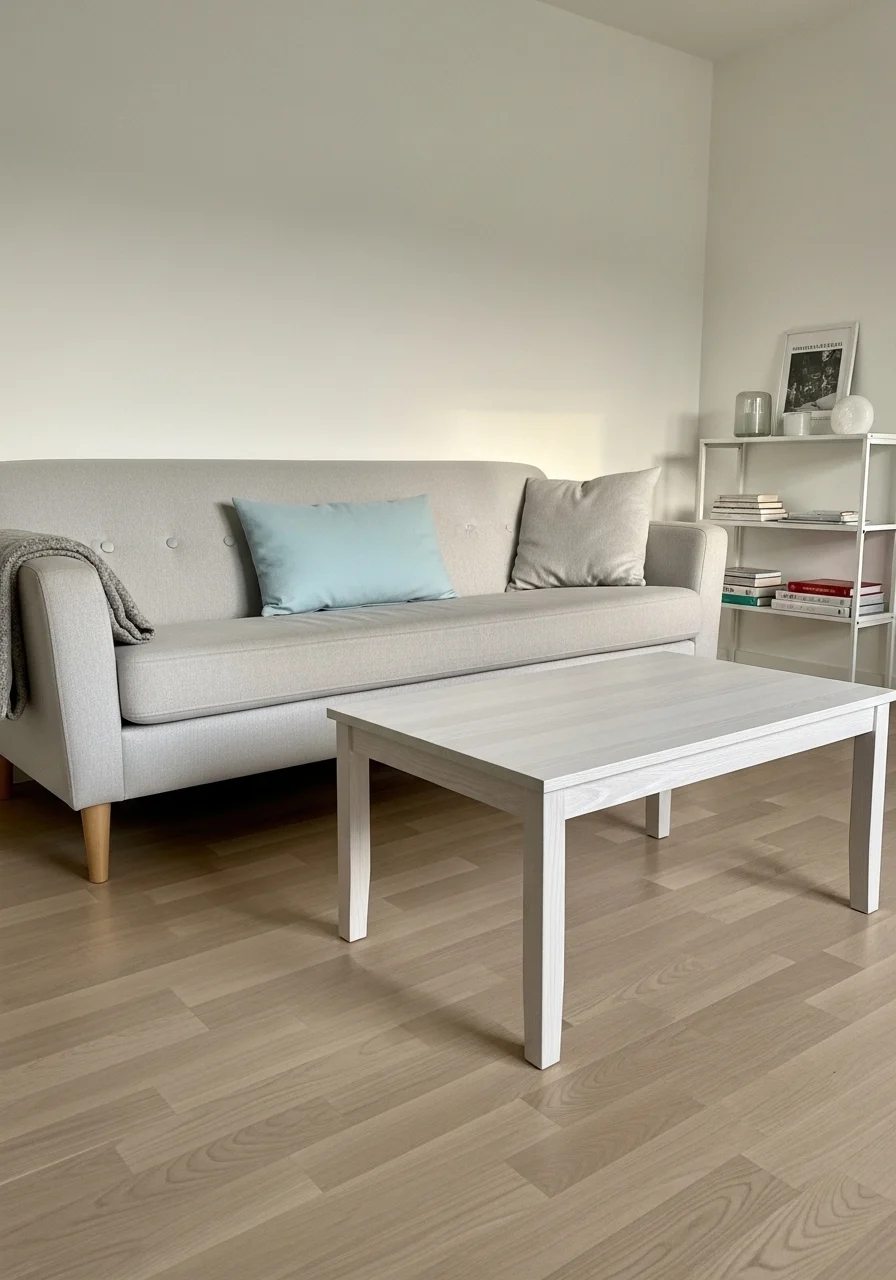
Scandinavian minimalism uses airy spaces and practical furniture. Soft pastels add friendly energy without breaking calm. The overall feel is neat and approachable.
This suits people who like tidy spaces with a gentle hint of color.
Key Elements (minimalist decor)
- Pale-gray or white sofa with clean legs
- White oak coffee table with tapered legs
- Pastel cushions (mint, blush, sky blue)
- Light hardwood flooring
- Slim white shelving unit
- Minimal ceramic tableware on display
- Neutral framed prints with pastel accents
- Sheer linen curtains
- Simple white planter with low plant
- Soft overhead pendant in matte white
How to Achieve This Look
- Choose a light sofa with visible wooden legs.
- Add a simple oak coffee table and position on a pale rug.
- Introduce 1–2 pastel cushions for subtle color.
- Install slim shelving and style with ceramics and books.
- Hang pastel-accented prints in slim frames.
- Use sheer linen curtains to soften light.
- Place a white planter with a small green plant.
- Keep surfaces clutter-free and furniture low-profile.
How to Style / Use It
Use pastel accents sparingly. Clean stripes and dust regularly to keep brightness. Swap cushion colors by season for easy refreshes. This look fits apartments and family rooms.
6. Minimal Black-and-Wood Cozy Corner
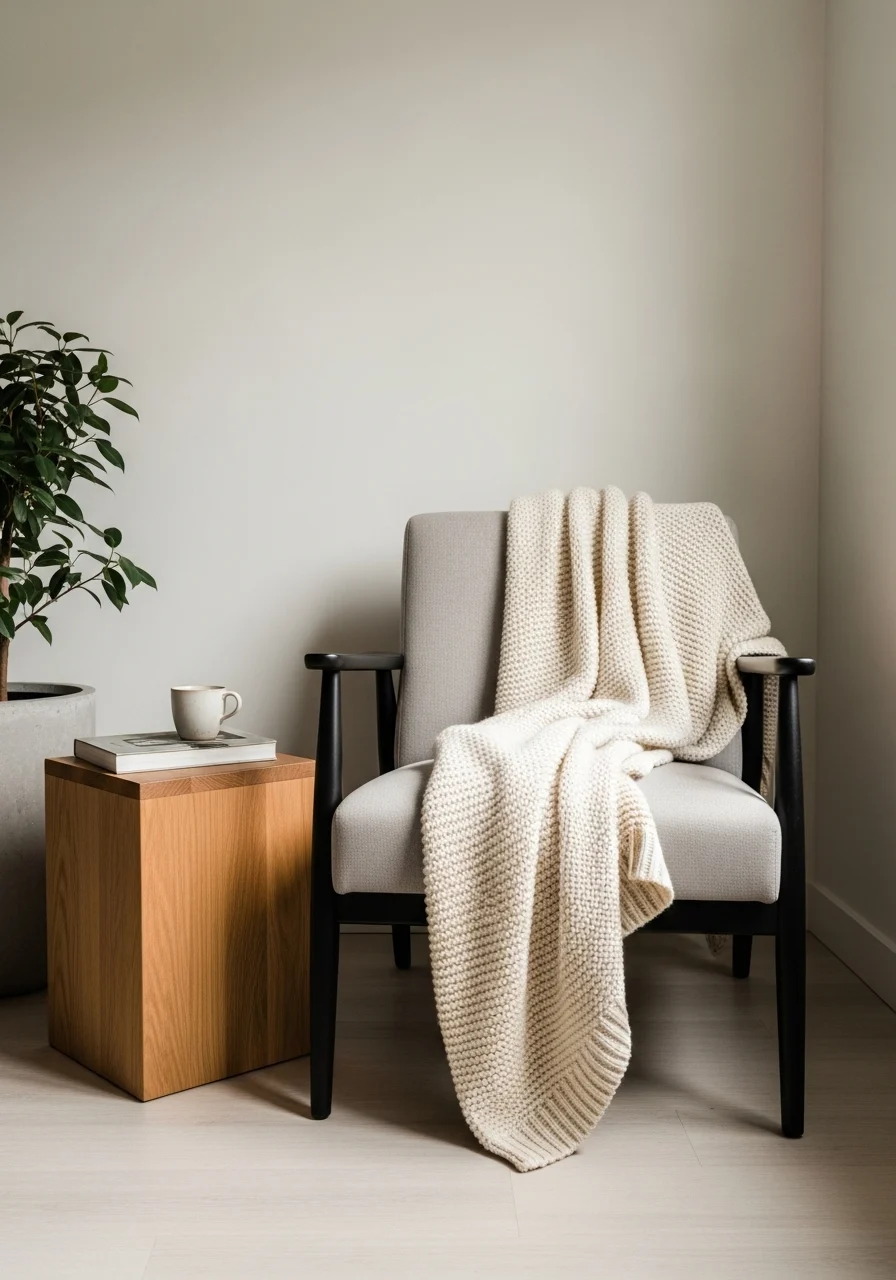
A dimmer, cozy minimal corner uses black as an anchor and wood for warmth. The mood feels intimate yet tidy. It’s great for reading nooks and small living rooms.
Contrast and texture give depth without visual clutter.
Key Elements (calm living room)
- Black metal-framed armchair or petite sofa
- Warm oak side table
- Chunky knit throw in oatmeal or cream
- Low-pile neutral rug
- Concrete or stone planter
- Slim black floor lamp with soft shade
- Books stacked vertically
- Leather or suede cushion
- Minimal black wall hook for a throw
- Subtle candle cluster on table
How to Achieve This Look
- Create a corner with a black-framed armchair.
- Add an oak side table with a small stack of books.
- Drape a chunky knit throw for texture.
- Place a concrete planter with a sculptural plant nearby.
- Install a slim black floor lamp for focused light.
- Add a leather cushion for tactile contrast.
- Keep decorations to one or two surface items.
- Use warm bulbs to soften black accents.
How to Style / Use It
Keep this space for relaxing or reading. Rotate the throw and cushion textures seasonally. Use wood polish occasionally to maintain warmth. Keep the floor clear for a tidy feel.
7. Minimalist Gallery Wall with Negative Space
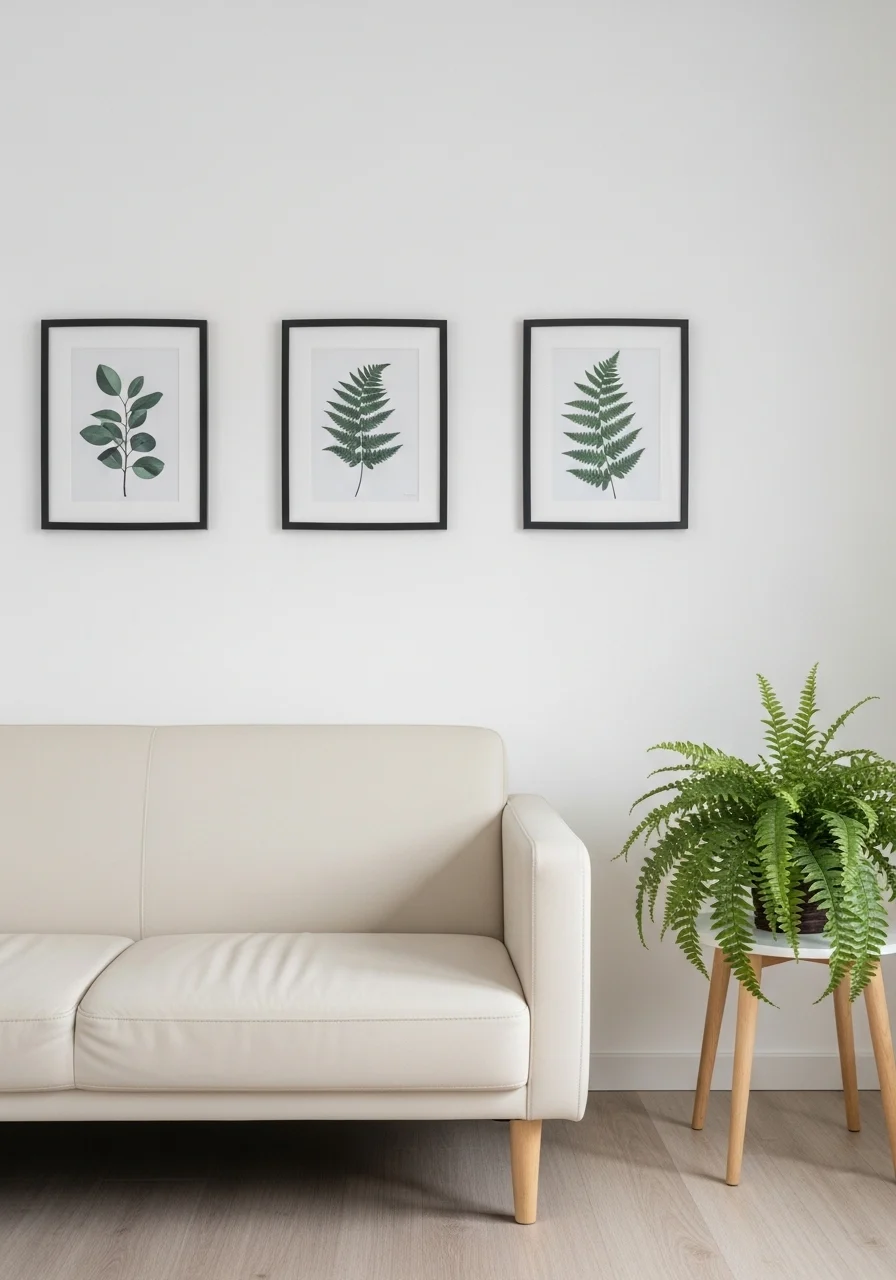
A minimalist gallery wall uses lots of negative space and few, well-chosen prints. It feels curated and calm because each piece has breathing room.
This works for art lovers who prefer quiet curation over wall-clutter.
Key Elements (minimalist decor)
- Three to five large, slim-framed art prints
- Wide margins between frames
- Light leather or fabric sofa beneath
- Neutral wall paint, matte finish
- Slim wooden or metal picture rail (optional)
- Low console with minimal accessories
- Single floor plant for life
- One ceramic bowl or tray for balance
- Neutral throw and single cushion
- Cordless hanging or hidden hanging hardware
How to Achieve This Look
- Choose 3–5 art pieces with a similar tone or theme.
- Paint the wall matte off-white for subtle contrast.
- Measure spacing and hang prints with wide margins.
- Place the sofa directly below, leaving visible wall above.
- Add one plant to the side for organic contrast.
- Keep console items to a single bowl and one book.
- Use matching frames for uniformity.
- Step back and adjust spacing until the wall breathes.
How to Style / Use It
Rotate art seasonally for fresh mood. Keep frames dust-free. Use artist-grade prints or affordable prints with quality frames. Negative space helps maintain calm even when you add a new piece.
8. Minimalist Living Room Ideas for a Calm Space — Low-Profile Modular Seating
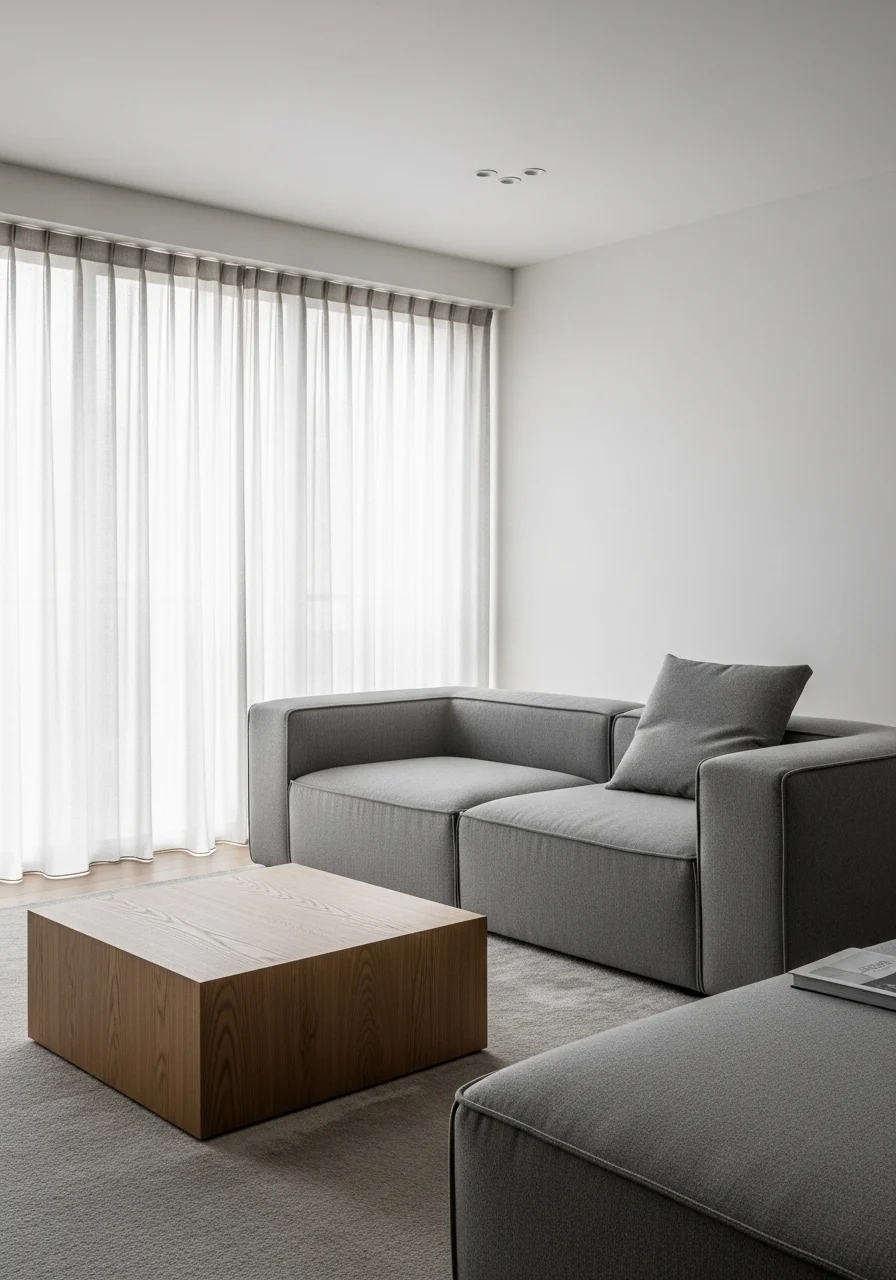
Low-profile modular seating creates an open, airy feel and flexible layout. Clean lines and neutral fabrics keep the tone calm. You can reconfigure modules for guests or lounging.
This suits flexible living rooms and families who like adaptable seating.
Key Elements (minimalist decor)
- Low modular sofa in muted gray or beige
- Square or rectangular oak coffee table
- Neutral low-pile rug that anchors modules
- Sheer linen curtains for soft light
- Slim console behind sofa if needed
- Floor cushions for casual seating
- Minimal decorative tray on table
- One sculptural vase or candle
- Hidden storage ottoman (optional)
- Simple pendant or recessed lighting
How to Achieve This Look
- Position modules to face the focal point (TV or window).
- Center a square coffee table so modules feel connected.
- Lay a neutral rug that fits under most modules.
- Add sheer curtains to soften incoming light.
- Keep tabletop decor to a tray and one sculptural piece.
- Place floor cushions for extra seating when needed.
- Use a hidden storage ottoman for blankets.
- Reconfigure modules regularly to suit activities.
How to Style / Use It
Use modularity to adapt to guests. Keep fabric maintenance simple with removable covers. Opt for stain-resistant linen blends if you have kids or pets. Neutral tones allow a seasonal cushion to stand out.
9. Minimal Mid-Century with Curved Silhouettes
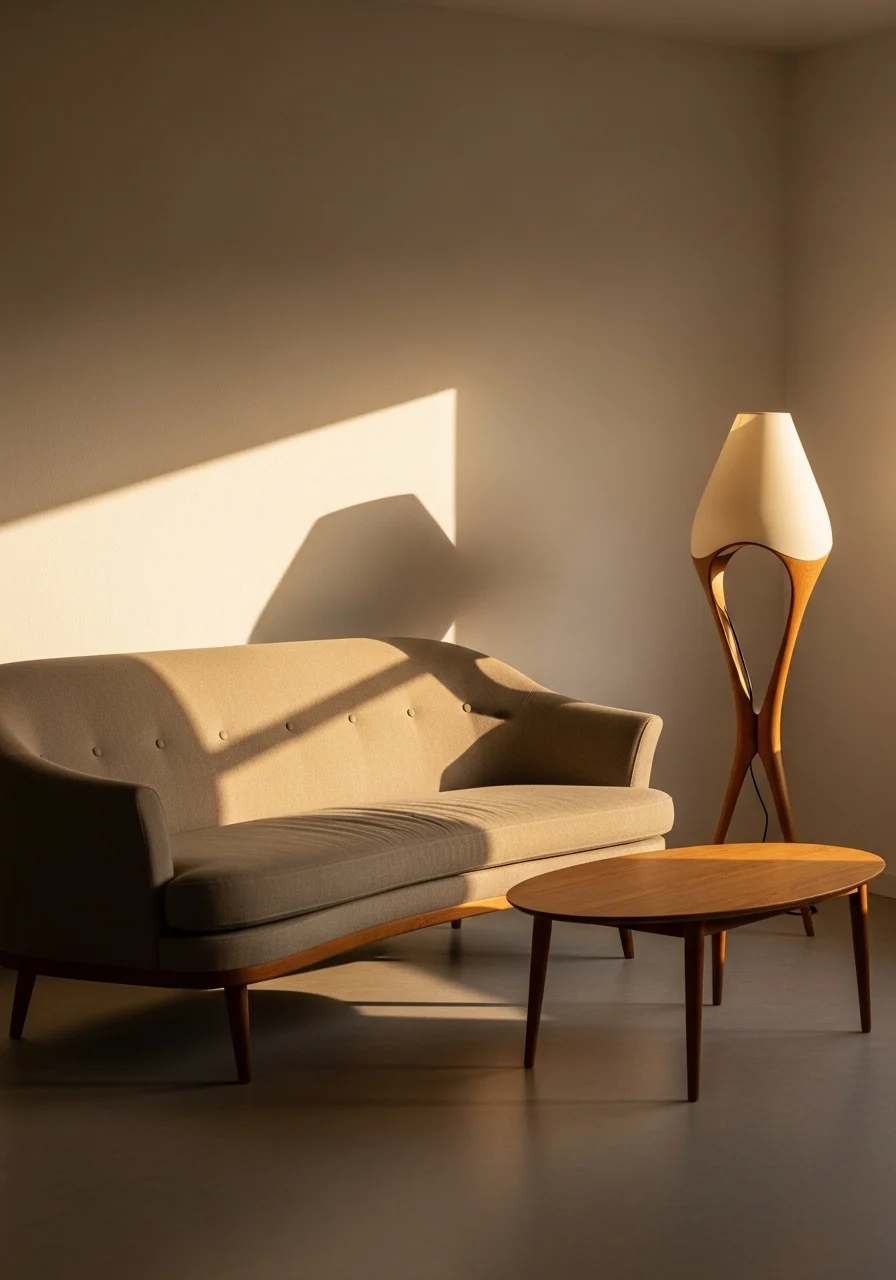
Mid-century minimalism favors curves and simple shapes. Curved sofas soften a space while keeping the look uncluttered. It feels elegant and relaxed.
This style suits design lovers who want a retro nod without fuss.
Key Elements (calm living room)
- Curved sofa in cream or warm gray
- Round or kidney-shaped wooden coffee table
- Tapered leg wood finishes
- Sculptural floor or table lamp
- Low-profile media console
- Slim framed mirror or small print
- Single patterned cushion in muted tones
- Natural fiber rug with low pile
- Potted plant with sculptural foliage
- Minimal, hidden storage solutions
How to Achieve This Look
- Choose a curved sofa as the focal piece.
- Place a round wooden coffee table centrally.
- Add a sculptural lamp to balance the curve.
- Use tapered leg furniture for a cohesive look.
- Introduce one small patterned cushion for interest.
- Keep media console minimal and closed.
- Add a plant to bring organic lines into the space.
- Use hidden storage for clutter control.
How to Style / Use It
Curved pieces pair well with circular rugs and soft lighting. Keep floor space open for flow. Dust and vacuum weekly to keep lines crisp.
10. Textured Neutrals with Layered Rugs
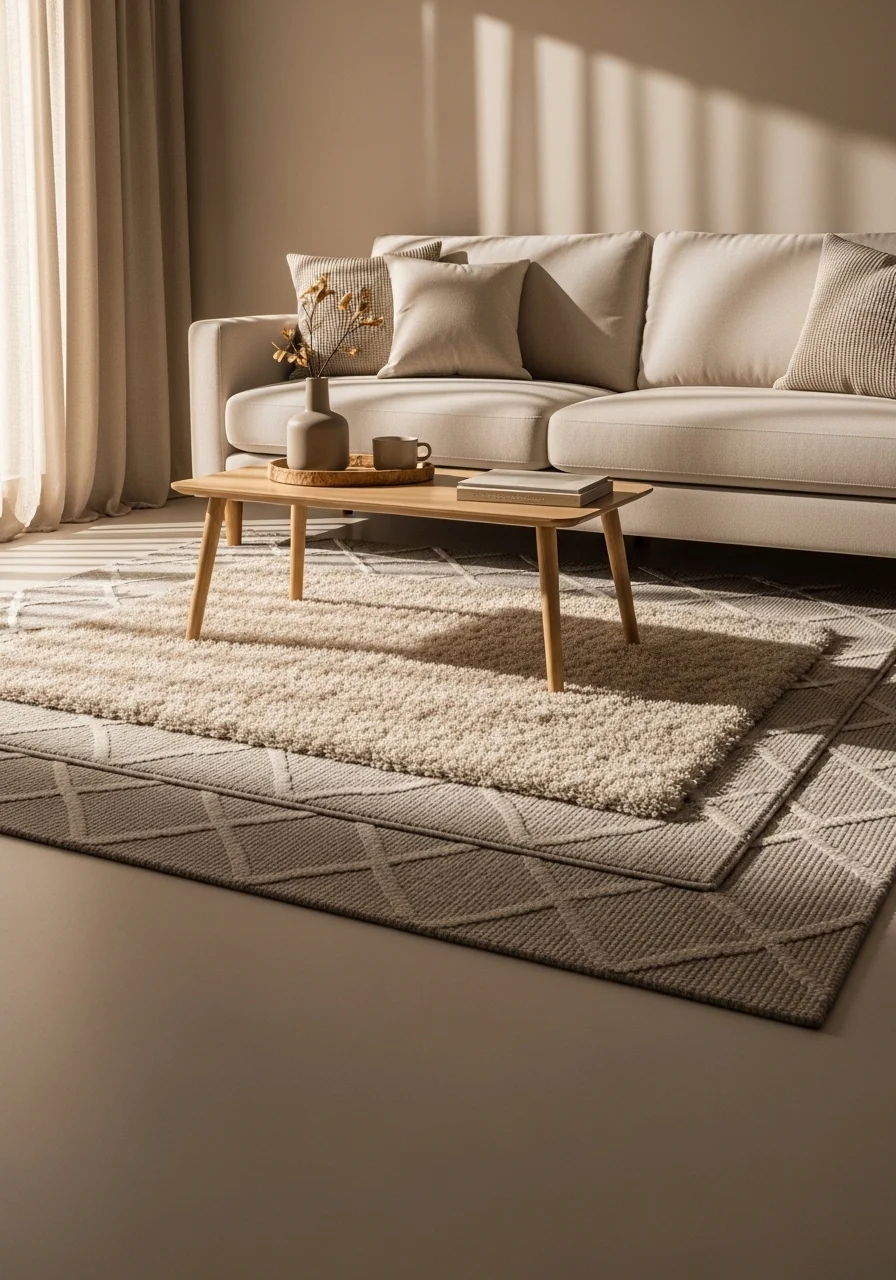
Layered rugs add depth while keeping a neutral palette. The combination of flat weave and a soft top rug brings visual interest without color overload.
This is for those who love texture and cozy underfoot comfort.
Key Elements (calm living room)
- Flatweave jute or sisal base rug
- Soft shag or wool rug layered on top
- Neutral sofa in cream or taupe
- Low coffee table in light wood or stone
- Textured cushions in knit and linen
- Slim metal or wood floor lamp
- Neutral-toned throw blanket
- Minimal decorative books or tray
- Natural-fiber basket
- Subdued wall art in earth tones
How to Achieve This Look
- Lay the flatweave rug to define the seating area.
- Position a smaller soft rug on top inside the seating footprint.
- Place sofa and coffee table centered on rugs.
- Add textured cushions and a throw for tactility.
- Use a basket for extra blankets or magazines.
- Keep tabletop decor minimal.
- Choose warm bulbs to enhance rug textures.
- Shake or vacuum rugs regularly to maintain pile.
How to Style / Use It
Layered rugs make a room feel curated. Rotate rugs periodically to even wear. Choose low-pile top rugs if pets or heavy foot traffic exist.
11. Minimal Coastal Calm with Breezy Textiles
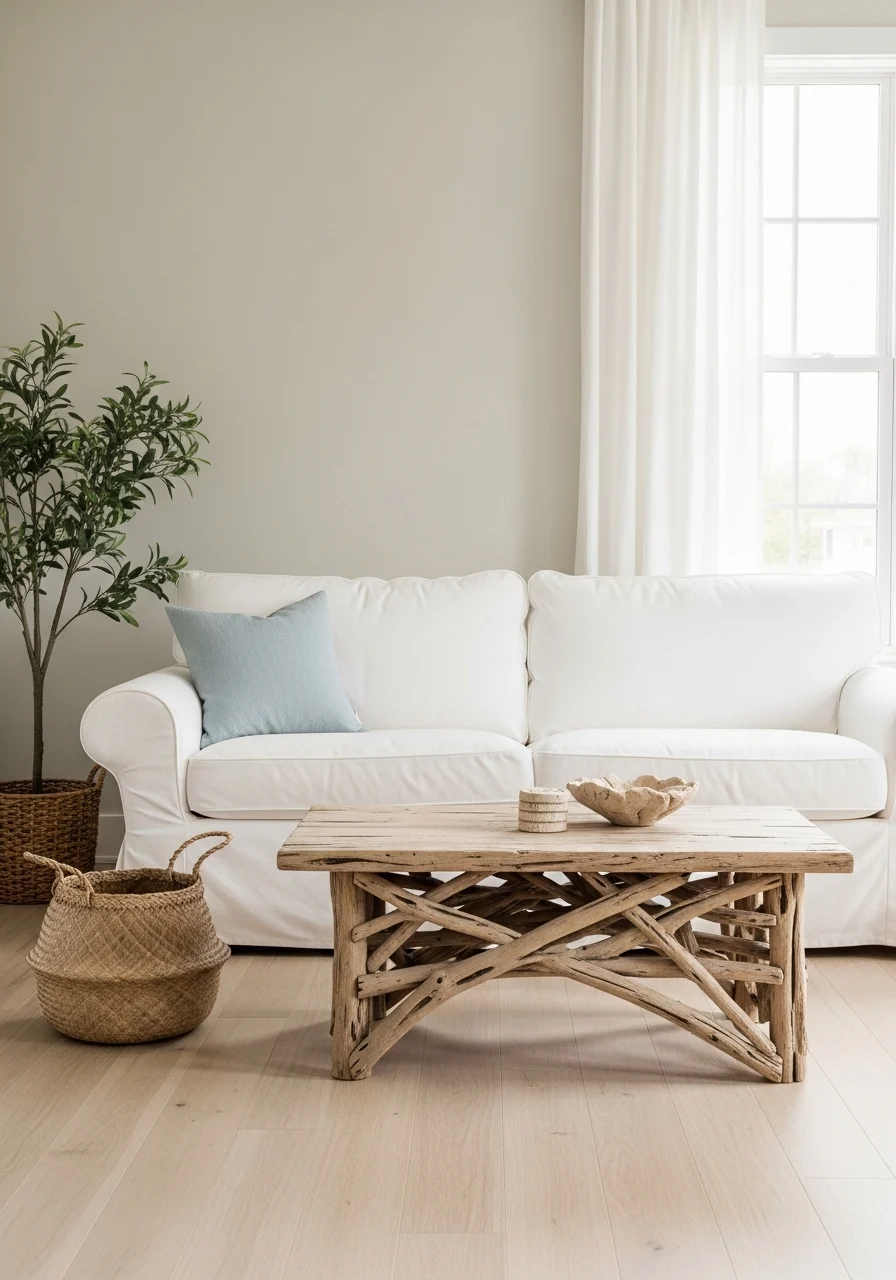
This coastal take on minimalism uses breezy textiles and light wood tones. It feels fresh without being thematic. The palette suggests sea-breeze calm.
This works for homes near the water or anyone wanting a fresh, airy vibe.
Key Elements (minimalist decor)
- White slipcovered sofa or pale upholstery
- Driftwood or bleached oak coffee table
- Pale blue or seafoam cushions
- Sheer curtains in linen or cotton
- Woven baskets for storage
- Light hardwood floors or pale rug
- Ceramic or glass vase with single bloom
- Minimal nautical-free wall art in soft blues
- Natural rope or jute accents
- Soft table lamp with linen shade
How to Achieve This Look
- Start with white or pale upholstered seating.
- Add a driftwood coffee table and pale rug.
- Use sheer curtains to let light filter in.
- Add subtle blue cushions for a coastal whisper.
- Place woven baskets as practical accents.
- Keep art minimal and in soft tones.
- Use glass or ceramic vases for small stems.
- Maintain a clean, uncluttered surface routine.
How to Style / Use It
Avoid beachy kitsch; keep the palette subtle. Air cushions and linens on sunny days. Use water-resistant finishes if you live by the coast.
12. Minimal Industrial with Soft Edges
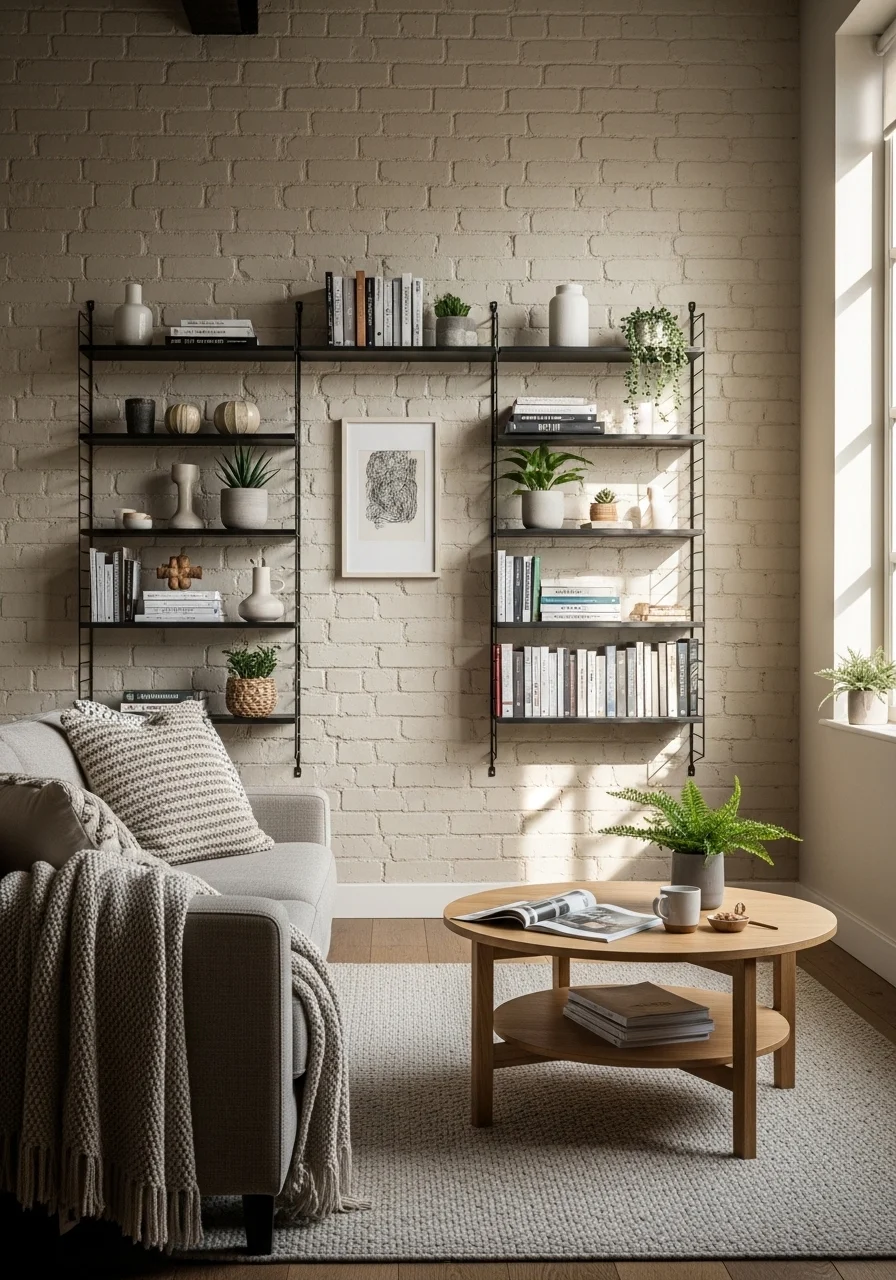
Industrial elements get softened here with plush textiles and rounded furniture. The contrast feels grounded yet calm. It’s a good fit for lofts and repurposed spaces.
Balance metal with wood and soft fabrics for a comfortable vibe.
Key Elements (minimalist decor)
- Painted or pale exposed brick wall
- Plush neutral sofa with soft upholstery
- Slim black metal shelving with minimal objects
- Round oak coffee table or stool
- Textured throw and cushions
- Concrete or stone planter
- Low-profile media unit in matte finish
- Warm ambient pendant light
- Neutral framed photography
- Simple woven basket storage
How to Achieve This Look
- Paint exposed brick a pale tone for brightness.
- Place a plush sofa with soft cushions near the brick.
- Add metal shelving but keep it sparsely styled.
- Use a round wooden table to soften metal lines.
- Include a concrete planter with a green plant.
- Use warm bulbs to counteract cool materials.
- Keep cords and industrial clutter hidden.
- Add a soft rug to anchor seating.
How to Style / Use It
This style tolerates imperfection in materials. Keep metal polished and wood oiled. Add soft rugs to reduce echo in larger spaces.
13. Serene Minimal with Green Accents
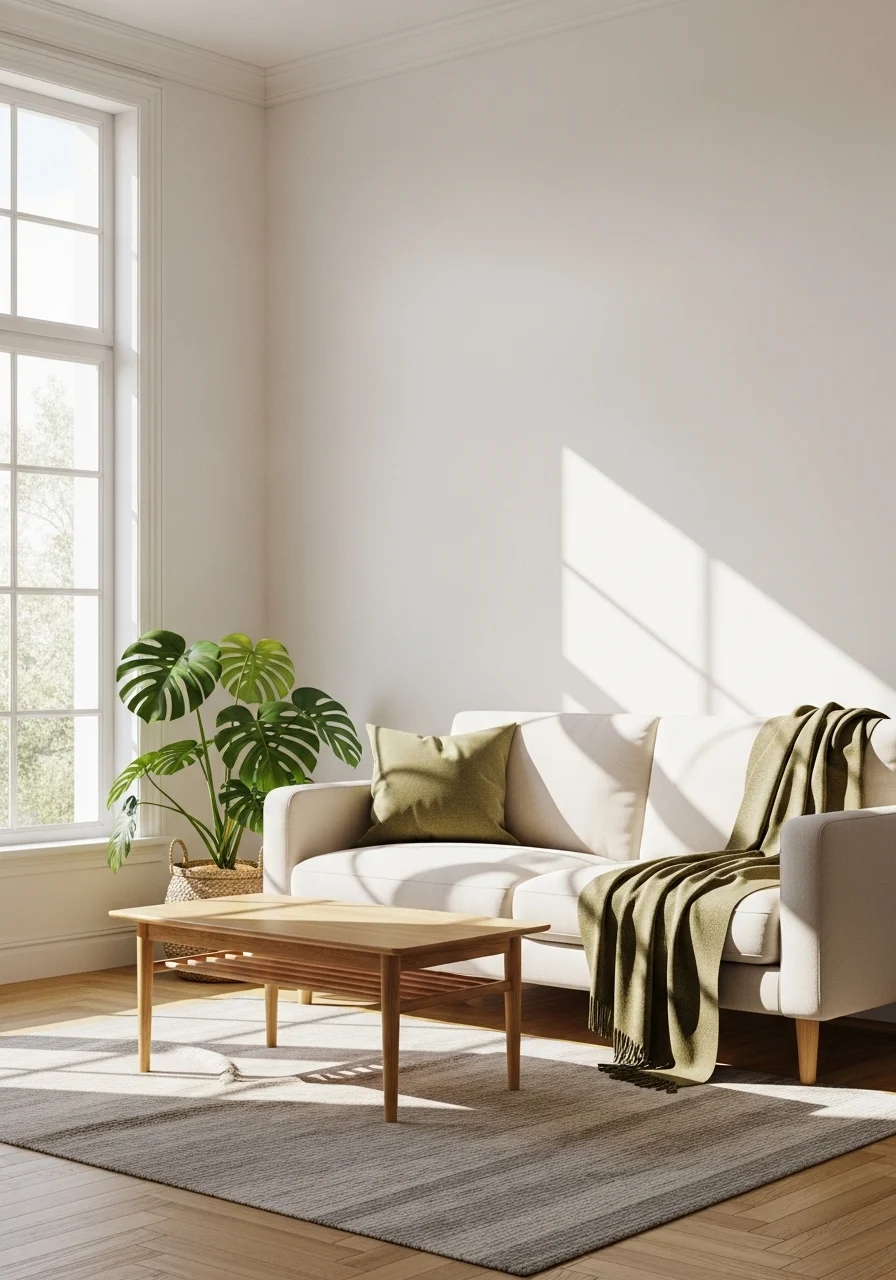
Green accents bring a restorative feel to a minimalist room. A single green tone repeated thoughtfully is calming. It feels balanced and close to nature.
Great for plant lovers who want a calm, cohesive look.
Key Elements (calm living room)
- Cream or beige sofa
- Olive or muted green cushions
- Wooden coffee table in light tone
- Potted monstera or philodendron
- Neutral rug with subtle texture
- Ceramic planter in warm gray
- One framed nature-inspired print
- Natural fiber storage basket
- Matte black or brass lamp
- Single sculptural object on table
How to Achieve This Look
- Start with a neutral sofa and rug.
- Add one or two olive-green cushions and a throw.
- Position a large potted plant near the window.
- Place a wooden coffee table centrally.
- Keep tabletop items to a well-chosen object.
- Use a subtle nature print on the wall.
- Water and care for plants to keep them lush.
- Dust leaves and planters regularly.
How to Style / Use It
Green tones warm neutrals without clutter. Rotate plant placement for better light. Trim browning leaves to maintain the calm aesthetic.
14. Minimalist Living Room Ideas for a Calm Space — Hidden Storage and Clean Surfaces
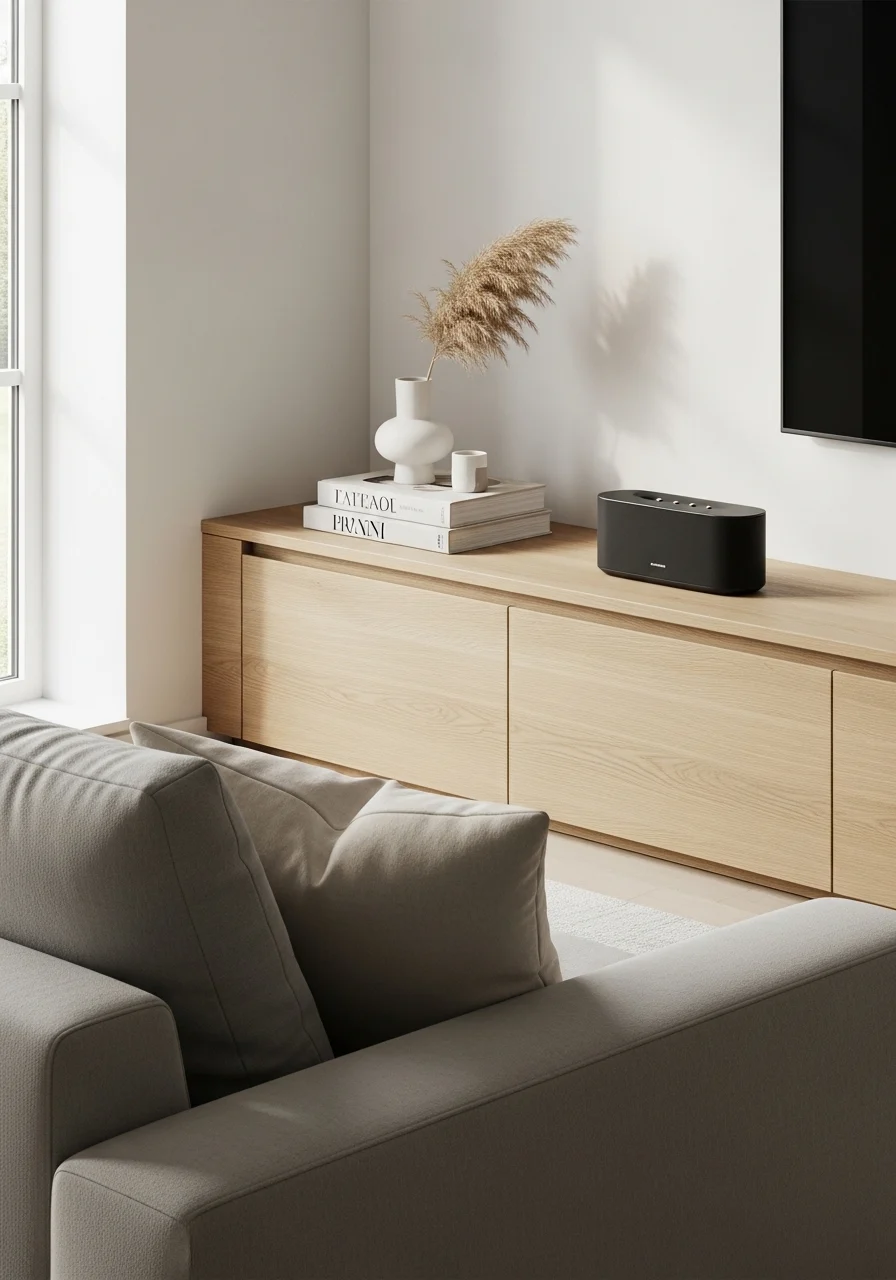
Hidden storage is a minimalist’s best friend. Keeping clutter out of sight maintains a calm, uncluttered surface. It’s practical and instantly peaceful.
This suits functional homes that still want a minimal look.
Key Elements (minimalist decor)
- Low-profile closed media console
- Built-in shelving with doors or driftwood panels
- Neutral sofa with under-seat storage (optional)
- Decorative tray for keys or remotes
- Cable management channels
- Minimal tabletop items (one vase, one book)
- Neutral rug and curtains
- Slim floor lamp with small footprint
- Storage basket for throws
- Wall hooks hidden near entry for organization
How to Achieve This Look
- Install a low closed-media console to conceal electronics.
- Use cable channels behind the unit for tidy cords.
- Choose storage furniture with clean lines and doors.
- Keep tabletop surfaces to one sculptural object.
- Use baskets or bins for soft items like throws.
- Place hooks near the entry to prevent coat clutter in the living area.
- Label storage inside cabinets for easy access.
- Empty visible surfaces weekly to maintain calm.
How to Style / Use It
Hidden storage reduces visual noise and stress. Opt for soft-close hardware for quiet use. Encourage household members to put things away daily.
15. Minimalist Living Room Ideas for a Calm Space — Black, White & Warm Wood Trio
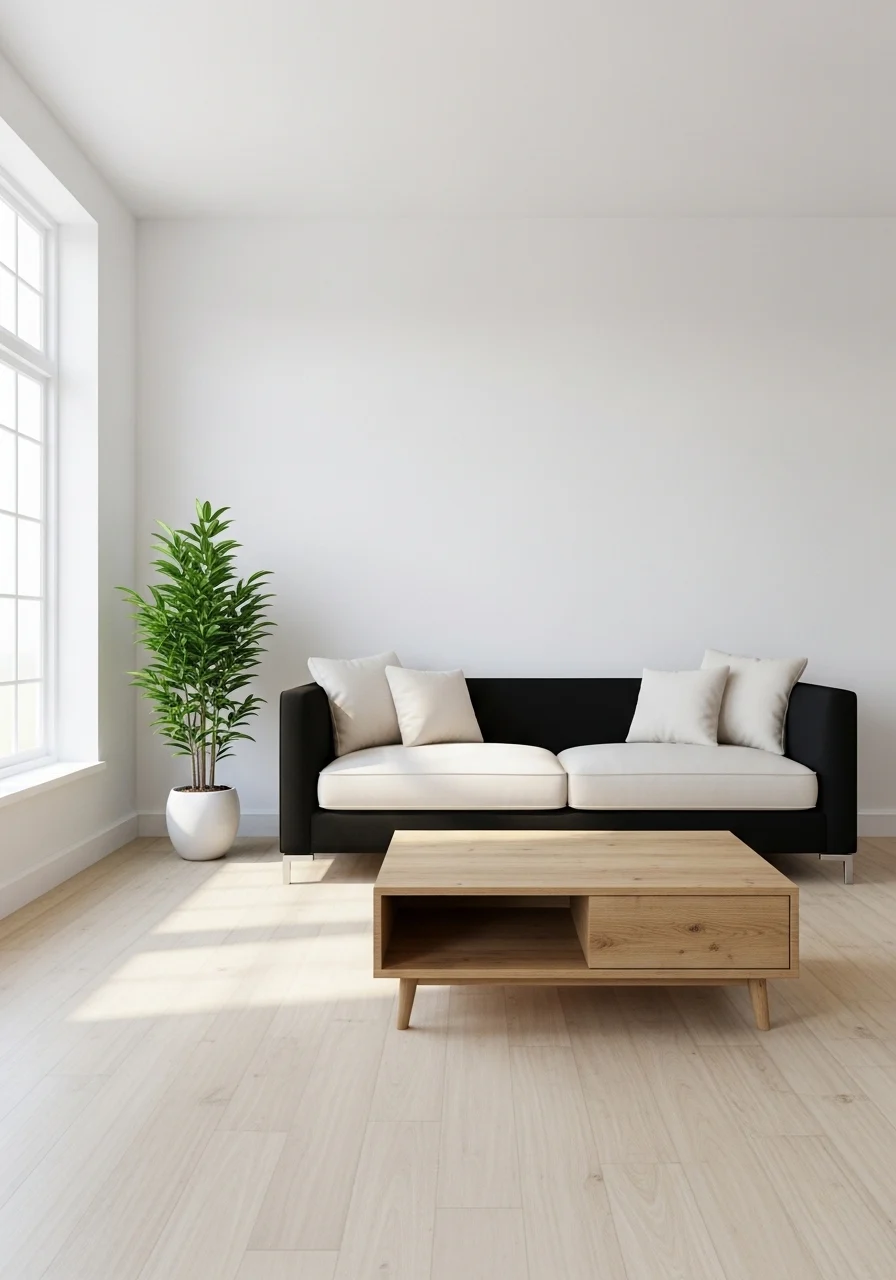
This trio mixes crisp black, clean white, and warm wood. The contrast feels modern but still calm thanks to limited objects and warm tones.
It’s ideal if you love clear structure and subtle warmth.
Key Elements (minimalist decor)
- White matte walls
- Black sofa frame or accent chair
- Warm wood coffee table or console
- Cream cushions and throws
- Neutral rug in tan or gray
- Slim black floor or table lamp
- One large plant in muted pot
- Minimal framed photograph or print
- Leather or woven basket for storage
- Discreet shelving with few items
How to Achieve This Look
- Create a white backdrop with matte paint.
- Add a black-framed sofa or accent chair.
- Place a warm wood table to add balance.
- Layer cream cushions to soften contrast.
- Add a single large plant for life.
- Keep artwork minimal and centered.
- Use a storage basket to hide clutter.
- Maintain a strict “one tray” rule on tables.
How to Style / Use It
Use the black elements sparingly to anchor the room. Polish wood and clean black finishes to keep the look crisp. Swap cushion textures seasonally.
16. Minimal Japandi Calm with Low Furnishings
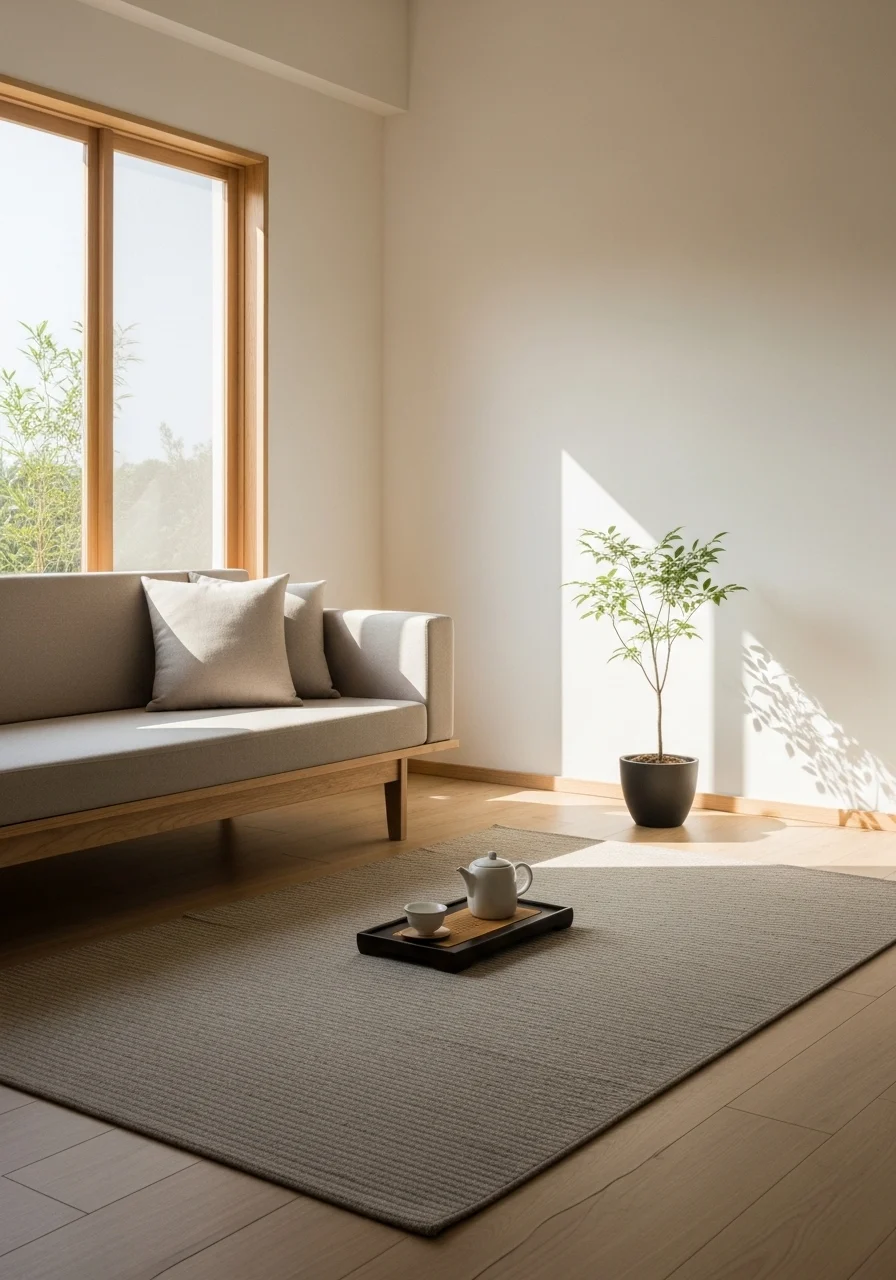
Japandi fuses Japanese minimalism and Scandinavian warmth. Low furniture, natural materials, and subtle craftsmanship make the room feel meditative and calm.
This is perfect if you prefer serene, floor-oriented layouts.
Key Elements (calm living room)
- Low wooden sofa or seating platform
- Tatami-style or woven rug
- Simple wooden coffee tray for tea
- Neutral linen cushions
- Bonsai or small potted plant
- Minimal wall art or scroll
- Soft paper or linen pendant
- Natural wood shelving with few items
- Neutral curtains or blinds
- Natural fiber storage boxes
How to Achieve This Look
- Choose low-profile furniture in light wood.
- Add a tatami-style rug to define the seating area.
- Use a wooden tray as a simple centerpiece.
- Place a small plant or bonsai near seating.
- Keep shelving sparse, emphasizing craft objects.
- Use soft paper or linen lighting for glow.
- Keep textiles neutral and low-contrast.
- Maintain a strict edit of belongings.
How to Style / Use It
Keep walking paths clear for calm movement. Clean natural materials with appropriate products. This layout works well for meditation or tea rituals.
17. Minimal Luxe with Velvet Accent
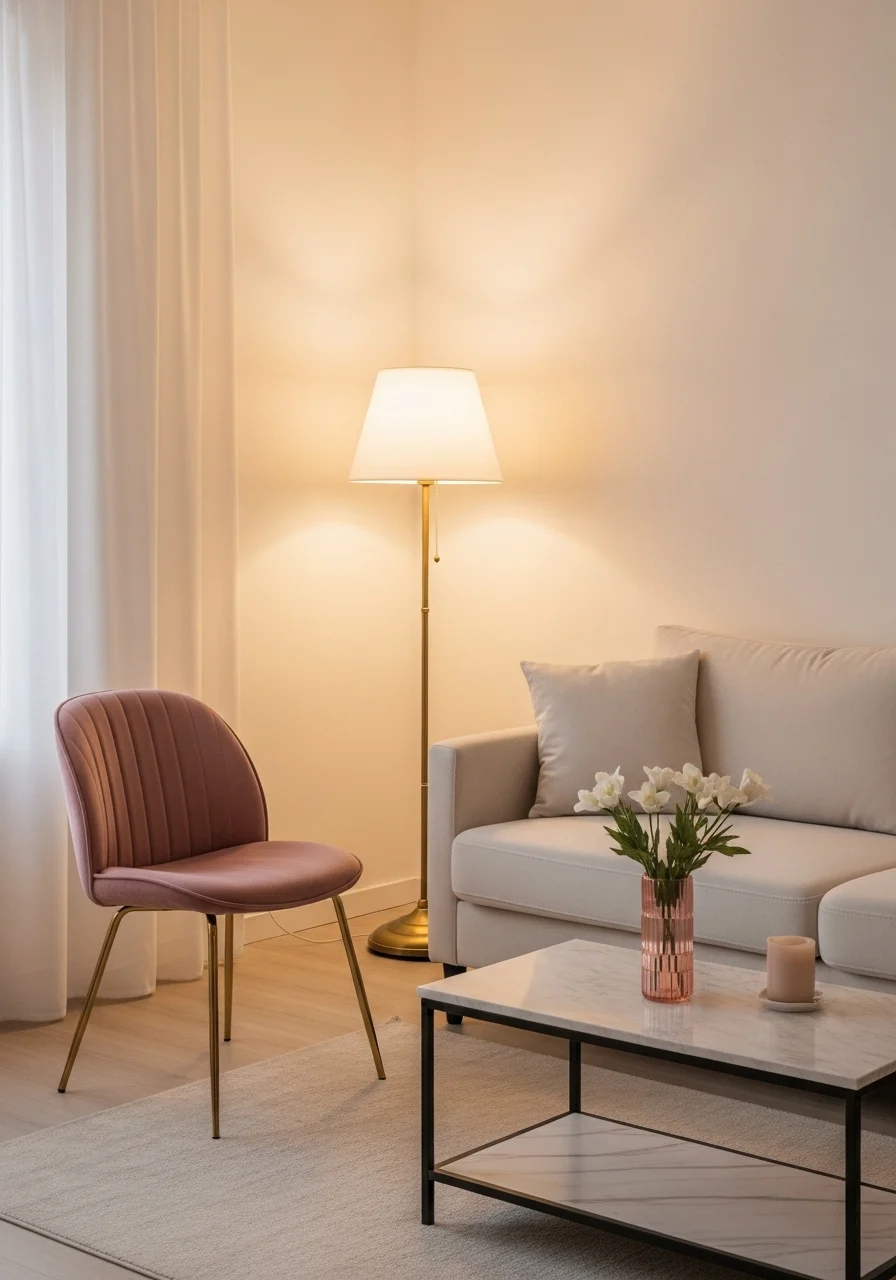
Minimal luxe uses quality materials but keeps the count low. One velvet accent chair adds tactile luxury without visual clutter.
This is great for those who like a touch of glamour with restraint.
Key Elements (minimalist decor)
- Cream sofa with simple line
- Velvet accent chair in muted tone
- Marble or stone-topped coffee table
- Brass or warm-metal lamp
- Neutral wool rug
- One sculptural vase or candle
- Leather or suede cushion
- Minimal framed art with thin brass frame
- Simple storage solutions
- Subdued ambient lighting
How to Achieve This Look
- Place the cream sofa and velvet accent for balance.
- Use a marble-topped table as a focal piece.
- Add brass lighting to introduce warm metal.
- Keep cushions minimal in number and tone.
- Select one sculptural object for the table.
- Keep media storage hidden or minimal.
- Use dimmable lighting to set mood.
- Polish metal and stone surfaces sparingly.
How to Style / Use It
Velvet needs occasional brushing to keep pile neat. Use pads under heavy objects to protect marble. Keep the room uncluttered to let luxe materials shine.
18. Minimal Retro with Soft Color Blocking
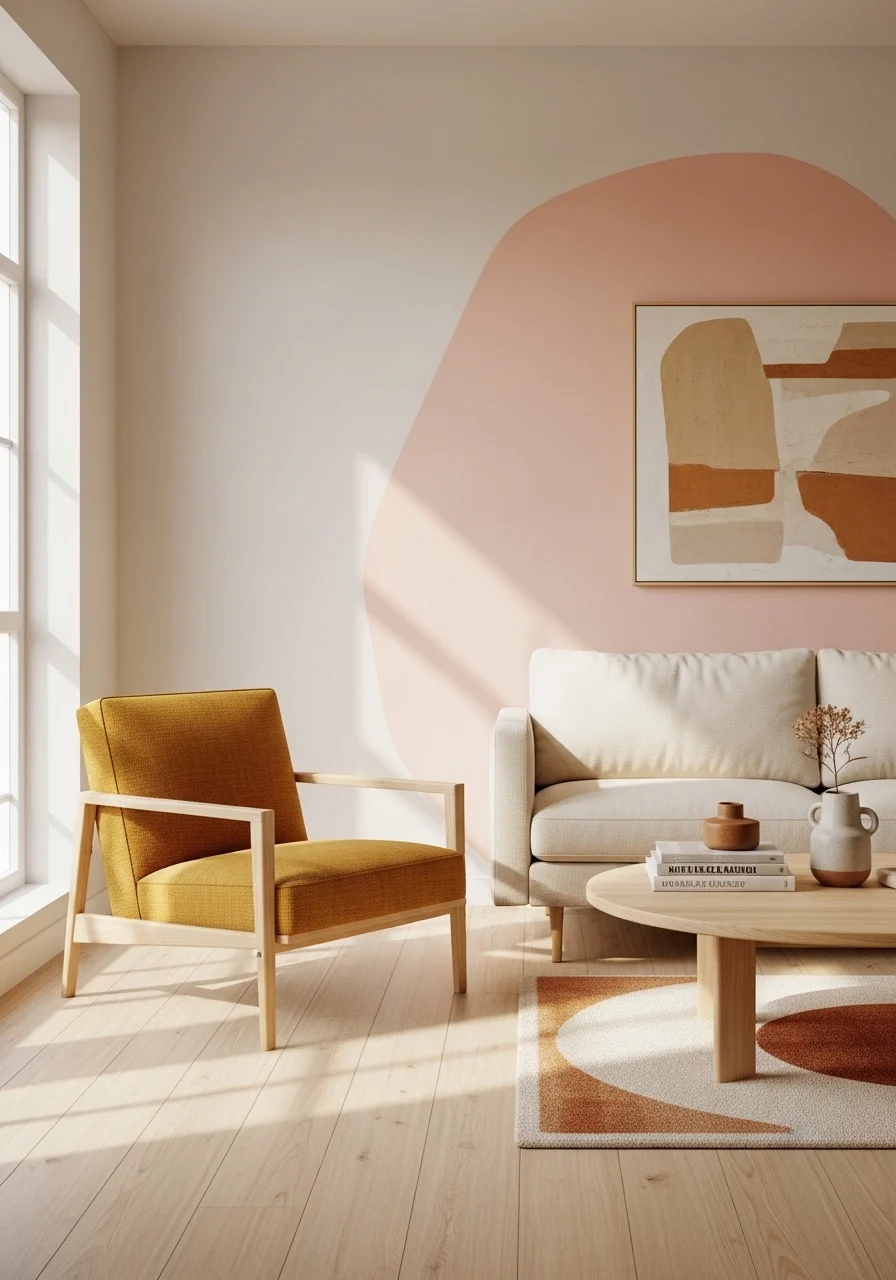
Retro-minimal combines vintage-inspired shapes with a muted retro palette. Soft color blocking adds warmth while keeping surfaces clear.
It suits someone who loves character without chaos.
Key Elements (calm living room)
- Low-profile chairs with retro curves
- Soft pastel accent wall or panel
- Rounded wooden coffee table
- Neutral sofa as anchor piece
- Muted mustard or terracotta cushion
- Low-pile neutral rug
- Slim media console in wood
- One retro lamp in matte finish
- Minimal decorative objects with rounded forms
- Simple shelf with a few curated items
How to Achieve This Look
- Paint a small accent panel in a muted pastel.
- Position retro-curved seating around the table.
- Use the neutral sofa to balance color.
- Add one mustard or terracotta cushion for character.
- Keep tabletop decor to rounded objects.
- Style shelves with a limited number of vintage finds.
- Maintain neat lines by using closed storage for clutter.
- Use warm lighting to soften retro tones.
How to Style / Use It
This aesthetic works well with thrifted pieces. Keep surfaces minimal to let shapes stand out. Clean upholstery and dust vintage items regularly.
19. Minimal Entertainment Zone with Quiet Tech
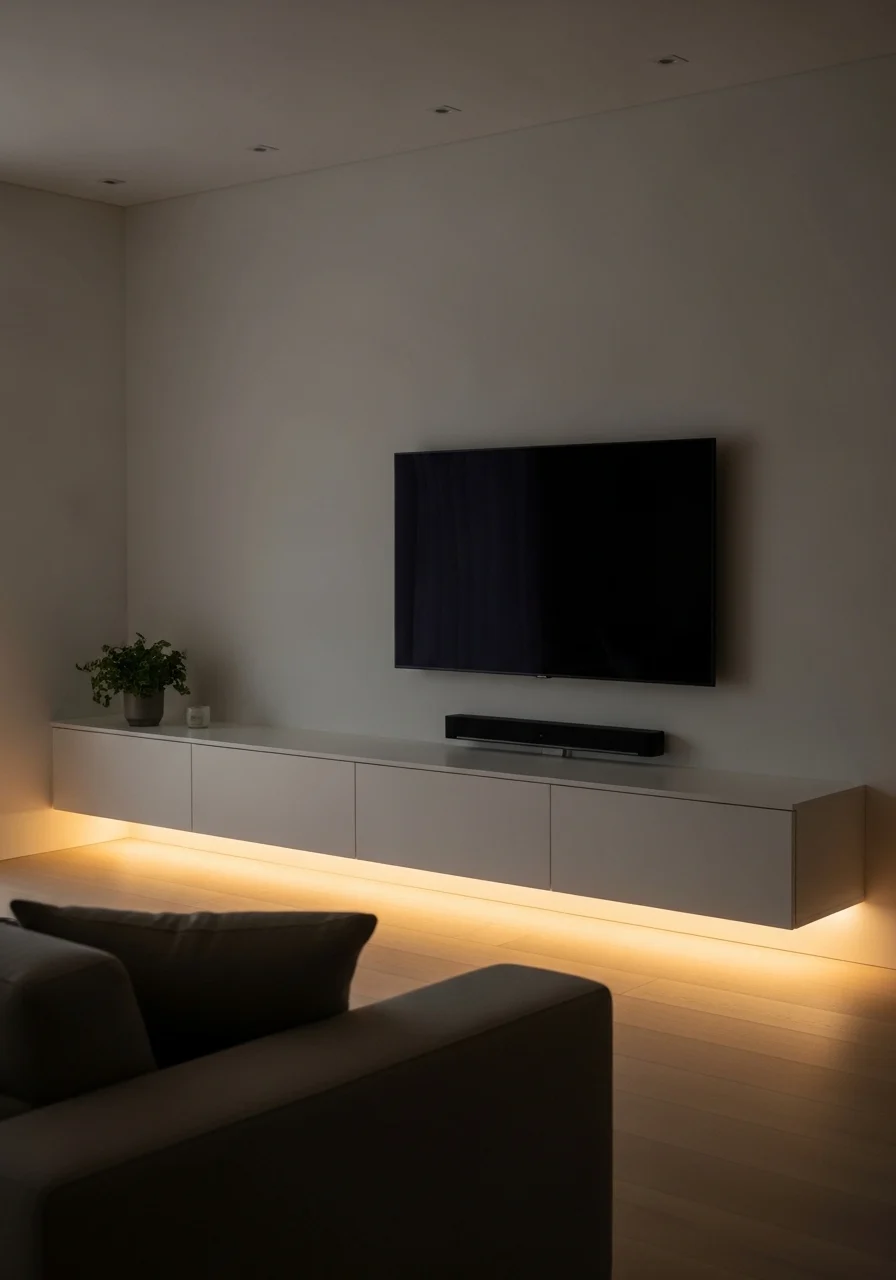
Minimal entertainment zones hide tech and keep the focus on calm. Simple consoles and concealed cables make media time feel restful.
This appeals if you want good tech without visual noise.
Key Elements (calm living room)
- Low-profile closed media console
- Wall-mounted slim TV and soundbar
- Cable management channels and surge protector hidden
- Simple media remote tray
- Neutral sofa facing screen
- Low-pile rug for acoustics
- Soft ambient sconces or floor lamp
- One plant to soften electronics
- Storage boxes for remotes and games
- Minimal framed print above console (optional)
How to Achieve This Look
- Mount the TV at comfortable eye height.
- Use a closed console to store devices.
- Route cables through channels or trunking.
- Place the sofa at optimal viewing distance.
- Use a soft rug to improve sound and comfort.
- Add ambient side lighting to reduce screen glare.
- Keep remotes and accessories in a small tray or box.
- Dust electronics and vacuum vents regularly.
How to Style / Use It
Limit visible components. Turn off devices when not in use to keep the room restful. Use remote organizers to avoid scattered controls.
20. Minimal Accent Wall with Subtle Texture
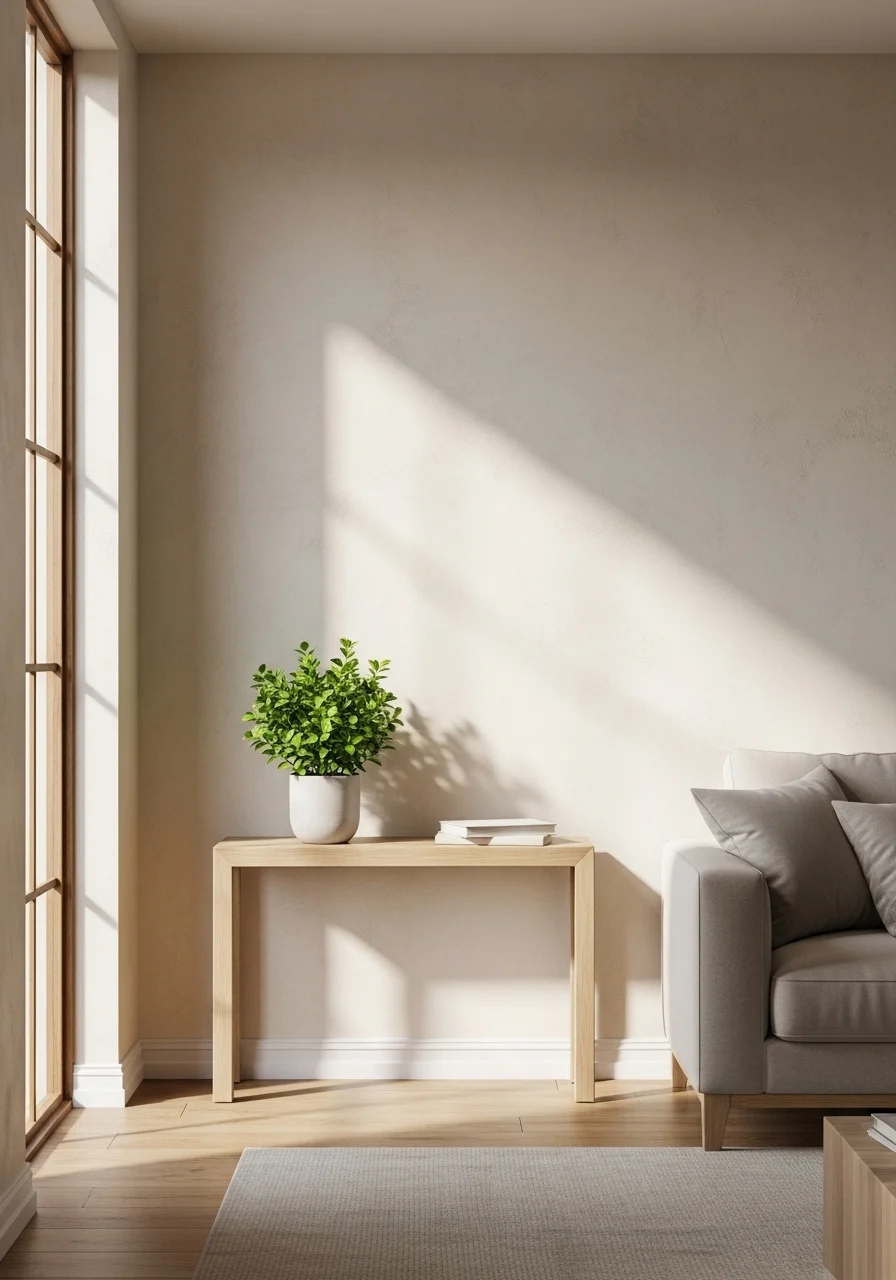
A single textured wall adds depth without heavy decor. Subtle plaster, lime wash, or matte paint gives a handcrafted feel while remaining minimal.
This option is excellent when you want interest without clutter.
Key Elements (calm living room)
- One textured accent wall (plaster, lime wash)
- Neutral sofa in front of the wall
- Slim wooden console or floating shelf
- One framed art or small mirror
- Single statement pot with plant
- Neutral low-pile rug
- Soft cushions in tonal hues
- Minimal lighting like a slim wall sconce
- Small ceramic or stone decorative object
- Hidden storage options
How to Achieve This Look
- Choose a wall and apply a subtle textured finish.
- Place the sofa centered against the textured wall.
- Add a slim console with a single object on top.
- Hang one small framed piece or mirror to complement texture.
- Position a plant to add organic contrast.
- Use soft lighting to highlight the texture at an angle.
- Keep other walls plain and minimal.
- Dust surfaces and maintain texture with gentle cleaning.
How to Style / Use It
Texture adds personality without clutter. Use light direction to reveal depth. Avoid heavy shelving on the textured wall to preserve its visual impact.
21. Seasonal Minimal — Switchable Accent Sets
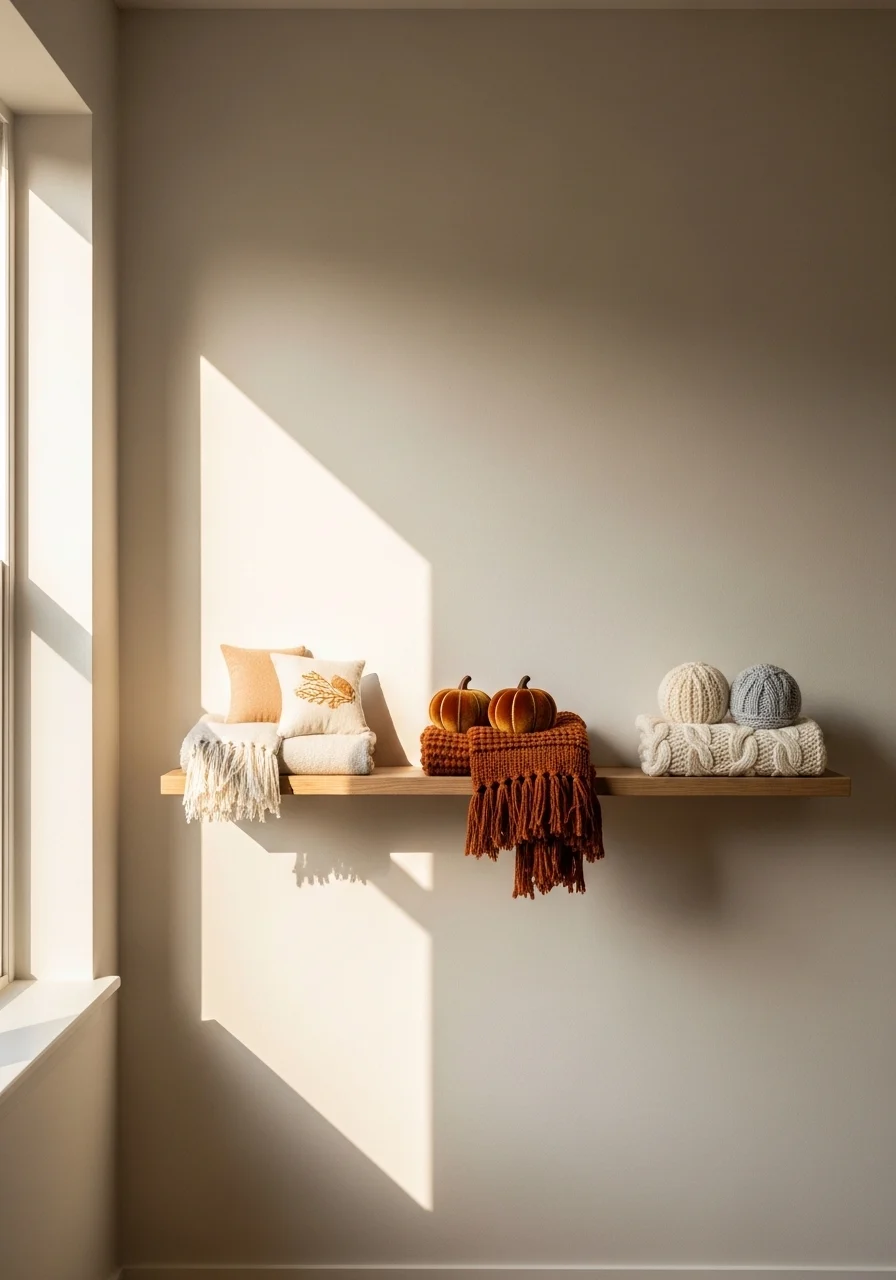
Seasonal minimal keeps the core room constant and swaps small accents each season. This method keeps the space calm while allowing fresh change.
It’s perfect if you want variety without clutter.
Key Elements (calm living room)
- Neutral core pieces: sofa, rug, coffee table
- Three small accent sets stored neatly: summer linens, autumn velvets, winter knits
- Storage baskets or bins labeled by season
- One small plant or floral option per set
- Neutral throws and cushion inserts for quick swaps
- Minimal accent artwork that works year-round
- Simple tray for seasonal items
- Slim storage bench or console
- Gentle ambient lighting
- Care kit for textiles (lint roller, gentle detergent)
How to Achieve This Look
- Keep a neutral, timeless base in furniture and rugs.
- Prepare three small accent sets with cushions and throws.
- Store seasonal sets in labeled baskets or bins.
- Swap cushions and throws each season as needed.
- Add one seasonal accessory like a ceramic or small plant.
- Rotate minimal artwork if desired, keeping frames consistent.
- Clean and store off-season textiles properly.
- Maintain core pieces to ensure longevity.
How to Style / Use It
Seasonal swaps let you refresh without cluttering. Wash and store textiles neatly between seasons. Keep accent sets small so changes feel intentional.
You’ve just scrolled through 21 practical, calming setups that fit different tastes and homes. Each idea shows how minimal choices, careful materials, and thoughtful storage create a peaceful living space. Try one small change first. A new rug, one hidden storage solution, or swapping cushions.
If one idea stood out, pin it for later and test it for a week. Which style will you try first? Share this list with a friend who’s redecorating. They might love the low-effort, high-calm approach.