22 Partition Design Ideas for Modern Living Rooms

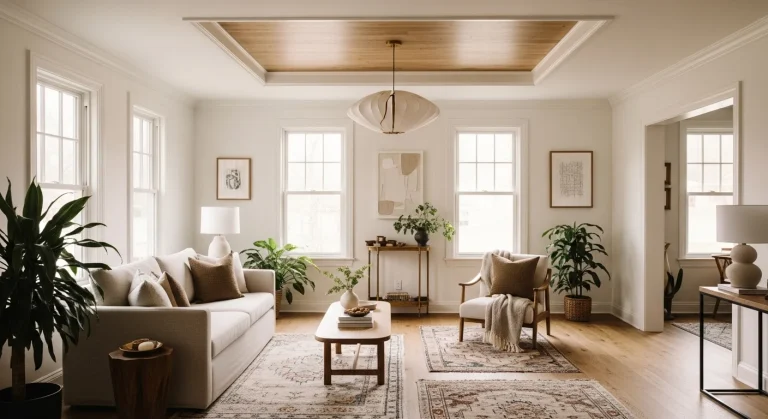
You love an open living area, but sometimes you want defined zones. These 22 partition design ideas for modern living rooms show simple, stylish ways to split space without closing it off. You’ll find practical split-screen solutions, sculptural dividers, and flexible systems that match many decor styles.
This list covers built-in and temporary partitions, from shelving and glass to curtains and plants. Each idea includes an image prompt, must-have elements, step-by-step setup, and styling tips. Pin the looks you like and try one the next weekend.
1. Partition Design Ideas for Modern Living Rooms: Open Shelving Room Divider
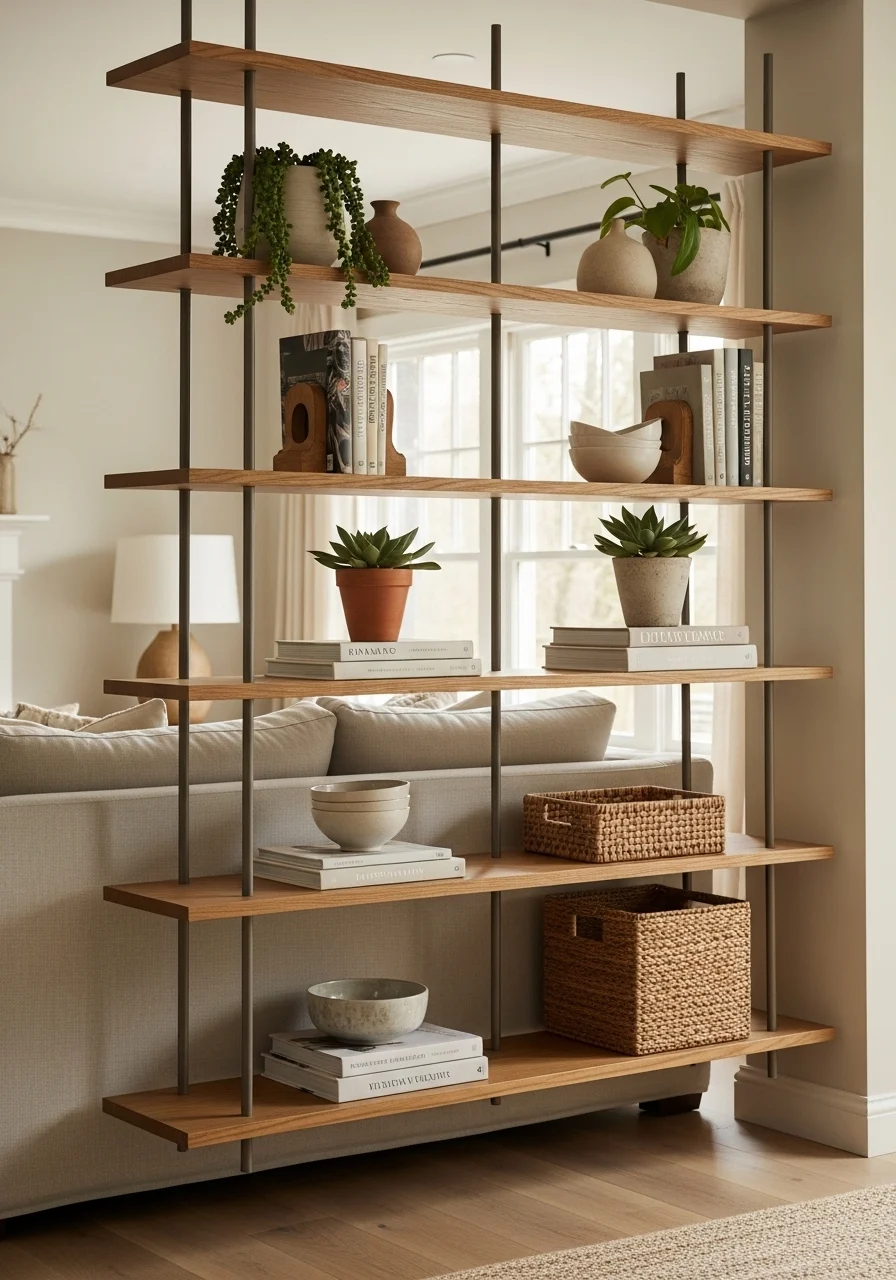
Open shelving feels airy and useful. It creates a visual divide while letting light pass through. The mix of books, baskets, and plants gives texture and personality. This approach suits modern, Scandinavian, and eclectic spaces. It feels lived-in and layered.
Key Elements
- Floor-to-ceiling or mid-height open shelving unit
- Mid-tone oak or walnut laminate shelves
- Vertical metal frame in matte black or brass
- Woven seagrass baskets for storage
- Curated books with neutral spines
- Ceramic vases and bowls for accents
- Small to medium potted plants (succulents, pothos)
- LED strip or clip-on shelf lighting
- Non-slip shelf liners if needed
- Felt pads to protect flooring
How to Achieve This Look
- Measure the area to choose shelf height and length.
- Choose a freestanding or anchored unit for stability.
- Assemble shelves, anchoring to wall if tall.
- Place larger items lower; keep middle shelves balanced.
- Add baskets to hide clutter on lower shelves.
- Layer books horizontally and vertically for rhythm.
- Intermix plants and ceramics for texture.
- Install LED strips under a top shelf for warmth.
- Keep openings on both sides for flow.
- Adjust spacing after living with it a week.
How to Style / Use It
- Face one side with decorative objects and the other with functional storage.
- Pair with a runner rug to lead the eye across zones.
- Rotate decor seasonally to keep the divider fresh.
- Use baskets to store throws and remotes for tidy longevity.
- Add small hooks on the side for headphones or keys.
2. Frameless Glass Partition with Black Grid
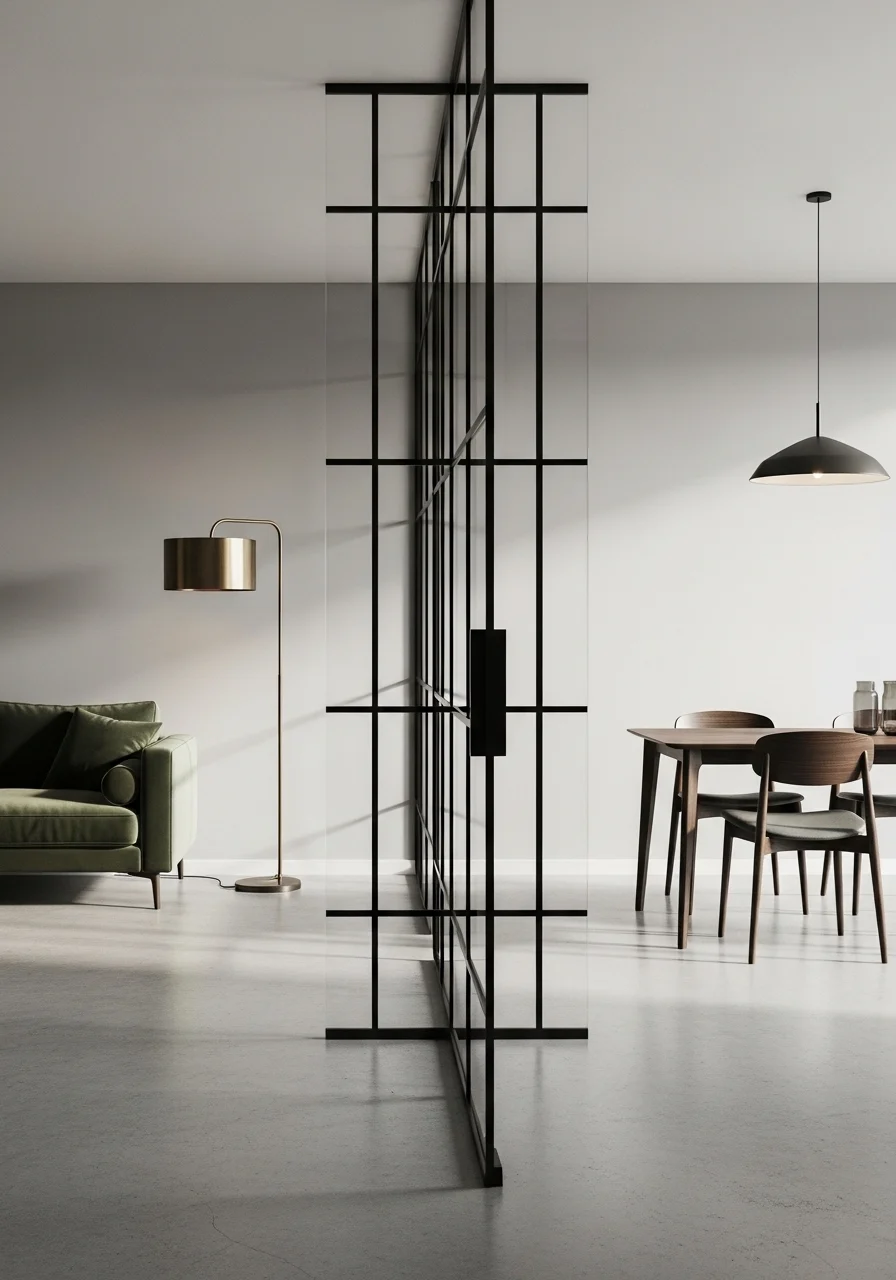
Glass keeps the room open while creating separation. The black grid adds industrial character and visual rhythm. It’s perfect when you want defined zones without losing light. This suits lofts and modern open-plan homes. It feels crisp and architectural.
Key Elements
- Tempered clear glass panels
- Thin black metal mullions or grid frame
- Matte black hardware and hinges
- Minimal metal threshold or flush floor channel
- Roller blinds or sheer curtains for privacy
- Concrete, hardwood, or tile-safe mounting
- Sealed edges and silicone for weatherproof finish
- Matching black trim accents in room
- Professional installation recommended
How to Achieve This Look
- Consult a glazier for measurements and safety codes.
- Choose tempered glass thickness (typically 10–12mm).
- Select a black metal grid pattern to suit scale.
- Prepare floor and ceiling tracks if needed.
- Install glass panels with professional support.
- Seal edges with clear silicone for a polished look.
- Add sheer roller blinds for soft privacy.
- Coordinate room hardware (lighting, furniture) with black finishes.
How to Style / Use It
- Keep furniture low to preserve sightlines through glass.
- Use rugs to define each side of the partition.
- Add metallic accents to tie into black framing.
- For privacy, layer with linen curtains on a discreet track.
- Clean glass regularly with a non-abrasive cleaner.
3. Folding Screen with Textured Fabric Panels
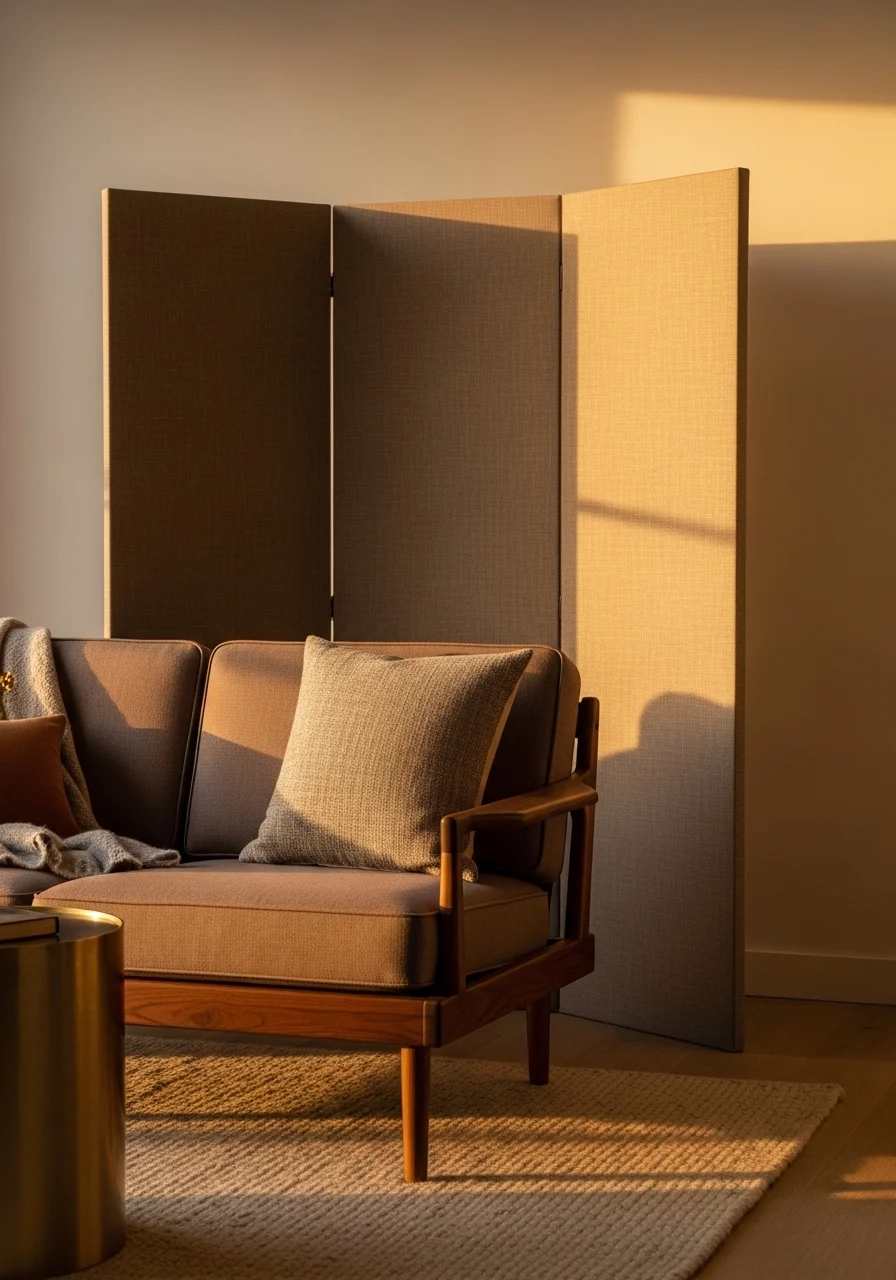
A folding screen is portable and budget-friendly. Fabric panels add softness and sound dampening. You can change the fabric seasonally. This approach suits renters and flexible spaces. It feels intimate and warm.
Key Elements
- Three- to five-panel wood frame screen
- Textured linen or cotton panels in neutral tones
- Brass or matte black hinge hardware
- Padding behind fabric for sound absorption
- Non-slip feet or floor protectors
- Pattern or solid options depending on style
- Lightweight finish for easy moving
- Option for printed or embroidered panels
How to Achieve This Look
- Measure the area and decide panel number.
- Choose a screen frame finish to match furniture.
- Select fabric, linen for texture, velvet for luxe.
- If DIY, staple fabric to frames and add batting.
- Place screen where you want temporary separation.
- Angle panels slightly for stability.
- Add floor weight if needed to prevent tipping.
- Swap panels as decor needs change.
How to Style / Use It
- Use behind a sofa as a soft, decorative backdrop.
- Layer with string lights for evening ambiance.
- Move easily to create privacy for guests.
- Clean fabric panels according to material care.
- Swap to heavier fabric in winter for better acoustics.
4. Low Console Partition for Flow and Function
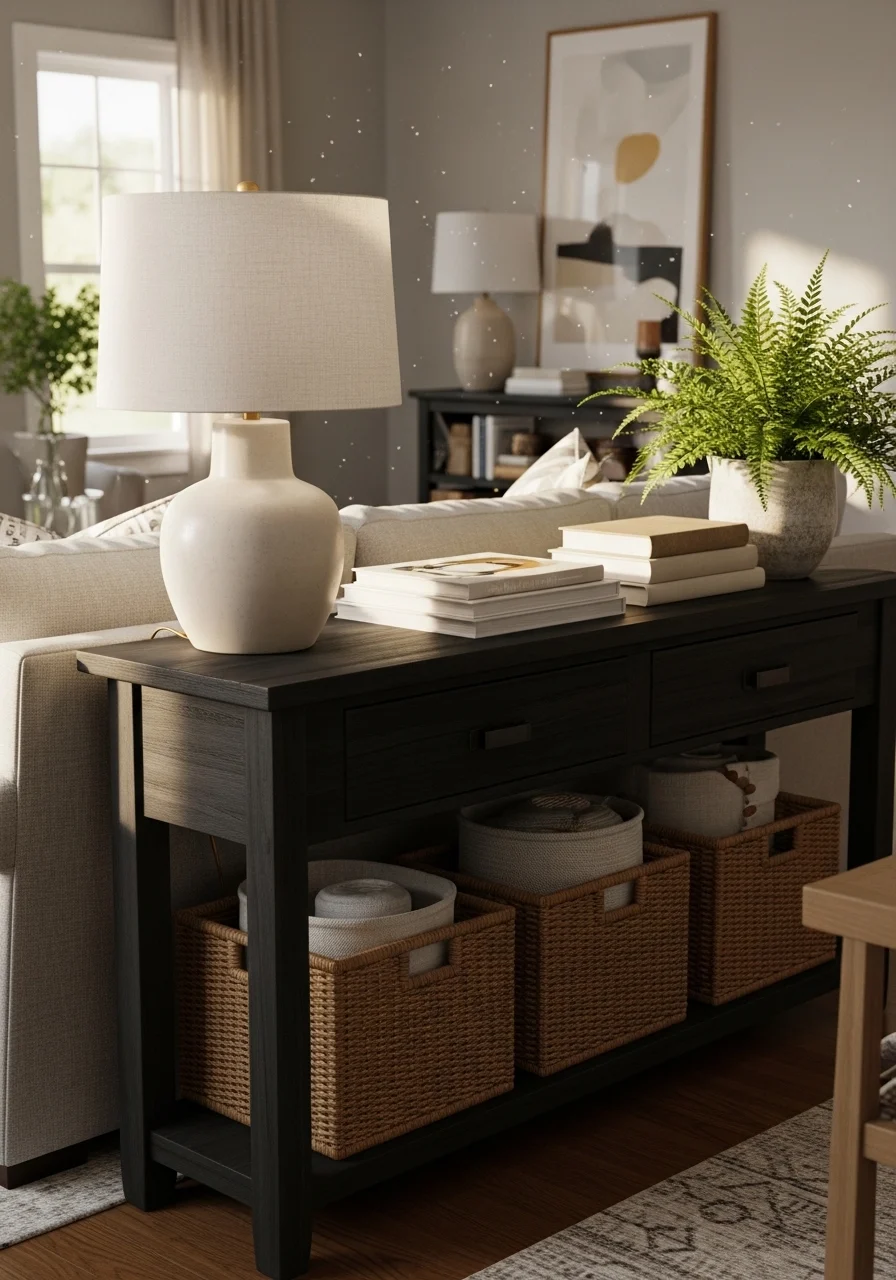
A low console keeps sightlines open while marking zones. It adds storage and a styling surface. This solution is great for narrow living rooms. It feels casual and purposeful.
Key Elements
- Console table 24–36 inches high
- Rich wood or painted finish
- Open lower shelf or baskets
- Tall table lamp for layered light
- Stackable trays and small trays for keys
- Decorative books and framed photos
- Planter or sculptural object
- Coasters and small catch-all dish
How to Achieve This Look
- Pick a console width slightly shorter than sofa length.
- Place it directly behind the sofa centered.
- Add baskets on the lower shelf for storage.
- Install a tall lamp at one end for ambiance.
- Balance décor with low and tall objects.
- Keep a tray for remotes and essentials.
- Maintain a 2–3 inch clearance between sofa and console.
- Tuck cable runs neatly with clips.
How to Style / Use It
- Use as a bar station or coffee staging area for guests.
- Pair with a slim mirror or artwork above the console.
- Rotate decor and books for a refreshed look.
- Choose woven baskets for durability and airflow.
- Keep top tidy to maintain open feeling.
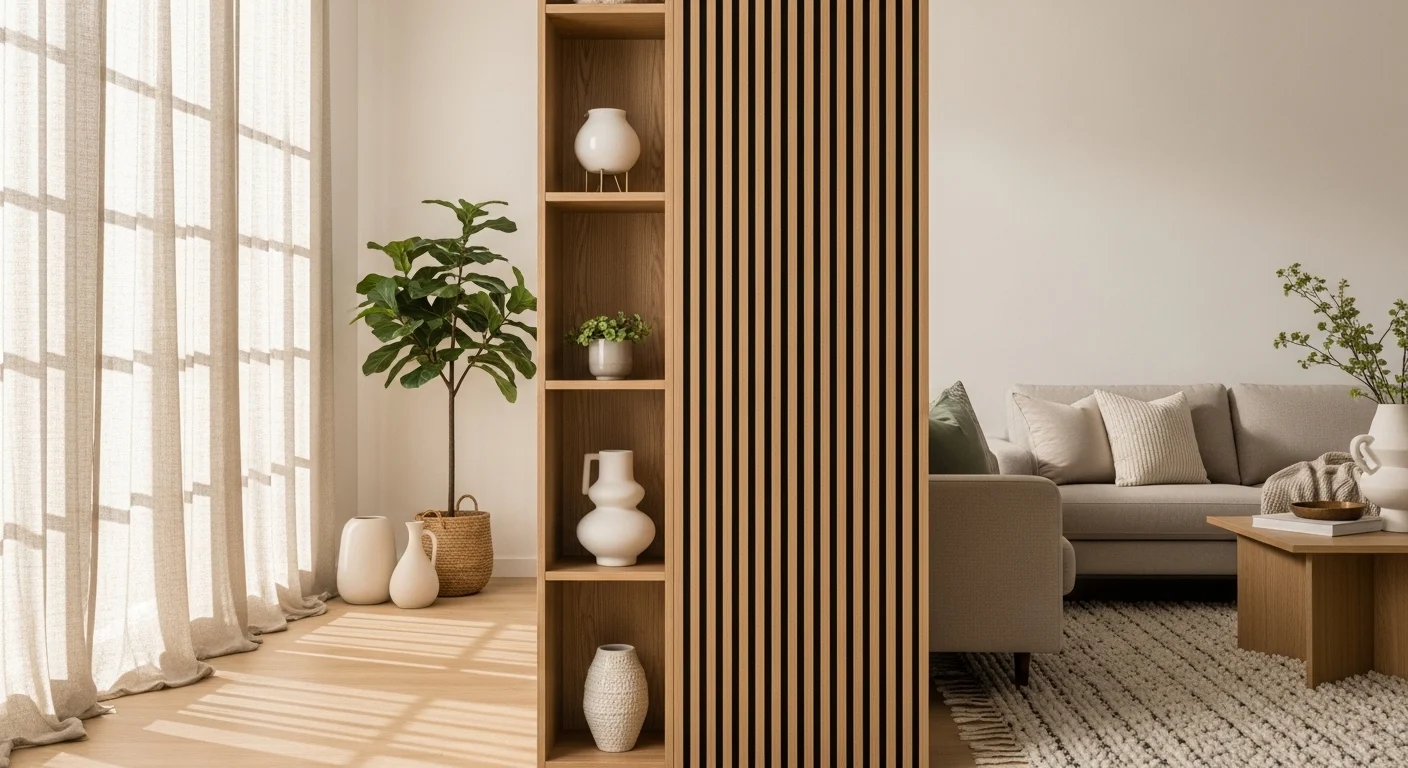
5. Partition Design Ideas for Modern Living Rooms: Vertical Wood Slat Wall
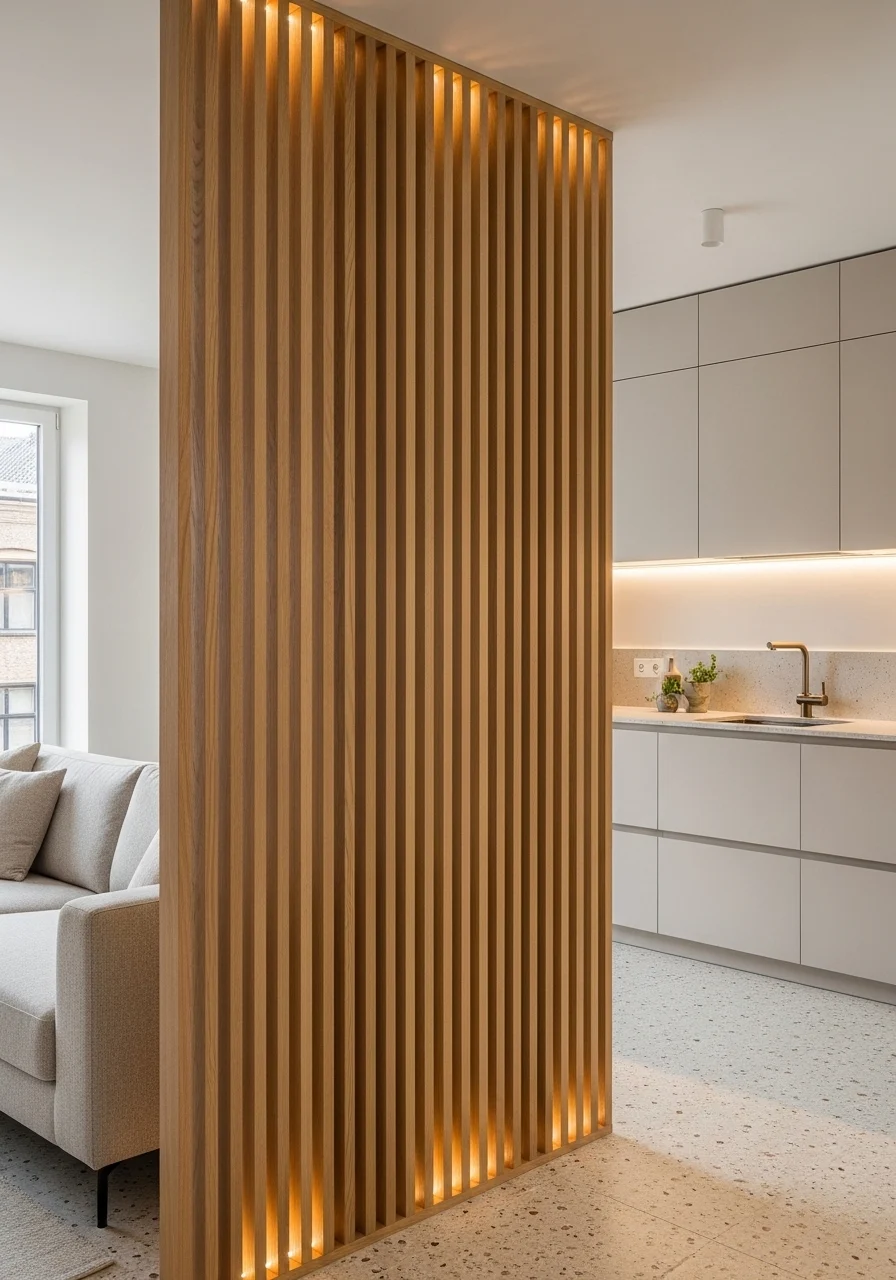
Wood slats create rhythm and warmth. They let light and air through while defining space. The vertical lines add height and a sculptural quality. This suits minimalist and mid-century interiors. It feels warm and structured.
Key Elements
- Vertical tongue-and-groove oak or veneer slats
- Spacing 1–2 inches for openness
- Backing channel or frame in contrasting tone
- Soft LED strip lighting behind slats
- Matte finish or clear oil for warmth
- Secure top and bottom mounting rails
- Coordinating wood furniture tones
- Sound-absorbing panel behind slats optional
- Mounting hardware and spacers
How to Achieve This Look
- Decide full-height or partial-height slat wall.
- Build a framed support structure on site.
- Install bottom and top rails for alignment.
- Attach slats with consistent spacing using spacers.
- Add LED strip behind a midline for glow.
- Sand and finish slats with oil or matte varnish.
- Seal edges and paint surrounding trim if needed.
- Add furniture that complements wood tone.
How to Style / Use It
- Place a slim console or bench near the slat wall.
- Use warmer textiles to complement the wood grain.
- Add artwork leaning on the living-side for depth.
- Clean with a soft, dry cloth; re-oil every few years.
- In winter, add plush throws to soften visuals.
6. Freestanding Metal Mesh Panel Divider
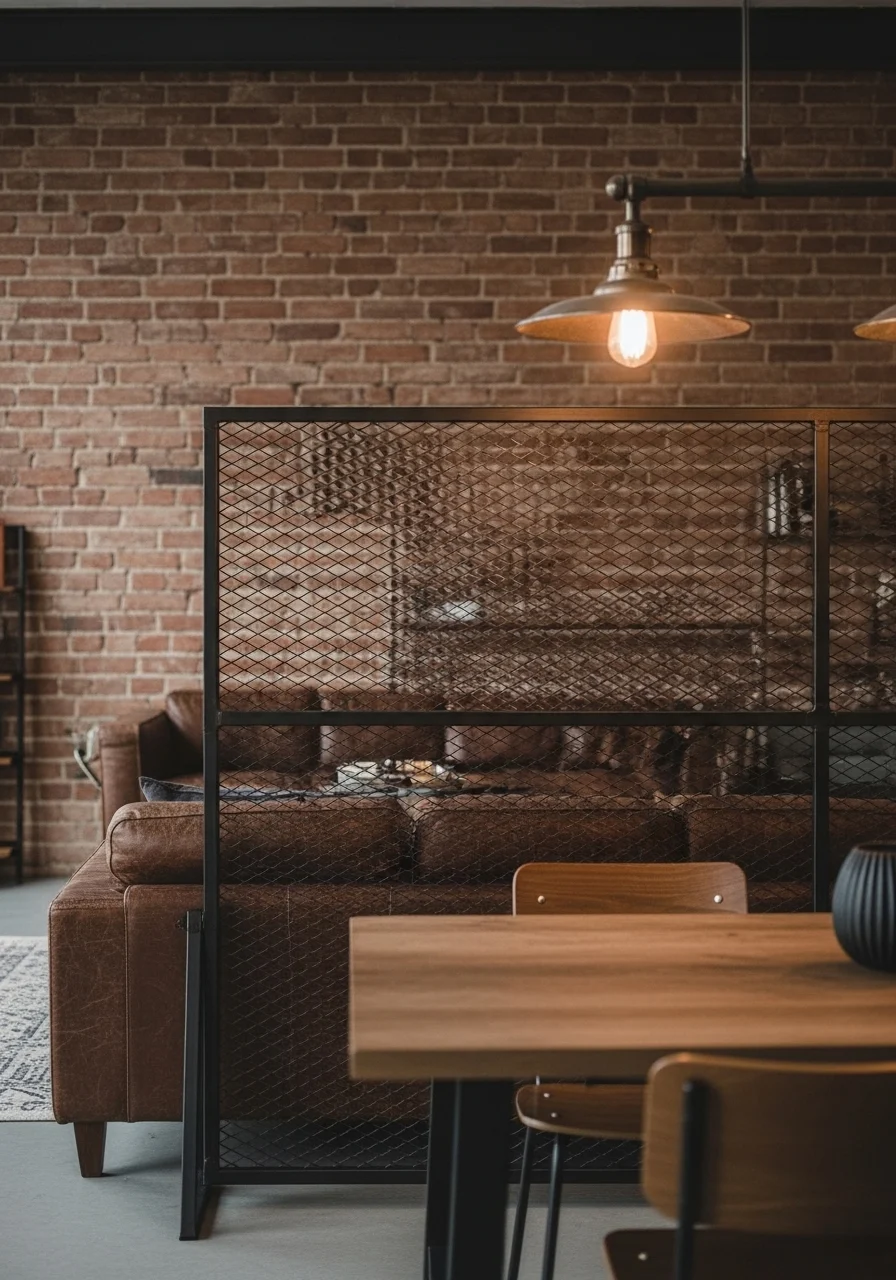
A metal mesh divider brings industrial edge. It’s sturdy and visually interesting. You can hang plants or lights on it. This suits urban lofts and modern-industrial schemes. It feels raw and sculptural.
Key Elements
- Powder-coated steel mesh panels
- Freestanding base plates for stability
- Matte black or dark bronze finish
- Hooks for hanging planters or art
- Floor protectors to prevent scratching
- Modular connection clips if multiple panels
- Exposed hardware for industrial vibe
- Accent lighting for texture
How to Achieve This Look
- Choose mesh density for visibility vs. opacity.
- Buy or fabricate freestanding panels to fit ceiling height.
- Install base plates and secure panel footings.
- Add hooks or S-hooks for hanging decor.
- Place planter pots or small shelves attached to mesh.
- Consider adding a cable conduit for lights.
- Anchor to floor if needed for safety.
- Style with plants and vintage lighting.
How to Style / Use It
- Hang trailing plants to soften metal edges.
- Use as a gallery wall for small prints or textiles.
- Add string lights for evening warmth.
- Dust with a microfiber cloth; touch-up paint to prevent rust.
- Swap hooks seasonally to refresh the look.
7. Built-in Bookcase Partition with Read Nook
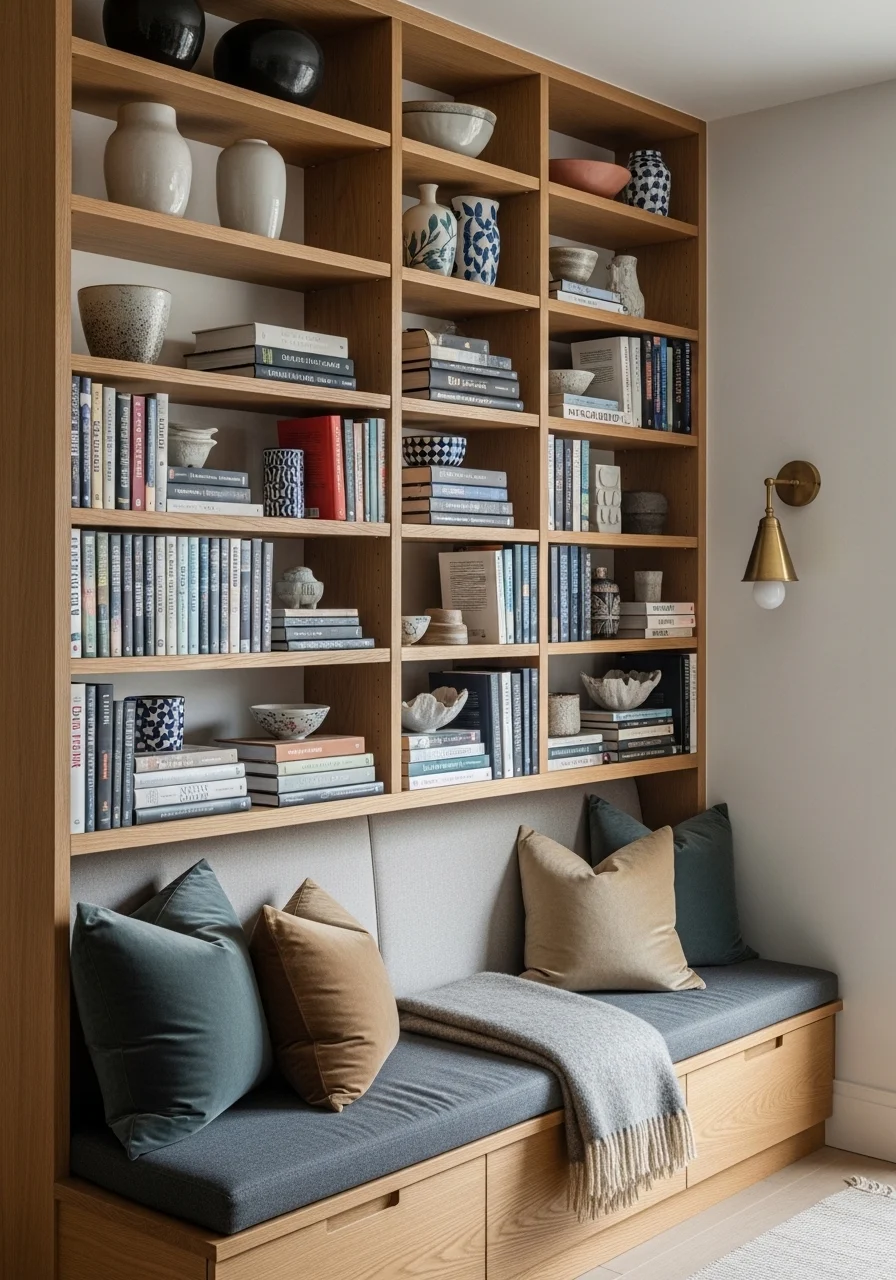
A built-in bookcase creates a permanent, polished divide. Adding a bench makes a cozy read nook. It combines storage and seating in one. This works great in larger open-plan spaces. It feels comforting and purposeful.
Key Elements
- Floor-to-ceiling built-in cabinetry
- Open shelves and closed lower cabinets
- Integrated bench with upholstered cushion
- Adjustable shelving hardware
- Recessed or wall-mounted reading light
- Soft textiles: wool throws, velvet pillows
- Adjustable shelf lighting
- Cabinet pulls in brass or matte black
How to Achieve This Look
- Plan layout and measure ceiling height.
- Decide open vs. closed storage balance.
- Build or order custom cabinetry for a seamless fit.
- Install adjustable shelves and bench with sturdy support.
- Add bench cushion and removable upholstery cover.
- Wire in a sconce or LED for reading light.
- Style shelves with books, baskets, and curated objects.
- Finish with paint or stain that matches trim.
How to Style / Use It
- Use lower cabinets for toys or media components.
- Create a reading micro-zone with lamp and throw.
- Rotate books and objects by color for a tidy look.
- Use washable cushion covers for easy maintenance.
- Add seasonal plants on open shelves for life.
8. Partition Design Ideas for Modern Living Rooms: Sliding Barn Door Partition
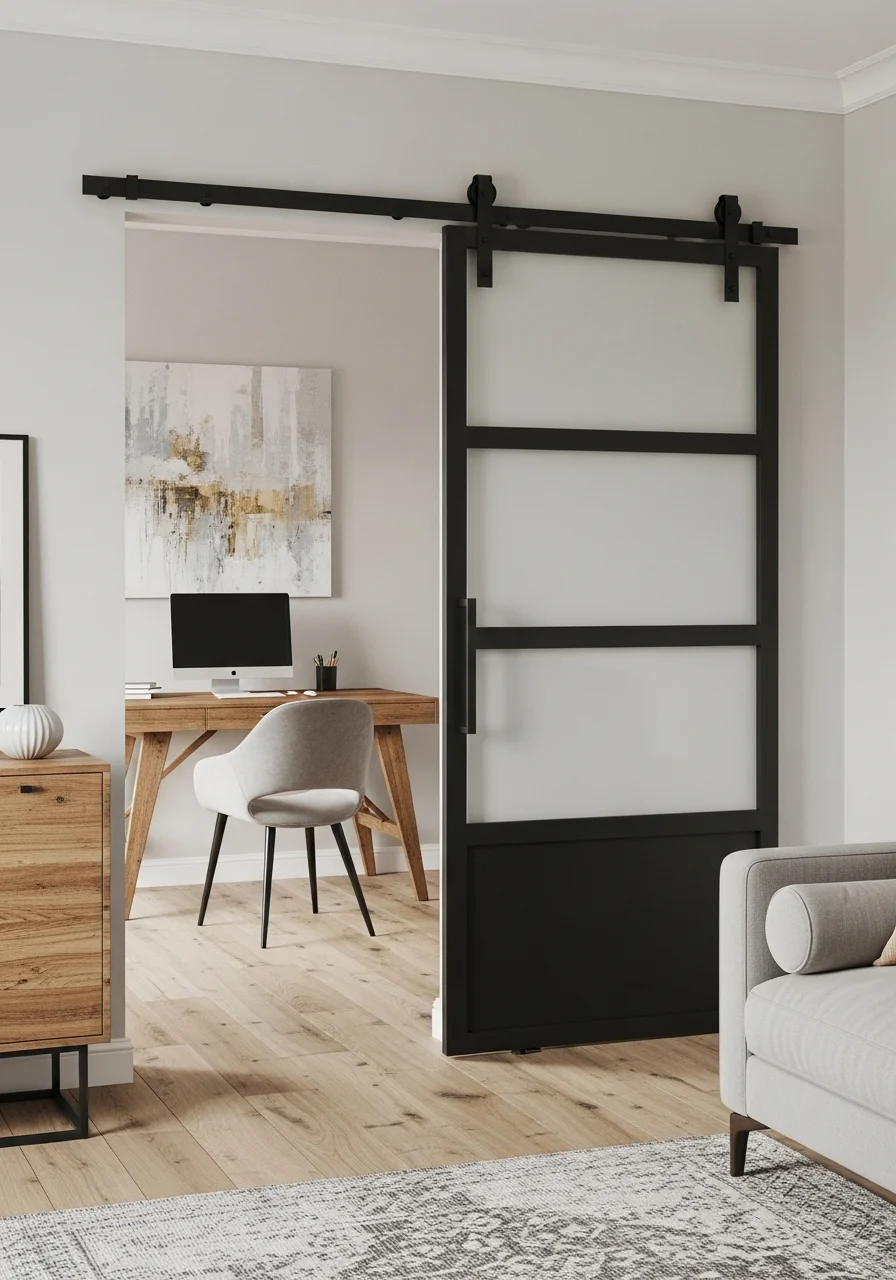
A sliding barn door adds drama and flexibility. Frosted glass keeps privacy while admitting light. Track hardware becomes a design statement. This works well where swing doors would block flow. It feels practical and stylish.
Key Elements
- Sliding door with frosted or clear glass panels
- Sturdy overhead track and rollers
- Soft-close mechanism or door guide
- Finger-pull or recessed handle
- Wall mounting reinforcement
- Matching trim and threshold kit
- Weatherstripping for noise reduction
- Locking option for privacy
How to Achieve This Look
- Measure the opening and allow clearance for door width.
- Choose glass type for privacy needs.
- Install reinforced header for track weight.
- Mount track and hang door according to manufacturer specs.
- Add guide at floor to keep door aligned.
- Install handle and soft-close if desired.
- Test movement and adjust rollers.
- Add trim or paint to match room finishes.
How to Style / Use It
- Pair hardware with other black accents in the room.
- Use frosted glass to maintain a bright, private space.
- Keep a small rug on either side to cushion foot traffic.
- Inspect track and rollers every six months for smooth operation.
- Use as an occasional room divider for work-life separation.
9. Hanging Planter Partition Wall
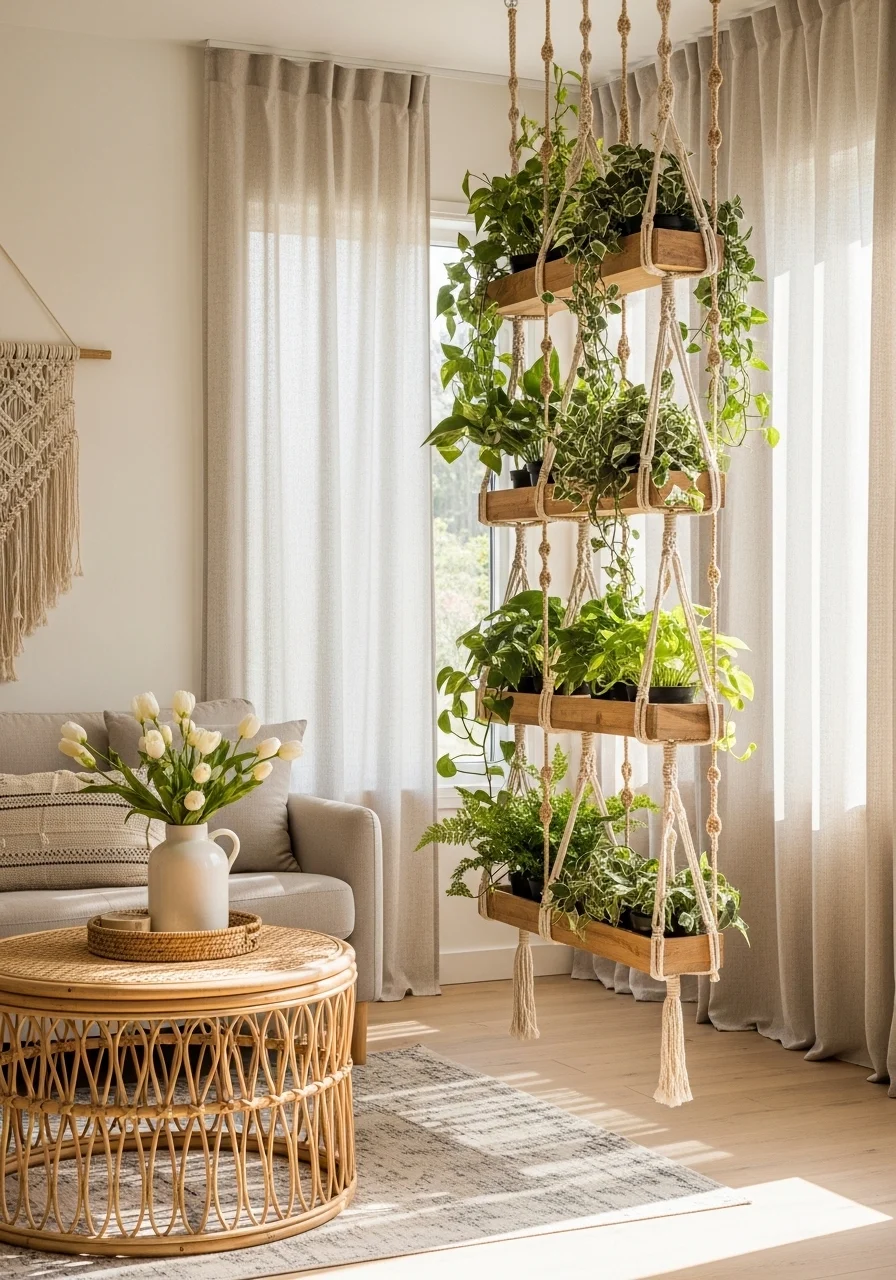
Plants make a lively, breathable partition. Hanging planters create depth and a soft barrier. They improve air quality and inject color. This approach suits boho, tropical, and eco-minded designs. It feels fresh and calming.
Key Elements
- Ceiling-mounted hanging system or bar
- Variety of hanging planters (macramé, ceramic, metal)
- Lightweight trailing plants (pothos, string of hearts)
- Shelved wooden trays for potted plants
- Water-catching trays or saucers
- Moisture-resistant ceiling anchor
- Grow lights if natural light is limited
- Wall-mounted irrigation option optional
How to Achieve This Look
- Choose a ceiling section that can bear weight.
- Install a sturdy bar or rail across the opening.
- Hang planters at varied heights for depth.
- Use lightweight pots with drainage control.
- Group plants by light needs for easier care.
- Add saucers to protect furniture from drips.
- Swap plants seasonally to maintain fullness.
- Consider a drip tray or floor mat to catch spills.
How to Style / Use It
- Create a color story with pot finishes or plant types.
- Use trailing plants on the living room side for softness.
- Add plant food and prune regularly for healthy growth.
- Supplement with grow lights in low-light homes.
- Re-hang or move planters to adjust sightlines.
10. Mirrored Partition for Light and Depth
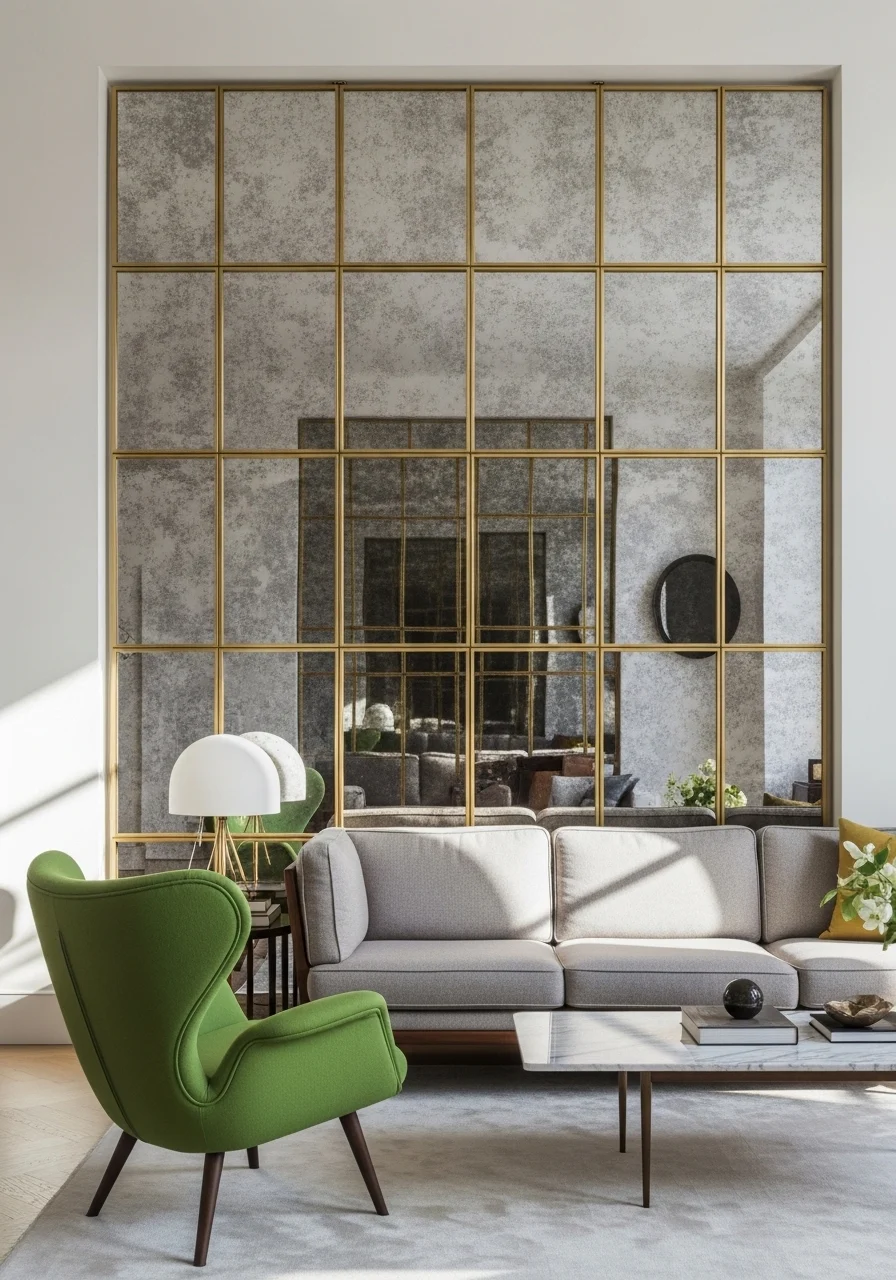
Mirrors expand space visually and bounce light. A segmented mirrored partition is chic and high-impact. Brass framing adds warmth. This suits compact living rooms that need brightness. It feels glam and airy.
Key Elements
- Tempered mirror panels
- Thin brass or black mullions between panels
- Secure wall/ceiling fixing system
- Non-glare mirror option for comfort
- Protective backing and edge sealing
- Polished floor threshold
- Coordinating metallic accents in furniture
How to Achieve This Look
- Assess wall or freestanding partition placement.
- Select tempered mirrors sized to fit openings.
- Install robust supports and adhesive systems.
- Add mullions to create segmented pattern.
- Seal edges to prevent moisture ingress.
- Keep furniture and lighting coordinated.
- Clean regularly with non-abrasive formula.
- Add soft textiles to balance reflective surfaces.
How to Style / Use It
- Keep opposite wall art minimal to avoid visual clutter.
- Use mirrors to amplify natural light from windows.
- Pair with warm metals to prevent coldness.
- Wipe fingerprints promptly to keep surfaces crisp.
- Add plants to soften reflections.
11. Chalkboard or Painted Partition for Functional Fun
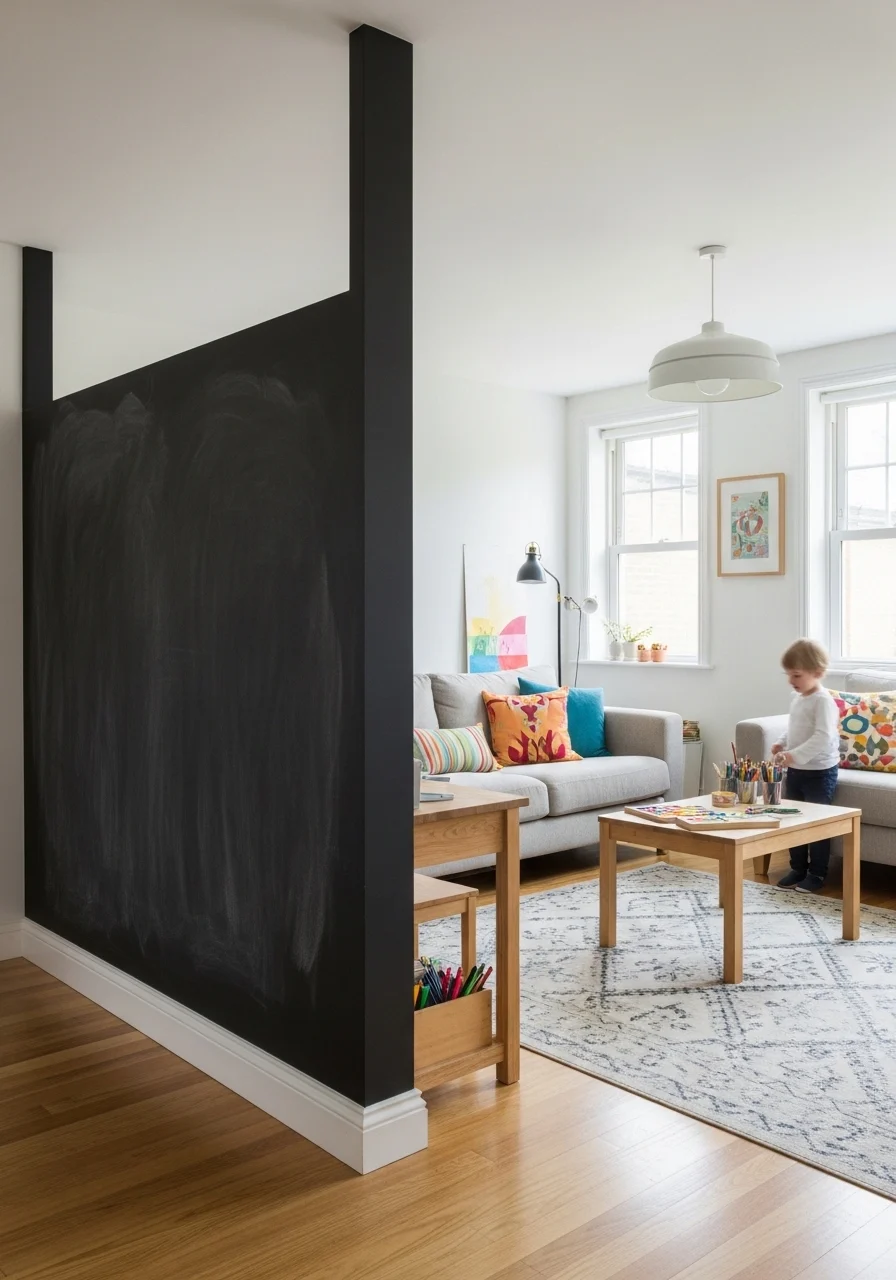
A painted or chalkboard partition adds personality and function. It’s great for families and creatives. Use it for notes, kids’ drawings, or seasonal art. This fits playful, casual living rooms. It feels interactive and relaxed.
Key Elements
- Partial-height drywall or wood panel
- Chalkboard paint or magnetic paint base
- Chalk tray or small ledge
- Good-quality chalk or liquid chalk markers
- Dry erase magnets if magnetic paint used
- Durable baseboard trim
- Protective top rail to prevent scuffs
How to Achieve This Look
- Prepare the partition surface with primer.
- Apply two coats of chalkboard or magnetic paint.
- Install a slim ledge for chalk and brushes.
- Add a top rail to prevent wear and offer display space.
- Season the chalkboard by rubbing full chalk over surface then erasing.
- Use liquid chalk markers for vibrant designs.
- Wipe clean periodically with a damp cloth.
- Let kids and guests help update the surface.
How to Style / Use It
- Write weekly notes, grocery lists, or rotating quotes.
- Use for kids’ art and display seasonal crafts.
- Pair with framed magnets or small pegboard trays.
- Repaint or refresh when style changes.
- Keep chalk in a decorative jar nearby.
12. Partition Design Ideas for Modern Living Rooms: Industrial Pipe and Wood Divider
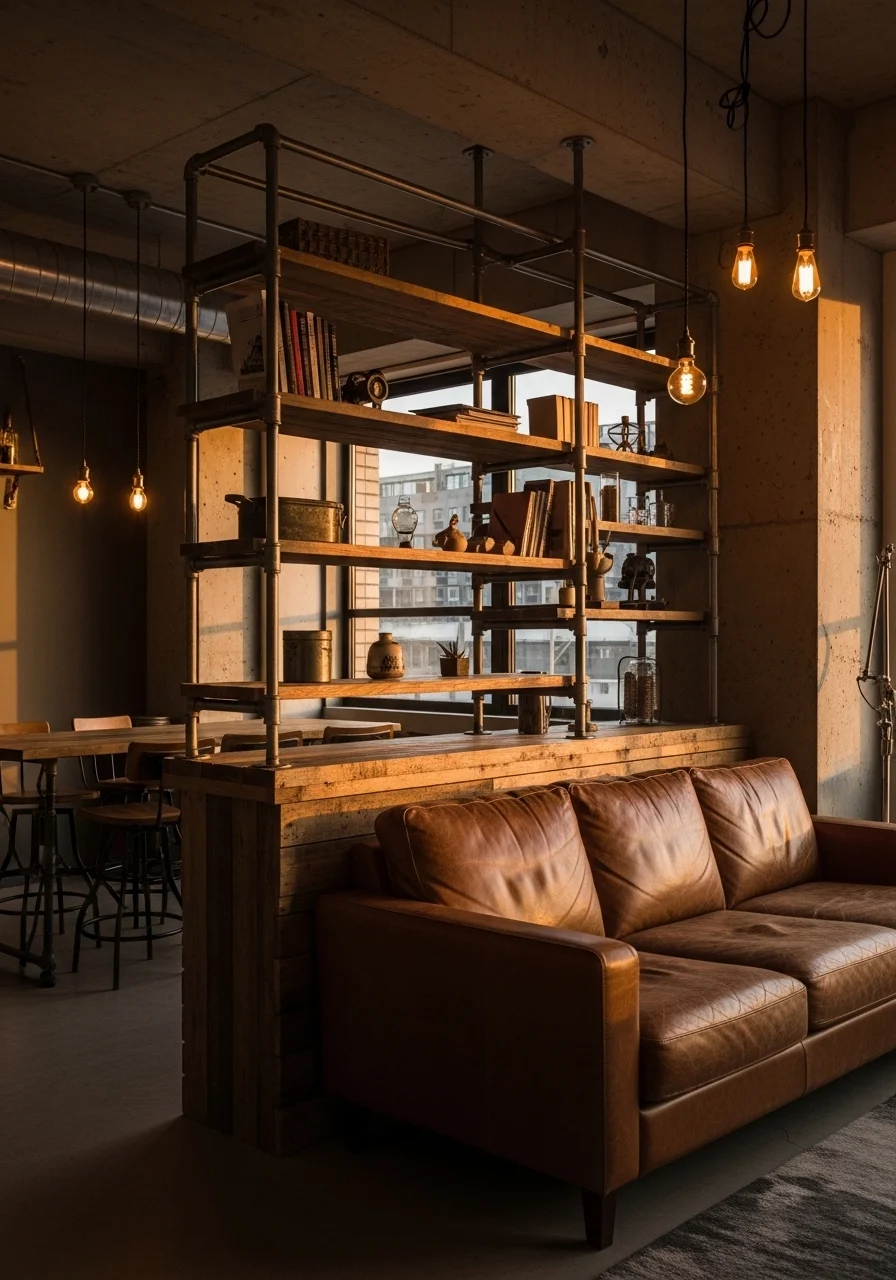
Industrial pipe and wood combines rugged metal with warm wood. Shelves add storage and display niches. The open structure keeps it airy. This suits urban lofts and masculine schemes. It feels handcrafted and durable.
Key Elements
- Black iron pipe frame with flanges
- Reclaimed or live-edge wooden shelves
- Visible flange mounts and pipe fittings
- Adjustable shelf heights with pipe clamps
- Protective wood finish (oil or matte varnish)
- Floor protectors under flanges
- Edison-style accent lighting optional
- Safety anchors if tall
How to Achieve This Look
- Sketch shelf layout and measure opening width.
- Purchase pipe and flange fittings at hardware store.
- Cut and assemble pipe frame to desired height.
- Prepare wood shelves—sand and oil finish.
- Mount flange plates and secure frame to floor or wall.
- Slot shelves into pipe supports and clamp.
- Add objects and plants to balance weight.
- Inspect and tighten fittings yearly.
How to Style / Use It
- Mix metals and warm wood tones for balance.
- Add vintage accessories for character.
- Use baskets on lower shelves for concealed storage.
- Dust pipes and oil wood occasionally to preserve finish.
- Swap shelf decor with seasons for freshness.
13. Acoustic Panel Partition for Quiet Zones
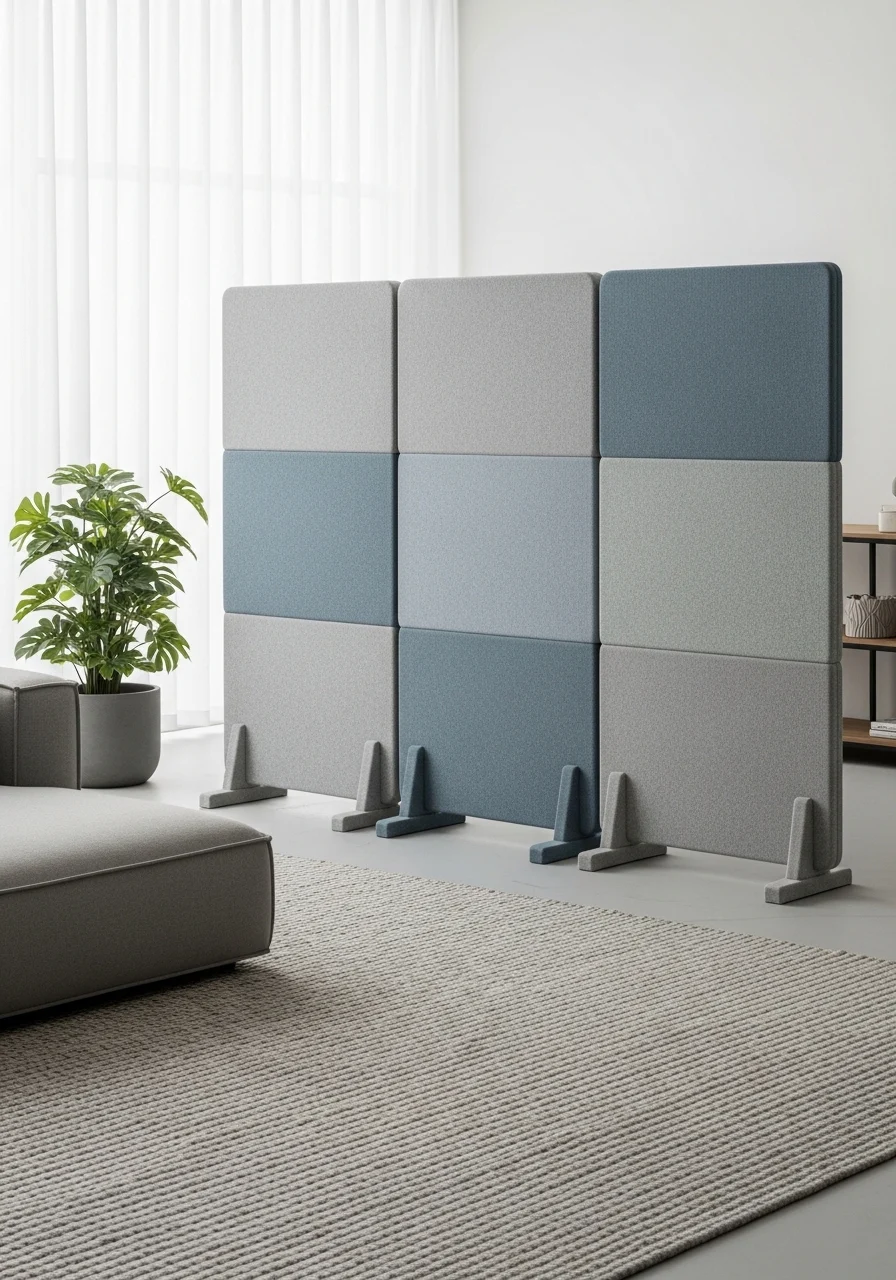
Acoustic partitions improve sound control and privacy. Fabric panels bring softness to a modern living room. They’re ideal for home offices or media areas. This suits open plans that need noise control. It feels calm and contained.
Key Elements
- Thick acoustic foam or mineral wool panels
- Fabric covers in muted tones (gray, blue, beige)
- Freestanding frame or moveable panels on casters
- Fire-retardant and stain-resistant fabrics
- Overlapping panel arrangement for extra absorption
- Integrated shelves or ledges optional
- Tool-free connectors for reconfiguration
How to Achieve This Look
- Determine acoustic needs and measure space.
- Select NRC-rated panels for sound-absorbing capacity.
- Choose fabric colors that match the palette.
- Mount panels on a lightweight frame or casters.
- Arrange panels to align with noise sources.
- Add a rug and soft furnishings to supplement absorption.
- Position panels to allow airflow and light.
- Replace or clean fabric covers as needed.
How to Style / Use It
- Use panels behind TV or desk for better acoustics.
- Coordinate panel colors with cushions and curtains.
- Vacuum or spot-clean fabric following manufacturer care.
- Reconfigure panels for events or different layouts.
- Combine with plants to further soften sounds.
14. Decorative Laser-Cut Metal Screen
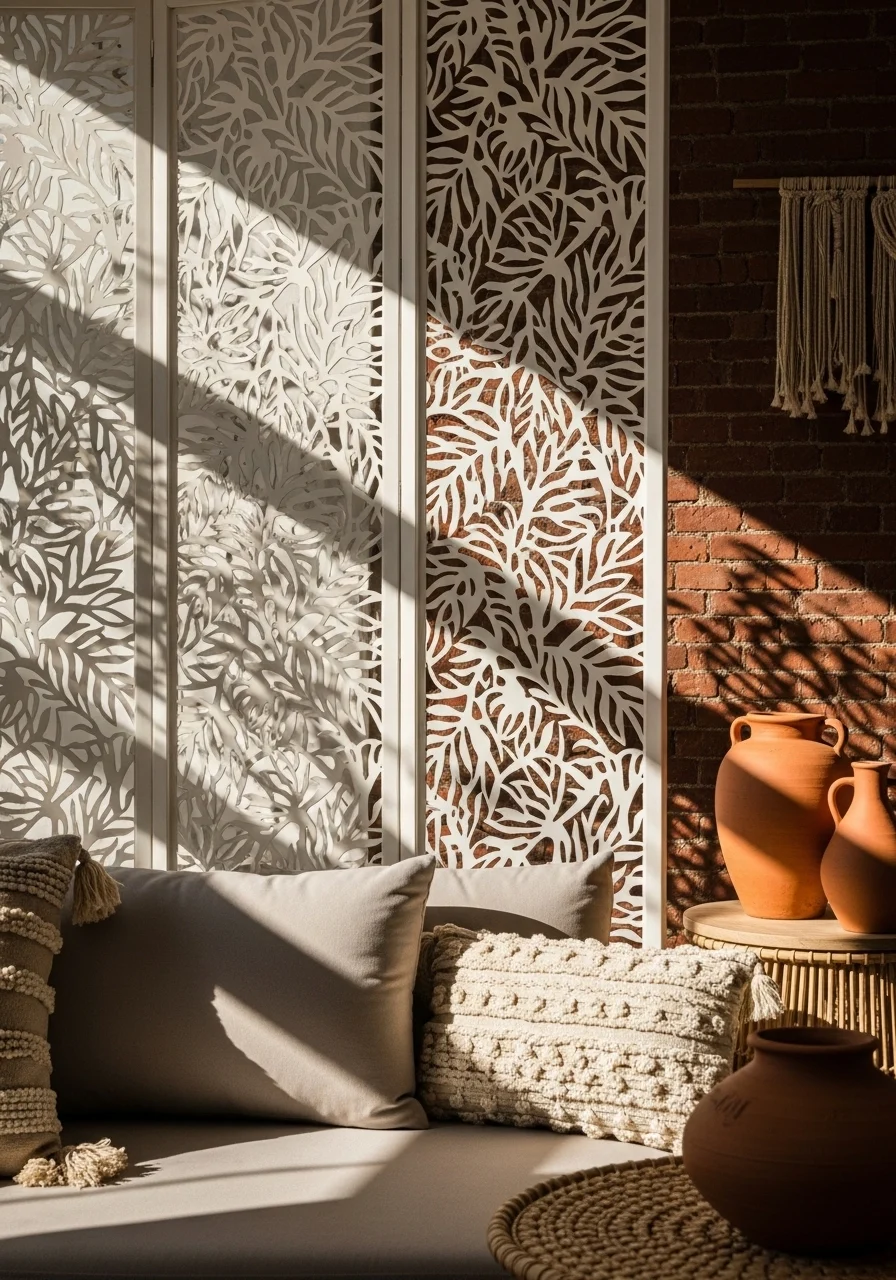
Laser-cut screens offer pattern and light play. They cast interesting shadows and become focal pieces. Powder-coated metal keeps them lightweight and durable. This suits modern, boho, and eclectic interiors. It feels artistic and airy.
Key Elements
- Powder-coated aluminum or steel panels
- Intricate laser-cut patterns (botanical, geometric)
- Freestanding feet or wall mounting brackets
- Matte white, black, or brass finishes
- Backlighting option to highlight patterns
- Soft furnishings to balance metal texture
- Protective pads under feet
How to Achieve This Look
- Choose pattern scale to match room proportions.
- Order custom or pre-made panels in chosen finish.
- Install freestanding supports or mount to walls.
- Position screen where backlighting can enhance shadows.
- Anchor if near high-traffic areas.
- Pair with soft textiles to temper metal feel.
- Clean with a damp cloth to remove dust.
How to Style / Use It
- Use as a backdrop for a reading chair or console.
- Add LED strip behind for evening drama.
- Pair with earthenware and woven textures for contrast.
- Touch-up paint chips to maintain finish.
- Move panel seasonally if you like a fresh focal point.
15. Partition Design Ideas for Modern Living Rooms: Shoji Screen-inspired Sliding Panels
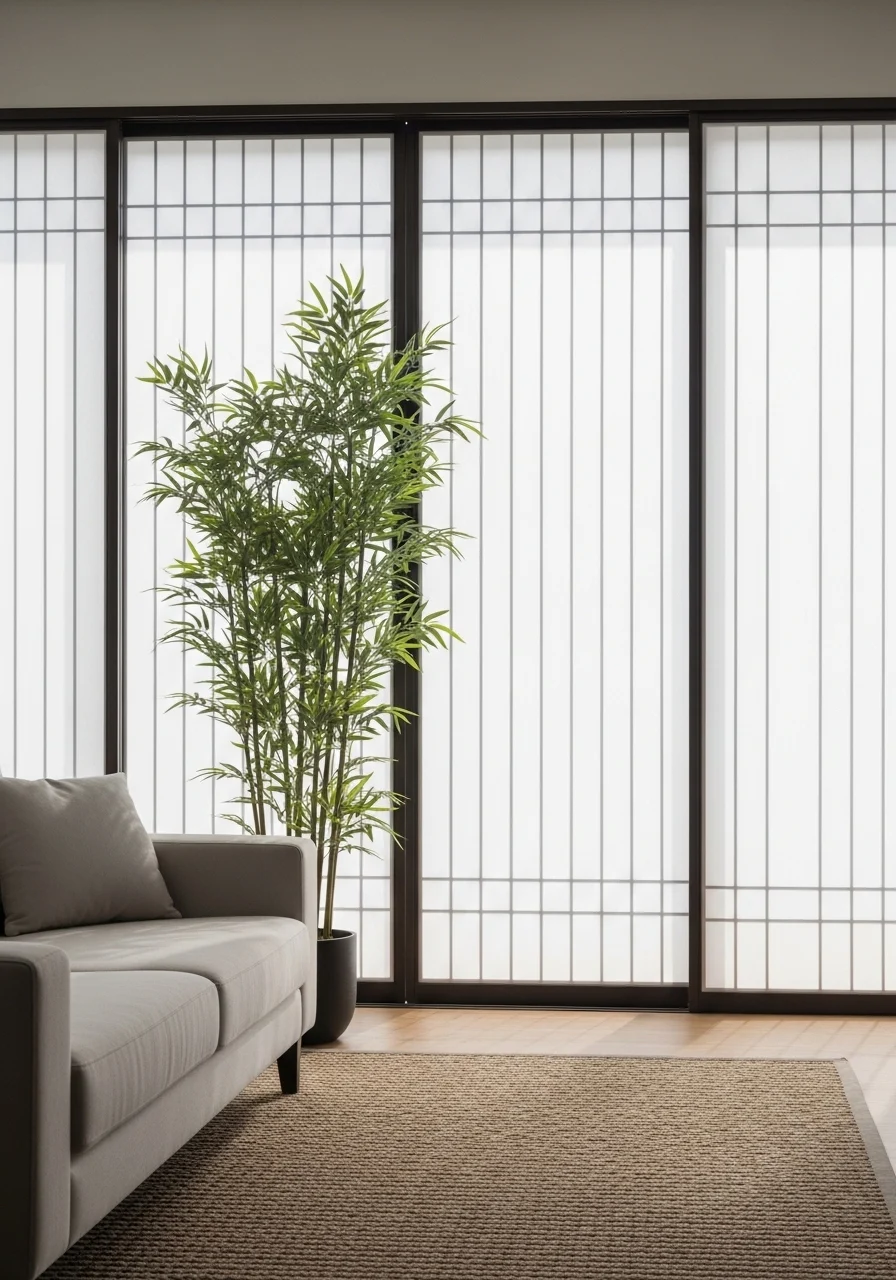
Shoji-inspired panels bring calm rhythm and soft light. Sliding panels create privacy without heavy mass. Slim frames and translucent panels keep things minimal. This suits Zen, minimalist, and Scandinavian interiors. It feels serene and refined.
Key Elements
- Slim wooden frames with translucent panels
- Sliding track system flush with floor
- Frosted acrylic or modern rice-paper alternative
- Soft-close rollers and floor guide
- Minimalist hardware in wood or matte metal
- Low threshold for smooth movement
- Neutral finishes: pale wood, off-white panels
How to Achieve This Look
- Measure opening and pick panel quantity.
- Choose sliding track that supports panel weight.
- Use frosted acrylic for durability over traditional paper.
- Install top track and bottom guide for stability.
- Fit panels and adjust rollers for smooth glide.
- Add slim handles or recessed pulls.
- Maintain track cleanliness for long life.
- Replace panels if they show wear.
How to Style / Use It
- Use to separate a meditation or tea corner.
- Keep adjacent decor minimal to maintain calm.
- Pair with natural fibers and simple ceramics.
- Wipe panels with a mild cleaner suited to material.
- Use different translucency levels for variable privacy.
16. Modular Cube Partition for Playful Flexibility
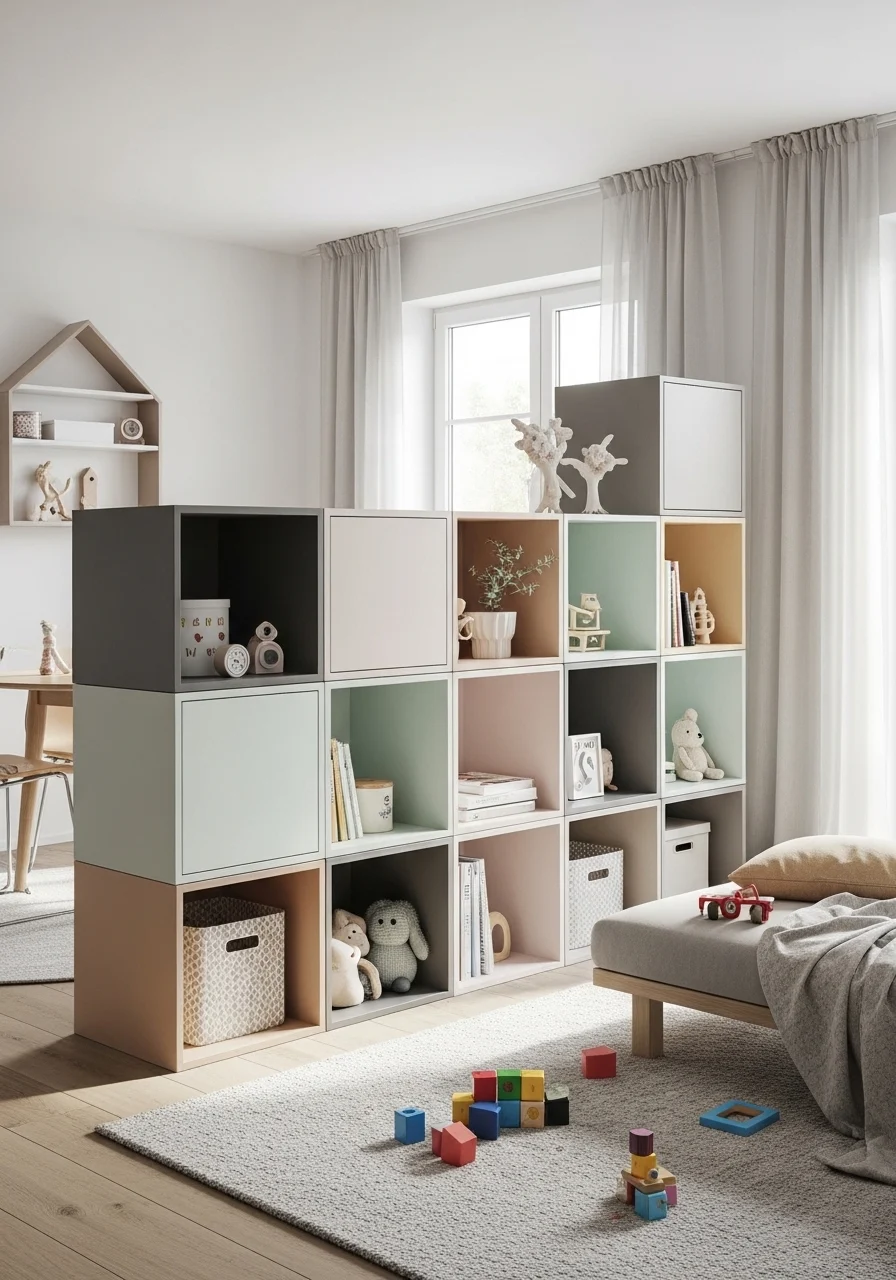
Modular cubes let you build varied partitions. They’re flexible for storage, display, and play. You can rearrange or add units over time. This is great for families and renters. It feels adaptable and fun.
Key Elements
- Stackable cube shelving modules (wood or laminate)
- Mix of open and closed cubes (doors or bins)
- Soft pastel or neutral finishes
- Baskets and bins sized to cubes
- Anti-tip brackets for safety
- Back panels optional for more structure
- Casters on some units for mobility
How to Achieve This Look
- Choose cube size based on room scale.
- Plan the stack layout before assembly.
- Assemble modules and connect with connectors.
- Anchor tall stacks to wall for safety.
- Add baskets and bins to lower cubes.
- Style open cubes with decor and books.
- Keep toys in lower accessible cubes for kids.
- Reconfigure layout as needs change.
How to Style / Use It
- Use as a kid-friendly partition with storage.
- Coordinate colors to link both sides visually.
- Swap bins seasonally for a fresh look.
- Wipe laminate surfaces to keep them clean.
- Add a small plant on top for continuity.
17. Fireplace as Central Partition
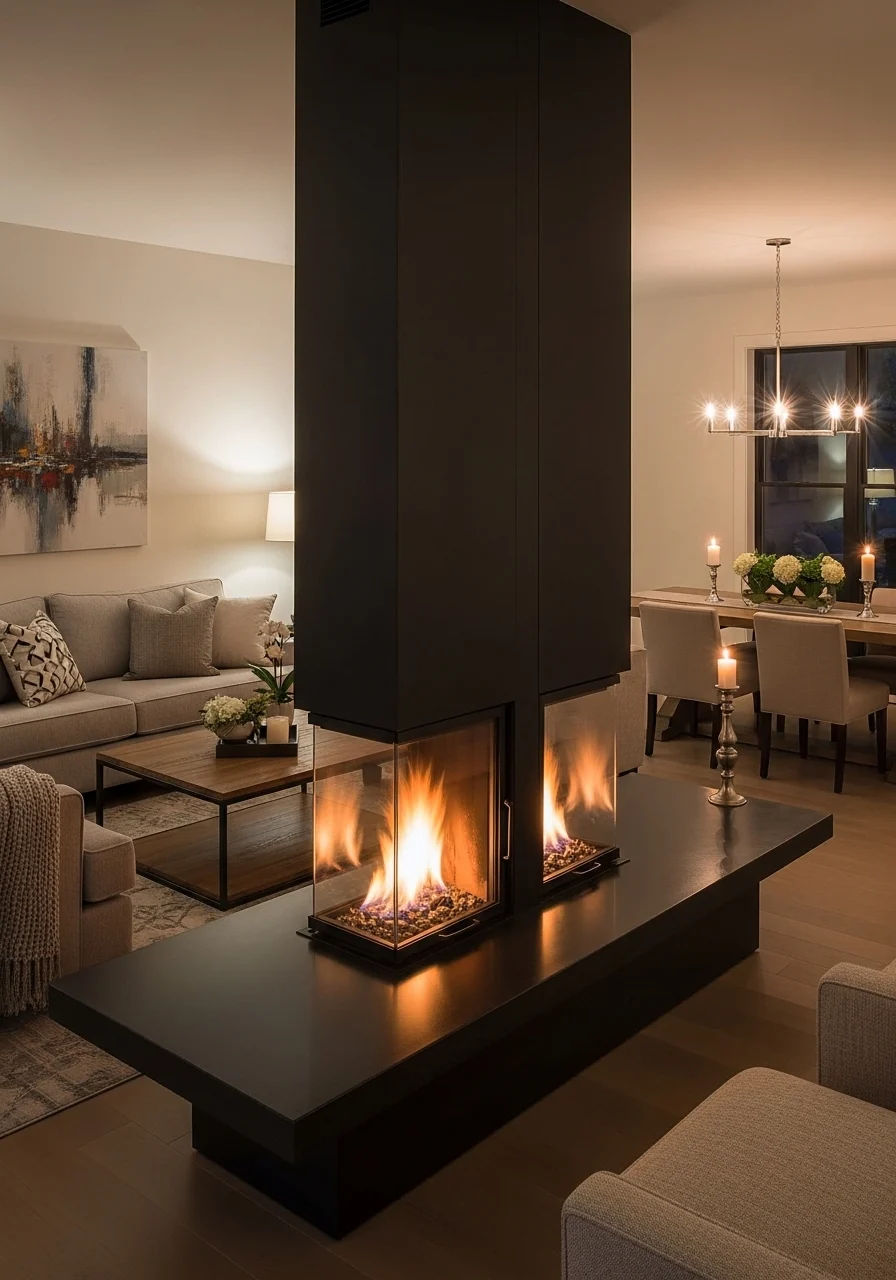
A double-sided fireplace becomes a physical and visual anchor. It defines two spaces while offering warmth and ambiance. Choose gas, electric, or bioethanol depending on installation. This suits open-plan living that needs a focal point. It feels warm and luxurious.
Key Elements
- Double-sided fireplace insert or unit
- Heatproof surround materials (stone, tile, metal)
- Proper venting and building-code compliance
- Low hearth or flush design option
- Mantel or slim shelf for styling
- Fire-safe hearth rug and accessories
- Remote control or ignition systems for gas/electric
How to Achieve This Look
- Consult a fireplace installer and check codes.
- Choose insert type and size for the opening.
- Frame and finish the surround with heatproof materials.
- Install venting and gas/electric connections.
- Test operation and add safety screens if needed.
- Style both sides with low seating and symmetrically placed rugs.
- Schedule annual maintenance for safety.
- Keep combustibles a safe distance away.
How to Style / Use It
- Use as a cozy divider that draws people together.
- Place low bookshelves or benches near the hearth.
- Pair with soft lighting to enhance evening mood.
- Regular servicing keeps it reliable and long-lasting.
- Consider glass doors for safety if kids are present.
18. Pegboard Partition with Functional Storage
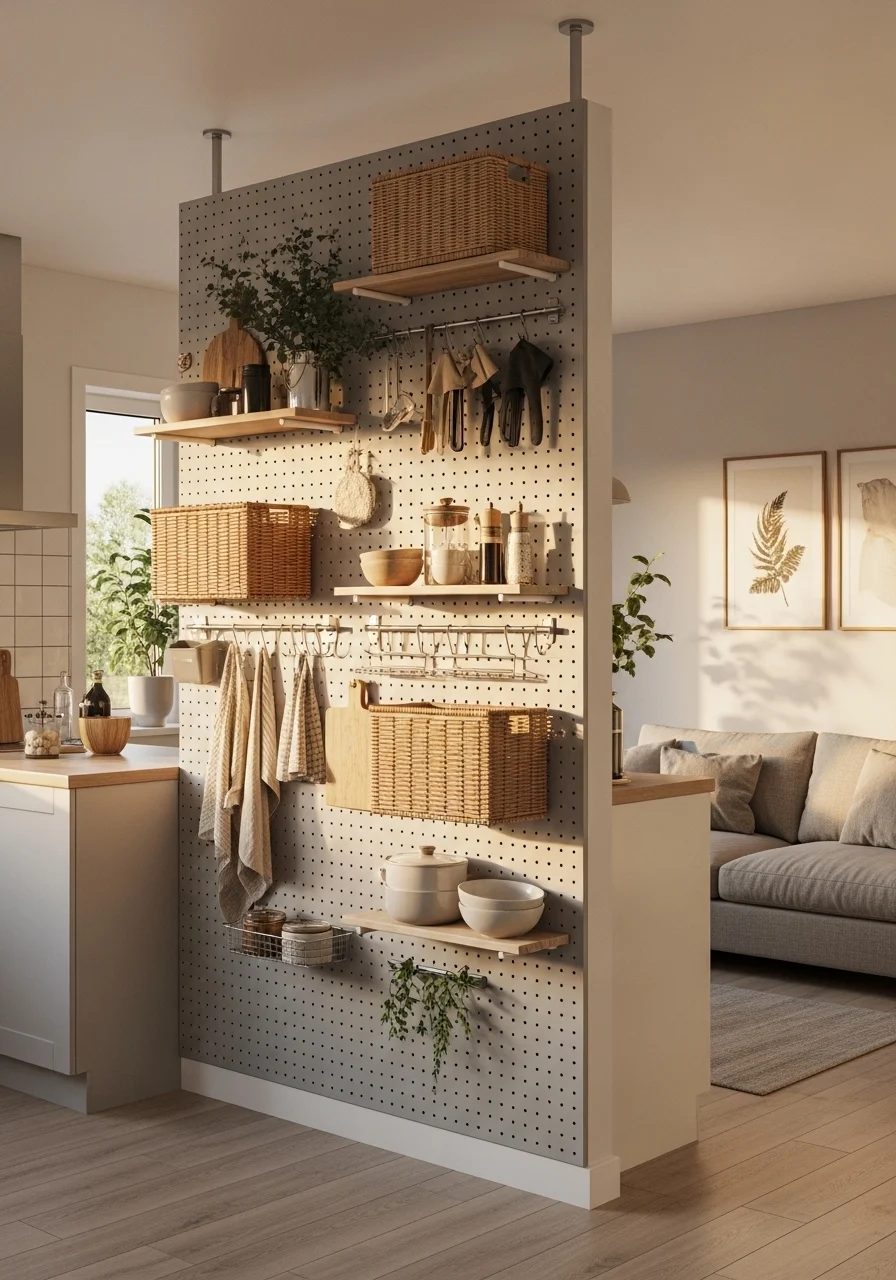
Pegboards are functional and reconfigurable. They turn a partition into a usable storage wall. You can move hooks and shelves as needs change. This works well near kitchens or workspaces. It feels practical and customizable.
Key Elements
- Full-height pegboard panels (wood or metal)
- Assorted pegs, hooks, baskets, and shelves
- Powder-coated finish in neutral tone
- Integrated ledges for small objects
- Anchoring system for safety
- Coordinating baskets and bins for organization
How to Achieve This Look
- Mount pegboard panels on a sturdy frame.
- Add pegs and shelves where most useful.
- Group items by function: keys, mail, tools, decor.
- Use baskets for smaller loose items.
- Reposition pegs as storage needs change.
- Keep heavier items low for stability.
- Paint pegboard to match decor if desired.
- Label baskets for quick access.
How to Style / Use It
- Use near entrances for grab-and-go necessities.
- Add decorative items to soften utility.
- Keep heavy objects close to studs.
- Wipe clean with damp cloth; avoid heavy moisture.
- Change configuration seasonally.
19. Room Divider with Integrated Lighting
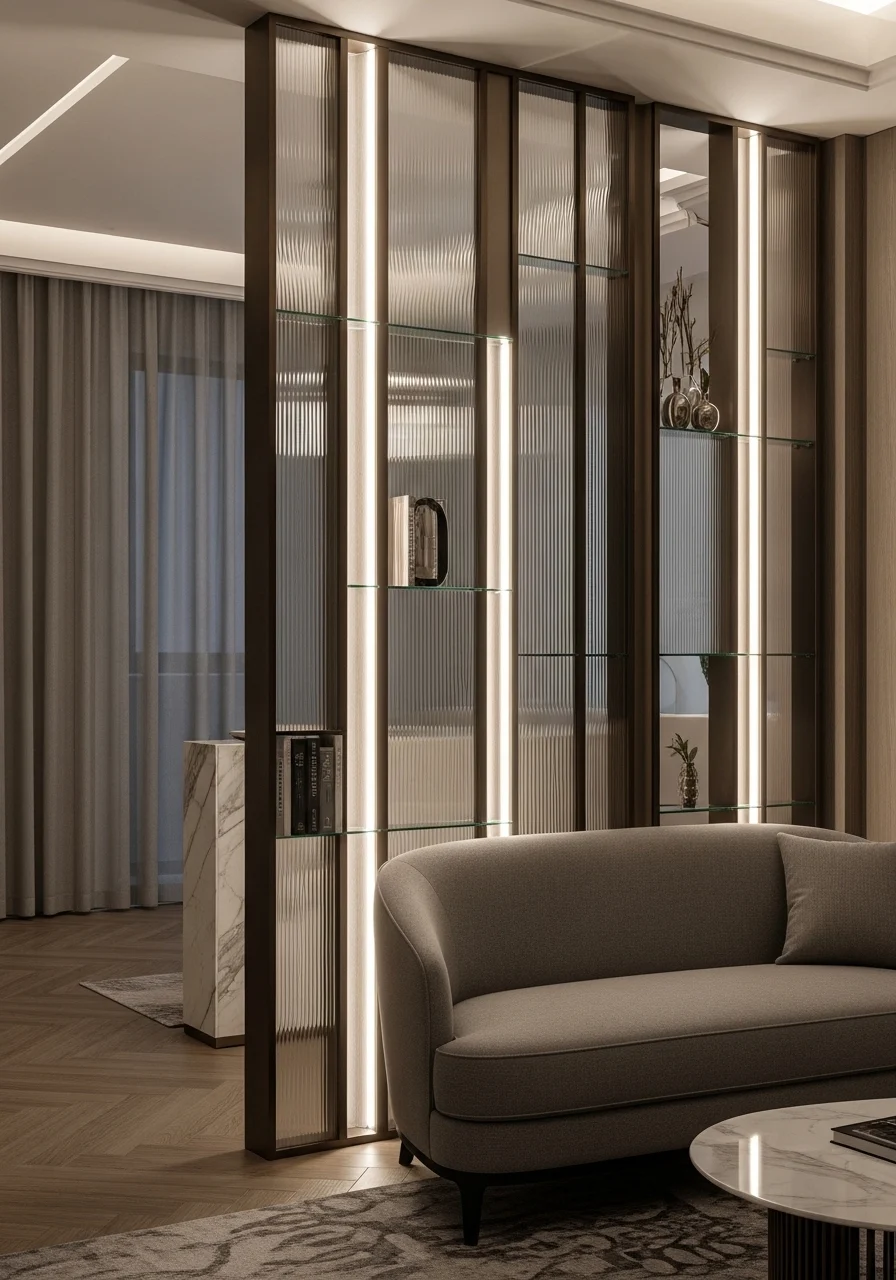
Integrated lighting makes a partition functional and atmospheric. Vertical light channels create sculptural lines and mood. Use warm-temperature LEDs for comfort. This suits modern and minimalist interiors. It feels intentional and luminous.
Key Elements
- Partition panel with recessed LED channels
- Warm 2700–3000K LEDs for living comfort
- Dimmer switch or smart control
- Frosted acrylic or glass shelves for diffusion
- Concealed wiring and junction boxes
- Matte finish on partition surfaces to avoid glare
- Professional electrical installation recommended
How to Achieve This Look
- Plan wiring runs and light placement during design.
- Choose LED strips with proper lumen output.
- Build or order partition with hidden channels.
- Install LEDs and connect to dimmer or smart switch.
- Hide wires inside partition cavity for a clean look.
- Test lighting and adjust brightness levels.
- Add frosted shelves to soften glow.
- Use smart controls to set scenes for different moods.
How to Style / Use It
- Use lighting to define evening and daytime moods.
- Pair with reflective surfaces to spread light.
- Keep warm color temperature for cozy feel.
- Ensure switches are accessible yet discreet.
- Replace LED drivers per manufacturer guidance.
20. Movable Partition on Casters for Flex Rooms
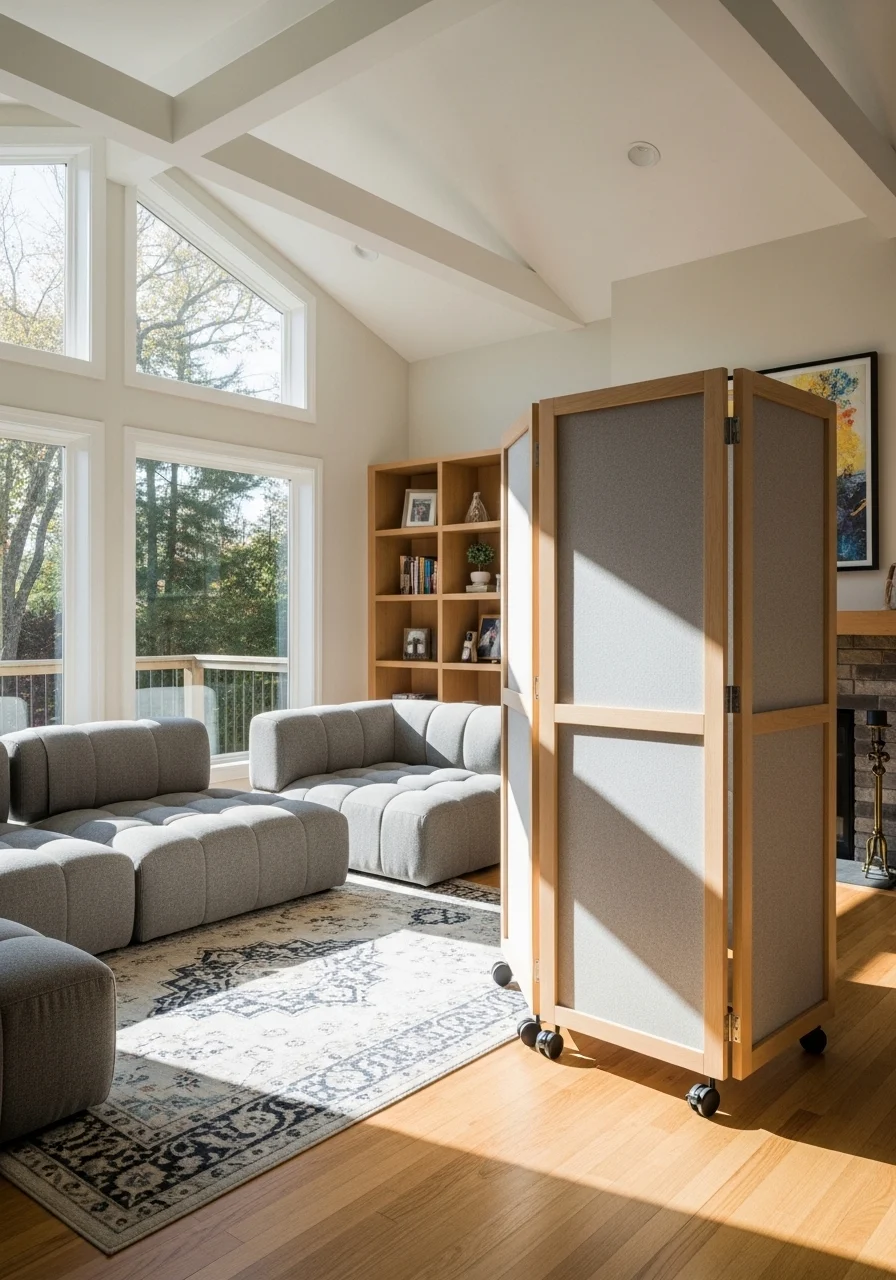
A caster-mounted partition gives instant flexibility. Move it to create privacy or open space quickly. Fabric panels reduce sound and add color. This is ideal for flexible or multi-use rooms. It feels practical and mobile.
Key Elements
- Lightweight frame on lockable casters
- Fabric panels in washable materials
- Bracing for stability when stationary
- Low-profile caster locks
- Optional acoustic backing for sound control
- Neutral or bold fabric options depending on style
How to Achieve This Look
- Choose a lightweight yet sturdy frame material.
- Attach fabric panels securely to frame.
- Fit heavy-duty casters with locking mechanisms.
- Test mobility and locking on typical floor surfaces.
- Add padding to caster bases to protect flooring.
- Move partition into position and engage locks.
- Store upright or flat when not in use.
- Wash or spot-clean fabric panels as needed.
How to Style / Use It
- Use as a flexible home office or guest privacy screen.
- Choose a fabric color that complements major textiles.
- Lock casters firmly for stability during use.
- Rotate panel direction to reset the room.
- Keep maintenance simple with removable fabric covers.
21. Mirrored Sliding Closet Doors as Partition
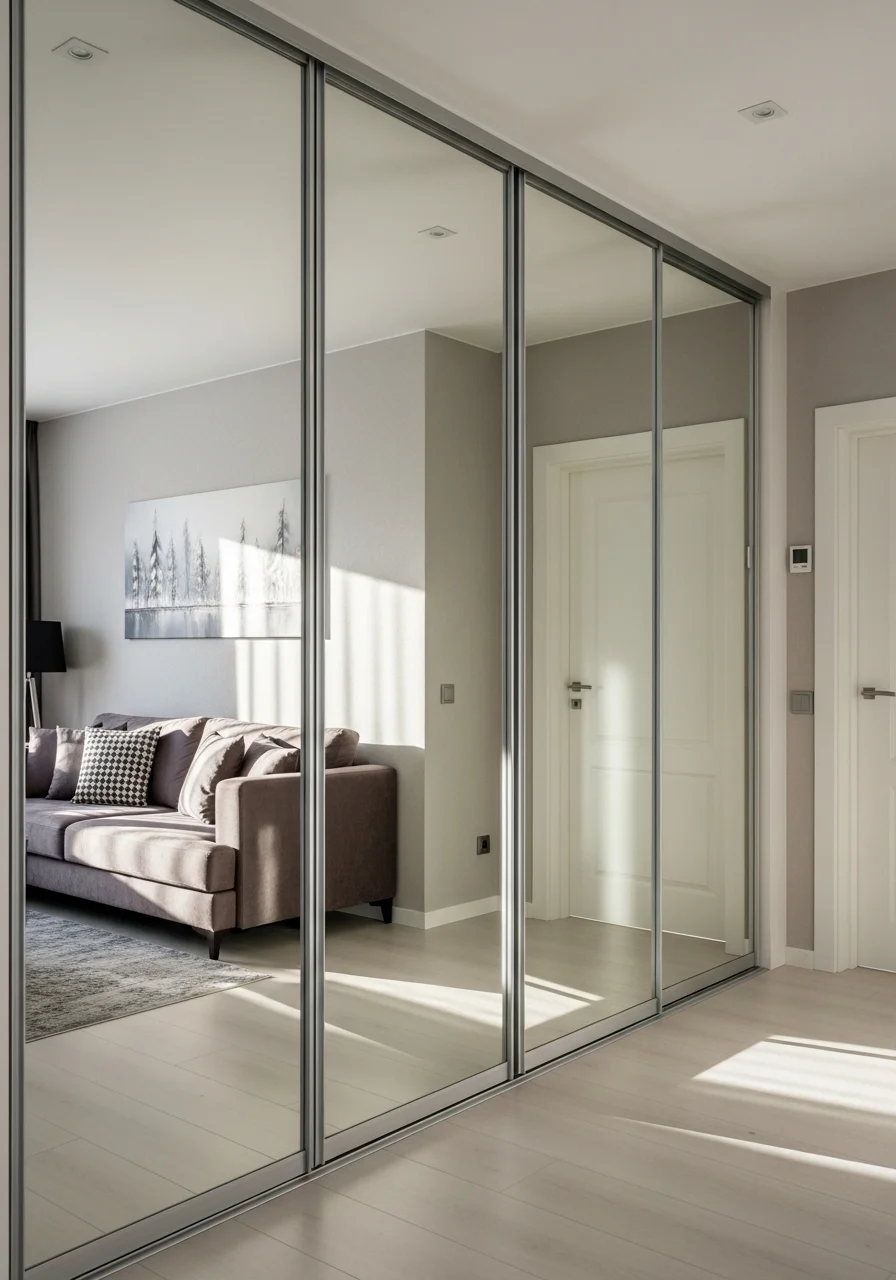
Mirrored sliding closet doors function as partitions and storage. They reflect light while offering concealed storage. Sliding action keeps circulation smooth. This suits compact homes needing storage and separation. It feels polished and practical.
Key Elements
- Sliding mirrored door panels
- High-quality rollers and tracks
- Integrated closet system behind doors
- Soft-close mechanisms optional
- Edge protection and safety film
- Interior shelving and hanging rods
- Coordinating trim or reveal
How to Achieve This Look
- Measure for sliding door frames and opening.
- Install sturdy top track and floor guide.
- Mount mirrored panels with appropriate hardware.
- Fit closet organizers behind doors as needed.
- Add soft-close features for smoothness.
- Clean mirrors with gentle glass cleaner.
- Check track alignment periodically.
- Replace rollers if sliding becomes rough.
How to Style / Use It
- Use mirrored doors to visually widen small rooms.
- Keep stored items organized to avoid bulky silhouettes.
- Add a long runner to guide traffic along the partition.
- Consider safety film if children are present.
- Maintain mirrors to keep reflection crisp.
22. Upholstered Tufted Partition for Soft Luxury
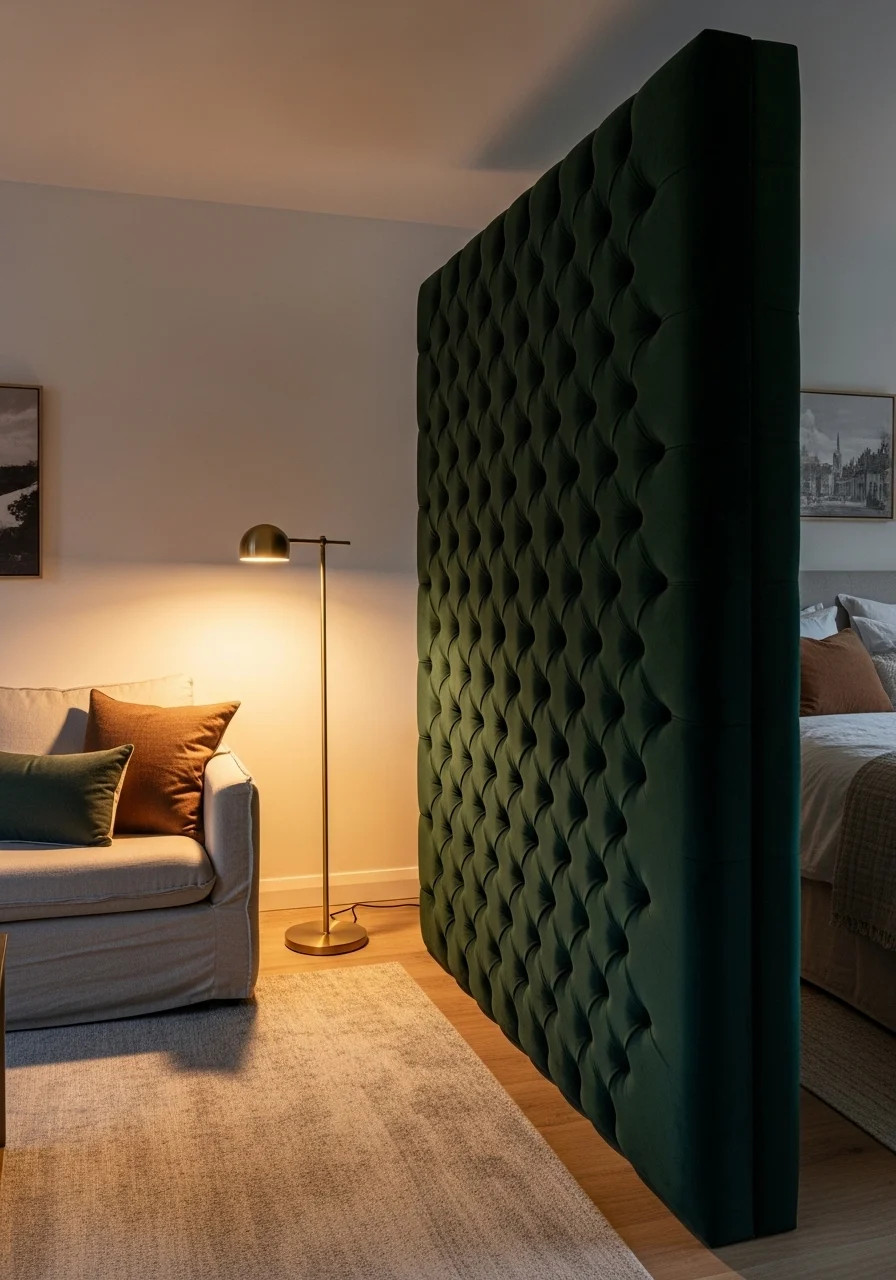
An upholstered partition adds plush texture and refined separation. Tufting gives a tailored, luxurious look. It also offers some sound-dampening. This suits bedroom-living combos or chic apartments. It feels cozy and elegant.
Key Elements
- Floor-to-ceiling upholstered panel with tufting
- High-density foam and fabric upholstery (velvet, linen)
- Solid frame with stable anchoring
- Button or deep tuft detailing
- Protective base trim to prevent wear
- Coordinating fabrics for cushions and throws
- Fire-retardant materials if required
How to Achieve This Look
- Build a solid plywood or framed structure to desired height.
- Add high-density foam to panel depth.
- Mark tufting grid and install buttons through the foam.
- Stretch chosen fabric tightly and staple on back.
- Finish edges with trim or piping.
- Anchor frame to floor and ceiling for safety.
- Add matching or complementary textiles on both sides.
- Vacuum upholstery regularly and spot-clean as needed.
How to Style / Use It
- Use tufted panel for a luxe backdrop behind sofas.
- Keep colors deep and tactile for evening coziness.
- Pair with brass or warm wood accents.
- Protect from direct sunlight to preserve fabric.
- Rotate cushions and care for velvet to maintain pile.
You now have 22 fresh partition options to adapt to your living room. From airy glass dividers to cozy upholstered panels, these partition design ideas for modern living rooms cover flexible, permanent, and movable solutions. Try one that fits your lifestyle and room flow, then pin the images you love for reference.
Which partition idea are you most excited to try? Save this list to your Pinterest board and share it with a friend who’s refreshing their space. You’ll have a new zone ready in no time.