25 Kids Study Room Ideas That Make Learning Fun

Creating a study space that feels comfortable, organized, and inspiring can make a big difference in how children learn each day.
Whether you’re designing a dedicated Kids Study Room, updating a small Kids Learning Space, or looking for Ideas For Kids Room layouts that encourage focus, the right setup can help support creativity and productivity.
From cozy reading corners to smart storage solutions, these study room ideas combine style and function to create spaces children will enjoy spending time in.
1. Color-Coded Learning Zones
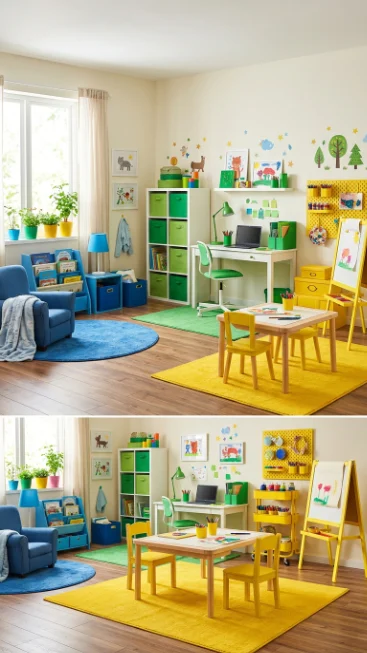
Color-coded zones are a simple way to organize a kids study room while making it feel more engaging and purposeful.
Assign different colors to reading, homework, and creative activities so children can easily recognize where each task belongs. Use rugs, storage bins, wall art, or desk accessories to define each area without overwhelming the room.
Soft blues and greens create a calm environment for focus, while cheerful yellows and warm accents can energize creative projects. This approach works especially well in shared rooms where multiple activities happen throughout the day.
2. Themed Study Nooks (Space, Jungle, Underwater)
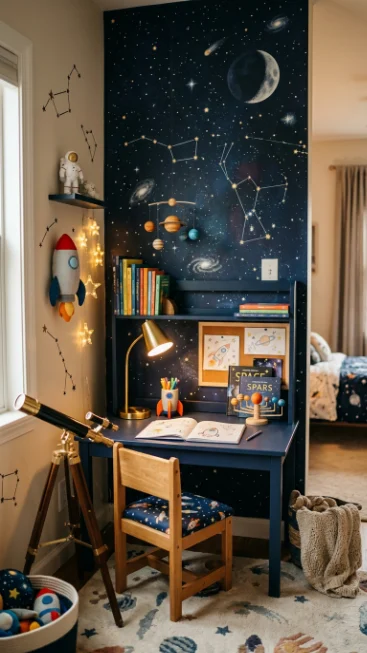
A themed study nook can turn everyday homework into something children actually look forward to.
Whether your child loves outer space, jungle adventures, or underwater worlds, a personalized kids learning space adds excitement while encouraging creativity and imagination.
Keep the design balanced by focusing the theme on one wall or corner of the room.
Removable decals, themed storage, and a few decorative accents help create an immersive look without sacrificing functionality. The result is a study area that feels fun, inspiring, and easy to update as interests change over time.
3. Standing Desks Sized for Kids
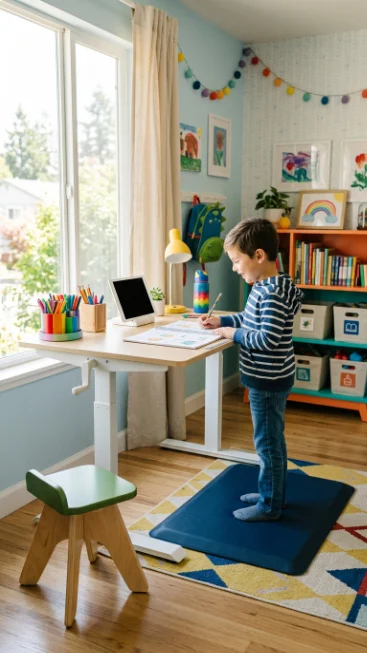
A kid-friendly standing desk brings flexibility to a modern kids space by allowing children to switch between sitting and standing throughout the day.
This simple change can make long homework sessions feel more comfortable while supporting better posture and movement. Choose an adjustable design that grows with your child and pair it with a supportive stool for added versatility.
Adding an anti-fatigue mat helps create a comfortable setup that encourages focus while fitting seamlessly into both contemporary and traditional study room designs.
4. Wall-Mounted Fold-Down Desks
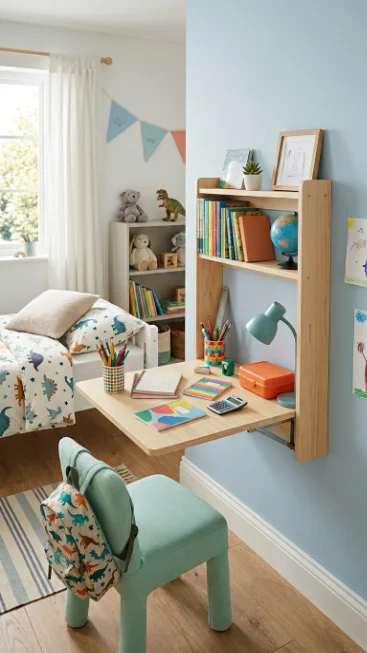
A wall-mounted fold-down desk is one of the smartest solutions for a minimalist kids study area, especially when space is limited.
It creates a dedicated homework zone during study time and folds neatly away when the room needs to be used for play or other activities. Look for a design with built-in shelves or hidden storage to maximize functionality without adding visual clutter.
This space-saving option works beautifully in apartments, shared bedrooms, and multipurpose family rooms where every square foot matters.
5. Multi-Sensory Learning Corners
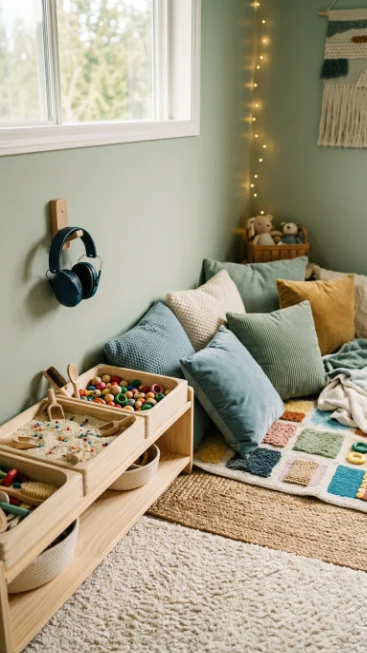
A multi-sensory corner can make a kids learning space feel more comfortable and supportive for different learning styles.
Combining soft textures, tactile materials, visual schedules, and calming accessories creates an environment that encourages focus while making study time feel less overwhelming.
Include cozy floor cushions, organized sensory bins, and easy-to-reach storage to keep the area functional and inviting.
When thoughtfully designed, a sensory-friendly corner can become a favorite spot for reading, creative projects, and independent learning activities.
6. Art and Creativity Station
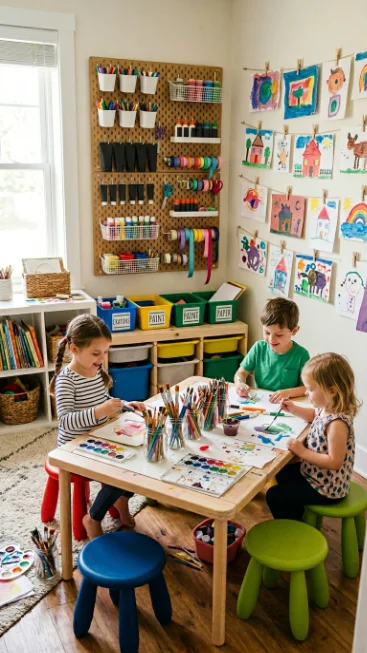
A dedicated art station encourages creativity while keeping supplies organized and easy to access.
Adding a creative corner to a kids study room gives children a place to draw, paint, build, and explore new ideas without taking over the rest of the room. Use a low table, open shelving, and labeled storage bins to keep materials tidy and within reach.
Displaying finished artwork on a wall rail or bulletin board adds personality to the space while inspiring children to continue creating and experimenting.
7. Cozy Reading Nook with Beanbag and Shelves
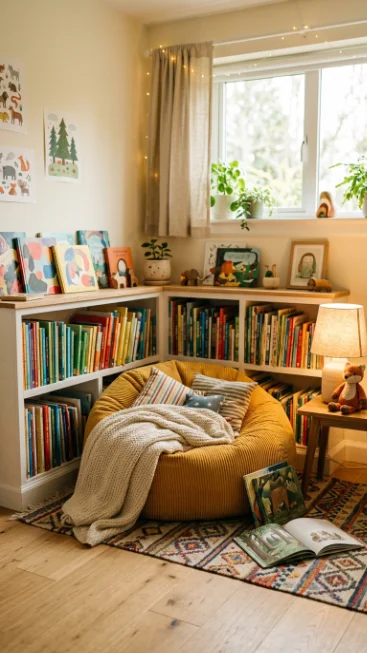
A cozy reading nook can transform an ordinary corner into a favorite retreat for quiet learning and relaxation.
This simple addition works beautifully in almost any ideas for kids room design while helping encourage a lifelong love of books. Layer soft seating, open bookshelves, warm lighting, and comfortable textiles to create an inviting atmosphere.
A plush beanbag, window seat, or floor cushions can make the area feel extra welcoming and give children a comfortable place to unwind with their favorite stories.
8. Modular Furniture and Storage Cubes
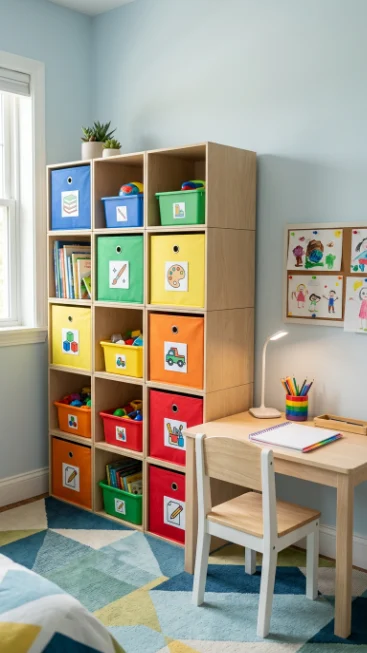
Modular furniture makes it easy to adapt a room as children grow and their needs change. Stackable storage cubes, flexible shelving, and movable furniture pieces help create a practical kids space that can evolve over time.
Use storage cubes to organize books, school supplies, toys, and creative materials while keeping everything accessible.
Choosing coordinated bins and baskets creates a clean, organized look that helps reduce clutter and makes daily routines feel more manageable.
9. Adjustable Lighting and Task Lamps
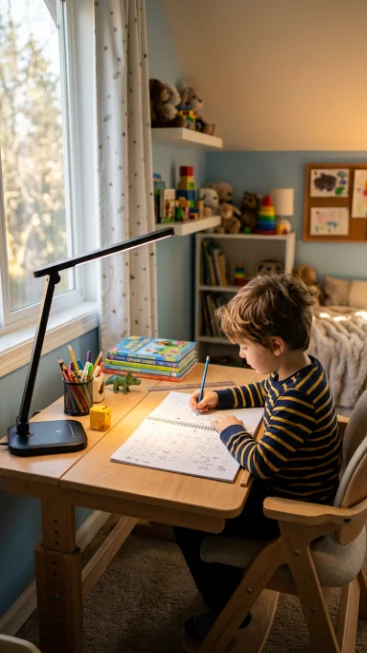
Good lighting plays an important role in creating a comfortable and functional kids learning space.
A combination of natural light, overhead lighting, and adjustable task lamps helps support reading, writing, and creative activities throughout the day. Position task lamps to reduce shadows and provide focused illumination where it’s needed most.
Dimmable lighting can also help transition the room from homework time to relaxation, creating a more versatile environment that feels comfortable from morning through evening.
10. Educational Wall Decals and Chalkboard Walls
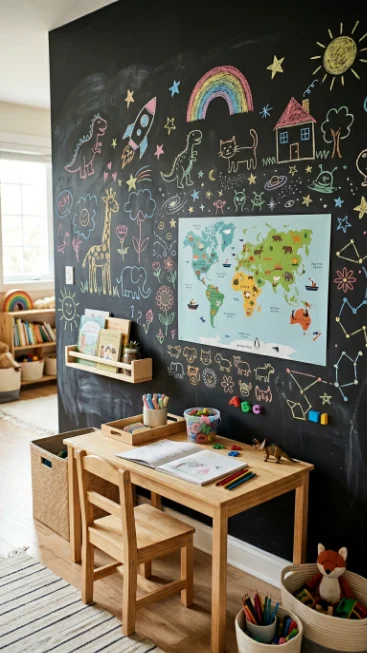
Interactive walls can make learning feel like a natural part of the room’s design.
Educational decals, maps, chalkboard paint, and whiteboard surfaces add both style and function to a kids study room while encouraging creativity and hands-on learning.
Create a feature wall where children can practice spelling, solve math problems, sketch ideas, or display educational visuals.
This approach works equally well for younger children and a growing teen study room, providing a flexible learning tool that evolves with age.
11. Tech-Smart Study Station
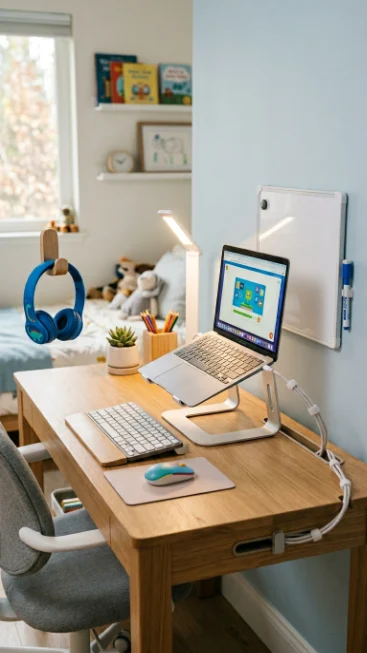
A tech-smart study station helps create a productive teen study room while keeping digital devices organized and easy to use.
A dedicated space for a laptop, tablet, or desktop computer can support online learning without making the room feel cluttered. Use cable management solutions, charging docks, and monitor stands to maintain a clean setup.
Pair technology with traditional tools like planners, notebooks, and whiteboards to create a balanced study environment that encourages both digital and hands-on learning.
12. Nature-Inspired Study Room
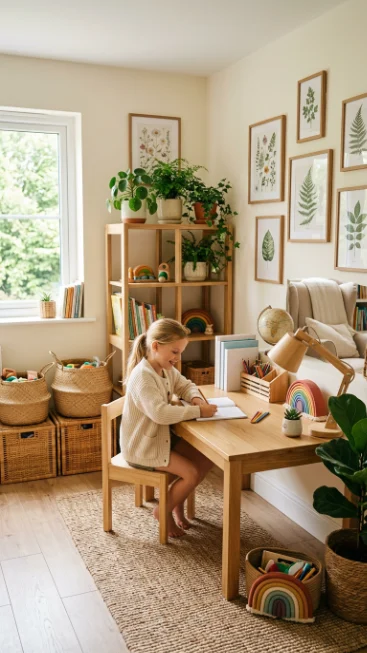
A nature-inspired kids learning space creates a calm and refreshing environment that feels connected to the outdoors.
Natural materials, greenery, and soft earthy tones can help make study areas feel more welcoming and relaxing.
Incorporate wooden furniture, woven storage baskets, botanical artwork, and a few easy-care plants to bring warmth and texture into the room.
Large windows and natural light further enhance the space, creating an atmosphere that feels bright, peaceful, and inviting.
13. Dual-Purpose Homework and Play Area
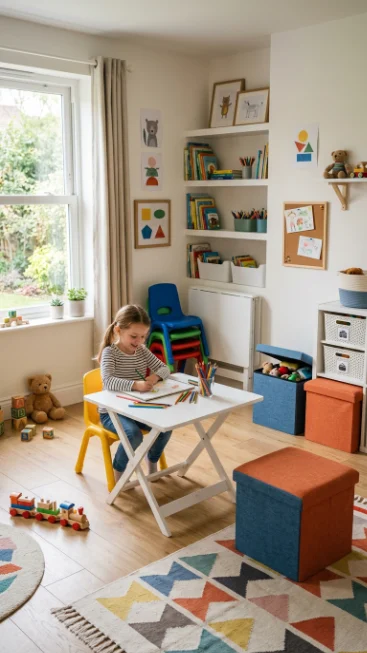
A room that easily transitions between study and play can make daily routines feel more seamless.
This approach is one of the most practical ideas for kids room layouts, especially for smaller homes where spaces need to serve multiple purposes.
Choose furniture with built-in storage, foldable tables, or movable seating that can quickly adapt throughout the day.
Keeping school supplies organized in portable containers makes it easy to switch from creative play to focused homework without unnecessary distractions.
14. Magnetic Boards and Pegboard Walls
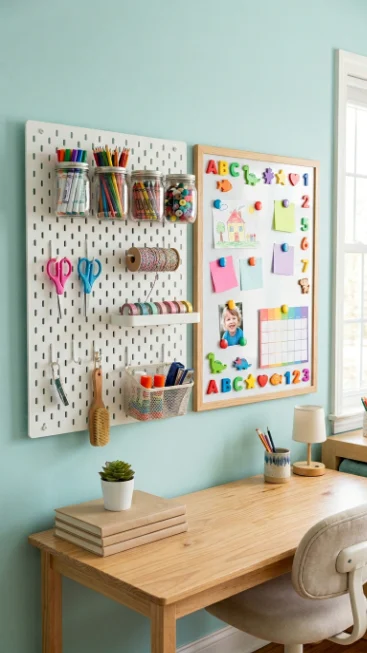
Magnetic boards and pegboards offer stylish vertical storage while helping keep a kids study room neat and organized.
They provide a practical way to store supplies, display reminders, and showcase educational materials without taking up valuable desk space.
Use pegboards for scissors, rulers, headphones, and small containers, while magnetic boards can hold schedules, flashcards, and artwork.
Together, they create a flexible organization system that can easily adapt as your child’s learning needs change.
15. Routine and Schedule Wall with Visual Timers
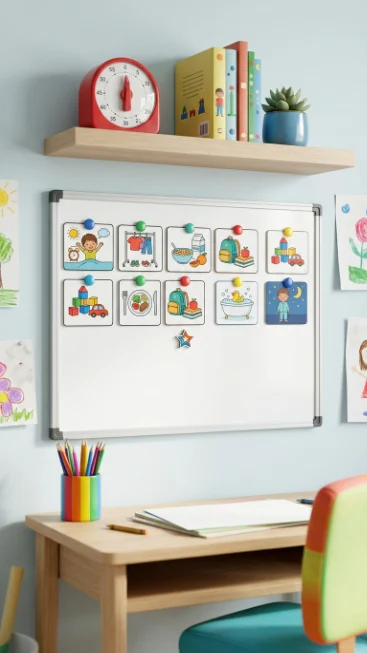
A routine wall can help create structure in a kids learning space while making daily tasks feel easier to manage.
Visual schedules, calendars, and timers provide clear guidance that supports organization and encourages independent learning habits. Combine colorful planners, routine cards, and simple countdown timers to create a system children can easily follow.
This setup not only helps with homework routines but also teaches valuable time-management skills that can benefit them well beyond the classroom.
16. Personalized Display Gallery for Achievements
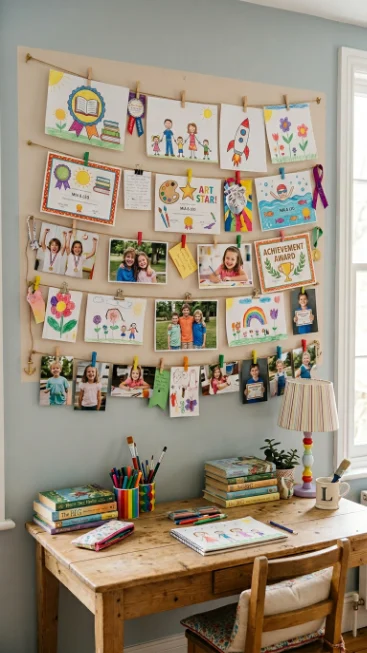
A personalized gallery wall is a wonderful way to celebrate progress while adding character to a kids space.
Displaying artwork, certificates, photos, and favorite projects can help create a study environment that feels encouraging and uniquely personal. Use clip frames, wire displays, cork boards, or simple shelves that allow items to be updated easily.
Rotating pieces throughout the year keeps the display fresh and gives children a dedicated place to showcase accomplishments they are proud of.
17. Collaborative Study Table for Siblings and Friends
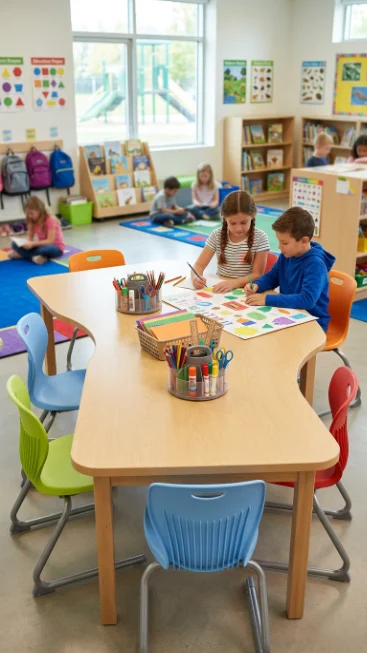
A collaborative study table creates a shared workspace where children can learn, create, and work on projects together. This setup works especially well in a kids study room designed for siblings or children who enjoy group activities.
Choose a large table with enough seating for multiple users and include shared storage for supplies.
Defined work areas can help keep materials organized while still encouraging teamwork, making the space both functional and welcoming for collaborative learning.
18. Calm Corner for Focus and Sensory Breaks
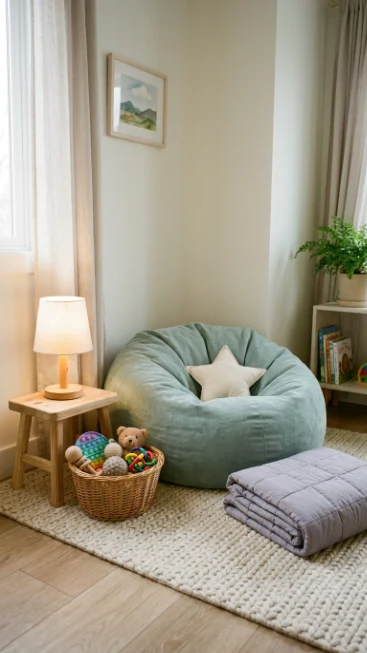
A calm corner provides a peaceful retreat within a kids learning space, giving children a quiet place to recharge when they need a break.
Thoughtfully designed relaxation zones can help create a more balanced and comfortable study environment.
Soft seating, gentle lighting, cozy blankets, and a small basket of calming activities can make the area feel inviting. Keeping the space simple and uncluttered helps maintain a soothing atmosphere that supports focus and emotional well-being.
19. Portable Study Caddies for On-the-Go Learning
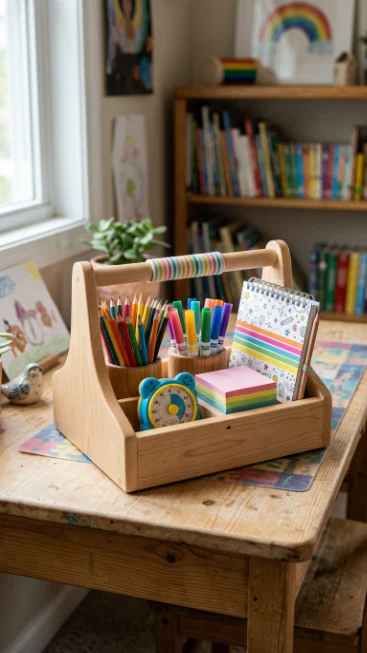
Portable study caddies are a simple way to keep essential supplies organized and ready to use anywhere in the home.
This flexible idea works especially well for ideas for kids room designs where learning happens in multiple spaces throughout the day. Choose a sturdy caddy with divided compartments for pencils, markers, notebooks, and other everyday essentials.
Having everything stored in one place makes transitions smoother and encourages children to take responsibility for organizing their own materials.
20. Math and STEM Maker Corner
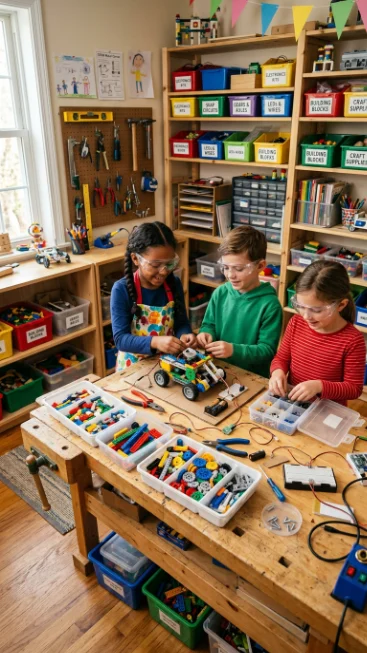
A dedicated STEM corner can transform a kids space into an area for hands-on discovery and creative problem-solving.
Building kits, engineering activities, and science projects encourage curiosity while making learning feel interactive and exciting. Use labeled storage bins, open shelving, and a durable work surface to keep materials organized and accessible.
Whether focused on robotics, building blocks, or simple experiments, a maker corner creates opportunities for exploration that can grow alongside your child’s interests.
21. Language Learning Corner with Audio Tools
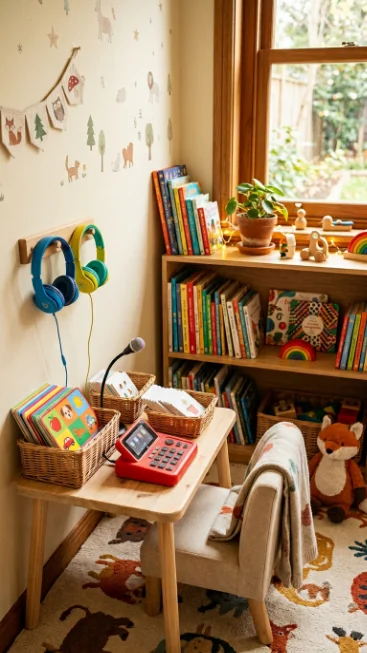
A language-focused corner adds a meaningful layer to a kids learning space, helping children build vocabulary and communication skills in a calm, structured setting.
Bilingual books, flashcards, and audio tools make learning feel interactive and engaging.
Include headphones, word cards, and a small display for daily vocabulary. This setup works especially well for consistent short practice sessions that gradually build confidence and fluency over time.
22. Ergonomic Chairs Sized for Kids
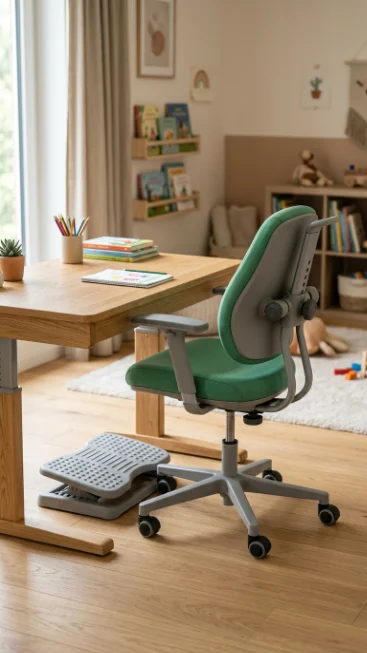
Comfortable seating is essential for any minimalist kids study area. An ergonomic chair designed for children supports proper posture, reduces strain, and helps maintain focus during study sessions.
Look for adjustable height features, lumbar support, and a stable footrest to ensure correct alignment.
When paired with the right desk height, an ergonomic chair creates a healthier and more productive learning environment.
23. Nighttime Study Setup for Older Kids
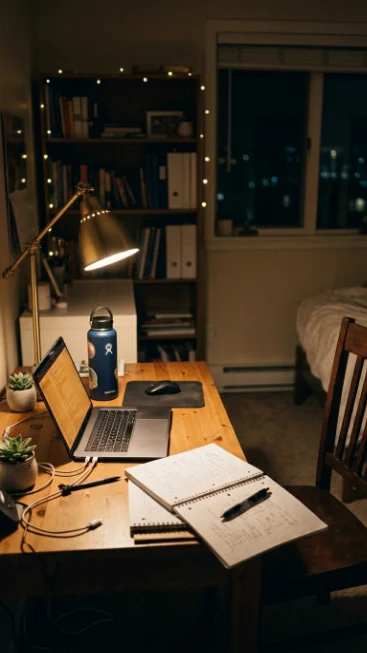
A well-designed evening workspace is essential for a focused teen study room, especially for older children with longer study hours. Soft, adjustable lighting and a calm setup help reduce strain and maintain concentration.
Use warm task lamps, blue-light filters, and a quiet, organized desk layout to create a balanced nighttime environment.
Keeping the space minimal and distraction-free supports better focus while also promoting healthier study habits before bedtime.
24. Budget-Friendly DIY Hacks and Upcycles
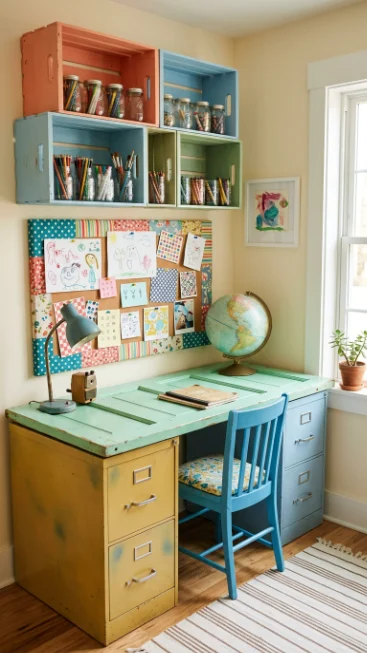
Creating a functional ideas for kids room setup doesn’t require a large budget. Simple DIY solutions and repurposed items can transform everyday materials into practical study furniture and storage.
Use painted crates, mason jars, or repurposed tables to build an affordable yet organized study area. These creative upgrades not only save money but also add personality and charm to the learning space.
25. Outdoor Study Area or Balcony Classroom
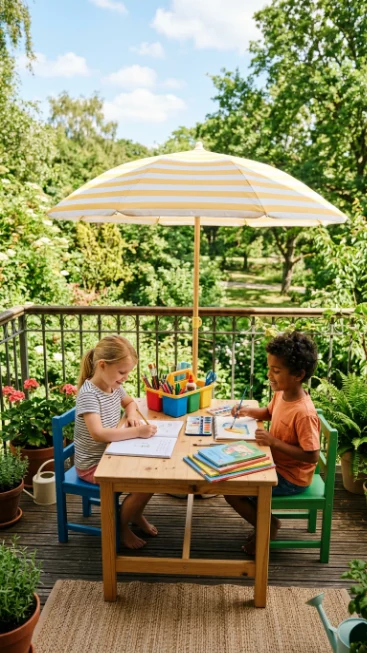
An outdoor study setup brings fresh energy into a kids space, making learning feel more relaxed and inspiring. Natural surroundings can improve focus while adding variety to daily study routines.
Set up a simple table, comfortable seating, and a portable supply caddy in a shaded outdoor area or balcony. This flexible arrangement is perfect for reading, science observations, or creative work in a refreshing environment.